
Lip Serum: What It Does, Which Ingredients Work and How to Use One
Lip serums promise smoother, fuller, better-hydrated lips. Here is why lips dry out faster than the rest of your face, which serum ingredients have lip-specific evidence, and what a serum cannot do for lip lines
Lip serums have become a staple next to the balm and the gloss: a slim tube or dropper of something lighter than a balm, usually built around hyaluronic acid or peptides, that promises softer, smoother and slightly fuller lips.
Some of that promise holds up. Lips are unusually thirsty, and a well-made serum can make a visible difference to dryness and texture. But a serum also gets credit for things it cannot do, especially when it comes to the lines that form around the mouth with age. Here is what the research says.
Why lips dry out so fast
The red part of your lips, called the vermilion, is a halfway zone between skin and the inside of the mouth. It has no oil glands, and its surface cells never fully mature into the flat, tightly packed layer that protects the rest of your face.
That shows up in the measurements. A study of 303 women found that water loss through the lips was almost three times as high as through the cheek, and lip surface hydration was only about a third of cheek levels [1]. The researchers traced this to incomplete formation of the lips’ outer cells, which leaves them with a weak barrier and poor water-holding capacity [1].
Your skin barrier on the lips is so weak that they lose water almost 3 times faster than your cheeks, so a serum alone is rarely enough.
How lips change with age
Lips do not simply deflate. A study comparing upper lips from people under 40 and over 80 found thinning of the skin, thinning of the muscle that shapes the mouth, and degeneration of the collagen and elastic fibres in the skin [2]. The authors concluded that the aged look comes mainly from loss of elasticity and a slight drooping of the upper lip, rather than from the total volume loss that is often assumed [2].
Your skin barrier on the lips is so weak that they lose water almost 3 times faster than your cheeks, so a serum alone is rarely enough.
This matters for choosing products. Hydration can temporarily smooth and plump the lip surface, but the collagen changes sit deeper. Our guide to thinning lips covers the structural side in more detail, including what fillers can and cannot change and which habits speed the process up.
What a lip serum can do
A serum is a light, water-rich formula that delivers humectants and actives to the lip surface. The best evidence comes from studies of multi-ingredient lip treatments:
- In a 4-week study of 36 women with dry lips, a two-step hyaluronic acid lip treatment improved texture, scaling, lines, definition and plumpness, with measurable gains in hydration and lip size on a digital caliper [3].
- In a similar 4-week study of 32 women, a lip treatment combining hyaluronic acid, a tripeptide and emollients, followed by a niacin plumper, improved scaling, cracking, fine dryness lines and fullness, with no adverse events reported [4].
Both studies were small, open-label and run with the product makers, and participants applied the products at least three times a day. So the results are encouraging rather than proof, and they depend on frequent use.
Your skin needs about 4 weeks of steady use, three times a day, before a hyaluronic acid lip treatment shows lasting gains rather than a few hours of plumpness.
Your skin needs about 4 weeks of steady use, three times a day, before a hyaluronic acid lip treatment shows lasting gains rather than a few hours of plumpness.
Ingredients worth looking for
- Hyaluronic acid draws water into the lip surface for an immediate smoothing, plumping effect [3].
- Peptides such as palmitoyl tripeptides are added to support the lip’s collagen and are a common partner to hyaluronic acid [4].
- Ceramides, squalane and plant oils help replace the lipids that lips lack and slow water loss.
- Panthenol and glycerin soothe and hydrate chapped areas.
- Niacin or mild warming agents create a temporary plumping flush, but they can sting sensitive lips.
Serum, balm, oil or plumper?
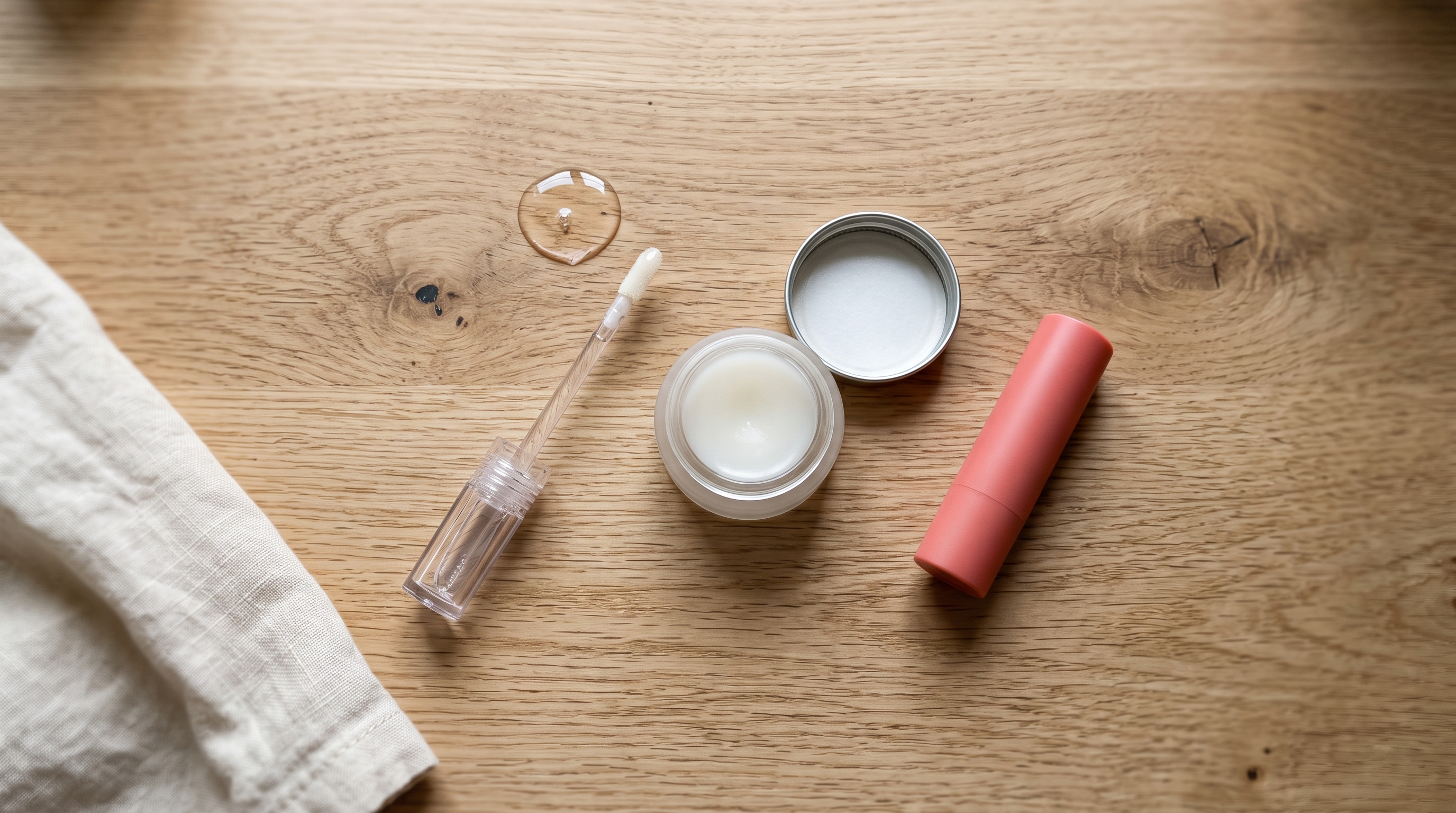
A serum hydrates; a balm seals. Because the lip barrier leaks water so easily [1], a humectant serum used alone in dry air can leave lips feeling tight once the water evaporates. The fix is layering: serum first, then a balm or ointment with petrolatum, shea butter or waxes on top. Our guide to the best lip balm for dry lips compares occlusive bases and flags the ingredients that tend to make chapping worse.
Lip oils add shine and softness with little hydration of their own. Plumpers use irritants such as cinnamon, capsicum or menthol to cause brief swelling. If you want fullness without the tingle, our roundup of the best lip plumper options explains which plumping ingredients are gentle enough for daily use and which ones are better saved for an occasional evening out.
How to use a lip serum
- Pat a thin layer onto clean, dry lips in the morning and at night.
- Wait a minute, then seal it with a balm, especially outdoors or in heated rooms.
- Reapply through the day if the label suggests it; the studies used three applications daily [3, 4].
- Wear an SPF lip balm in daylight, since sun exposure speeds up collagen loss.
Skip flavoured or fragranced serums if your lips flake or burn, and stop any product that causes swelling, itching or cracking at the corners of the mouth.
The lines a serum cannot reach
The vertical lines that run up from the lip border into the skin above it are not really a lip problem. They form in the skin around the mouth, where collagen thins and repeated movement creases the surface. A lip serum can soften how they look for a few hours, but it cannot rebuild that collagen. Our guide to lip lines explains why smoking, sun and pursing habits deepen them and which treatments reach the deeper layers.
Retinol is the ingredient with the strongest evidence for this kind of fine wrinkling. In a trial on aged skin, retinol increased collagen production and improved fine wrinkles over 24 weeks [5]. Apply it to the skin around the mouth, not to the lip itself: in the 303-woman lip study, an oral retinoid drug significantly increased water loss from the lips, whose barrier is already weak [1].
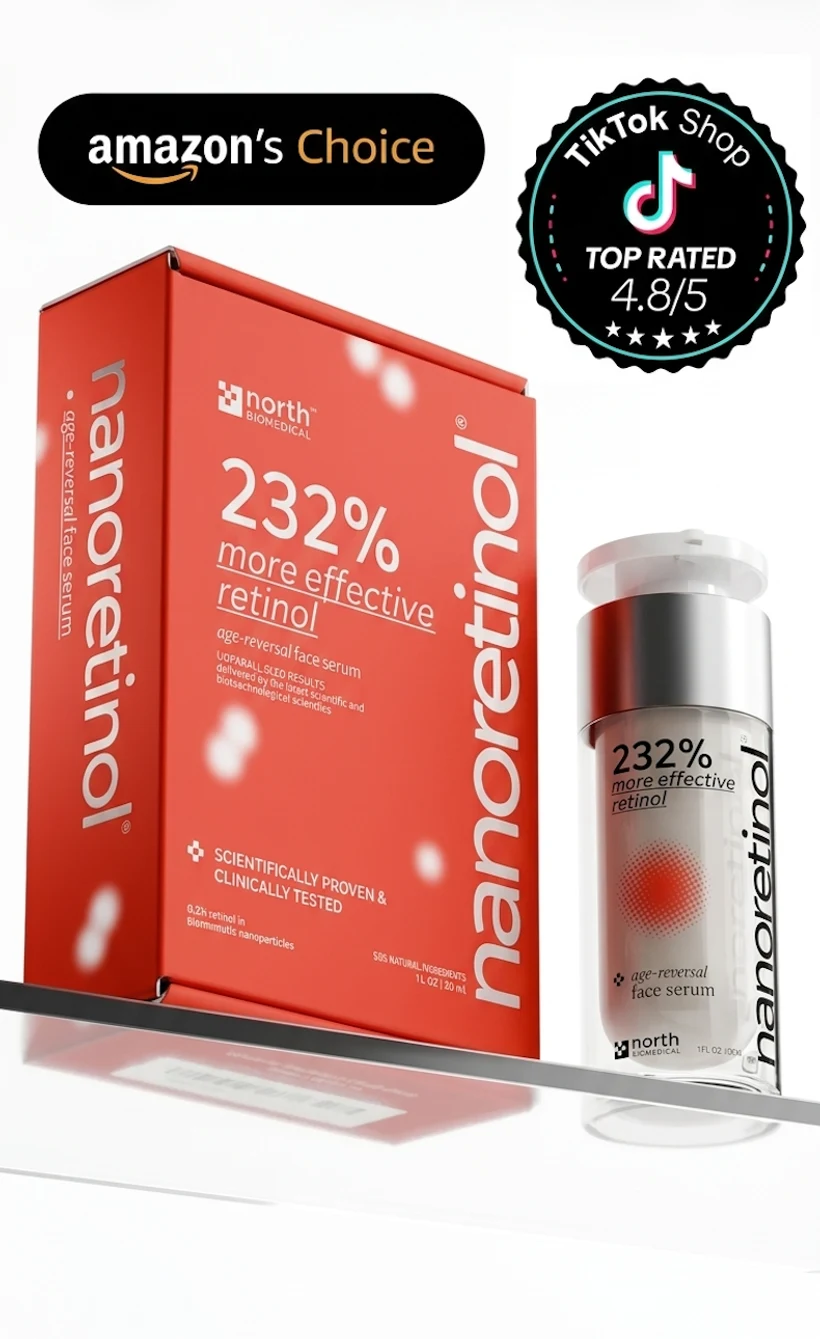
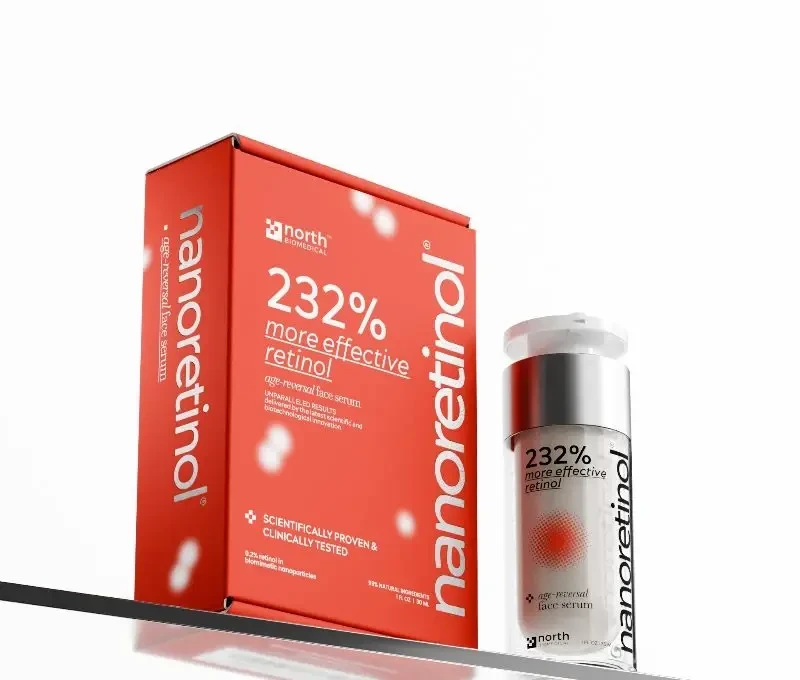
Nanoretinol makes that step gentler. It carries 0.2% retinol in biomimetic lipid nanoparticles, in a light, water-based gel that is suitable for sensitive skin. In North Biomedical’s clinical study it was 232% more effective in collagen recovery than conventional retinol and produced a 56% increase in elasticity after 56 days, with milder side effects than conventional retinol [6]. Use Nanoretinol at night on the skin above the lip, and a lip serum and balm on the lip itself.
References
- Kobayashi H, Tagami H. “Functional Properties of the Surface of the Vermilion Border of the Lips Are Distinct from Those of the Facial Skin.” British Journal of Dermatology. 2004;150(3):563-567. doi:10.1046/j.1365-2133.2003.05741.x
- Penna V, Stark GB, Eisenhardt SU, Bannasch H, Iblher N. “The Aging Lip: A Comparative Histological Analysis of Age-Related Changes in the Upper Lip Complex.” Plastic and Reconstructive Surgery. 2009;124(2):624-628. doi:10.1097/PRS.0b013e3181addc06
- Makino ET, Tan P, Qian K, Babcock M, Mehta RC. “Clinical Assessment of Immediate and Long-Term Effects of a Two-Step Topical Hyaluronic Acid Lip Treatment.” Journal of Drugs in Dermatology. 2017;16(4):366-371. PubMed: 28403271
- Trookman NS, Rizer RL, Ford R, Mehta R, Gotz V. “Clinical Assessment of a Combination Lip Treatment to Restore Moisturization and Fullness.” Journal of Clinical and Aesthetic Dermatology. 2009;2(12):44-48. PubMed: 20725584
- Kafi R, Kwak HS, Schumacher WE, Cho S, Hanft VN, Hamilton TA, et al. “Improvement of Naturally Aged Skin with Vitamin A (Retinol).” Archives of Dermatology. 2007;143(5):606-612. doi:10.1001/archderm.143.5.606
- North Biomedical LLC. “Nanoretinol vs. Conventional Retinol: Efficacy in Collagen and Elastin Recovery.” Clinical Study Summary, 2024. Study summary