
Best Skin Care for Women Over 60: A Regimen Built on What Changed
After 60 the limiting factor is tolerance, not effort — which products still earn their place, and which quietly stopped
Most skincare advice aimed at women over 60 is advice for women over 40 with a larger font. It recommends the same actives, the same layering order and the same expectations, as if the intervening two decades changed only the number on a birthday card.
They changed the tissue. A regimen that works at 60 has to be built around three specific shifts, and once you know what they are, the shopping list gets shorter rather than longer.
What actually changed
The first shift is collagen, and its timing is not what most people assume.
In a study measuring skin collagen content, skin thickness and bone mass in postmenopausal women, all of these declined at roughly 1 to 2% per year after menopause — and critically, the decline tracked years since menopause rather than chronological age [1]. Two women of the same age can have measurably different skin depending on when their menopause occurred.
After menopause, skin collagen tracks how long it has been since your last period — not how many birthdays you have had.
The second shift is oil, and it is steeper than most people expect. Forehead sebaceous wax ester secretion was measured in 276 people aged 15 to 97 and declined continuously through adult life at approximately 23% per decade in men and 32% per decade in women [2]. By 60, surface lipid output is a fraction of what it was at 25. This is the physiology behind the tightness, the flaking and the sudden intolerance of cleansers you used for years.
The third shift is the one that changes how you should use actives. In subjects over 80 compared with subjects aged 20 to 30, baseline water loss through the skin was actually lower than in young skin — but the barrier broke far more easily under tape stripping, and it repaired dramatically slower: about 15% recovery at 24 hours in aged skin, against 50% at 24 hours and 80% at 72 hours in young skin [3].
That single finding reframes the whole regimen. The risk at 60 is not that actives stop working. It is that a bad week — over-exfoliating, a too-strong retinoid, a stripping cleanser — costs you three days of barrier repair instead of one night, and the setbacks start to outpace the progress.
The products that still earn their place
A non-stripping cleanser. With sebum output down by roughly a third per decade, a foaming surfactant cleanser is removing lipids you cannot replace by morning. Cream, milk and oil cleansers are the appropriate category now, not a preference.
Sunscreen, still. The evidence here does not expire. In a randomised trial of 903 adults over four and a half years, skin ageing measured by surface microtopography was 24% lower in the daily broad-spectrum sunscreen group than in the discretionary-use group, with no detectable increase in photoaging in the daily group [4]. Photoaging keeps accumulating at 60; so does the benefit of blocking it. Our guide to sunscreen for mature skin covers formulations that do not cling to dry texture.
A retinoid — and this is the point most over-60 advice gets wrong. The assumption that retinoids are for younger skin is contradicted by the trial designed to test exactly this population. Thirty-six elderly subjects with a minimum age of 80 and a mean age of 87 used topical 0.4% retinol three times weekly for 24 weeks. Fine wrinkling improved by −1.64 against −0.08 for vehicle, and glycosaminoglycans rose 40% [5].
Mean age 87. The question was never whether retinoids work in old skin. It is whether the delivery vehicle is gentle enough that you stay on it.
The trial that settled whether retinoids still work in old skin had a mean participant age of 87, and it ran for 24 weeks.
A barrier-supporting moisturiser. Given the repair-speed finding, this is not cosmetic. Look for ceramides, cholesterol and fatty acids rather than humectants alone — you are replacing lipids, not just holding water. The moisturiser comparison for skin over 60 goes through this in detail.
Niacinamide, as the low-risk addition. In a 12-week double-blind split-face trial, 50 women with facial photoaging applying 5% niacinamide showed significant reductions in fine lines and wrinkles, hyperpigmented spots, red blotchiness and sallowness, plus improved cutometer-measured elasticity, against vehicle on the other cheek [6]. The subjects were photoaged rather than specifically postmenopausal, so read it as evidence in mature photoaged skin. It is well tolerated, which at 60 is half the value.
What quietly stopped earning its place
Frequent physical or acid exfoliation. Cell turnover has slowed, which sounds like an argument for more exfoliation and is actually an argument for less. The barrier that exfoliation disrupts now takes three days to rebuild.
Oil-control products. Mattifying cleansers, clay masks and astringent toners are solving a problem that resolved itself two decades ago.
Alcohol-heavy toners. On a face producing a third of its former lipid output, these subtract from an already short supply.
The seven-step routine. More steps mean more surfactants, more preservatives, more fragrance and more opportunity to trip the barrier. Four products used consistently beat nine used anxiously. If you are stepping down from a more elaborate regimen, the routine for your fifties is a useful bridge.
The tolerance problem, and what solves it
Every recommendation above collides with the same constraint. The actives with the best evidence are the ones most likely to irritate, and irritation on skin that repairs at 15% per day is a genuine setback rather than a nuisance.
Conventional retinol makes this worse by design. Traditional formulations barely cross the epithelial barrier, so many rely on chemicals and petroleum derivatives that break the barrier down through lipid mobility — forcing entry by damaging the wall. On skin that already takes three days to repair, that trade is a bad one.
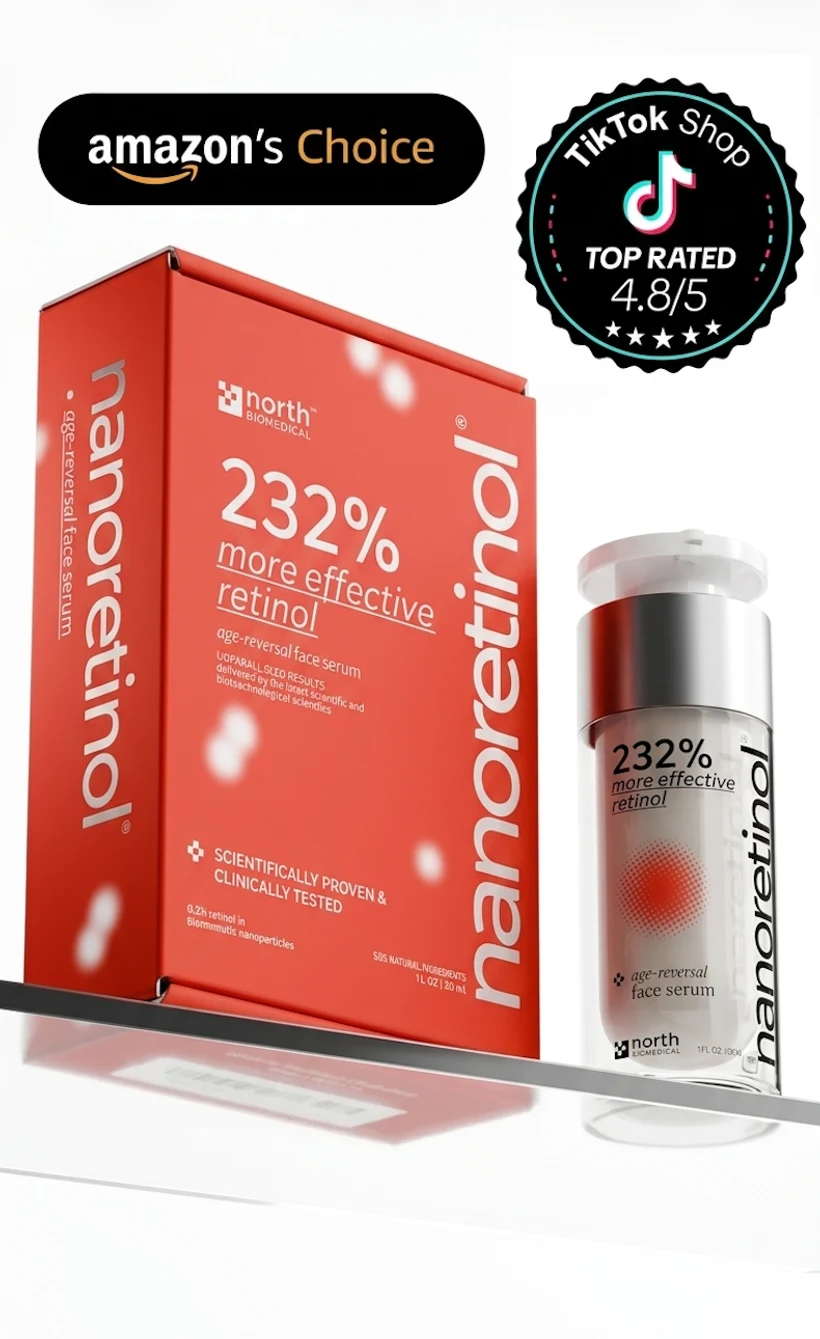
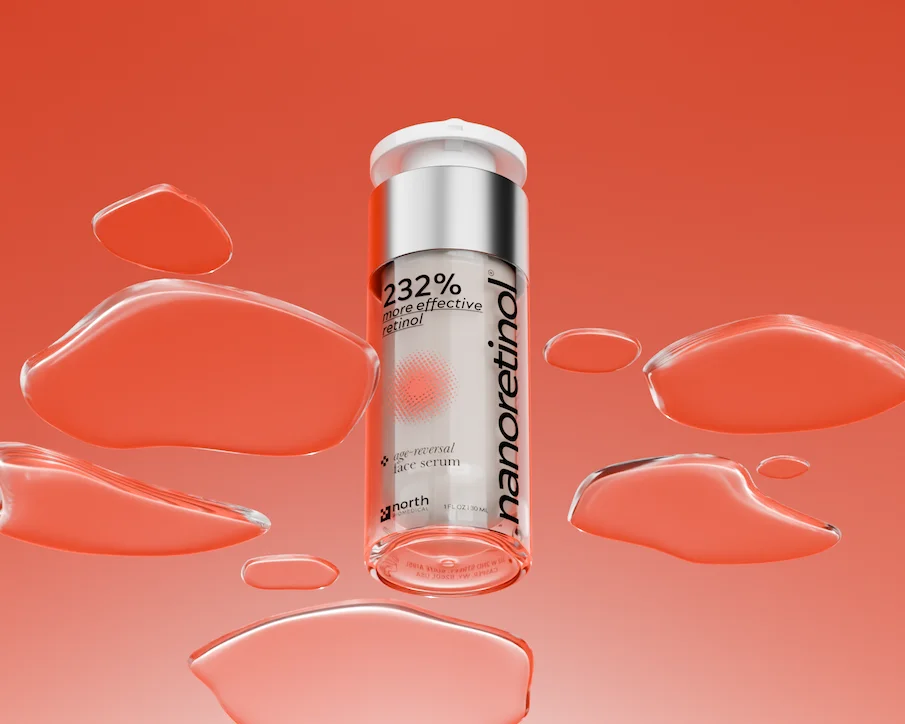
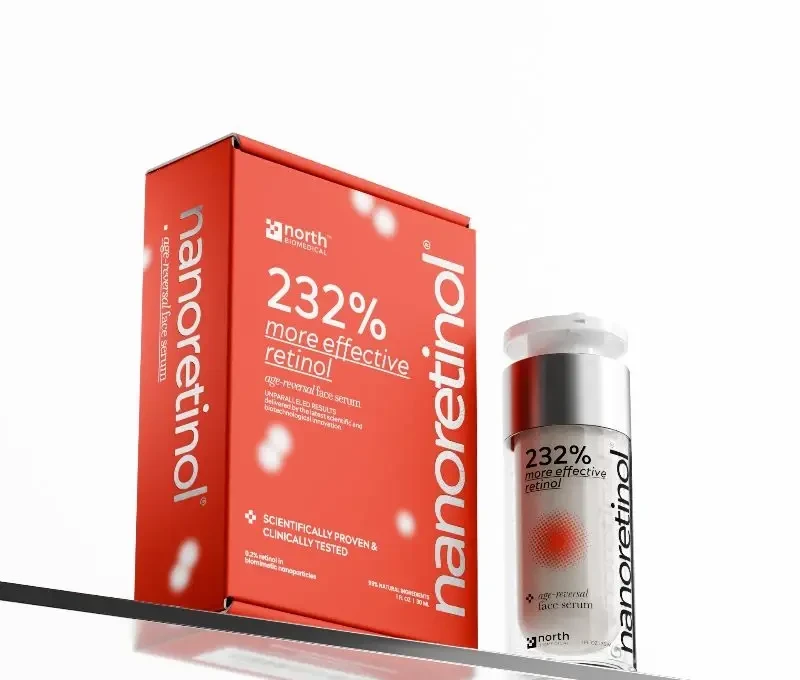
Nanoretinol was developed to remove the trade entirely. Its retinol is encapsulated in biomimetic lipid nanoparticles — externally identical to skin cells, so the body recognises them as “self” and lets them through the epithelial barrier intact, the same nanotechnology used in drug delivery. Nothing has to be damaged for the active to arrive. In North Biomedical’s clinical study it was 232% more effective than conventional retinol in collagen recovery and 73% more effective in elastin recovery, delivering a 61% increase in skin firmness and a 56% increase in elasticity over 56 days. It is 0.2% retinol in a water-based, 99% natural formulation, significantly gentler on skin cells than conventional retinol, suitable for sensitive skin and safe for the eye contour.
For skin where tolerance is the binding constraint, delivery efficiency is worth more than concentration. More on the outcome that matters most here in how to improve skin elasticity.
Building yours this week
Four products: a cream cleanser at night, a barrier moisturiser morning and night, a broad-spectrum sunscreen every morning, and a gentle retinoid two or three nights a week to start. Add niacinamide if you want one more. That is the whole regimen.
Give it twelve weeks before judging it, and treat the absence of irritation as a result in its own right — at 60, the routine you can sustain without setbacks is the one that compounds.
References
- Brincat M, Kabalan S, Studd JW, Moniz CF, de Trafford J, Montgomery J. “A study of the decrease of skin collagen content, skin thickness, and bone mass in the postmenopausal woman.” Obstetrics & Gynecology. 1987;70(6):840-845. PMID 3120067
- Jacobsen E, Billings JK, Frantz RA, Kinney CK, Stewart ME, Downing DT. “Age-Related Changes in Sebaceous Wax Ester Secretion Rates in Men and Women.” Journal of Investigative Dermatology. 1985;85(5):483-485. doi:10.1111/1523-1747.ep12277224
- Ghadially R, Brown BE, Sequeira-Martin SM, Feingold KR, Elias PM. “The aged epidermal permeability barrier. Structural, functional, and lipid biochemical abnormalities in humans and a senescent murine model.” Journal of Clinical Investigation. 1995;95(5):2281-2290. doi:10.1172/JCI117919
- Hughes MC, Williams GM, Baker P, Green AC. “Sunscreen and prevention of skin aging: a randomized trial.” Annals of Internal Medicine. 2013;158(11):781-790. doi:10.7326/0003-4819-158-11-201306040-00002
- Kafi R, Kwak HSR, Schumacher WE, Cho S, Hanft VN, Hamilton TA, King AL, Neal JD, Varani J, Fisher GJ, Voorhees JJ, Kang S. “Improvement of Naturally Aged Skin With Vitamin A (Retinol).” Archives of Dermatology. 2007;143(5):606-612. doi:10.1001/archderm.143.5.606
- Bissett DL, Oblong JE, Berge CA. “Niacinamide: A B Vitamin that Improves Aging Facial Skin Appearance.” Dermatologic Surgery. 2005;31(7 Pt 2):860-865. doi:10.1111/j.1524-4725.2005.31732