Oily Skin Routine: The Steps That Reduce Shine and the Ones That Cause It
Most oily skin routines are built to remove oil, which is the reason they stop working after the first fortnight
An oily skin routine usually starts as an arms race. The skin produces oil, so the routine adds something to remove it. That works for a few hours, so the next escalation is a stronger cleanser, then a toner with alcohol in it, then blotting papers, then washing a third time in the evening. Six months later the shine is unchanged, the skin stings when anything is applied, and there is a collection of half-used bottles that all promised to be mattifying.
The escalation is logical and it is the wrong model. Sebum is not dirt sitting on the surface waiting to be removed. It is a lipid mixture manufactured inside sebaceous glands in the dermis and pushed continuously up the follicle to the surface. Nothing applied to the outside of the skin can reach into a gland and switch it off, which means removing oil from the surface has no effect whatsoever on the rate at which more arrives.
What actually sets your oil output
Sebaceous gland activity is under hormonal control, principally androgens. Output is low through childhood, climbs steeply during puberty, and then settles into a long plateau. Classic measurement work found that sebum production remains essentially unchanged in men into their eighties, while in women it declines gradually after menopause [1].
The practical implication is unglamorous but useful. If you have oily skin at 35, you have a sebaceous system doing exactly what it was built to do, and the goal of a routine is not to defeat it. Two things are genuinely achievable: reducing the rate of excretion somewhat with the right actives, and stopping the routine from making things measurably worse. Most people’s shine problem is at least partly the second one.
There is a consolation that nobody mentions when you are 22 and blotting your forehead. That same sebum forms a lipid film that supports the barrier and slows water loss, which is one reason oily skin tends to line later than dry skin does.
The over-washing loop
Harsh cleansing does not reduce oil production. It does reliably damage the tissue doing the containing. Anionic surfactants such as sodium lauryl sulfate interact with stratum corneum proteins and cause them to swell, while disordering the intercellular lipids packed between corneocytes. High-pH cleansing systems produce the same swelling effect even without surfactant, which is why traditional soap is a poor choice for the face regardless of how oily it is [2].
There is a consolation that nobody mentions when you are 22 and blotting your forehead.
The result is a face that feels squeaky at 7:05am, tight at 7:20, and shiny by 11, with a barrier that is now more permeable to everything applied afterwards. Every subsequent active in the routine then stings, which reads as sensitivity and triggers another round of product changes.
Twice a day is the ceiling. A gentle, pH-appropriate cleanser morning and night handles a genuinely oily face, and the third wash people add out of frustration costs more than it returns.
Oily and dehydrated at the same time
The single most useful thing to understand about oily skin is that oil content and water content are separate, independently regulated variables. A large study measuring 713 people across the full age range found sebum content and stratum corneum hydration following entirely different trajectories with age and sex [3]. They are not two ends of one dial.
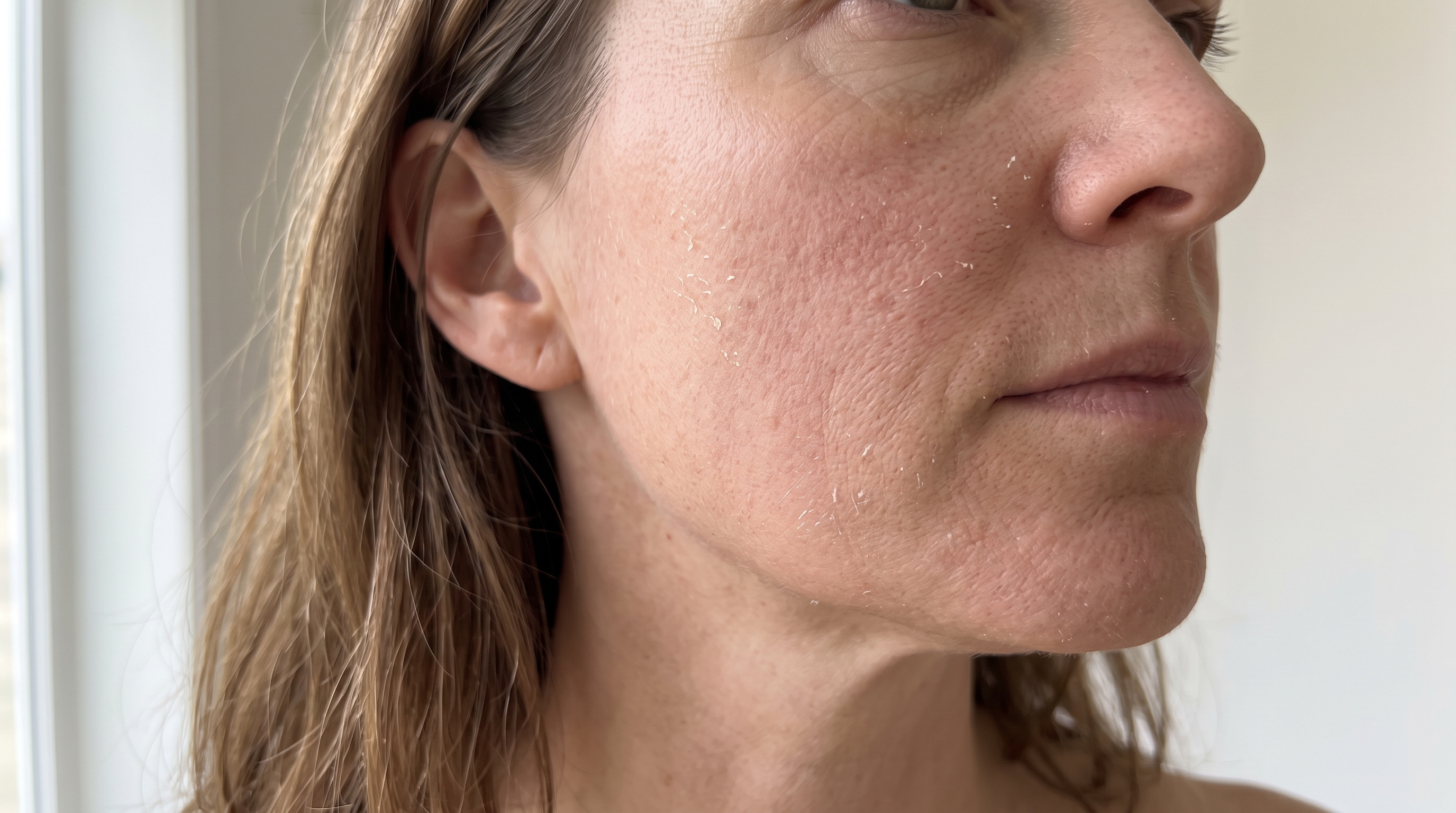
So skin can be greasy by lunchtime and dehydrated at the same time. That combination presents as shine plus tightness, flaking around the nose, makeup that clings in patches, and the peculiar sensation of skin that feels oily and rough simultaneously. The instinct is to strip harder. The correct move is to add water-phase hydration and leave the oil alone.
The routine, in order
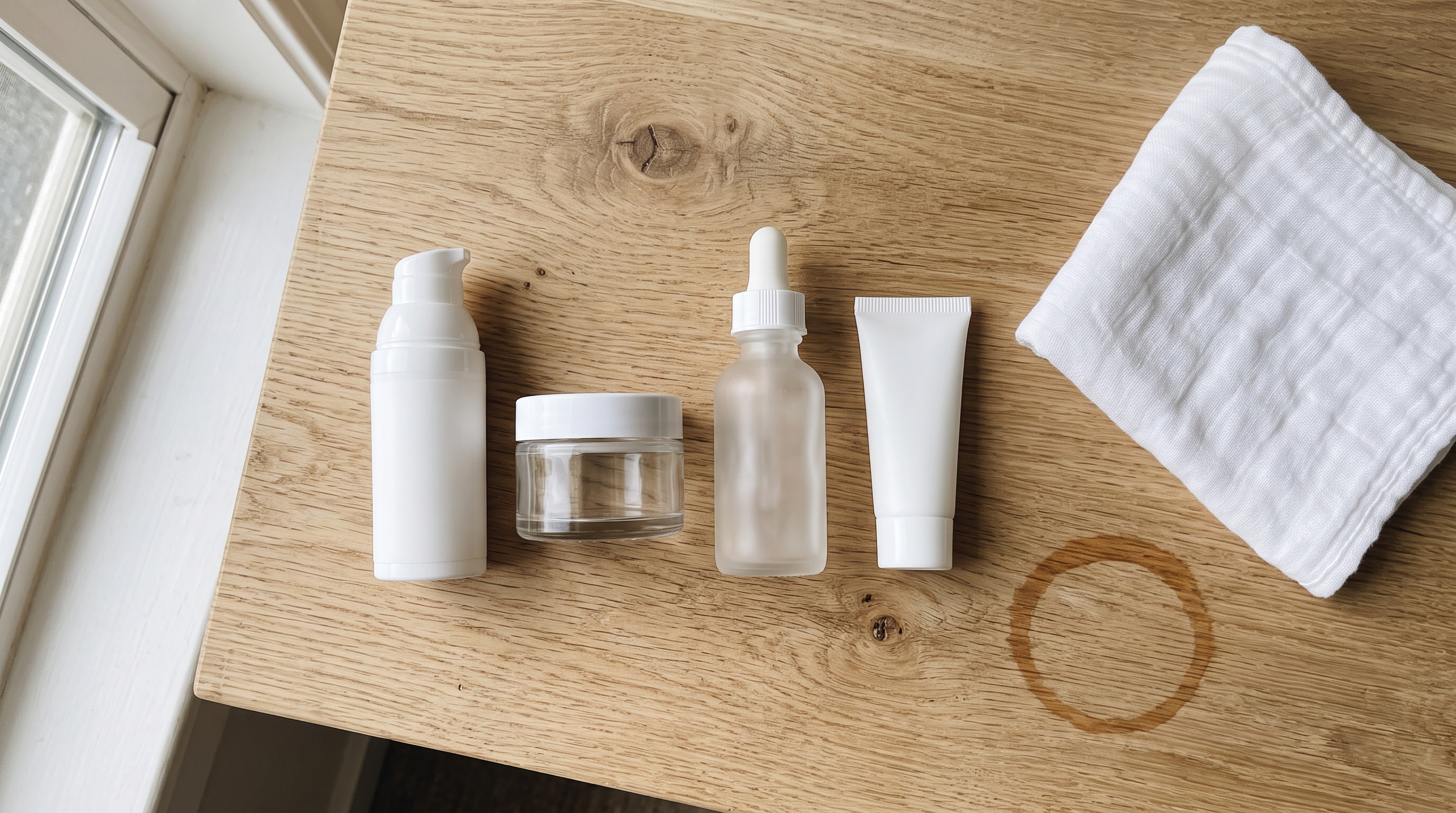
Morning. Gentle cleanser. A hydrating, water-light layer if the skin feels tight. Sunscreen, always.
Evening. Gentle cleanser. Treatment step. A light moisturizer over the top.
Niacinamide is the rare ingredient with direct measured evidence against sebum itself rather than against shine.
That is four steps and three, and it is deliberately unimpressive. What matters is what occupies the treatment step and how the moisturizer is chosen.
The treatment step: niacinamide, then a retinoid
Niacinamide is the rare ingredient with direct measured evidence against sebum itself rather than against shine. In a four-week double-blind placebo-controlled trial in 100 subjects, topical 2% niacinamide significantly lowered sebum excretion rate at both two and four weeks, and a separate split-face study found reduced casual sebum levels over six weeks [4]. It is well tolerated, sits comfortably in a morning routine, and is a sensible first active.
The larger structural change comes from a retinoid at night. Retinoids bind retinoic acid receptors and regulate gene transcription, which normalizes follicular keratinization: the epithelium lining the follicle turns over faster and corneocytes shed more readily, so mature comedones are expelled and new microcomedones are suppressed [5]. That is the mechanism behind refined texture and the appearance of smaller pores, and it is the same mechanism that makes retinoids the best-evidenced anti-aging active available. It is worth understanding what a retinoid can and cannot do to pore size before starting, and our guide to retinol and pores covers the realistic timeline.
The moisturizer step people skip
Skipping moisturizer on oily skin is the most common self-inflicted wound in this category. The barrier still needs support, the retinoid step needs a buffer, and the dehydration described above needs addressing. What changes for oily skin is the vehicle: a water-based gel or fluid rather than a heavy occlusive cream, which is the entire distinction covered in choosing a moisturizer for oily skin.
Sunscreen is not optional and not negotiable
Daily broad-spectrum sunscreen is the single best-evidenced anti-aging intervention in dermatology. In a randomized trial following 903 adults for four and a half years, the daily-use group showed no detectable increase in measured skin aging, while the discretionary-use group aged measurably [6]. Oily skin tolerates fluid and gel sunscreens well, and the modern generation of them no longer behaves like the thick white creams that gave sunscreen its reputation among oily-skinned people.
Where delivery becomes the deciding factor
The retinoid step is where oily-skin routines most often break, and the reason is rarely the retinol itself. Conventional retinol formulations are frequently built in oil-heavy or petroleum-derived vehicles that loosen the skin barrier to force the molecule through it. On skin already carrying a high oil load, that adds greasiness to a face that does not want any, and the barrier disruption produces the flaking and irritation that end the experiment in week three.
Nanoretinol was built around the opposite approach. It encapsulates 0.2% retinol in biomimetic lipid nanoparticles that the skin recognizes as self and admits through the epithelial barrier without that barrier being forced open. The formulation is water-based, gel-like, and absorbs to a matte finish, which is a different daily experience on oily skin than an oil-suspended retinol. In laboratory comparison against conventional retinol it proved 232% more effective in collagen recovery and 73% more effective in elastin recovery, with drastically reduced cytotoxicity in cellular assays and clinical results showing a 61% increase in skin firmness over 56 days.
Give it eight weeks
The routine above is short on purpose. Oily skin does not need more steps; it needs the right four, applied consistently long enough for follicular turnover to change, which takes about eight weeks rather than eight days.
The habit that helps most is the one that feels like doing nothing: stop washing a third time, stop reaching for the alcohol toner when the shine returns at 2pm, and let the skin get on with it. Sebum was never the enemy. The routine built to punish it usually was.
References
- Pochi PE, Strauss JS, Downing DT. “Age-related changes in sebaceous gland activity.” Journal of Investigative Dermatology. 1979;73(1):108-111. doi:10.1111/1523-1747.ep12532792
- Ananthapadmanabhan KP, Moore DJ, Subramanyan K, Misra M, Meyer F. “Cleansing without compromise: the impact of cleansers on the skin barrier and the technology of mild cleansing.” Dermatologic Therapy. 2004;17(Suppl 1):16-25. doi:10.1111/j.1396-0296.2004.04s1002.x
- Man MQ, Xin SJ, Song SP, Cho SY, Zhang XJ, Tu CX, Feingold KR, Elias PM. “Variation of skin surface pH, sebum content and stratum corneum hydration with age and gender in a large Chinese population.” Skin Pharmacology and Physiology. 2009;22(4):190-199. doi:10.1159/000231524
- Draelos ZD, Matsubara A, Smiles K. “The effect of 2% niacinamide on facial sebum production.” Journal of Cosmetic and Laser Therapy. 2006;8(2):96-101. doi:10.1080/14764170600717704
- Motamedi M, Chehade A, Sanghera R, Grewal P. “A clinician’s guide to topical retinoids.” Journal of Cutaneous Medicine and Surgery. 2022;26(1):71-78. doi:10.1177/12034754211035091
- Hughes MC, Williams GM, Baker P, Green AC. “Sunscreen and prevention of skin aging: a randomized trial.” Annals of Internal Medicine. 2013;158(11):781-790. doi:10.7326/0003-4819-158-11-201306040-00002