Body Polish: The Gentler Way to Smooth Rough, Dull Body Skin
A body polish buffs instead of scouring. How it differs from a scrub, what abrasion does to aging skin, how often to use one, and what it can and can't do for crepey arms and legs
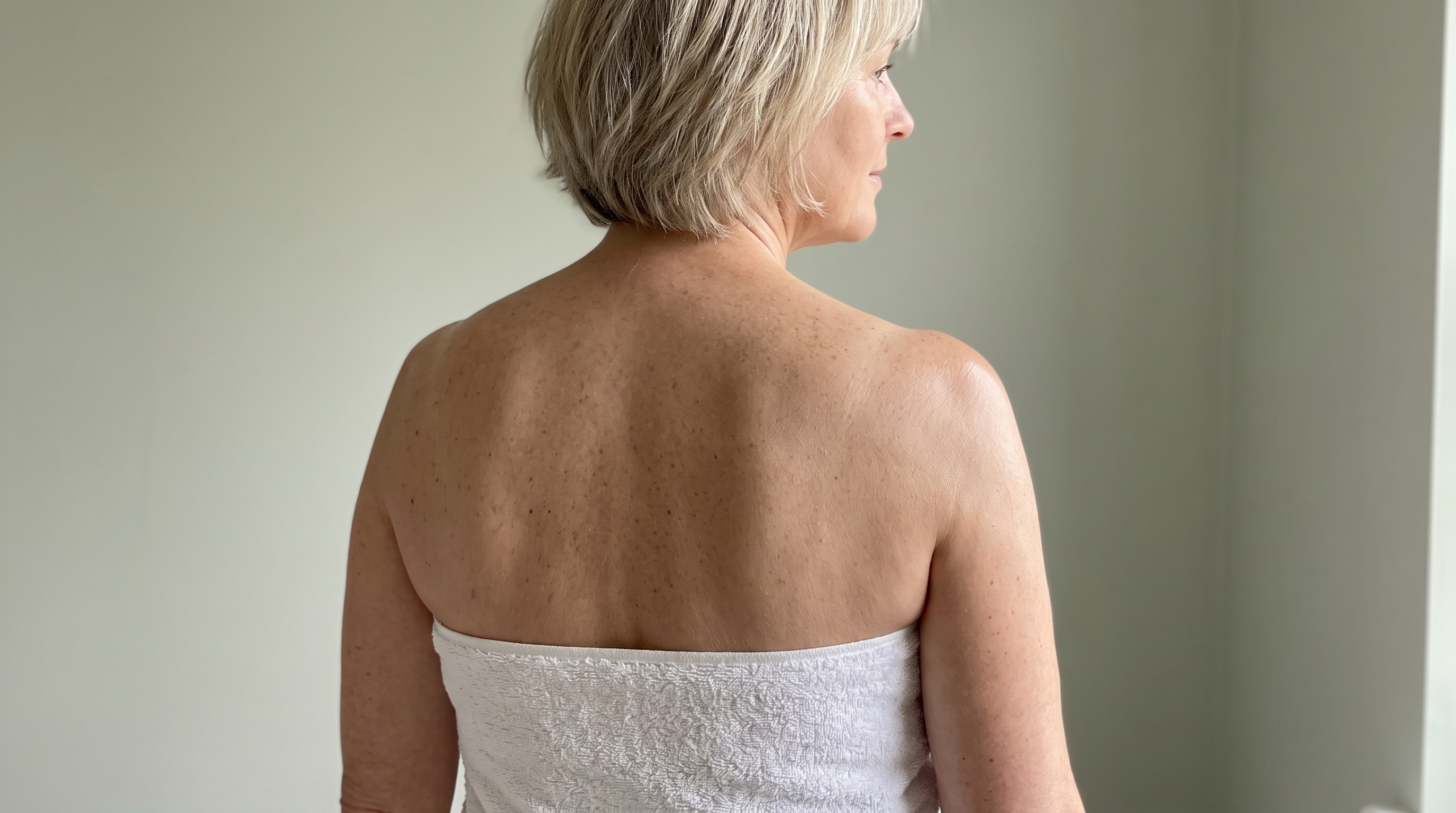
Run a hand over your shins, elbows or the backs of your arms in late autumn and the skin often feels like fine sandpaper. It looks a little ashy too, especially against dark clothes. Body lotion helps for an hour, then the roughness comes back.
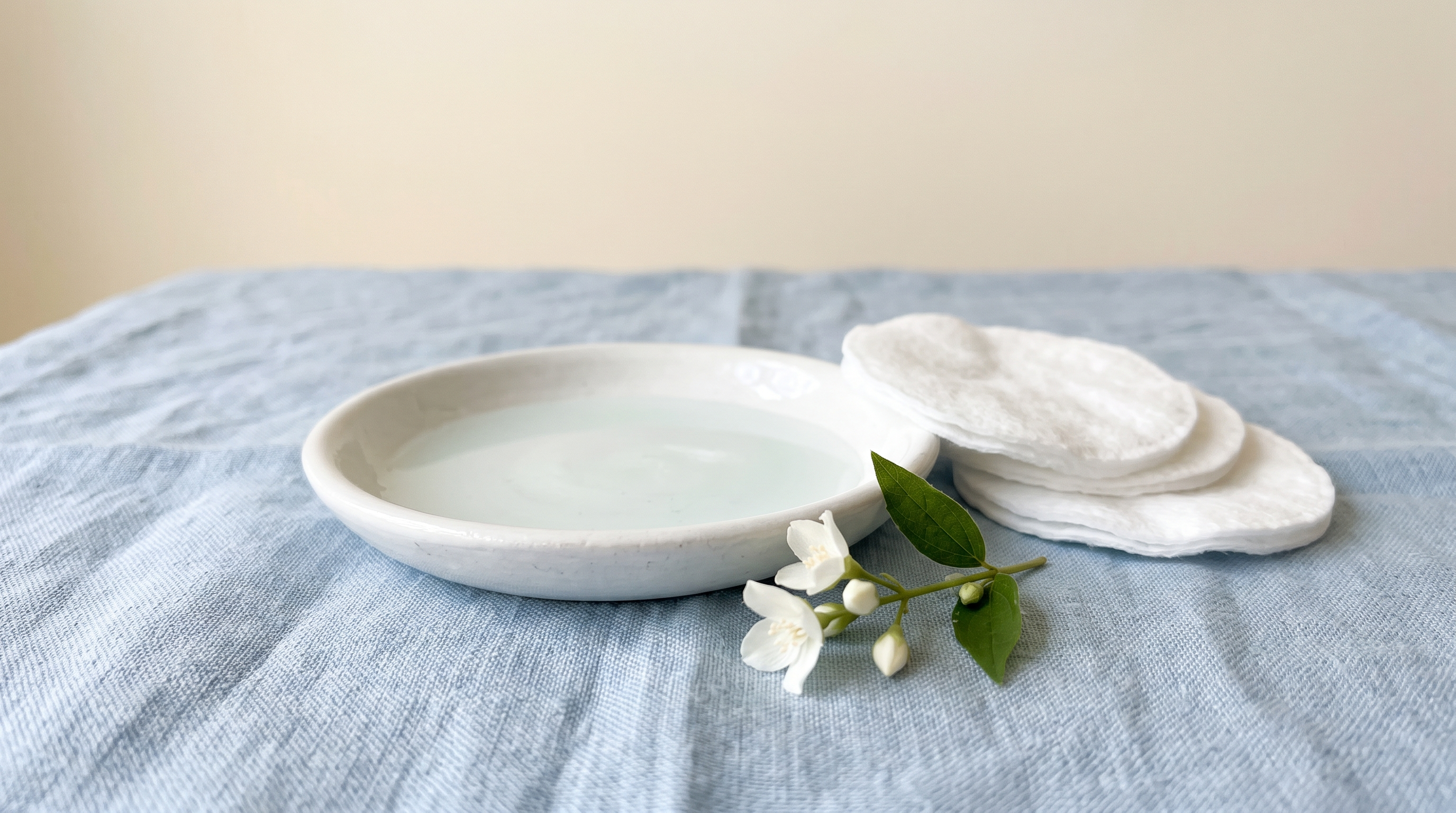
That is the problem a body polish is designed to solve. It sits between a scrub and a rich body cream: fine grains suspended in oil or butter that buff away the dull top layer and leave a soft, conditioned finish behind. Used well, it is one of the simplest ways to make body skin look smoother. Used too often or too hard, it can leave older skin drier than before. This guide explains the difference.
Body polish vs body scrub
The names are used loosely, but there is a real difference in how the two products are built.
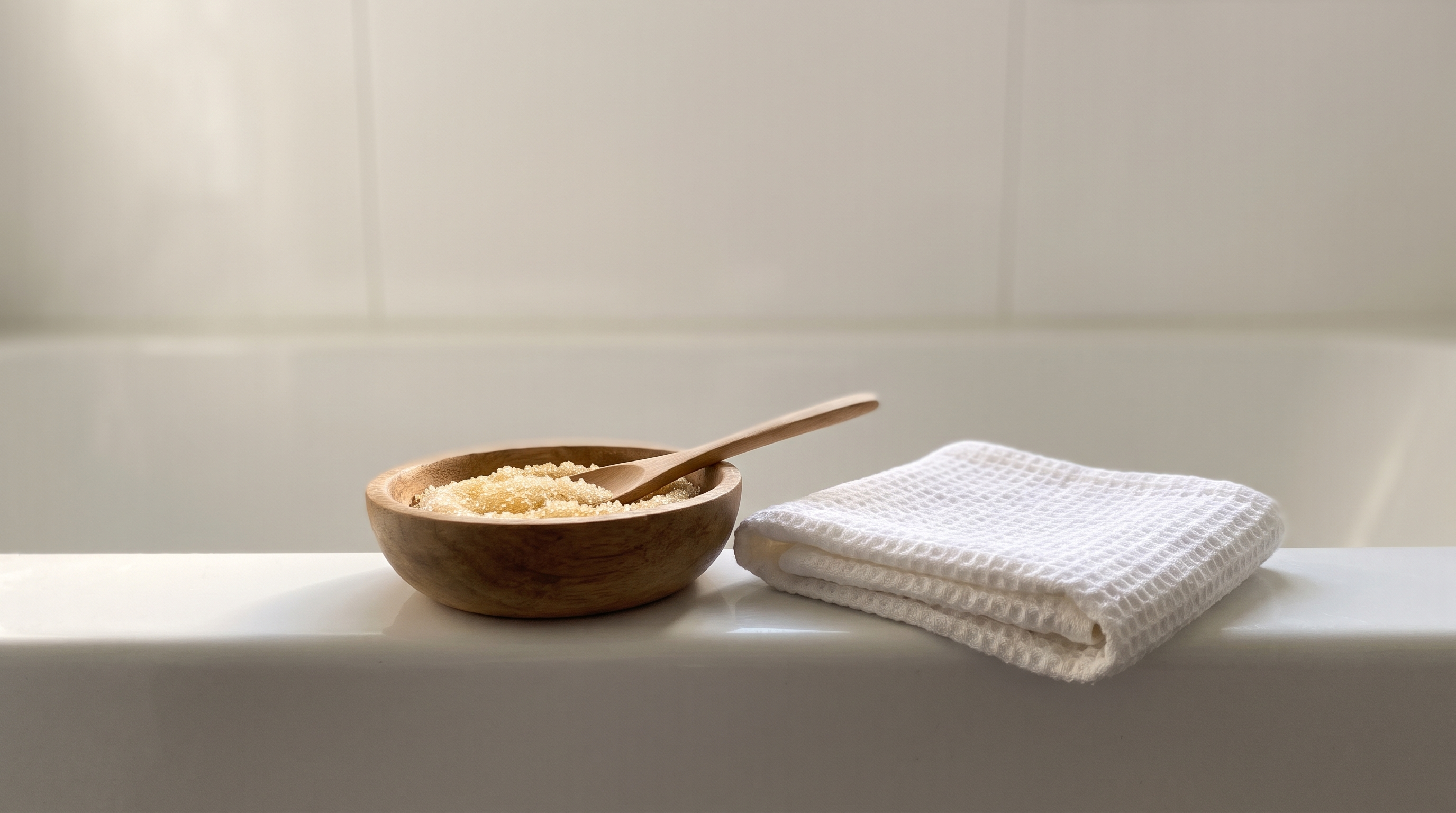
- A body scrub uses larger, coarser particles such as sea salt, crushed sugar or ground coffee, often in a simple oil base. It works fast and can feel aggressive. Our guide to the best body scrubs covers the main types.
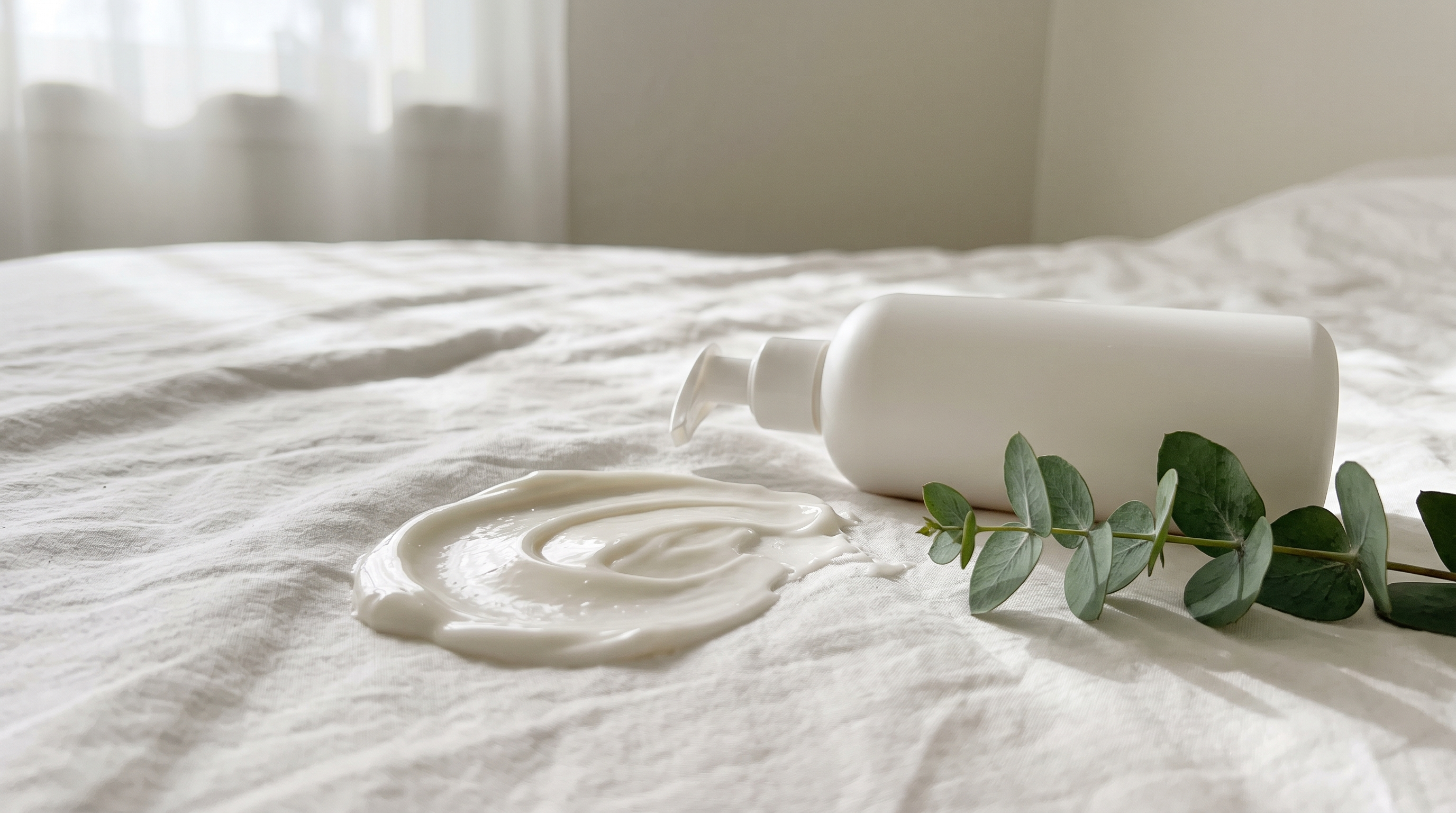
- A body polish uses finer grains, such as superfine sugar, finely milled salt, rice powder or rounded jojoba beads, in a creamier base of oils, butters or an emulsion. It buffs rather than scours, and much of the base stays on the skin after rinsing.
A useful test is the feel between your fingers. If the grains are sharp enough to notice individually, it is a scrub. If the product feels more like a gritty cream, it is a polish. For a closer look at one coarse option, see our article on salt scrub.
Why body skin gets rough with age
Your skin sheds its surface cells more than 10 days more slowly in later life than it did in your twenties, which is why dull, ashy patches stick around longer than they used to.
Your skin sheds its surface cells more than 10 days more slowly in later life than it did in your twenties, which is why dull, ashy patches stick around longer than they used to.
That figure comes from a classic study that tracked how long a harmless dye took to disappear from the skin surface. In young adults the outer layer turned over in about 20 days. In older adults it took more than 10 days longer, and the slowdown seemed to speed up after about age 50 [1].
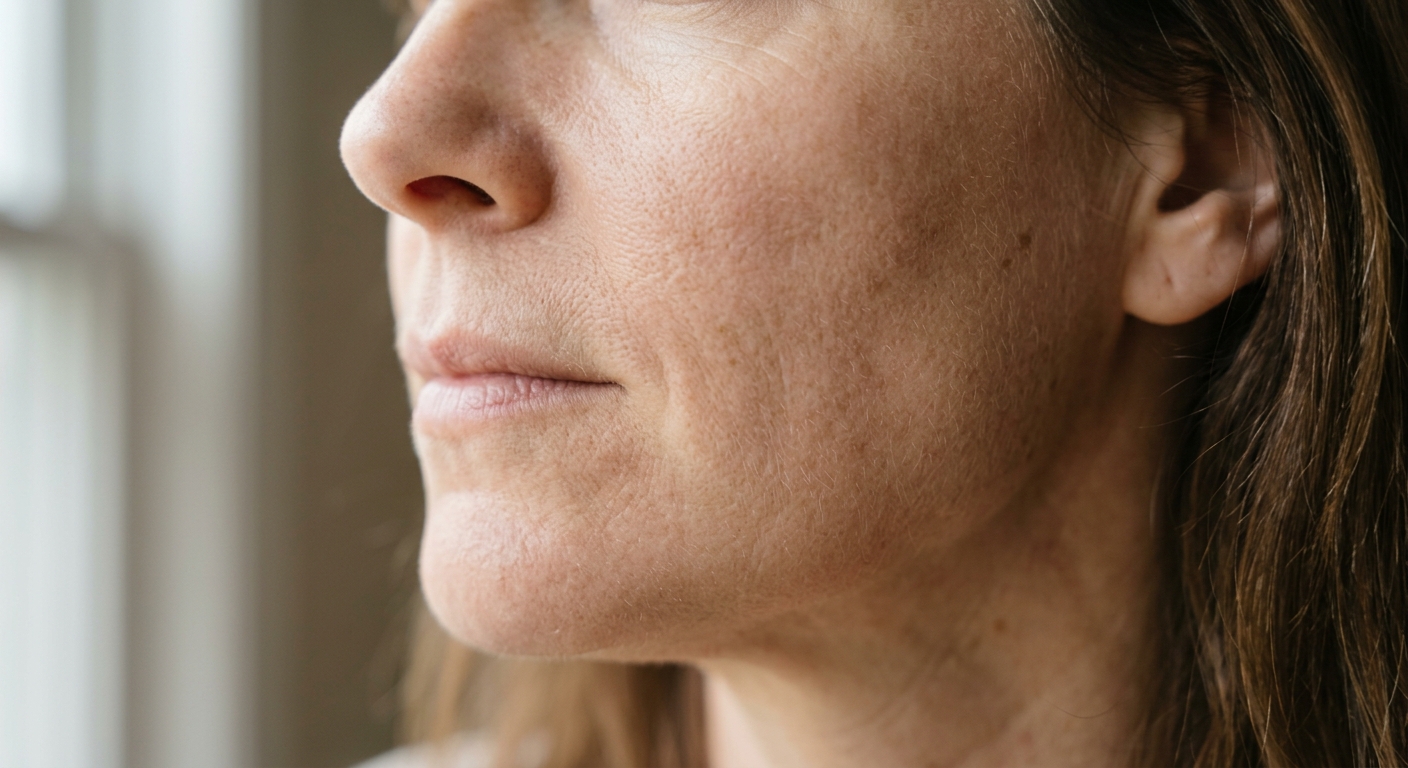
Dryness makes the buildup worse. Surface cells are held together by tiny protein rivets that have to be broken down by enzymes before the cells can fall away invisibly. Those enzymes need water to work. In dry skin they slow down, so cells come away in visible clumps and flakes instead of one at a time [2]. Rough, dry body skin is partly a shedding problem and partly a water problem, and the two feed each other.
The barrier also becomes more fragile. In one comparison, older skin looked normal at rest but broke down after fewer rounds of tape stripping than young skin and took several days longer to repair [3]. That matters a great deal when you start rubbing grains across it.
What buffing actually does to the barrier
There are no large trials of at-home body polishes, but research on microdermabrasion, a stronger professional version of the same idea, shows what abrasion does to the skin.
In a split-face study, both salt crystals and aluminum oxide crystals increased water loss through the skin for the first 24 hours. By day seven, water loss had dropped below the starting level, and skin hydration was higher than before [4]. A second study using a diamond-tipped device found the barrier had recovered within two days, and concluded that a weekly schedule gave the skin enough time to recover [5].
Your skin needs about 2 days to rebuild its barrier after a thorough buffing, so polishing once a week gives it far more recovery time than a daily scrub.
Your skin needs about 2 days to rebuild its barrier after a thorough buffing, so polishing once a week gives it far more recovery time than a daily scrub.
A home polish is much gentler than a clinic treatment, but the same pattern applies on a smaller scale: a brief dip in barrier function, followed by smoother, better-hydrated skin once it repairs. Older skin repairs more slowly, which is why restraint pays off.
Why the oil matters as much as the grain
The base of a body polish is not just a carrier. Plant oils and butters vary widely in what they do to the barrier. A review of topical plant oils found that some, such as sunflower seed oil, shea butter and jojoba, can support barrier repair and calm inflammation, while olive oil has been linked to barrier damage in some studies [6]. The base you leave on your skin after rinsing is effectively your first layer of moisturizer, so it is worth choosing well.
How to choose a body polish
Look for these features:
- Fine, rounded or dissolving grains. Superfine sugar dissolves as you work it, which makes it hard to overdo. Jojoba beads and rice powder are round and smooth. Avoid crushed nut shells or fruit pits, which have jagged edges.
- A nourishing base of shea butter, squalane or oils high in linoleic acid such as sunflower or safflower.
- No heavy fragrance if you have sensitive or reactive skin.
- No added acids if you already use an acid lotion or a retinoid on your body. Doubling up on exfoliation is the most common way people irritate their skin.
How to use a body polish
- Pick a time when your skin is damp and warm, toward the end of a lukewarm shower.
- Take a small amount, about a tablespoon for both legs.
- Massage in slow, light circles for 30 to 60 seconds per area, focusing on elbows, knees, shins and the backs of the arms. The grains should do the work; you should not need to press.
- Rinse with lukewarm water and pat dry gently, leaving a light film of the oil behind.
- Follow with a moisturizer within a few minutes. A body oil for dry skin or a rich cream locks in the softness.
Once a week is enough for most mature skin. Very rough elbows and knees can take a second session. Skip the polish on freshly shaved or waxed skin, sunburn, broken or itchy patches, and anywhere you have just started a retinoid.
What a polish can’t do for crepey skin
A body polish smooths the surface. It cannot thicken the skin underneath. The crinkled, tissue-paper texture on aging arms and legs comes from the loss of collagen and elastin in the dermis, the layer that grains never reach.
That deeper change responds to retinoids. In a trial of elderly adults with an average age of 87, a 0.4 percent retinol lotion applied to one arm for 24 weeks improved fine wrinkling and increased procollagen compared with the arm treated with a plain lotion [7]. Our guide to retinol for the body explains how to use it on arms, legs and chest. A polish fits in as the weekly prep step that helps everything you apply afterward spread evenly over smoother skin.
Pairing a polish with a gentler retinol
The challenge on body skin is that conventional retinol creams can sting and peel, especially on thin areas like the inner arms, and a freshly polished surface is more sensitive still.
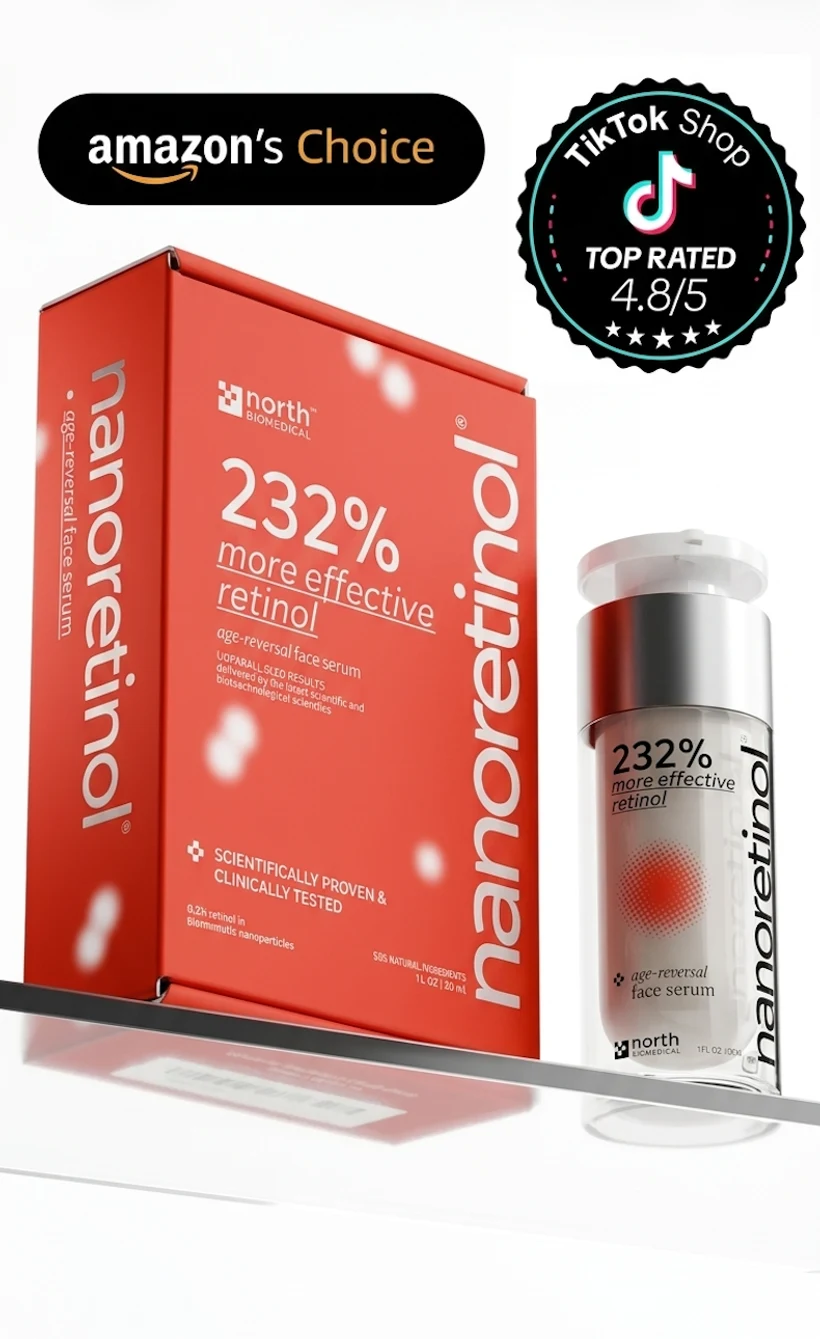
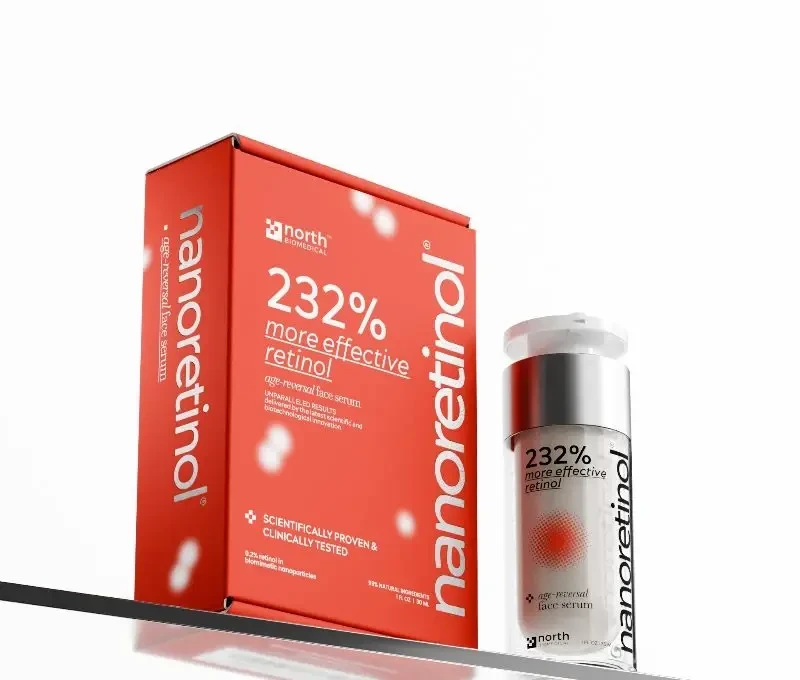
Nanoretinol is built to avoid that trade-off. It delivers 0.2% retinol inside biomimetic lipid nanoparticles in a light, water-based gel that absorbs completely, so the retinol reaches skin cells without first breaking down the barrier. In laboratory testing it was 232 percent more effective in collagen recovery and 73 percent more effective in elastin recovery than conventional retinol, and in clinical use over 56 days it produced a 61 percent increase in firmness and a 56 percent increase in elasticity [8]. Polish once a week, leave a day before applying retinol to the same area, use it at night, and keep exposed skin covered with sunscreen.
References
- Grove GL, Kligman AM. “Age-associated changes in human epidermal cell renewal.” Journal of Gerontology. 1983;38(2):137-142. doi:10.1093/geronj/38.2.137
- Harding CR, Watkinson A, Rawlings AV, Scott IR. “Dry skin, moisturization and corneodesmolysis.” International Journal of Cosmetic Science. 2000;22(1):21-52. doi:10.1046/j.1467-2494.2000.00001.x
- Ghadially R, Brown BE, Sequeira-Martin SM, Feingold KR, Elias PM. “The aged epidermal permeability barrier. Structural, functional, and lipid biochemical abnormalities in humans and a senescent murine model.” Journal of Clinical Investigation. 1995;95(5):2281-2290. doi:10.1172/JCI117919
- Rajan P, Grimes PE. “Skin barrier changes induced by aluminum oxide and sodium chloride microdermabrasion.” Dermatologic Surgery. 2002;28(5):390-393. doi:10.1046/j.1524-4725.2002.01239.x
- Kim HS, Lim SH, Song JY, et al. “Skin barrier function recovery after diamond microdermabrasion.” Journal of Dermatology. 2009;36(10):529-533. doi:10.1111/j.1346-8138.2009.00695.x
- Lin TK, Zhong L, Santiago JL. “Anti-Inflammatory and Skin Barrier Repair Effects of Topical Application of Some Plant Oils.” International Journal of Molecular Sciences. 2017;19(1):70. doi:10.3390/ijms19010070
- Kafi R, Kwak HS, Schumacher WE, et al. “Improvement of naturally aged skin with vitamin A (retinol).” Archives of Dermatology. 2007;143(5):606-612. doi:10.1001/archderm.143.5.606
- North Biomedical LLC. “Nanoretinol vs. Conventional Retinol: Efficacy in Collagen and Elastin Recovery.” Clinical Study Summary, 2024. Study summary