Dark Spot Correctors: Which Ingredients Actually Fade Hyperpigmentation
A dermatology-backed guide to the actives that genuinely lighten dark spots — and how long it really takes
The “dark spot corrector” is one of the best-selling categories in all of skincare, and also one of the most confusing. Every brand has one, the active ingredients are buried in tiny print, and the before-and-after photos look suspiciously perfect. If you have spent money on a corrector that did nothing, you are not alone — and the reason usually comes down to a mismatch between what the spot actually is and what the product was designed to fade.
So before you buy another jar, it helps to understand how a dark spot forms, which ingredients can genuinely reverse it, and how long real results take.
What a Dark Spot Actually Is
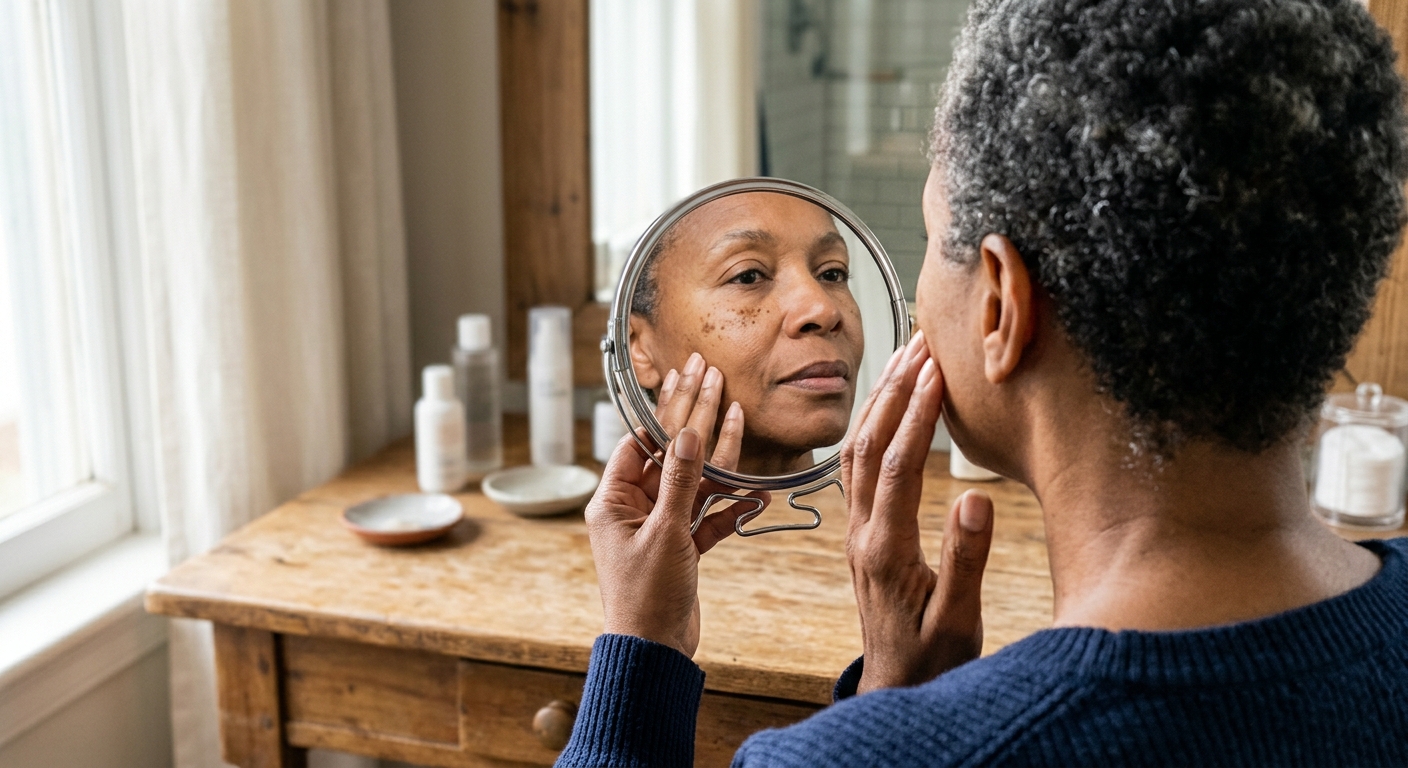
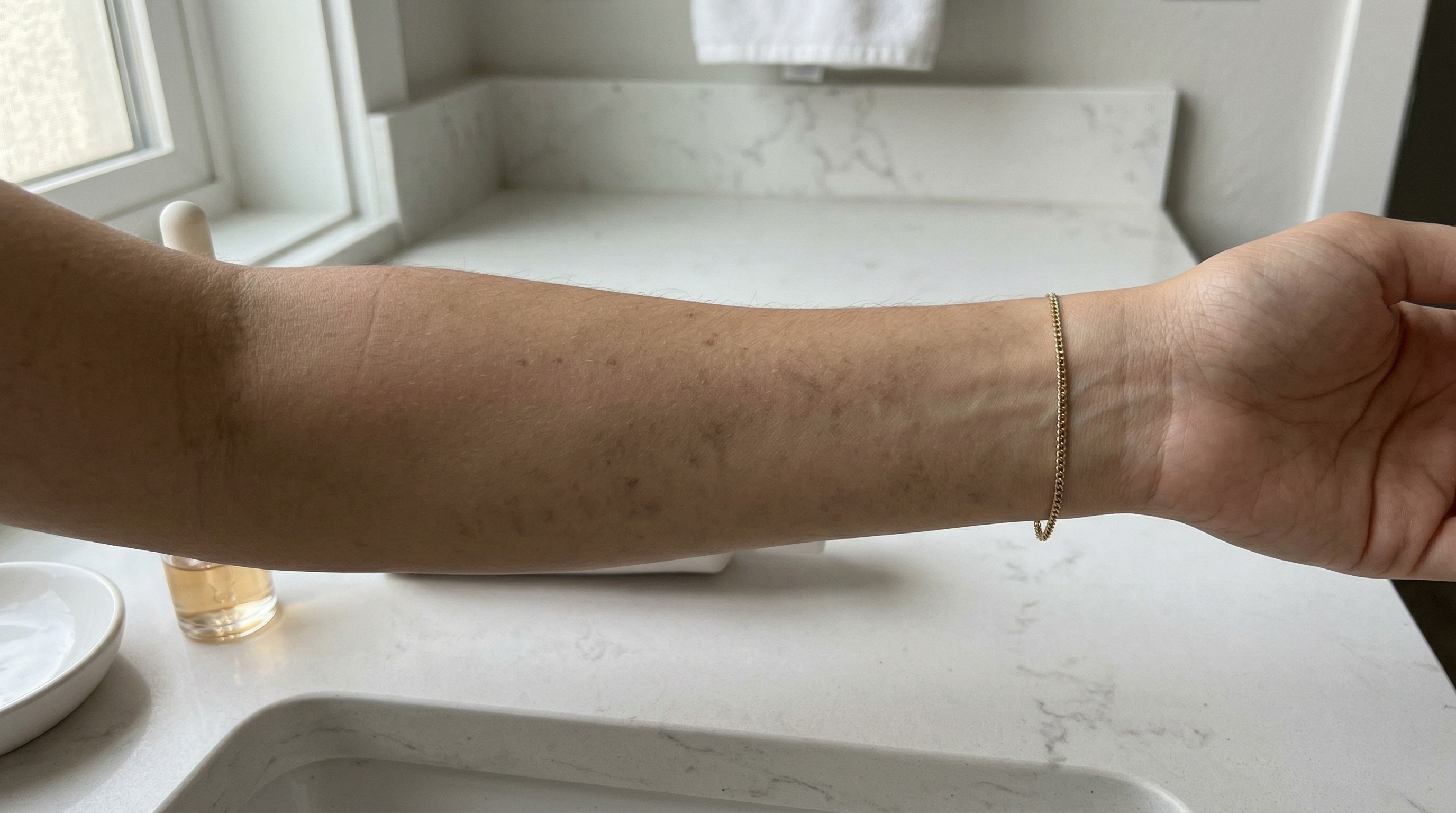
Almost every dark spot — whether you call it an age spot, a sun spot, melasma, or a post-acne mark — is the same thing at the cellular level: an overproduction of melanin, the brown pigment that gives skin its color. Specialized cells called melanocytes manufacture melanin and package it into little parcels called melanosomes, which they hand off to surrounding skin cells.
The rate-limiting step in this whole process is an enzyme called tyrosinase. Tyrosinase is the ignition switch for melanin synthesis, which is why the majority of fading ingredients are, in one way or another, tyrosinase inhibitors, from kojic acid to the gentle hydroquinone relative sold as an alpha arbutin serum or arbutin cream [1]. When sun exposure, hormones, or inflammation crank up tyrosinase activity, you get a localized surplus of pigment — a dark spot.
This matters because a corrector cannot bleach pigment away like paint remover. It works by slowing the pigment factory and helping your skin shed the melanin that has already surfaced. That is a biological process, and biology takes weeks.
It works by slowing the pigment factory and helping your skin shed the melanin that has already surfaced.
The Ingredients With Real Clinical Evidence
A genuinely effective dark spot corrector leads with one or more of these proven actives — not a long list of botanical extracts.
Retinoids speed up cell turnover, pushing pigment-laden cells toward the surface and out, while also interrupting the transfer of melanin. A landmark double-blind, vehicle-controlled trial in the New England Journal of Medicine showed topical tretinoin significantly lightened solar lentigines (liver spots), with results that held months after treatment [2]. Over-the-counter retinol works along the same pathway, which is why it appears in so many serious correctors. Our guide to retinol for dark spots goes deeper on dosing.
Vitamin C is an antioxidant that also directly inhibits tyrosinase. A 2023 systematic review found topical vitamin C provides meaningful benefit for melasma and photoaging, though it works gradually and pairs best with sunscreen [3]. It is a gentle, everyday-friendly option — see vitamin C serum benefits.
Niacinamide takes a different route: rather than blocking tyrosinase, it stops melanosomes from being delivered to skin cells. A classic study in the British Journal of Dermatology demonstrated that niacinamide reduces melanosome transfer and visibly lightens hyperpigmentation [4]. It is also exceptionally well tolerated, which is why it shows up in nearly every modern formula. Niacinamide and the tyrosinase inhibitors above belong to different mechanism classes, a distinction our guide to the best brightening serum uses to explain which products actually stack.
Tranexamic acid is the newer entrant, especially for stubborn melasma. A meta-analysis pooling multiple trials found tranexamic acid significantly reduced melasma severity scores [5]. Hydroquinone remains the dermatology gold standard for short courses, but a head-to-head randomized trial found 4% niacinamide delivered comparable melasma improvement with fewer side effects [6] — useful if your skin reacts to harsher agents. Azelaic acid and kojic acid, most often sold as a kojic acid serum, round out the tyrosinase-inhibitor toolkit. For a hydroquinone-free option with its own randomized trials, see our guide to cysteamine cream.
Expect 8 to 12 weeks of consistent nightly use before clear fading, and longer for deep dermal pigment like melasma.
Why Your Corrector Might Not Be Working
Three mistakes sabotage most people’s results.
Skipping sunscreen. This is the big one. Ultraviolet light is the single biggest trigger of melanin production, so using a corrector without daily SPF is like bailing water out of a boat while leaving the hole open. Every proven fading study above was conducted alongside sun protection — see sunscreen for hyperpigmentation.
Quitting too early. Melanin clears at the pace of skin cell turnover, which slows with age. Expect 8 to 12 weeks of consistent nightly use before clear fading, and longer for deep dermal pigment like melasma. The photos that promise two-week miracles are almost always lighting and makeup.
Over-treating and triggering inflammation. Aggressive acids and high-strength actives can irritate skin, and irritation itself can trigger more pigment — post-inflammatory hyperpigmentation — particularly in medium and deeper skin tones. Gentler, well-delivered actives often outperform harsh ones precisely because they avoid this trap. If your spots are concentrated on the face, our overview of dark spots on the face maps which type you are likely dealing with.
Where Retinol — and Nanoretinol — Fit In
Among all these ingredients, retinoids are unique because they do double duty: they fade existing pigment and rebuild the collagen that keeps aging skin firm and smooth. The catch is the one that derails so many people — conventional retinol is irritating, and as we just saw, irritation can backfire into more pigmentation.
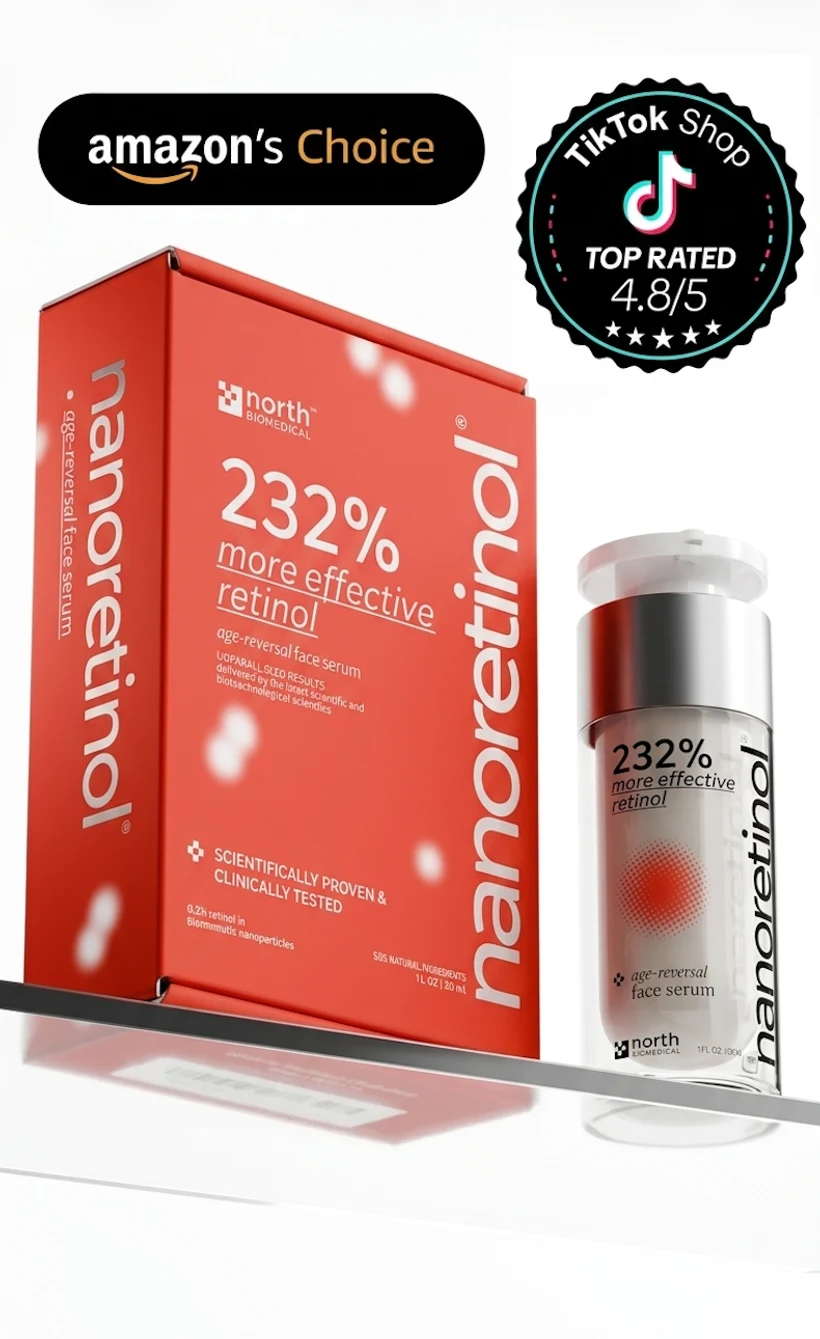
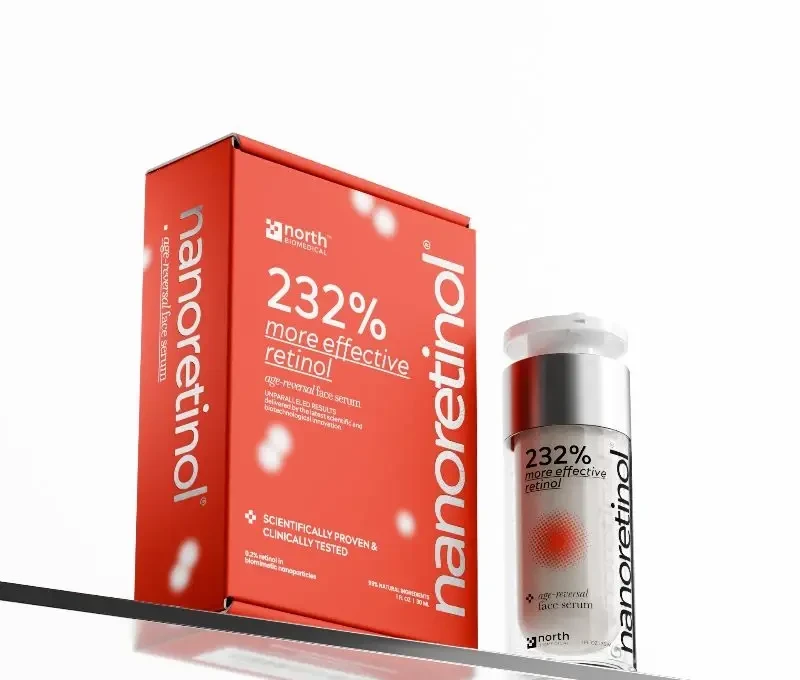
This is the problem Nanoretinol was engineered to solve. By encapsulating stabilized retinol inside biomimetic lipid nanoparticles, it carries the active through the skin barrier without the harsh chemicals and barrier disruption that conventional formulas rely on. The body recognizes the nanoparticles as “self” and lets them pass, so the retinol is delivered rather than forced — which is why Nanoretinol is significantly gentler on skin cells, with milder side effects than traditional retinol.
That gentleness is exactly what makes a retinol sustainable in a pigment routine: you get the cell-turnover and remodeling benefits of a retinoid without the inflammatory flare-ups that can deepen the very spots you are trying to fade. Used nightly alongside diligent sun protection, it becomes the engine of a corrector routine rather than a source of new problems.
A dark spot corrector is not a magic eraser, but the right combination of a proven active, patience, and daily sunscreen genuinely works. Match the ingredient to your spot, give it three months, protect your skin from the sun that started the problem — and ignore any label promising overnight perfection.
References
- Ni X, Luo X, Jiang X, Chen W, Bai R. “Small-Molecule Tyrosinase Inhibitors for Treatment of Hyperpigmentation.” Molecules. 2025;30(4):788. doi:10.3390/molecules30040788
- Rafal ES, Griffiths CE, Ditre CM, Finkel LJ, Hamilton TA, Ellis CN, Voorhees JJ. “Topical tretinoin (retinoic acid) treatment for liver spots associated with photodamage.” New England Journal of Medicine. 1992;326(6):368-374. doi:10.1056/NEJM199202063260603
- Correia G, Magina S. “Efficacy of topical vitamin C in melasma and photoaging: a systematic review.” Journal of Cosmetic Dermatology. 2023;22(7):1938-1945. doi:10.1111/jocd.15748
- Hakozaki T, Minwalla L, Zhuang J, et al. “The effect of niacinamide on reducing cutaneous pigmentation and suppression of melanosome transfer.” British Journal of Dermatology. 2002;147(1):20-31. doi:10.1046/j.1365-2133.2002.04834.x
- Zhang L, Tan WQ, Fang QQ, et al. “Tranexamic acid for adults with melasma: a systematic review and meta-analysis.” BioMed Research International. 2018;2018:1683414. doi:10.1155/2018/1683414
- Navarrete-Solís J, Castanedo-Cázares JP, Torres-Álvarez B, et al. “A double-blind, randomized clinical trial of niacinamide 4% versus hydroquinone 4% in the treatment of melasma.” Dermatology Research and Practice. 2011;2011:379173. doi:10.1155/2011/379173