Exosomes for Skin: What They Are and Why They're Changing Anti-Aging Science
The nano-sized cellular messengers that are emerging as anti-aging's most compelling new frontier — and how they connect to the technology already in advanced skincare
Every few years, a word migrates from research papers into Vogue. In 2026, that word is exosomes. Featured prominently in Forbes, named a top skincare trend by BeautyIndependent, and increasingly visible in medical spas and advanced skincare lines, exosomes have made the leap from laboratory curiosity to consumer conversation with unusual speed.
The science behind them is genuinely compelling. Understanding what exosomes actually are — as opposed to what marketing copy says they are — requires a brief tour through cell biology. But once you understand the mechanism, the enthusiasm becomes more legible.
What Exosomes Are
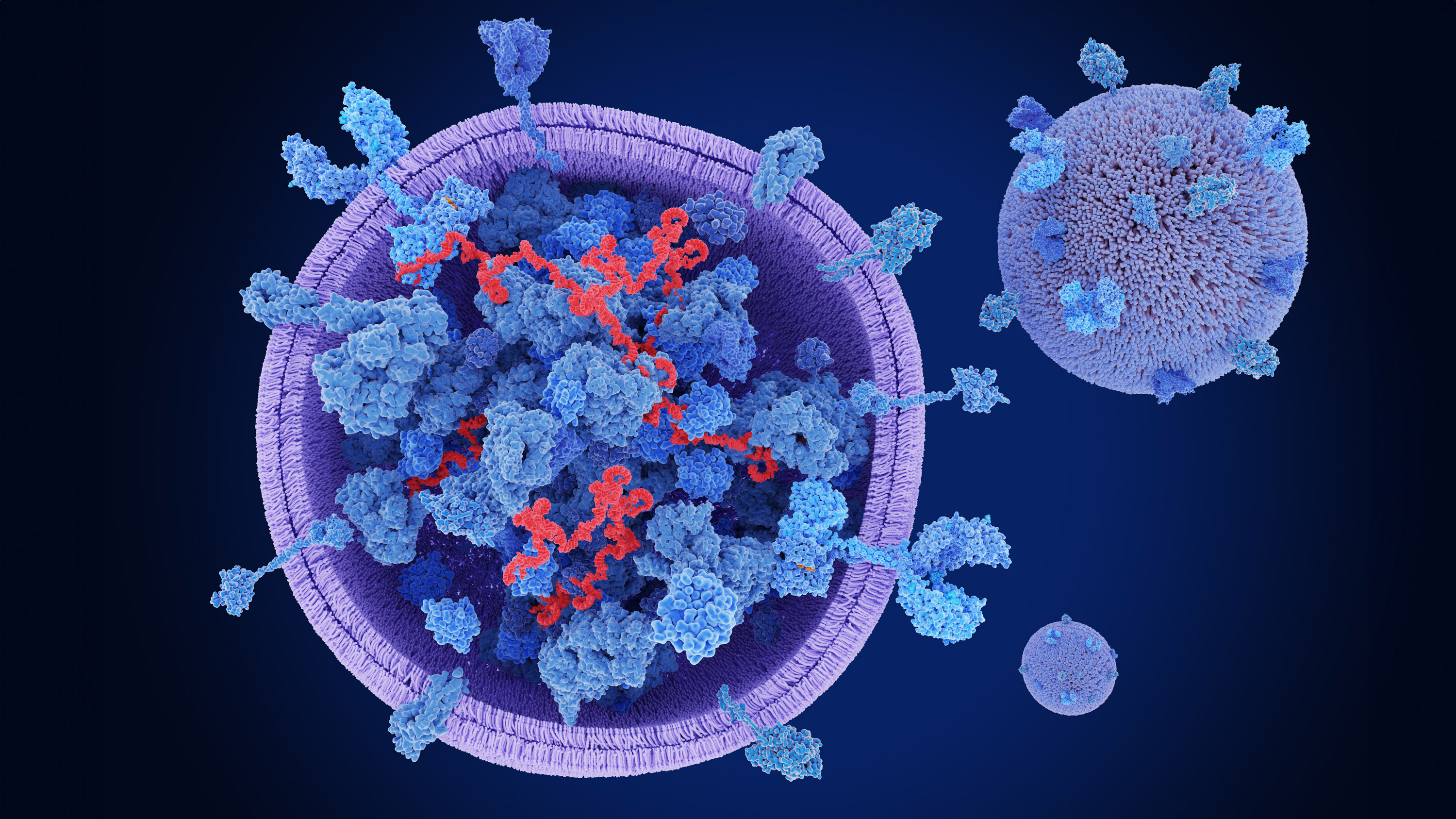
Every living cell communicates. Not through nerves or blood vessels, but through a constant stream of nano-sized parcels released into the extracellular space — packages that carry instructions, proteins, genetic material, and signaling molecules to neighboring and distant cells. Exosomes are one class of these parcels [1].
Specifically, exosomes are extracellular vesicles: tiny membrane-bound bubbles, typically 30 to 150 nanometers in diameter, generated by essentially every cell type in the body. They originate from the endosomal system — an internal sorting network inside cells — forming as intraluminal vesicles within multivesicular bodies before being released when those bodies fuse with the outer cell membrane [1].
Their structure is elegant. A lipid bilayer membrane — the same basic architecture as a cell membrane — encloses a payload of proteins, messenger RNA, microRNA, and bioactive molecules that reflect the state and function of the parent cell. When an exosome docks with a recipient cell (through direct membrane fusion, receptor binding, or endocytosis), it delivers that payload and triggers downstream responses in the recipient [1].
In healthy, young skin, fibroblasts — the cells responsible for producing collagen and elastin — release exosomes that signal for continued collagen synthesis, regulate inflammation, and coordinate tissue repair. Stem cells release exosomes that promote cellular proliferation and counteract senescence (cellular aging). The skin’s homeostasis is, in significant part, a product of this constant exosomal communication.
The problem: exosome signaling declines with age. As cells accumulate oxidative damage and enter senescence, the quality and quantity of their exosome output shifts — fewer regenerative signals, more inflammatory ones. This shift is increasingly understood as a molecular driver of visible skin aging, not merely a symptom of it [2].
What Clinical Research Shows
The most clinically studied exosome applications in dermatology involve stem cell-derived and platelet-derived exosomes applied topically or in combination with procedures like microneedling [3].
Understanding what exosomes actually are — as opposed to what marketing copy says they are — requires a brief tour through cell biology.
A comparative study examining 28 participants found that microneedling combined with human adipose stem cell-derived exosomes produced significantly greater improvements in collagen content, wrinkle depth, skin elasticity, hydration, and dyspigmentation at 12 weeks compared to microneedling alone [1]. A prospective trial in 56 participants using topically applied platelet-derived exosome serum demonstrated measurable improvement in facial photodamage, reduced redness, and reduced melanin production over six weeks [1, 2].
A 2025 systematic review of 21 studies found that exosome-based therapies consistently improved skin elasticity, reduced wrinkle depth, enhanced hydration, and modulated pigmentation — with molecular evidence showing increased collagen and elastin synthesis, reduced oxidative stress, and suppression of matrix metalloproteinases (the enzymes that break down structural proteins) [3]. An exploratory prospective trial using topically applied platelet-derived exosomes specifically demonstrated reduced senescence signaling in human skin — a key driver of cellular aging at the tissue level [4].
The safety profile observed across studies is broadly favorable, with minimal adverse events and high patient satisfaction. This aligns with what one would expect from an endogenous molecule: the immune system’s recognition machinery does not flag exosomes as foreign, reducing the risk of inflammatory response.
Clinical evidence remains early-stage compared to decades of data behind retinoids or vitamin C. The field is young, methodologies are not yet standardized, and large randomized controlled trials are still needed. But the mechanistic rationale is sound, and the preliminary data is consistent [5].
What Exosomes Can and Can’t Do (Yet)
Professional exosome treatments — concentrated serums applied with microneedling or injection-adjacent devices in medical spa settings — have the strongest evidence and highest concentrations of active exosomes. These fall outside the scope of typical skincare routines.
Topical over-the-counter exosome products present a different challenge: stability. Exosomes are biological structures that degrade with heat, light, and improper storage. Product quality varies widely, with limited regulatory oversight of what constitutes a meaningful concentration or a properly preserved preparation [5]. This is not a reason to dismiss topical exosome products categorically, but it is a reason to apply the same scrutiny you would to any biological claim.
The honest summary: professionally administered exosome treatments have early but meaningful evidence behind them. Consumer topical products are highly variable, and the evidence base for at-home formats specifically is thin. This gap between clinical and consumer application is common in dermatology — it existed for retinol for years before delivery technology improved.
Conventional topical ingredients — retinol, vitamin C, peptides — face a fundamental challenge.
The Nanotechnology Connection
Here is where the science becomes particularly interesting for anyone who has been following advancements in skincare delivery systems.
Exosomes and lipid nanoparticles are not the same thing. But they operate on the same fundamental principle: both are nanoscale, lipid-membrane-enclosed carriers that bypass the skin barrier not by breaking it down, but by being recognized as compatible at the molecular level [1].
Conventional topical ingredients — retinol, vitamin C, peptides — face a fundamental challenge. The skin’s outermost layer, the stratum corneum, is a lipid-rich barrier designed to keep the outside world out. It is very good at its job. Molecules that cannot cross it either accumulate ineffectively near the surface or require harsh penetration enhancers that compromise the barrier in the process.
Lipid nanoparticle encapsulation solves this differently. By packaging active ingredients inside nanoscale lipid carriers whose outer membrane is structurally similar to the skin’s own lipid matrix, the carrier is recognized as “self” rather than foreign. It passes through the epithelial barrier without disrupting it and delivers its cargo to deeper skin layers intact.
This is the same technology platform that drives Nanoretinol® — retinol encapsulated in biomimetic lipid nanoparticles that penetrate to target cells rather than pooling at the surface [6]. The same nanotechnology used in novel cancer therapies for targeted drug delivery is being applied to skincare actives. The result: 232% greater efficacy in collagen recovery and 73% greater efficacy in elastin recovery compared to conventional retinol — not because the active ingredient is different, but because it actually reaches the cells where it needs to work.
Exosome research is, in a sense, studying the most sophisticated version of this same principle: the body’s own lipid-bilayer delivery system, refined over millions of years of evolution, optimized to signal between cells. The scientific community’s interest in exosomes reflects a broader recognition that how active molecules reach their target is often more important than the molecule itself.
Looking at the Future
The trajectory of exosome research is one of the more genuinely exciting developments in anti-aging science, precisely because it targets aging at a systems level rather than addressing individual symptoms.
Current research is exploring exosomes derived from diverse sources — adipose stem cells, platelets, plant extracts, and milk — each with distinct signaling profiles and potential applications [2]. Next-generation work is investigating how to engineer exosome cargo: loading exosomes with specific mRNAs, growth factors, or anti-inflammatory compounds before delivery, turning them into programmable biological packages rather than relying solely on their natural payload.
For skin aging after 40, where the underlying biology involves declining cell signaling as much as structural loss, a therapy that directly addresses the communication deficit — rather than simply adding more collagen precursors from outside — represents a genuinely different approach.
The most immediate practical applications are in professional settings — medical spas, dermatology practices — where product sourcing, preparation, and delivery can be controlled. Consumer applications are following, and delivery technology is improving. What encapsulated retinol did for one of dermatology’s most proven actives — dramatically improving delivery efficiency without increasing concentration or irritation — the same class of nanotechnology may ultimately do for exosomes in consumer formats.
Where Exosomes Fit in the Skincare Conversation
It is worth noting what exosomes are not: a replacement for the actives with four decades of evidence behind them. Retinoids remain the most evidence-backed anti-aging intervention in skincare. Broad-spectrum SPF remains the most impactful preventive measure available. These foundations don’t change because a new category is emerging.
What exosomes represent is a potential new layer of intervention — addressing the signaling environment of aging skin in a way that existing actives don’t directly target. As a complement to a well-designed anti-aging routine rather than a substitute for proven ingredients, the science-informed case for paying attention to this category is real.
Whether you encounter exosomes in a medical spa treatment, a high-end serum, or simply in understanding where the science of cellular aging is headed, the concept is worth understanding: your cells have been communicating through nanosized lipid vesicles since before you were born. Aging partially disrupts that conversation. And the emerging science of skin rejuvenation is increasingly focused on restoring it.
References
- Bai G, Truong TM, Pathak GN, Benoit L, Rao B. “Clinical Applications of Exosomes in Cosmetic Dermatology.” Skin Health Dis. 2024;4(6):e348. doi:10.1002/ski2.348
- Liang C, Yi Y, Li J, et al. “Unveiling Exosomes in Combating Skin Aging: Insights into Resources, Mechanisms and Challenges.” Stem Cell Res Ther. 2025;16:474. doi:10.1186/s13287-025-04620-y
- Domaszewska-Szostek A, Krzyżanowska M, Polak A, Puzianowska-Kuźnicka M. “Effectiveness of Extracellular Vesicle Application in Skin Aging Treatment and Regeneration: Do We Have Enough Evidence from Clinical Trials?” Int J Mol Sci. 2025;26:2354. doi:10.3390/ijms26052354
- Wyles SP, Yu GT, Gold M, Behfar A. “Topical Platelet Exosomes Reduce Senescence Signaling in Human Skin: An Exploratory Prospective Trial.” Dermatol Surg. 2024;50(11S):S160–S165. doi:10.1097/DSS.0000000000004426
- Haykal D, Wyles S, Garibyan L, Cartier H, Gold M. “Exosomes in Cosmetic Dermatology: A Review of Benefits and Challenges.” J Drugs Dermatol. 2025;24(1):12–18. doi:10.36849/JDD.8872
- North Biomedical LLC. “Nanoretinol® vs. Conventional Retinol: Efficacy in Collagen and Elastin Recovery.” Clinical Study Summary, 2024. northbiomedical.com/documents/Nanoretinol-Study_Summary.pdf