Konjac Sponge: Benefits, How to Use One and Whether It Beats a Brush
Made from a starchy Asian root, the konjac sponge is the gentlest cleansing tool on the shelf. Here is what it does, what the charcoal and clay versions add, and how to keep one clean
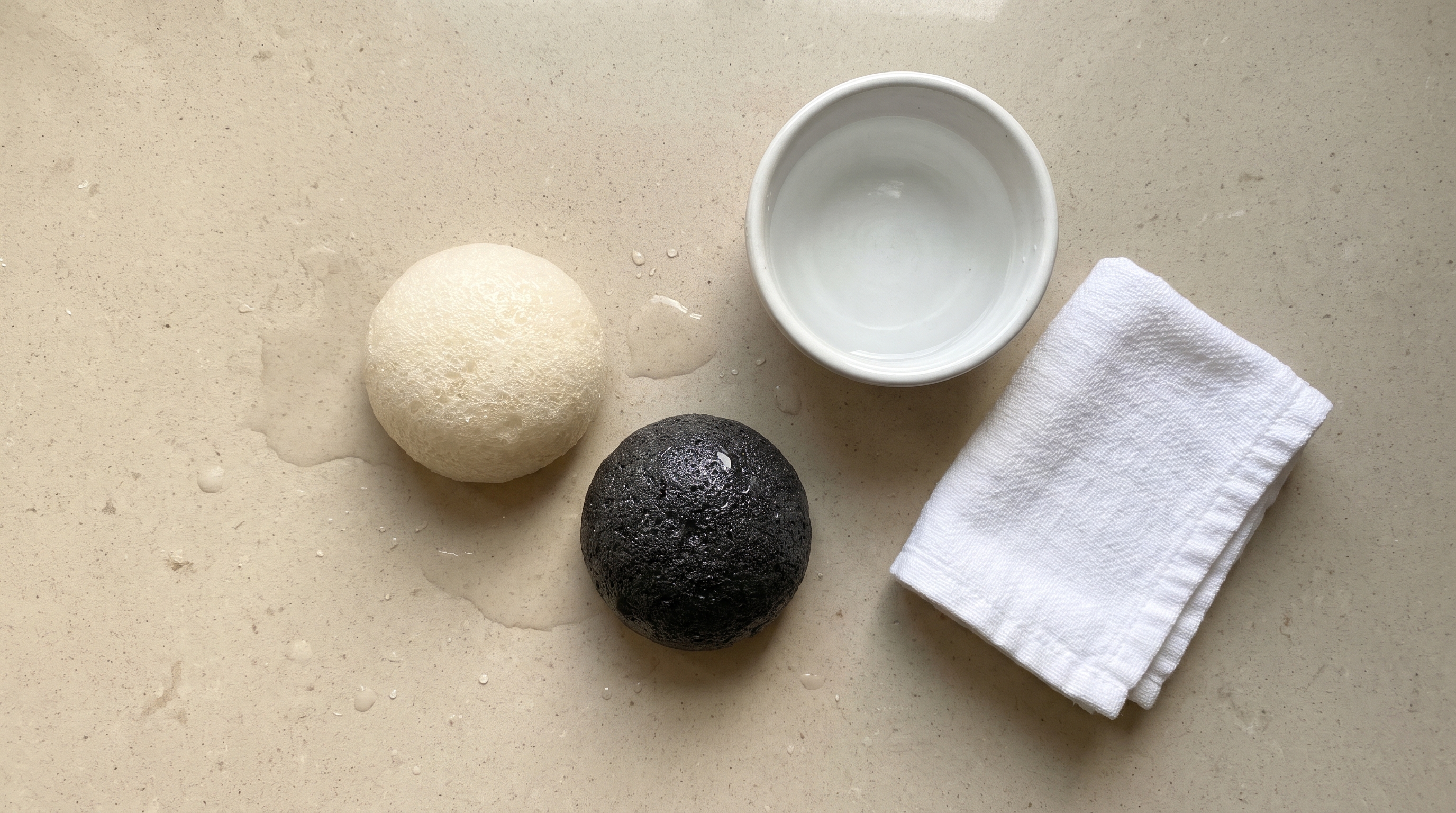
A konjac sponge looks unpromising out of the packet. It is a hard, shrunken disc that feels like pumice. Soak it in warm water for a minute and it turns into something closer to a jellyfish: soft, bouncy and slippery, with a faint grip on the skin. Massage it over a cleansed face and skin comes away smooth, without the sting of a scrub.
That gentleness is the whole appeal, and also the limit. This guide explains what a konjac sponge is made of, what the research does and does not say, how it compares with other tools, and how to use and replace one.
What konjac is
Konjac is a plant, Amorphophallus konjac, grown across East and Southeast Asia for its large underground corm. The corm is rich in glucomannan, a long, water-loving fibre that swells into a thick gel. It is the same fibre used in konjac noodles and in some diet supplements. Researchers are interested in it because it is non-toxic, biodegradable and highly absorbent, and it has been studied for everything from blood sugar control to wound dressings [1].
A konjac sponge is that fibre set into a porous mesh and dried. When wet, the mesh holds a surprising amount of water, which is what makes it feel so soft against skin.
What the research says
There are no published clinical trials of konjac sponges on the face. That is worth saying plainly, because packaging often implies otherwise.
What does exist is lab work on glucomannan itself. In one laboratory study, broken-down konjac glucomannan helped probiotic bacteria hold back the growth of the main acne-linked skin bacterium [2]. That is interesting for future skincare ingredients, but it was done in a dish with processed glucomannan and live probiotics. It does not show that rubbing a sponge on your face changes acne.
So the honest case for konjac rests on its texture. It gives a mild, mechanical polish that lifts loose flakes and spreads cleanser evenly, with very little friction.
Your skin needs only 30 to 60 seconds of light circles with a soaked konjac sponge, far less time than the scrubbing most people give a washcloth.
Your skin needs only 30 to 60 seconds of light circles with a soaked konjac sponge, far less time than the scrubbing most people give a washcloth.
How gentle is it?
Every cleansing step removes a little of the skin’s own oils and proteins. The more aggressive the cleanser and the more friction you add, the more barrier disruption you get, which shows up as tightness, dryness and redness [3]. That is why harsh soaps are being replaced by milder synthetic cleansers, and why tools matter.
Roughly, from gentlest to firmest:
- Fingertips alone.
- Konjac sponge, fully soaked.
- Soft muslin or microfibre cloth.
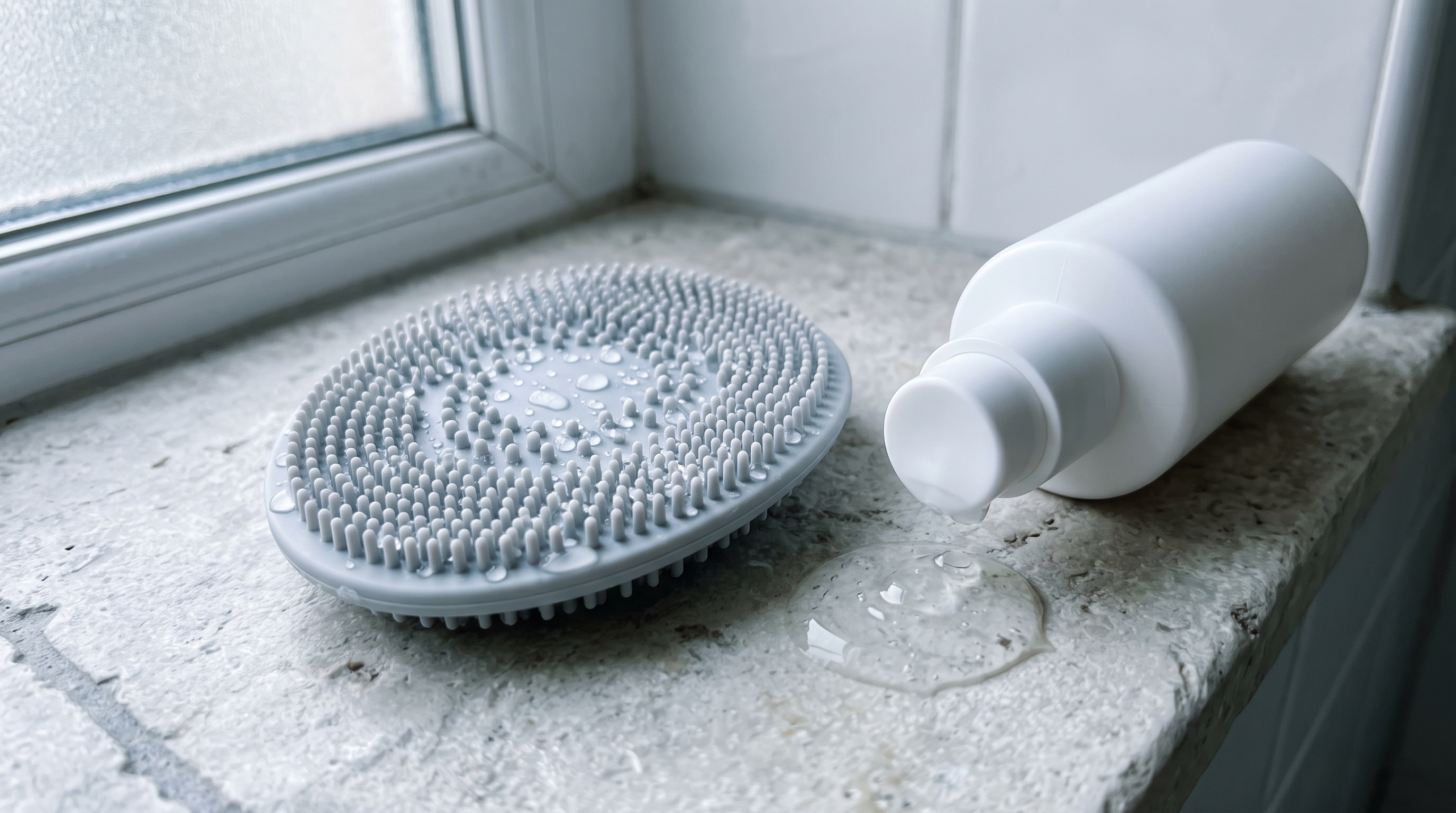
- Silicone cleansing brush.
- Bristle or sonic brush, or a gritty scrub.
A konjac sponge sits close to fingertips, but with a slightly better ability to lift dry flakes from around the nose and chin. For a fuller comparison of electric options, see our guide to the face cleansing brush.
Plain, charcoal, clay or green tea?
Konjac sponges come in a rainbow of colours, each with a different claimed benefit.
- Plain (white or cream). The gentlest. Best for dry, sensitive or mature skin.
- Charcoal (black). Sold for oily skin and pores. Activated charcoal adsorbs oil, but the small amount dried into a sponge is unlikely to add much beyond what the sponge already does.
- Clay (red, pink or green). Similar idea to charcoal, marketed for oil control or calming.
- Green tea, turmeric or other botanicals. Mostly change the colour and the story on the box.
None of the add-ins has been tested in a sponge. Choose by texture and price, not by colour.
Your skin is better off with a new sponge every 4 to 6 weeks than with an old one that has turned into a damp home for bacteria.
How to use a konjac sponge
- Soak it in warm water until fully soft, usually one to two minutes for a dry sponge.
- Squeeze, do not wring. Press out the excess water between your palms. Twisting tears the fibres.
- Add a little cleanser if you like, or use it with water alone in the morning.
- Massage in light circles for 30 to 60 seconds. Let the sponge glide; do not press.
- Rinse and finish with your usual serum and moisturizer.
You can use one daily if your skin likes it. If you also use acids or a retinoid, the sponge counts as mild exfoliation, so start with a few times a week. Our guide to how often to exfoliate your face explains how to balance exfoliating steps.
Keeping it clean
This is the part most people get wrong. A konjac sponge is a damp, porous, fibrous material that traps dead skin cells, which makes it a good home for bacteria.
No one has studied bacteria on konjac sponges, but similar products give a clear warning. Loofah sponges, another natural exfoliating tool, encouraged the growth of several potentially harmful bacteria, and one case of skin infection was traced to a contaminated loofah [4]. Used kitchen sponges, another porous material that stays damp, carried dense bacterial colonies when scientists examined them under the microscope [5].
To keep a konjac sponge as clean as possible:
- Rinse it thoroughly after every use, until the water runs clear.
- Squeeze it out and hang it on its string somewhere airy, not in a damp shower caddy.
- Never share it.
- Once a week, soak it briefly in just-boiled water, or follow the maker’s cleaning instructions.
Your skin is better off with a new sponge every 4 to 6 weeks than with an old one that has turned into a damp home for bacteria.
Replace it sooner if it smells, discolours, or starts to tear or crumble.
Using it with retinol
Many people first buy a konjac sponge to deal with retinol flakes. That is a sensible use, as long as it stays gentle. On the evening you apply retinol, use the sponge with plain water or a mild cleanser, pat dry, and wait until your skin is fully dry before applying the retinoid.
Skip the sponge on any area that is red, raw or stinging. If your skin is actively irritated, fingertips are better. For more gentle options, see our guide to the gentle exfoliator for sensitive skin. If you remove sunscreen and makeup in the evening, a sponge also works well as the second step after an oil cleanser, as explained in our guide to double cleansing.
A soft start, not the whole routine
A konjac sponge is one of the kindest ways to cleanse. It suits dry, sensitive and mature skin, lifts flakes without scratching, and makes cleansing feel like a small ritual. It does not change how skin renews itself or rebuild the collagen that keeps texture smooth over time.
That deeper change is retinol’s job; in one trial, retinol increased collagen production in naturally aged skin over 24 weeks [6]. Nanoretinol carries 0.2% retinol in biomimetic lipid nanoparticles, in a water-based gel designed to be gentler than conventional retinol. In North Biomedical’s clinical study, it was 232% more effective in collagen recovery than conventional retinol and produced a 56% increase in elasticity after 56 days, with milder side effects [7]. Use the sponge to start the evening, and let Nanoretinol do the slow, structural work overnight.
References
- Behera SS, Ray RC. “Konjac Glucomannan, a Promising Polysaccharide of Amorphophallus konjac K. Koch in Health Care.” International Journal of Biological Macromolecules. 2016;92:942-956. doi:10.1016/j.ijbiomac.2016.07.098
- Al-Ghazzewi FH, Tester RF. “Effect of Konjac Glucomannan Hydrolysates and Probiotics on the Growth of the Skin Bacterium Propionibacterium acnes in Vitro.” International Journal of Cosmetic Science. 2010;32(2):139-142. doi:10.1111/j.1468-2494.2009.00555.x
- Draelos ZD. “The Science Behind Skin Care: Cleansers.” Journal of Cosmetic Dermatology. 2018;17(1):8-14. doi:10.1111/jocd.12469
- Bottone EJ, Perez AA 2nd, Oeser JL. “Loofah Sponges as Reservoirs and Vehicles in the Transmission of Potentially Pathogenic Bacterial Species to Human Skin.” Journal of Clinical Microbiology. 1994;32(2):469-472. doi:10.1128/jcm.32.2.469-472.1994
- Cardinale M, Kaiser D, Lueders T, Schnell S, Egert M. “Microbiome Analysis and Confocal Microscopy of Used Kitchen Sponges Reveal Massive Colonization by Acinetobacter, Moraxella and Chryseobacterium Species.” Scientific Reports. 2017;7(1):5791. doi:10.1038/s41598-017-06055-9
- Kafi R, Kwak HS, Schumacher WE, Cho S, Hanft VN, Hamilton TA, et al. “Improvement of Naturally Aged Skin with Vitamin A (Retinol).” Archives of Dermatology. 2007;143(5):606-612. doi:10.1001/archderm.143.5.606
- North Biomedical LLC. “Nanoretinol vs. Conventional Retinol: Efficacy in Collagen and Elastin Recovery.” Clinical Study Summary, 2024. Study summary