Facial Massage Oil: How to Choose One That Glides Without Clogging
A good facial massage oil gives fingertips and gua sha stones enough slip without leaving pores congested. Which oils work best, which to skip, and how to plan massage around retinol
Every facial massage needs slip. With too little, fingertips and stones drag across the skin and tug at it, which is the opposite of what you want around a jawline or under the eyes. With too much, your hands skid around, the session gets messy, and you may wake up to congested pores.
The oil you use for massage has a different job from the face oil you leave on overnight. This guide explains what makes a good massage oil, which oils suit which skin types, what the evidence says about massage itself, and how to fit massage into a routine that also includes retinol.
Slip vs absorption
A face oil you leave on is chosen to sink in and seal moisture into the skin. A massage oil is chosen to stay on the surface long enough for the tool or your fingertips to glide for the whole session.
That makes the speed of absorption the key difference. Light, fast-absorbing oils feel lovely as a final step but start to drag before a massage is finished. Very heavy oils glide for a long time but leave a thick film that is hard to remove. The best massage oils sit in the middle: slick enough to last several minutes, light enough to wash off cleanly.
Your skin needs about 5 minutes of steady glide for a gua sha session, far longer than a fast-absorbing serum oil will stay on the surface.
Jojoba oil is one of the most reliable choices. Strictly speaking it is a liquid wax rather than a true oil, made of long-chain wax esters that resemble those in the skin’s own sebum, and it is very stable on the shelf [1]. It spreads evenly, keeps its slip and rarely leaves a greasy residue. Our guide to jojoba oil for skin covers it in more detail.
Your skin barrier fared worse after 4 weeks of olive oil than after the same 4 weeks of sunflower oil in a simple forearm comparison.
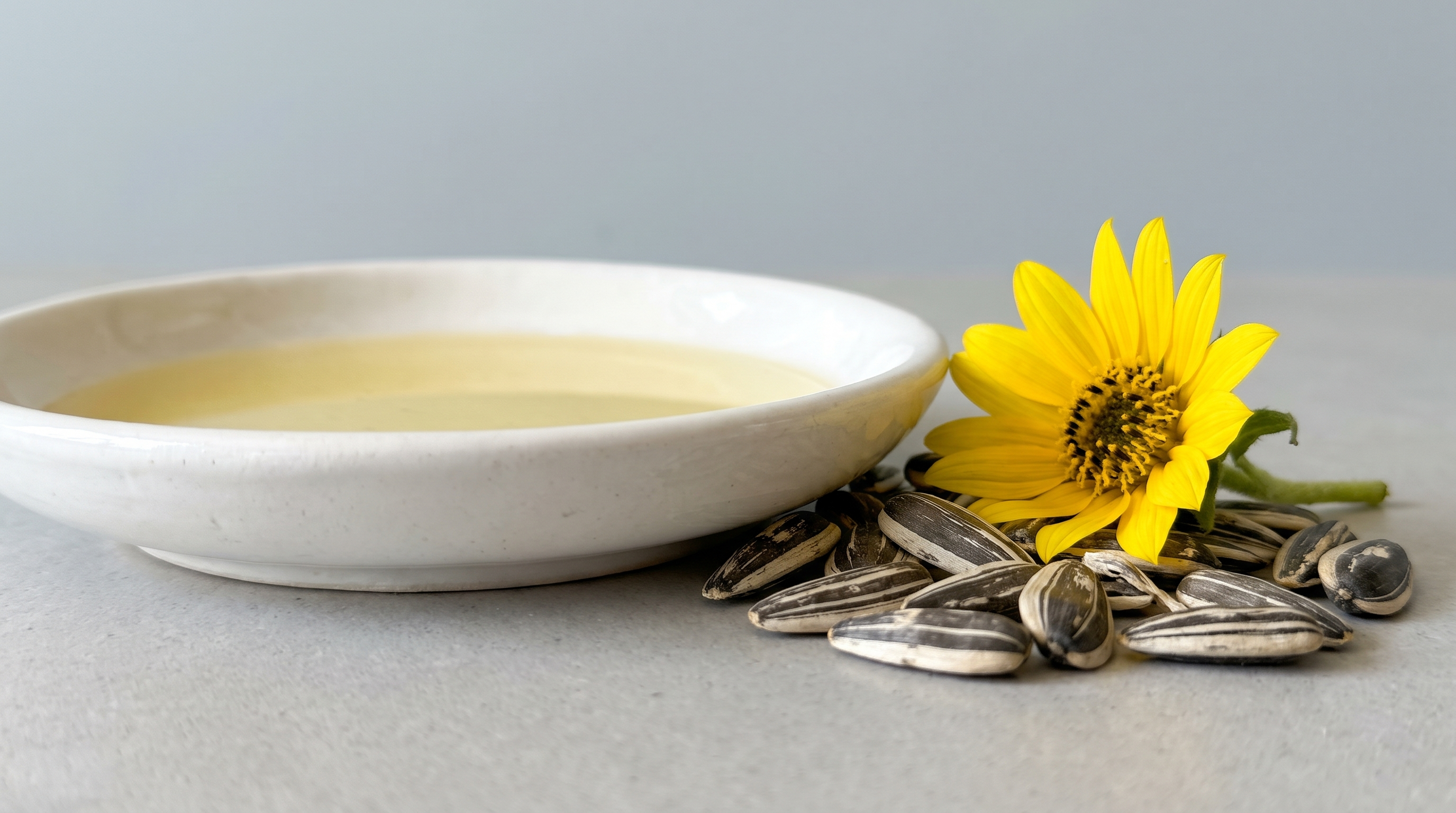
Sunflower seed oil is an underrated option with good evidence behind it, as the next section explains.
Why the type of oil matters for your skin barrier
Plant oils are not interchangeable. Their effect on the skin depends largely on their balance of two fatty acids. Oils rich in linoleic acid tend to support the skin barrier, while oils rich in oleic acid can loosen the orderly lipid layers that keep water in and irritants out [2].
The clearest human comparison used two common kitchen oils. In one group of adult volunteers, each person applied six drops of olive oil to one forearm and six drops of sunflower seed oil to the other, twice a day. After four weeks, olive oil had significantly weakened the outer skin layer and caused mild redness, while sunflower seed oil left the barrier intact and improved hydration [3].
Your skin barrier fared worse after 4 weeks of olive oil than after the same 4 weeks of sunflower oil in a simple forearm comparison.
That matters for massage, because massage oils are rubbed in with friction for several minutes, often several times a week. A barrier-friendly oil is the safer habit.
Your skin may glow for 10 minutes after a massage, but that glow fades far sooner than results built over 12 weeks of collagen care.
Choosing an oil for your skin type
- Dry or mature skin: sunflower seed oil, jojoba, or a blend of the two. Our guide to facial oil for dry skin compares the richer oils by fatty acid profile if you want to leave a thin layer on afterwards.
- Oily or blemish-prone skin: jojoba on its own, used sparingly and removed afterwards. Thick, waxy oils such as coconut oil feel slick but are a common culprit in clogged pores.
- Sensitive skin: a single, fragrance-free oil with nothing added. Patch test it on the jaw before the first full session.
- Any skin: avoid oils that smell sharp or stale. Oxidised oil is more irritating than fresh oil, so buy small bottles in dark glass and use them within a few months of opening.
Skip the essential oils
Many oils sold for facial massage are scented with lavender, rose, peppermint or citrus. They smell relaxing, but they bring a real risk. Contact allergy has been described for 80 different essential oils, and dermatologists often cannot tell which component caused a reaction [4]. Massage drives those compounds into the skin with warmth and friction, session after session, which is exactly how sensitisation tends to build, so keep scent in a candle and out of the oil.
What massage itself can do
The evidence on facial massage points to circulation rather than structural change. In one study, five minutes with a facial massage roller increased blood flow in the treated cheek for at least ten minutes, and five weeks of daily use improved how well the small vessels widened in response to heat [5]. A study of traditional gua sha on the back found a fourfold rise in surface blood flow for the first few minutes after treatment, with flow still raised 25 minutes later [6]. That back treatment deliberately used firm strokes that leave marks; facial gua sha uses much lighter pressure and should never bruise.
Your skin may glow for 10 minutes after a massage, but that glow fades far sooner than results built over 12 weeks of collagen care.
These effects explain the healthy glow and reduced puffiness people notice after massage. They do not show that massage rebuilds collagen or lifts sagging skin. Our guide to gua sha benefits looks at what the tool can and cannot do in more detail.
A simple five-minute oil massage
- Cleanse and pat the skin almost dry.
- Warm four to six drops of oil between your palms and press them over the face and neck.
- Work from the centre outward and from the neck upward with light, even strokes. Hold a gua sha stone almost flat against the skin.
- Add one or two more drops if the tool starts to drag. Never push through dry skin.
- Remove the excess with a warm damp cloth or a gentle second cleanse. Dry skin can keep a thin layer on; oily skin should take it all off.
Massage nights, retinol nights and Nanoretinol
An oil massage can leave your face looking brighter and less puffy, but no oil or massage technique has been shown to replace the collagen that thins with age. Readers comparing oils for that goal will find the richer, more active options in our guide to the best face oil for aging skin. The ingredient with human evidence for collagen is retinol. In a study comparing retinol with prescription retinoic acid, four weeks of retinol thickened the epidermis and switched on the genes for type I and type III collagen, and 12 weeks of a retinol formula significantly reduced facial wrinkles [7].
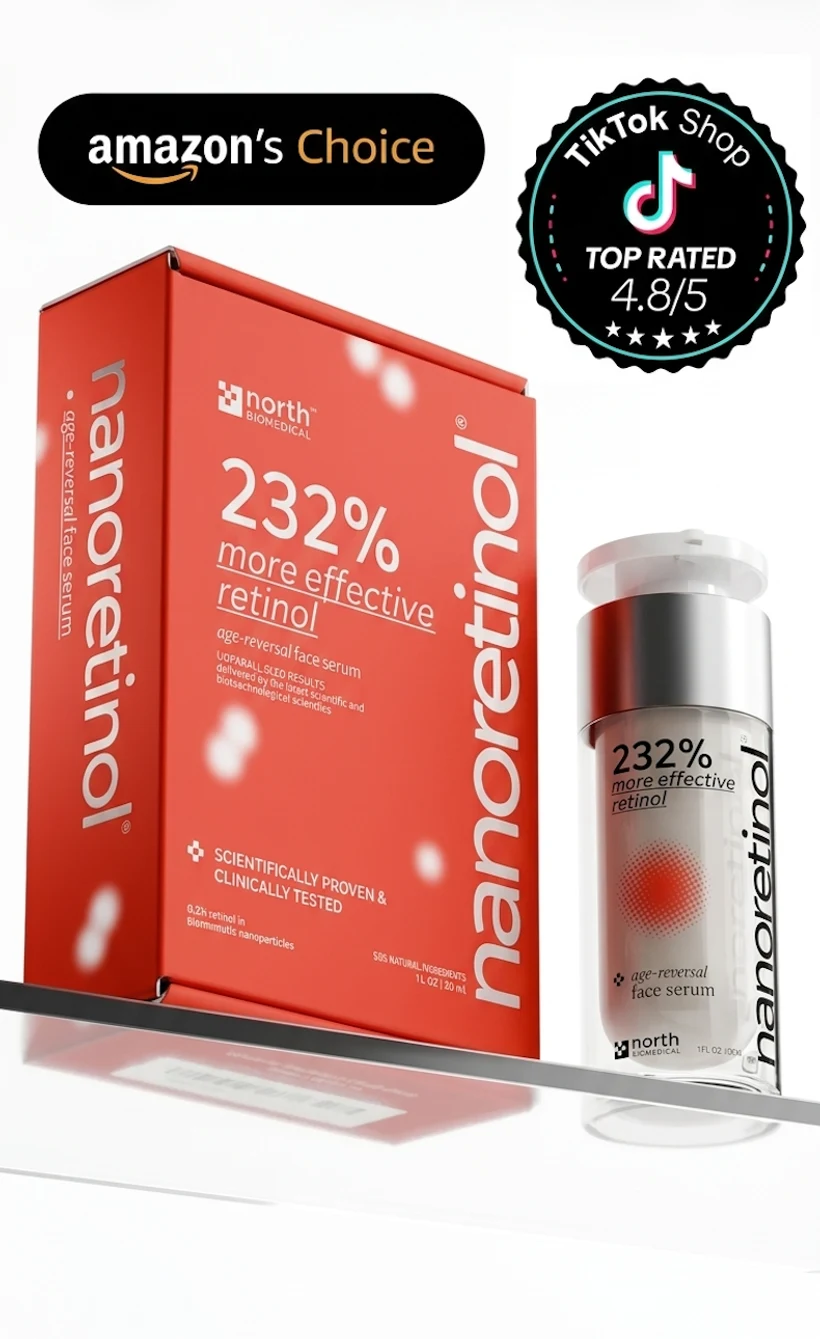
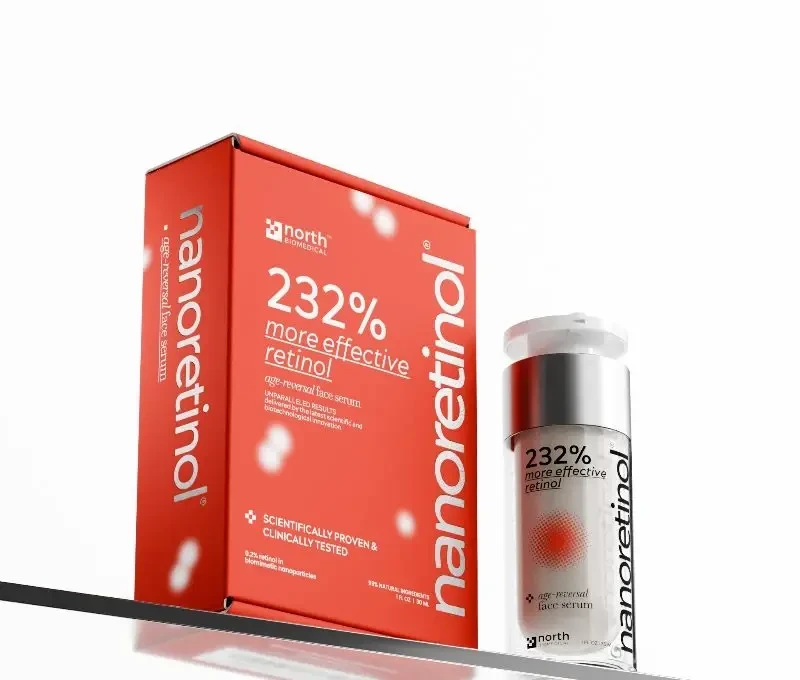
Conventional retinol can make skin dry and tender, and friction on irritated skin makes that worse. Nanoretinol is designed to be gentler. It delivers 0.2% retinol inside biomimetic lipid nanoparticles that the skin recognises as its own, in a light, water-based gel that absorbs completely to a smooth matte finish. In North Biomedical’s clinical study it was 232% more effective in collagen recovery and 73% more effective in elastin recovery than conventional retinol, and users saw a 61% increase in firmness and a 56% increase in elasticity after 56 days, with milder side effects than conventional retinol [8].
The two fit together easily if you keep the order right. Massage with oil, cleanse the oil off, pat the skin dry, then apply Nanoretinol so nothing stands between it and the skin. If your skin ever feels tender, skip the massage that night and let the retinol work on its own.
References
- Pazyar N, Yaghoobi R, Ghassemi MR, Kazerouni A, Rafeie E, Jamshydian N. “Jojoba in Dermatology: A Succinct Review.” Giornale Italiano di Dermatologia e Venereologia. 2013;148(6):687-691. PubMed 24442052
- Lin TK, Zhong L, Santiago JL. “Anti-Inflammatory and Skin Barrier Repair Effects of Topical Application of Some Plant Oils.” International Journal of Molecular Sciences. 2017;19(1):70. doi:10.3390/ijms19010070
- Danby SG, AlEnezi T, Sultan A, Lavender T, Chittock J, Brown K, Cork MJ. “Effect of Olive and Sunflower Seed Oil on the Adult Skin Barrier: Implications for Neonatal Skin Care.” Pediatric Dermatology. 2013;30(1):42-50. doi:10.1111/j.1525-1470.2012.01865.x
- de Groot AC, Schmidt E. “Essential Oils, Part I: Introduction.” Dermatitis. 2016;27(2):39-42. doi:10.1097/DER.0000000000000175
- Miyaji A, Sugimori K, Hayashi N. “Short- and Long-Term Effects of Using a Facial Massage Roller on Facial Skin Blood Flow and Vascular Reactivity.” Complementary Therapies in Medicine. 2018;41:271-276. doi:10.1016/j.ctim.2018.09.009
- Nielsen A, Knoblauch NT, Dobos GJ, Michalsen A, Kaptchuk TJ. “The Effect of Gua Sha Treatment on the Microcirculation of Surface Tissue: A Pilot Study in Healthy Subjects.” Explore. 2007;3(5):456-466. doi:10.1016/j.explore.2007.06.001
- Kong R, Cui Y, Fisher GJ, Wang X, Chen Y, Schneider LM, Majmudar G. “A Comparative Study of the Effects of Retinol and Retinoic Acid on Histological, Molecular, and Clinical Properties of Human Skin.” Journal of Cosmetic Dermatology. 2016;15(1):49-57. doi:10.1111/jocd.12193
- North Biomedical LLC. “Nanoretinol vs. Conventional Retinol: Efficacy in Collagen and Elastin Recovery.” Clinical Study Summary, 2024. Study summary