Festoons: What Causes Those Cheek Bags and What Actually Helps
The aging condition that sits between your eye bags and your cheekbones — and why it's so stubborn
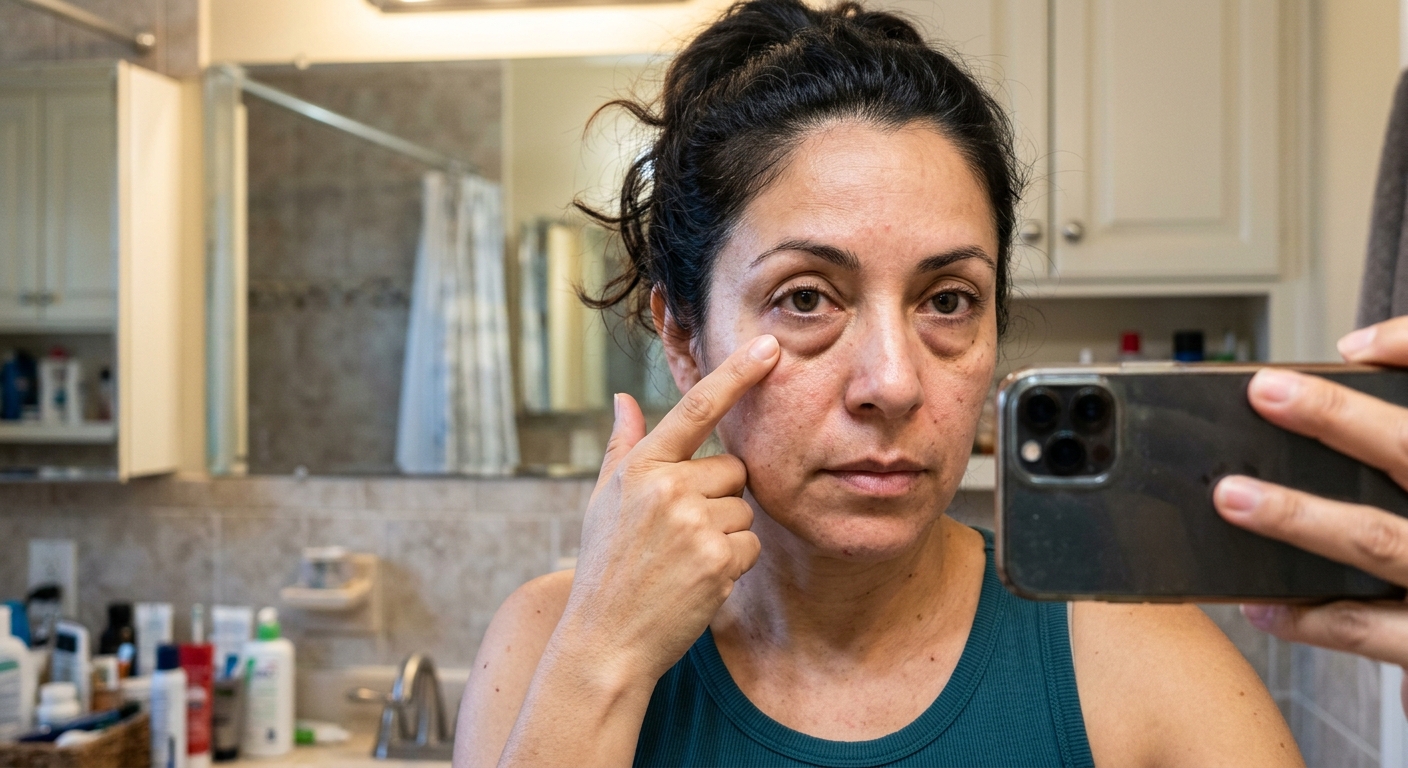
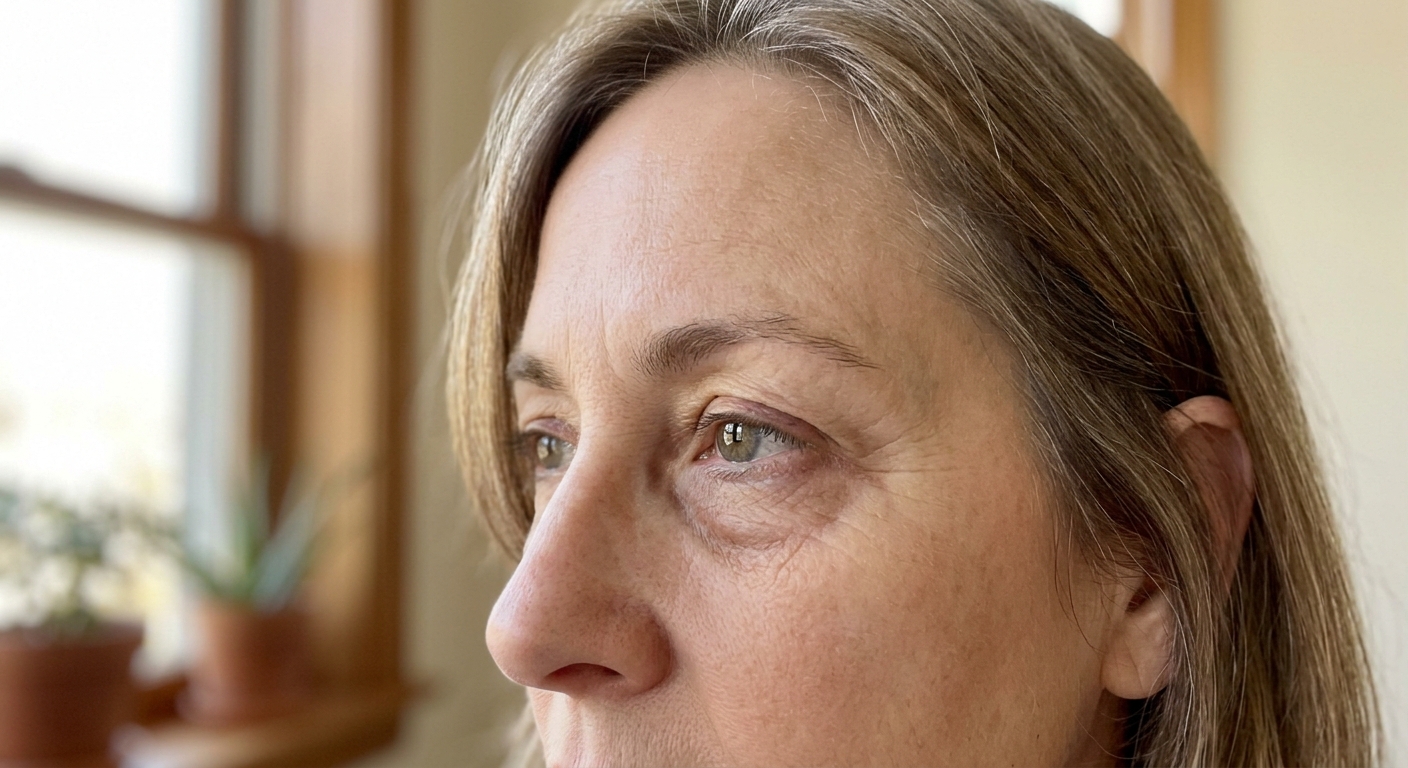
You’ve probably noticed them in unflattering selfies — those puffy, sagging pouches that sit not quite under your eyes, but a little lower, draped across the upper cheekbone. They aren’t bags exactly, and they aren’t dark circles. They have their own name in the dermatology literature: festoons, also called malar mounds or malar bags.
Festoons are one of the most distinctive markers of midface aging, and they’re notoriously difficult to treat. Concealer doesn’t hide them. Cooling de-puffing creams barely move the needle. And unlike under-eye bags, which can sometimes be resolved with surgery alone, festoons sit on top of a complex anatomical structure that resists most quick fixes.
Understanding why they form is the first step to making smart decisions about what to do about them.
What Festoons Actually Are
Festoons are chronic collections of edematous, lax soft tissue that accumulate over the malar (cheekbone) region [1]. They are anatomically distinct from lower eyelid bags, which sit closer to the orbital rim and result primarily from herniation of orbital fat. Festoons live below that — across the upper cheek, often forming a visible roll or pouch when you smile.
They’re driven by a combination of three problems that compound with age:
1. Weakening of the malar septum. This fascial structure runs from the orbital rim down across the cheek and acts as a barrier to fluid movement. As the skin ages, the malar septum becomes more permeable in some places and more rigid in others — allowing fluid to pool above its insertion point and creating that characteristic mounded appearance [1].
2. Loss of skin support. The dermis thins. Collagen breaks down at roughly 1% per year from your mid-twenties onward, and the loss accelerates dramatically after menopause [2]. Without that scaffolding, the overlying skin can no longer hold tissue snugly against the underlying bone.
3. Lymphatic congestion. The lower eyelid and upper cheek share a lymphatic drainage pathway that’s already inefficient by design. Add inflammation, allergies, salt, alcohol, or poor sleep, and fluid lingers exactly where the malar septum traps it [1].
Why Festoons Get Worse With Sun Damage
Decades of UV exposure don’t just darken or wrinkle your skin — they restructure it at the molecular level. Photoaged skin shows disorganized collagen fibers and an accumulation of abnormal, fragmented elastin called solar elastosis [3]. The springy, supportive matrix that once held your cheekbones snug against the bone becomes a chaotic tangle of damaged proteins.
Collagen breaks down at roughly 1% per year from your mid-twenties onward, and the loss accelerates dramatically after menopause.
This matters specifically for festoons because the upper cheek is one of the most sun-exposed regions on the face. The skin there receives a brutal cumulative dose of UV — and once the elastic fibers are destroyed, they don’t snap back. They sag, hold fluid, and contribute to that characteristic mounded shape.
This is why people with significant solar elastosis tend to develop more pronounced festoons earlier than those who diligently used sunscreen.
What Doesn’t Work
Be honest with yourself before spending money on the wrong things. Several popular approaches have very little evidence for genuine festoon improvement:
- Topical caffeine creams. May reduce transient puffiness for an hour or two, but won’t address the underlying laxity.
- Lymphatic drainage massage. Can help reduce fluid component briefly, but the structural problem remains.
- Hyaluronic acid filler placed directly into the festoon. This is one of the worst things you can do — HA is hydrophilic and can make malar mounds dramatically worse by attracting more fluid into already congested tissue [1].
- Aggressive eye creams. No topical alone will resolve a true festoon.
If anyone promises a “festoon serum” with quick results, treat it with deep skepticism.
What the Evidence Actually Supports
Treatment for established festoons usually requires combining approaches that target the different drivers:
Skin tightening procedures. Microfocused ultrasound and radiofrequency-based devices can stimulate collagen and tighten lax skin. Outcomes vary, but multiple sessions over time produce measurable improvement in mild-to-moderate cases.
Retinoid therapy. Topical retinoids remain the most evidence-backed prescription-free intervention for the underlying skin laxity that contributes to festoons. Retinoids upregulate procollagen synthesis, increase epidermal thickness, and partially reverse photoaging at the cellular level [4]. Daily use over 6–12 months produces real, measurable changes in dermal architecture, including improved skin elasticity and density.
Daily use over 6–12 months produces real, measurable changes in dermal architecture, including improved skin elasticity and density.
Surgical correction. For severe festoons, blepharoplasty alone is rarely enough. Targeted surgical procedures that address the malar septum and reposition cheek tissue produce the most durable results, but they involve real recovery and aren’t trivial decisions [1].
Sun protection. Daily broad-spectrum SPF prevents further damage to the elastin and collagen networks that already aren’t doing well. This is non-negotiable. There is no skincare routine for women over 50 that works without this step.
The Retinoid Problem Around the Eyes
Here’s where things get complicated. The skin in the festoon region is among the thinnest on the face. Conventional retinol formulations frequently cause irritation, redness, and barrier disruption when applied this close to the eye area — and irritation here can actually worsen the appearance of festoons by triggering more inflammation and fluid retention.
Many people give up on retinol entirely because of this.
The issue is rarely the retinol molecule itself. It’s the formulation. Conventional retinol is delivered in vehicles that rely on penetration enhancers and emulsifiers that disrupt the skin barrier — exactly what fragile periorbital skin can’t handle.
A Smarter Approach to Retinol Around Festoons
Nanoretinol takes a different route. The retinol is encapsulated inside biomimetic lipid nanoparticles — particles that the skin recognizes as biologically familiar and absorbs without barrier disruption. Compared to conventional retinol, the encapsulated form delivers 232% greater collagen recovery and 73% greater elastin recovery in laboratory studies [5].
For festoon-prone skin, three properties matter:
- It works at 0.2% — a low concentration delivered efficiently rather than a high concentration delivered inefficiently
- The water-based gel base contains no petroleum derivatives or harsh penetration enhancers
- Clinical trials confirm minimal side effects, with any irritation milder than conventional retinol
It’s not a cure for festoons. Nothing topical is. But it gives you the collagen and elastin support of a real retinoid without the irritation cycle that derails most people who try to use retinol on the upper cheek.
A Realistic Plan
If you’ve just noticed festoons starting to form:
- Lock in daily SPF 30+ with broad-spectrum coverage. This stops the damage from compounding.
- Start a well-tolerated retinoid at night and stay consistent for at least 6 months before judging results.
- Sleep with your head slightly elevated to reduce overnight fluid pooling.
- Cut salt and alcohol if you notice morning swelling worsening over time.
- Schedule a consultation with a board-certified dermatologist or oculoplastic surgeon if the festoons bother you significantly — they can stage your case and recommend procedures with realistic outcome expectations.
Festoons are a long game. But the same habits that prevent them from worsening also reverse a meaningful amount of the underlying skin damage that made them visible in the first place.
References
-
Kpodzo DS, Nahai F, McCord CD. “Malar Mounds and Festoons: Review of Current Management.” Aesthetic Surgery Journal. 2014;34(2):235-248. doi:10.1177/1090820X13517897
-
Shuster S, Black MM, McVitie E. “The influence of age and sex on skin thickness, skin collagen and density.” British Journal of Dermatology. 1975;93(6):639-643. doi:10.1111/j.1365-2133.1975.tb05113.x
-
El-Domyati M, Attia S, Saleh F, et al. “Intrinsic aging vs. photoaging: a comparative histopathological, immunohistochemical, and ultrastructural study of skin.” Experimental Dermatology. 2002;11(5):398-405. doi:10.1034/j.1600-0625.2002.110502.x
-
Mukherjee S, Date A, Patravale V, et al. “Retinoids in the treatment of skin aging: an overview of clinical efficacy and safety.” Clinical Interventions in Aging. 2006;1(4):327-348. doi:10.2147/ciia.2006.1.4.327
-
North Biomedical LLC. “Nanoretinol vs. Conventional Retinol: Efficacy in Collagen and Elastin Recovery.” Clinical Study Summary, 2024. Read the study