Peel-Off Face Mask: What It Really Removes and Who Should Skip It
Peeling a dried mask off your face is satisfying, but the film takes less from your pores than it seems. Here is what the research shows and how to use one safely
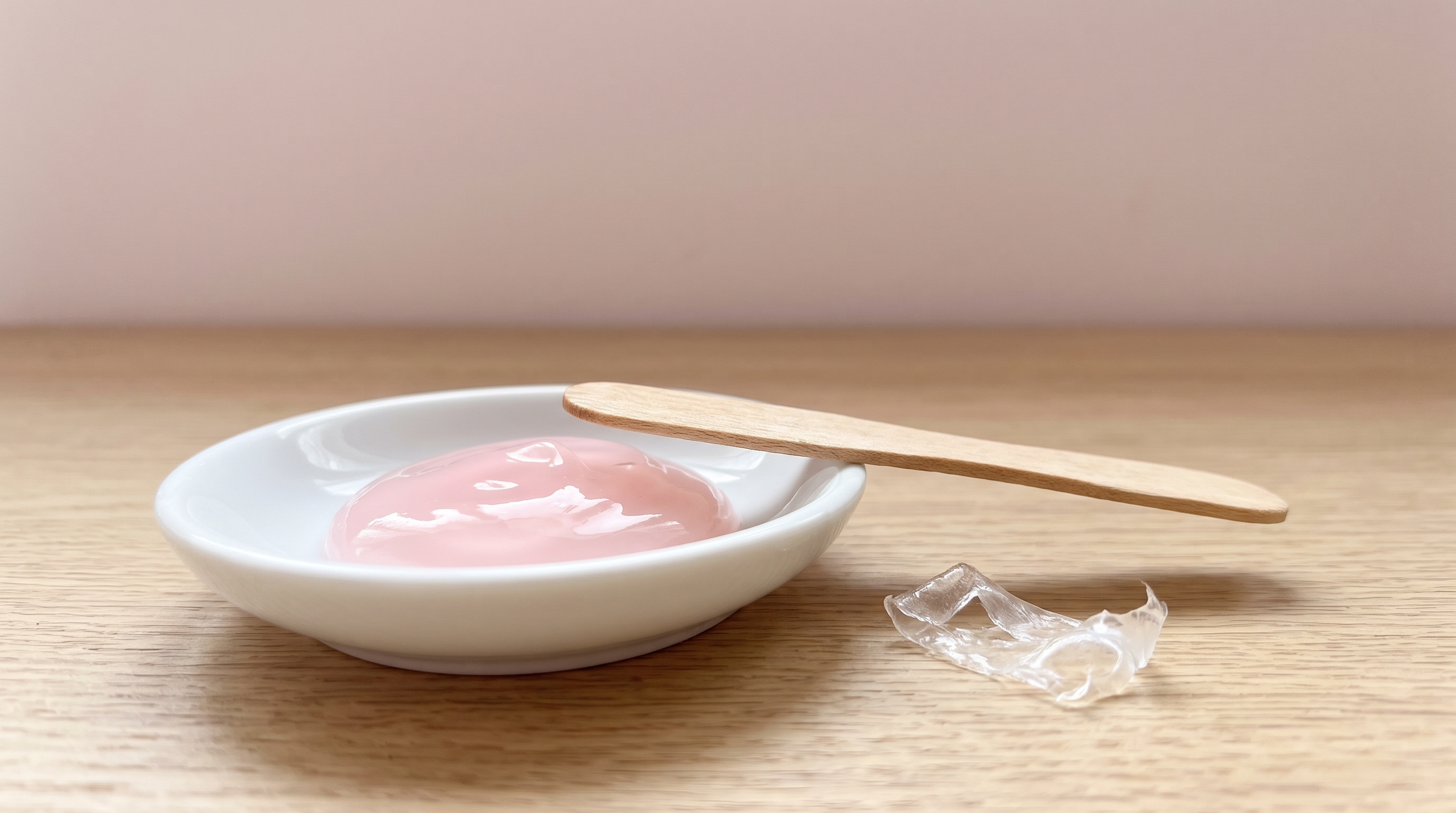
Few skincare products are as satisfying to use as a peel-off mask. You paint on a gel, wait for it to dry into a film, and then lift it away in one piece, often with what looks like a layer of grime attached. Your skin feels smooth and tight for the rest of the evening.
How much of that is real, and is it doing your skin any favors? This guide explains how peel-off masks work, what they actually lift away, what the small body of research shows, who should avoid them, and what to use if your real goal is clearer pores or smoother skin over time.
How a peel-off mask works
A review of cosmetic face masks sorts them into four families: sheet masks, peel-off masks, rinse-off masks and hydrogels [1]. Peel-off masks are the only ones designed to be removed as a single dried film.
Most are built on a film-forming polymer, usually polyvinyl alcohol, dissolved in water with some alcohol to speed drying. As the water and alcohol evaporate, the polymer chains knit together into a flexible sheet that grips the skin surface. That drying film is what creates the tight, lifted feeling while it sets.
The film also seals the skin while it is on. In a short controlled study, a polyvinyl alcohol peel-off mask raised the water content of the outer skin layer more than an ordinary moisturizing emulsion did, and the researchers attributed this to its occlusive effect [2].
What peeling actually removes
When you pull the film away, it takes with it whatever has bonded to it more firmly than to your skin. That usually includes:
Your skin loses a thin sheet of its outer cells every time a mask is peeled away, so once every 7 days is kinder than a daily habit.
- Dead surface cells. The outer skin layer is made of flattened dead cells that are shed constantly. Dermatologists use adhesive tape to remove this layer one sheet at a time in a technique called tape stripping, and the amount lifted depends on what is on the skin [3]. A peel-off film works in a similar way.
- Surface oil and debris. Sunscreen residue, oil and dust stuck to the film come away with it.
- Fine facial hair. Vellus hairs get trapped in the film, which is part of why peeling can sting.
- The tops of some pore plugs. A strong film can lift the exposed tip of a sebaceous filament, but it does not empty the pore.
Your skin loses a thin sheet of its outer cells every time a mask is peeled away, so once every 7 days is kinder than a daily habit.
The dark specks visible on a used mask are mostly surface debris and dead cells, not deep blackheads. Pore strips are built to grip plugs more aggressively, and even they only remove the top of each plug. Our guide to nose strips explains why pores refill within days.
What the research shows
The evidence on peel-off masks is limited and mostly comes from small studies, so it helps to separate the vehicle from what is put into it.
Hydration, but not firmness. In the study described above, volunteers were measured over 3 hours after using either a peel-off mask or an emulsion. The mask hydrated the skin surface better, but there was no significant difference in the tightening effect or in water loss through the barrier [2]. The taut feeling is real while the film dries, yet it is not lasting firmness.
A delivery vehicle for actives. Researchers have started using peel-off films to carry treatments, because the film holds them against the skin as it dries. An open-label study in 40 women with adult acne used an overnight peel-off mask containing myoinositol and trehalose every other day for 60 days, and lesion counts fell, though the study had no control group [4]. Two small split-face trials then compared weekly peel-off masks containing prescription-strength actives with plain placebo masks. An estradiol mask improved adult female acne over 8 weeks [5], and a metformin mask improved melasma scores by 68% against 20% on the placebo side over 12 weeks [6].
Your skin held more water over 3 hours with a peel-off mask than with an ordinary cream in one study, but it was not measurably firmer.
Your skin held more water over 3 hours with a peel-off mask than with an ordinary cream in one study, but it was not measurably firmer.
The lesson from these trials is that the mask base is a carrier. What changes the skin is the active ingredient inside it, and the masks tested in these studies are not products you can buy over the counter.
Who should skip peel-off masks
- Sensitive or reactive skin. The pulling force and the alcohol in many formulas can leave redness and stinging.
- Visible broken capillaries or rosacea. Repeated tugging is best avoided on fragile vessels.
- Anyone using a retinoid or an exfoliating acid. Skin that is already shedding faster loses more cells to the film and can be left raw.
- Active breakouts, sunburn or broken skin. Peeling over inflamed spots can tear the surface.
- Dry or mature skin. A hydrating cream or gel mask, or one of the sheet masks designed for hydration, gives the moisture benefit without the pull.
Skip homemade versions that use craft glue or similar adhesives. They are not formulated for skin, can be very hard to remove, and are a common source of irritation.
How to use a peel-off mask safely
- Patch test first on the jawline, especially if the mask contains fragrance or alcohol.
- Start with clean, dry skin. Oil under the film makes it peel unevenly.
- Apply a thin, even layer, and keep it away from the eyebrows, hairline, eyes and lips.
- Wait until it is fully dry, usually 15 to 20 minutes, so it lifts in one piece.
- Peel slowly from the edges toward the center. If it resists or hurts, wet it and rinse it off instead of pulling.
- Finish with a moisturizer to replace what the film lifted.
If you want a mask that draws oil from congested pores, a clay mask does that job without pulling, and our guide to the best clay mask compares the options.
What a peel-off mask cannot do
A peel-off mask is an occasional treat that leaves skin feeling smooth for an evening. It does not change how fast pores refill, how visible fine lines are, or how firm your skin feels next week. Those depend on what happens below the surface, in how the pore lining sheds and how much collagen the dermis makes. Our guide on how to get rid of blackheads covers the treatments that work at the pore level.
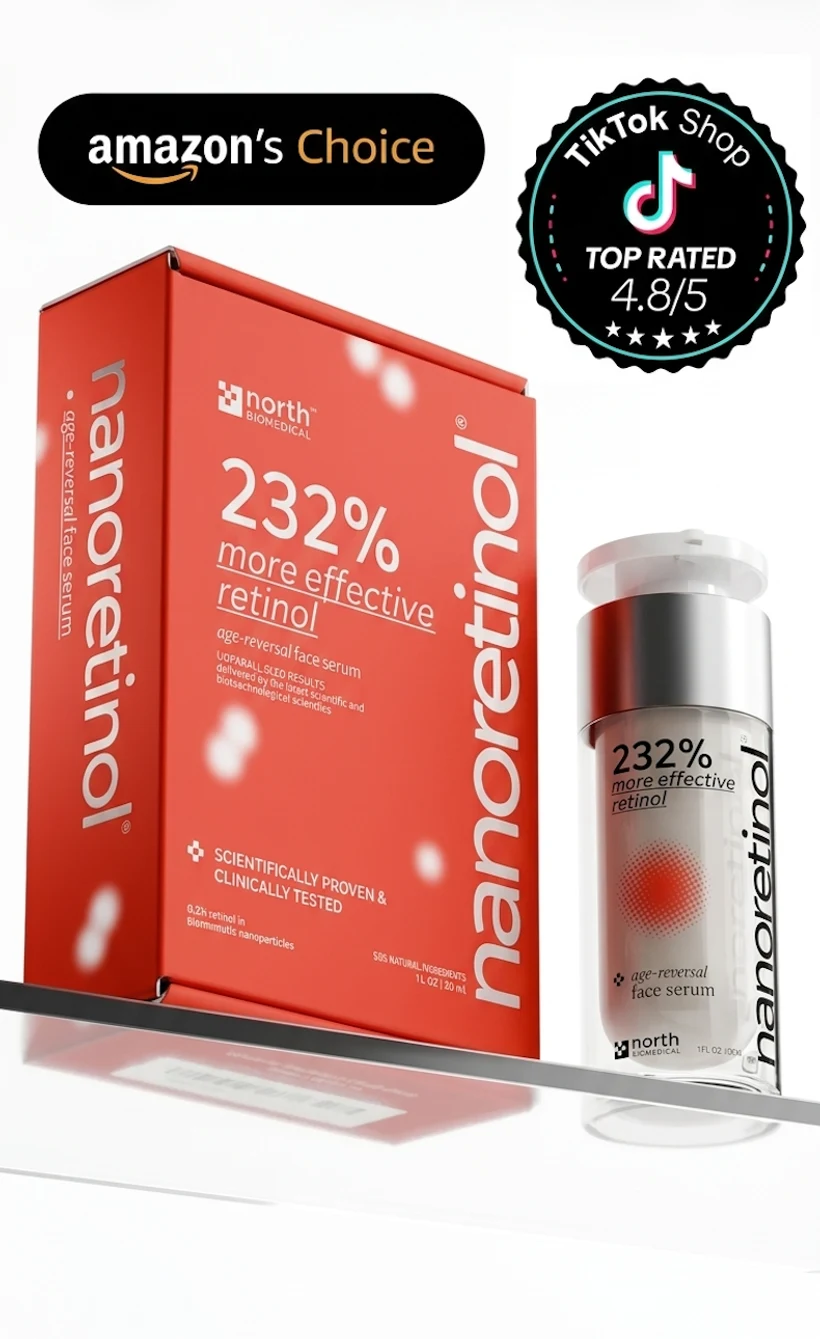
Retinoids are among the best-studied ingredients for that deeper renewal. In aged skin, topical retinol increased procollagen and glycosaminoglycans and improved fine wrinkles over 24 weeks [7]. Nanoretinol was designed to bring those benefits without the irritation that often comes with conventional retinol. It delivers 0.2% retinol in biomimetic lipid nanoparticles that the skin recognizes as its own, so the retinol passes through the barrier without the damage caused by many conventional formulas. In clinical use it produced a 61% increase in skin firmness and a 56% increase in elasticity within 56 days, and in North Biomedical’s study it was 232% more effective in collagen recovery than conventional retinol [8].
For a steady routine, use Nanoretinol at night and sunscreen every morning, and save the peel-off mask for an occasional evening, never on the same night as your retinol.
References
- Nilforoushzadeh MA, Amirkhani MA, Zarrintaj P, Salehi Moghaddam A, Mehrabi T, Alavi S, Mollapour Sisakht M. “Skin care and rejuvenation by cosmeceutical facial mask.” Journal of Cosmetic Dermatology. 2018;17(5):693-702. doi:10.1111/jocd.12730
- Velasco MV, Vieira RP, Fernandes AR, Dario MF, Pinto CA, Pedriali CA, Kaneko TM, Baby AR. “Short-term clinical of peel-off facial mask moisturizers.” International Journal of Cosmetic Science. 2014;36(4):355-360. doi:10.1111/ics.12133
- Lademann J, Jacobi U, Surber C, Weigmann HJ, Fluhr JW. “The tape stripping procedure—evaluation of some critical parameters.” European Journal of Pharmaceutics and Biopharmaceutics. 2009;72(2):317-323. doi:10.1016/j.ejpb.2008.08.008
- Fabbrocini G, Capasso C, Donnarumma M, Cantelli M, Le Maître M, Monfrecola G, Emanuele E. “A peel-off facial mask comprising myoinositol and trehalose-loaded liposomes improves adult female acne by reducing local hyperandrogenism and activating autophagy.” Journal of Cosmetic Dermatology. 2017;16(4):480-484. doi:10.1111/jocd.12340
- El-Komy MHM, Youssef DKA, Shamma RN, Bedair NI. “Improvement of adult female acne with a novel weekly oestradiol-loaded peel-off mask: a split-face placebo-controlled study.” Clinical and Experimental Dermatology. 2024;49(5):478-483. doi:10.1093/ced/llad443
- El-Komy MHM, Elnowaihy SW, Shamma RN, Bedair NI. “Efficacy and safety of a novel weekly topical metformin-loaded peel-off mask in the treatment of melasma: a split-face, placebo-controlled study.” Clinical and Experimental Dermatology. 2024;49(12):1633-1640. doi:10.1093/ced/llae274
- Kafi R, Kwak HS, Schumacher WE, Cho S, Hanft VN, Hamilton TA, King AL, Neal JD, Varani J, Fisher GJ, Voorhees JJ, Kang S. “Improvement of naturally aged skin with vitamin A (retinol).” Archives of Dermatology. 2007;143(5):606-612. doi:10.1001/archderm.143.5.606
- North Biomedical LLC. “Nanoretinol vs. Conventional Retinol: Efficacy in Collagen and Elastin Recovery.” Clinical Study Summary, 2024. Study summary