Gel Cleanser: Who It Suits and How to Pick a Gentle One
Clear, light and quick to rinse, gel cleansers are a favourite for oily and combination skin. Here is what makes a gel a gel, and how to tell a gentle one from a stripping one
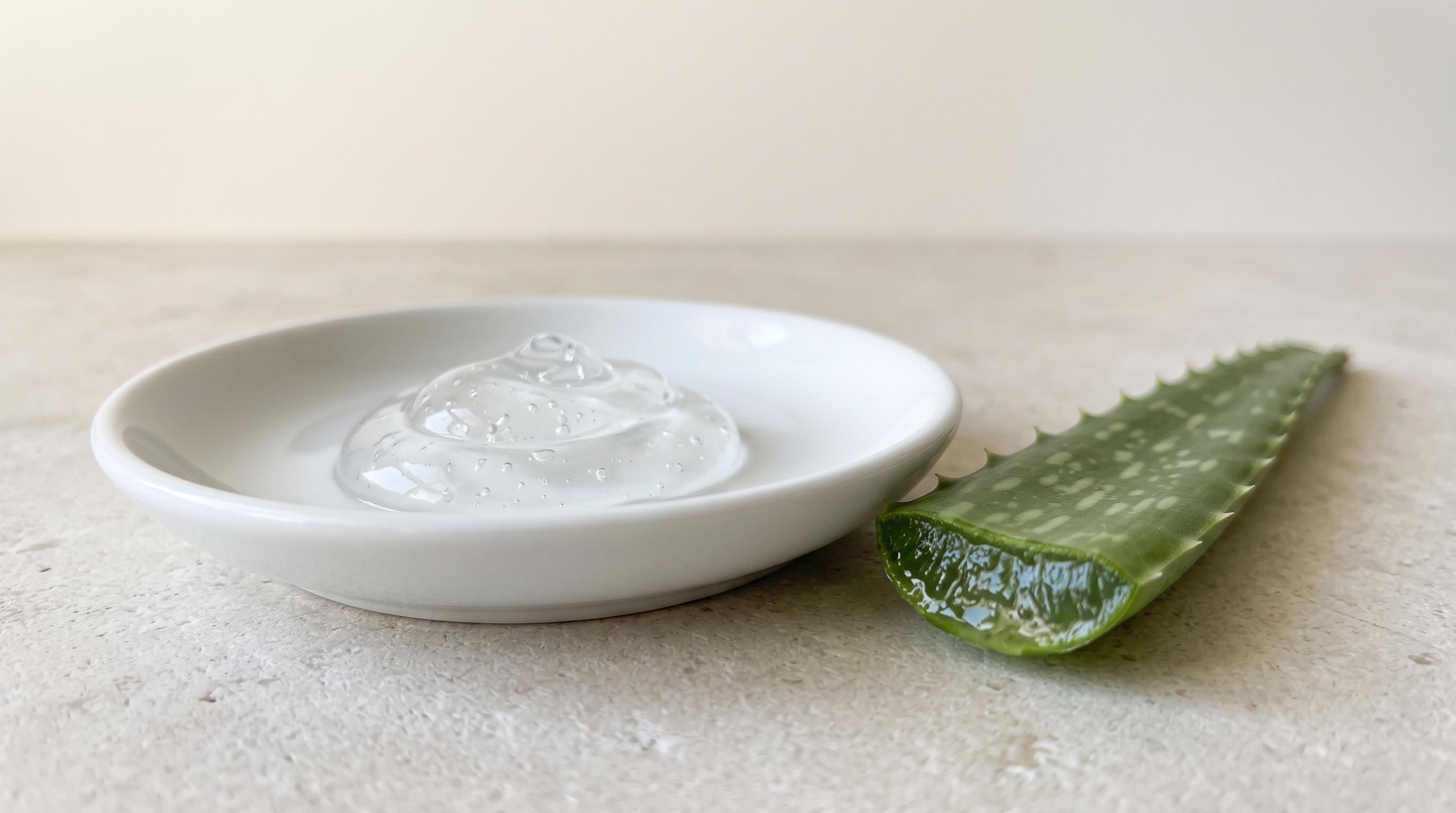
Gel cleansers sit in the middle of the cleanser shelf. They are thicker than a micellar water, lighter than a cream, and usually clear or translucent in the bottle. Squeeze some onto damp hands and they turn into a slippery wash with a soft, low lather that rinses away quickly.
That clean, fresh finish is why gel cleansers are a favourite for oily, combination and acne-prone skin. It is also why some people find them drying. Whether a gel cleanser leaves your face comfortable or tight depends on what is inside it, not on the gel texture itself. This guide explains how gels are made, how they compare with other formats, and how to choose and use one.
What makes a cleanser a gel
Every cleanser contains surfactants, molecules that grab oil and grime and let water rinse them away. A gel cleanser is mostly water and surfactant, thickened with a water-loving polymer such as a carbomer, an acrylates copolymer or a natural gum. The polymer gives the gel its body and its clear look. Unlike a cream cleanser, a gel has little or no oil in the formula.
Those polymers do more than set the texture. Researchers have shown that certain hydrophobically modified polymers pull surfactants together into larger, more stable clusters. Larger clusters are less able to slip into the outer skin layer, so a cleanser built this way removes grime while leaving the skin barrier in better shape [1]. A gel is therefore not automatically harsh. The right polymer can make it gentler.
What decides whether a gel strips your skin
Surfactant type. Harsh surfactants bind tightly to proteins in the outer skin layer, causing swelling, tightness and irritation. Surfactants that interact only weakly with skin proteins and lipids are the mildest [2].
pH. Traditional soap is alkaline, while synthetic detergents, or syndets, can be formulated close to the skin’s natural pH of about 5.5 [2, 3]. Syndets also denature skin proteins less, which is why they cause less dryness and irritation [3]. Most modern gel cleansers are syndets.
Your skin ran less acidic and carried more acne bacteria after 4 weeks of washing with soap than after 4 weeks with a synthetic cleanser.
That choice matters more than most people realize. In a crossover trial, healthy volunteers washed their forehead and forearm twice a day with soap for 4 weeks and with a synthetic detergent for another 4 weeks. Skin pH ran higher during the soap weeks, and the forehead carried markedly more acne-associated bacteria [4].
Your skin ran less acidic and carried more acne bacteria after 4 weeks of washing with soap than after 4 weeks with a synthetic cleanser.
Our guide to skin pH explains why staying on the acidic side helps the barrier hold water.
Gel versus foam, cream and oil
- Gel. Light, oil-free and quick to rinse. Best for oily, combination and acne-prone skin, and for warm, humid weather.
- Foam. Dispensed as a lather or whipped up from a paste. Similar skin types to gel, though high-foaming formulas are more likely to use harsher surfactants. Our guide to the foaming cleanser covers that format.
- Cream or milk. Contains oils and emollients, cleans gently and leaves a soft finish. Better for dry, mature or reactive skin.
- Oil or balm. Dissolves sunscreen and makeup. Often the first step of a double cleanse, followed by a gel. Our guide to double cleansing explains when two steps are worth it.
Who suits a gel cleanser
A gel cleanser is a good match if your skin turns shiny by midday, if you break out easily, or if cream cleansers leave a film you can feel. It also suits people who shave, since a gel rinses cleanly from stubble, and anyone who wants a simple morning wash that leaves nothing behind. Our guide to the best face wash for oily skin compares options for that skin type.
Your skin keeps a cleanser for about 60 seconds, so an acid gel wash does far less than the same acid left on overnight in a toner or serum.
Dry skin can still use a gel, provided the label points to a hydrating formula with glycerin, panthenol or ceramides and no drying alcohol near the top of the ingredient list. If your face feels tight within a few minutes of rinsing, the gel is too strong for you.
Gel cleansers with active ingredients
Many gel cleansers add salicylic acid, glycolic acid or benzoyl peroxide. These can help, especially on oily or blemish-prone skin, but expectations should match the contact time. A cleanser stays on your face for about a minute before you rinse it away, while a leave-on product works for hours.
Your skin keeps a cleanser for about 60 seconds, so an acid gel wash does far less than the same acid left on overnight in a toner or serum.
That is not a reason to avoid them. Cleansers can play a helpful supporting role alongside other treatment in acne, rosacea and sun-damaged skin [5]. The best results come from pairing a mild gel wash with leave-on actives, rather than relying on the wash to do everything. Using an acid cleanser and an acid toner in the same routine is a common cause of stinging.
How to use a gel cleanser well
- Wet your face with lukewarm water. Hot water removes more of the skin’s own lipids.
- Use a small amount, about the size of a coin, and work it between damp palms.
- Massage gently for 30 to 60 seconds, paying attention to the nose, chin and hairline.
- Rinse thoroughly, since residue left behind keeps acting on the barrier.
- Pat dry and moisturize while the skin is still slightly damp.
Once a day in the evening is enough for many people. Oily skin often does well with a second wash in the morning.
Gel cleansers and retinol
A retinol routine raises the stakes on cleanser choice. Conventional retinol already stresses the skin barrier, and a stripping wash beforehand adds to the dryness, flaking and stinging that make many people quit. A review of four clinical trials looked at exactly this situation, including patients using tretinoin for sun damage, and concluded that mild synthetic cleansers that barely disturb the barrier are the ideal choice [6].
The retinol itself matters just as much. Many conventional formulas push retinol through the barrier by disrupting its lipids. Nanoretinol works differently. It carries 0.2% retinol inside biomimetic lipid nanoparticles that the skin recognizes as its own, so the retinol passes through without damaging the barrier, and the nanoparticle membranes leave behind phospholipids that nourish the skin. It is a light, water-based gel with a matte finish that suits oily, combination and sensitive skin, and in North Biomedical’s study it was 232% more effective in collagen recovery than conventional retinol [7].
A simple evening routine is a mild gel cleanser, Nanoretinol on dry skin, then a light moisturizer. In the morning, a quick gel wash and broad-spectrum sunscreen are all you need.
References
- Walters RM, Mao G, Gunn ET, Hornby S. “Cleansing formulations that respect skin barrier integrity.” Dermatology Research and Practice. 2012;2012:495917. doi:10.1155/2012/495917
- Ananthapadmanabhan KP, Moore DJ, Subramanyan K, Misra M, Meyer F. “Cleansing without compromise: the impact of cleansers on the skin barrier and the technology of mild cleansing.” Dermatologic Therapy. 2004;17(Suppl 1):16-25. doi:10.1111/j.1396-0296.2004.04s1002.x
- Draelos ZD. “The science behind skin care: Cleansers.” Journal of Cosmetic Dermatology. 2018;17(1):8-14. doi:10.1111/jocd.12469
- Korting HC, Kober M, Mueller M, Braun-Falco O. “Influence of repeated washings with soap and synthetic detergents on pH and resident flora of the skin of forehead and forearm. Results of a cross-over trial in health probationers.” Acta Dermato-Venereologica. 1987;67(1):41-47. PubMed:2436413
- Mukhopadhyay P. “Cleansers and their role in various dermatological disorders.” Indian Journal of Dermatology. 2011;56(1):2-6. doi:10.4103/0019-5154.77542
- Subramanyan K. “Role of mild cleansing in the management of patient skin.” Dermatologic Therapy. 2004;17(Suppl 1):26-34. doi:10.1111/j.1396-0296.2004.04s1003.x
- North Biomedical LLC. “Nanoretinol vs. Conventional Retinol: Efficacy in Collagen and Elastin Recovery.” Clinical Study Summary, 2024. Study summary