Best Korean Skincare for Aging Skin: What the Science Actually Supports
K-beauty's gentle, barrier-first philosophy has real evidence behind it — and one missing piece worth knowing about.
Walk into any Korean beauty store and the contrast with a Western anti-aging aisle is immediate. Where Western brands tend to lead with strength — high-percentage acids, prescription-grade retinoids, “clinical” everything — Korean skincare leads with restraint. Layers of lightweight hydration, soothing botanicals, and a near-religious focus on the skin barrier. For mature skin, which is often dry, thinner, and more reactive, that philosophy is not just pleasant. It is frequently smarter. The question is which parts of K-beauty actually move the needle on aging, and which are just elegant packaging.
Why the barrier-first approach suits aging skin
As skin ages, it loses lipids, holds less water, and develops a weaker, more permeable barrier. That is why so many people over 40 find that the strong actives they used in their 30s now leave them red and stinging. The Korean emphasis on hydration and barrier support is a direct answer to that change: a calmer, well-hydrated barrier tolerates active ingredients better and looks plumper and more luminous on its own. This is the genuine insight behind K-beauty — not any single miracle ingredient, but a sequencing that respects fragile skin.
That said, “gentle” only matters if the ingredients inside actually do something. Several K-beauty staples have legitimate clinical support.
Niacinamide: the quiet multitasker
Niacinamide (vitamin B3) is in a huge share of Korean serums and essences for good reason. In a controlled clinical trial, topical 5% niacinamide significantly reduced fine lines and wrinkles, hyperpigmented spots, red blotchiness, and sallowness compared with a vehicle control over twelve weeks [1]. It also supports the barrier by boosting ceramide production — exactly the kind of dual action that fits aging skin. If you want the full breakdown, our deep dive on niacinamide’s benefits covers the mechanisms in detail.
If you want the full breakdown, our deep dive on niacinamide’s benefits covers the mechanisms in detail.
Centella asiatica: the soothing workhorse
Often labeled “cica,” Centella asiatica is arguably the signature K-beauty botanical. It is not just a marketing flourish: its active compounds, including madecassoside and asiaticoside, have been shown to stimulate collagen synthesis and calm inflammation, and topical centella has demonstrated benefit against photoaging by suppressing the collagen-degrading enzymes MMP-1 and MMP-9 while supporting the skin’s extracellular matrix [2]. For thin, easily irritated mature skin, an ingredient that soothes and supports collagen at once is a genuine asset. We cover it further in our article on centella asiatica for skin.
Ginseng: tradition meets a real trial
Ginseng is woven through Korean skincare and herbal tradition, and for once the folklore has a controlled study behind it. In a randomized, double-blind, placebo-controlled trial, a red-ginseng-based herbal extract significantly improved facial wrinkles and increased type I procollagen synthesis in human skin over 24 weeks [3]. That is meaningful: procollagen is the raw material the dermis uses to rebuild itself, and most “anti-aging” botanicals never demonstrate that kind of biochemical effect in people.
Snail mucin and fermented essences
Snail secretion filtrate — the much-memed “snail mucin” — is another K-beauty signature with surprising data. In clinical evaluation, regimens built around snail secretion filtrate improved skin roughness, firmness, and elasticity while reducing transepidermal water loss in women with photoaged skin [4]. Fermented ingredients (like the rice-ferment essences central to many routines) round out the category as gentle, hydrating barrier-supporters; our piece on rice water for skin explores that tradition. If the essence-versus-serum distinction still feels arbitrary, we take it apart in essence vs serum. None of these are overnight wrinkle erasers, but as part of a layered routine they earn their place. If snail mucin is the part you want to get right, see our guide to the best snail mucin serum.
The one thing K-beauty routines often lack
Here is the honest gap. For all its strengths, the gentle Korean approach tends to under-deliver on the single most evidence-backed anti-aging active in dermatology: the retinoid. Vitamin A derivatives remain the gold standard for actually remodeling aged skin — increasing collagen, improving cell turnover, and softening wrinkles in repeated controlled trials [5]. Many K-beauty routines either skip retinoids or use very mild versions, precisely because conventional retinol is harsh and clashes with the barrier-first ethos. So you can assemble a beautiful, soothing, well-hydrated routine that is missing its most powerful tool.
Snail secretion filtrate — the much-memed “snail mucin” — is another K-beauty signature with surprising data.
The good news is that this is a delivery problem, not a reason to abandon either philosophy. The reason conventional retinol clashes with gentle skincare is that it has to partly break down the skin barrier to penetrate — the opposite of everything K-beauty is built around.
A retinoid that fits the gentle philosophy
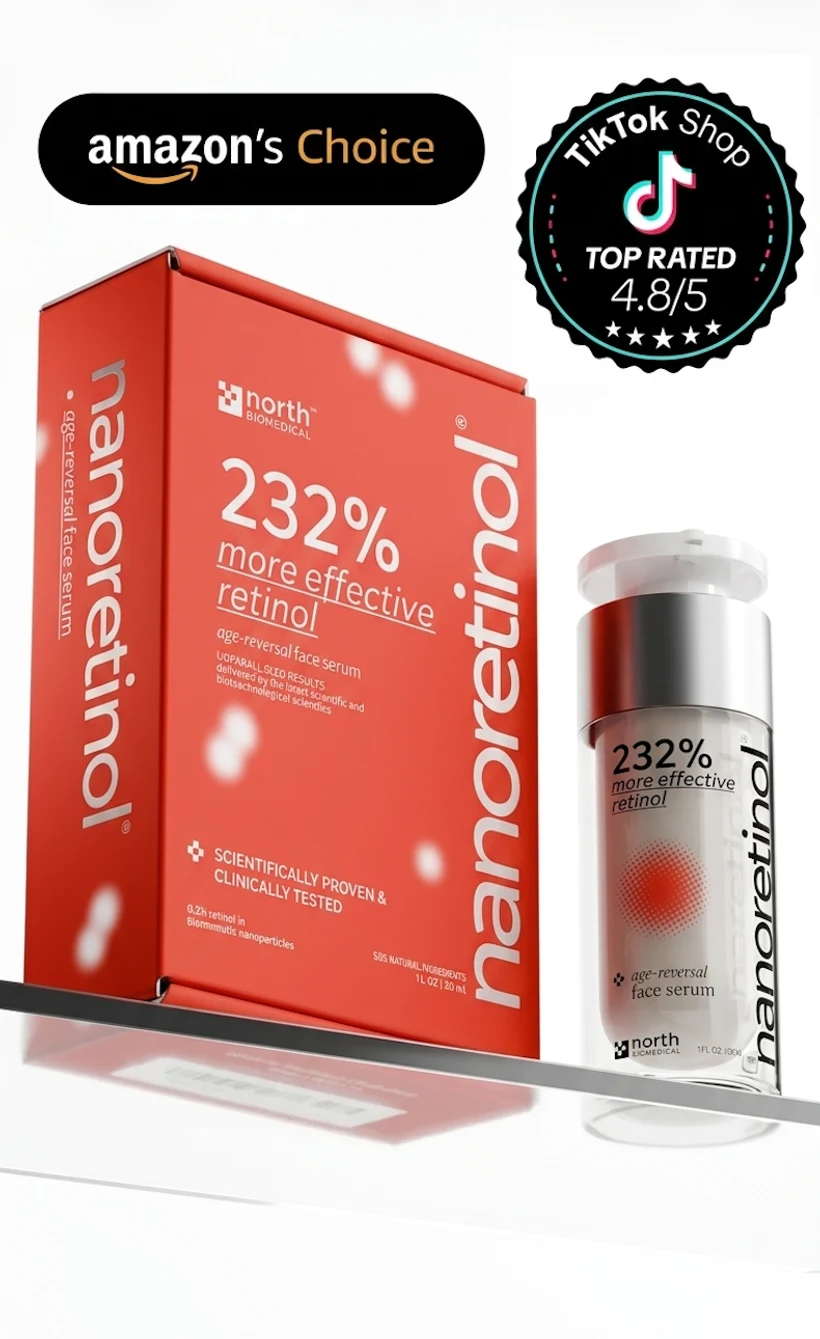
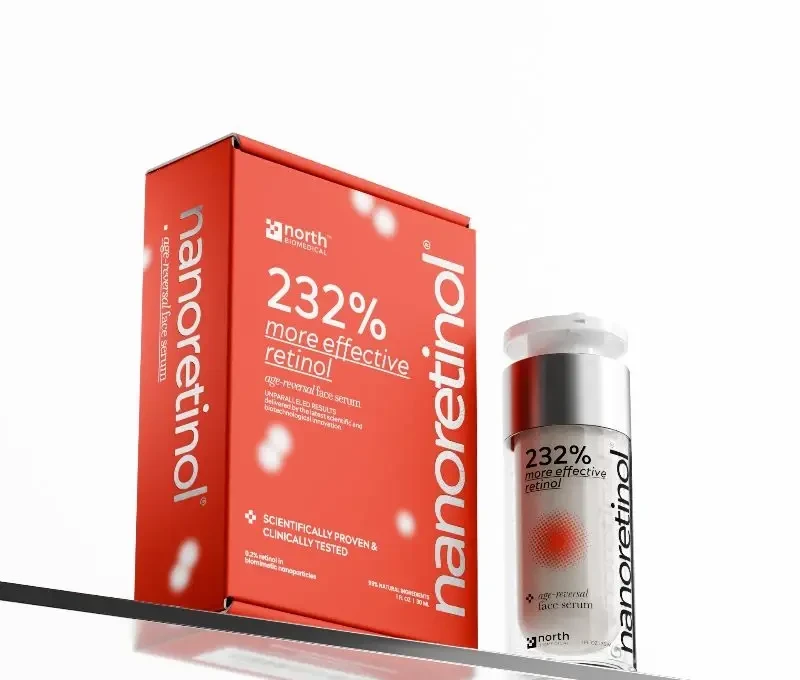
This is where Nanoretinol bridges the two worlds. Rather than forcing retinol through the skin by disrupting the barrier, Nanoretinol encapsulates it in biomimetic lipid nanoparticles that the skin recognizes as “self” and admits without damage. The result is a retinoid that behaves the way K-beauty wants ingredients to behave: it is water-based, light, and non-greasy, made with 99% natural ingredients, and clinically gentler on skin cells than conventional retinol, with significantly reduced cytotoxicity. Yet it does not trade away potency — in comparative testing it delivered 232% greater collagen recovery and 73% greater elastin recovery than standard retinol, and over 56 days of use produced a 61% increase in firmness and a 56% increase in elasticity.
In other words, it slots neatly into a Korean-style routine: cleanse, hydrate with your essences and serums, support the barrier — and add the proven retinoid your gentle routine was missing, in a form that will not undo the calm you worked to build. For readers comparing broader options, our roundup of the best anti-aging serums puts these ingredient choices in context.
How to build a K-beauty routine for mature skin
Keep it simple and layered. In the morning: a gentle cleanser, a hydrating toner or essence, niacinamide, a Korean moisturizer with a texture matched to your skin, and broad-spectrum sunscreen — the non-negotiable anchor of any anti-aging plan, and the one step where Korean sunscreen formulas hold a real regulatory advantage over what is sold in the US. At night: cleanse, layer hydration, and use a well-tolerated retinoid a few nights a week, building up frequency as your skin adapts. Add soothing actives like centella or snail mucin wherever your skin wants more comfort.
The lesson of Korean skincare for aging skin is not that gentler always means better — it is that gentleness lets proven ingredients work without collateral damage. Pair that philosophy with a retinoid your barrier can actually tolerate, and you get the best of both traditions: the calm, glowing surface of K-beauty and the real structural change only a retinoid delivers. Japan arrives at a similar conclusion by a different regulatory route, which makes Japanese skincare for aging skin worth reading alongside this.
References
- Bissett DL, Oblong JE, Berge CA. “Niacinamide: A B Vitamin That Improves Aging Facial Skin Appearance.” Dermatologic Surgery. 2005;31(7 Pt 2):860-865. PMID: 16029679
- Park KS. “Pharmacological Effects of Centella asiatica on Skin Diseases: Evidence and Possible Mechanisms.” Evidence-Based Complementary and Alternative Medicine. 2021;2021:5462633. doi:10.1155/2021/5462633
- Cho S, Won CH, Lee DH, et al. “Red Ginseng Root Extract Mixed with Torilus Fructus and Corni Fructus Improves Facial Wrinkles and Increases Type I Procollagen Synthesis in Human Skin: A Randomized, Double-Blind, Placebo-Controlled Study.” Journal of Medicinal Food. 2009;12(6):1252-1259. PMID: 20041778
- Lim VZ, Yong AA, Tan WPM, Zhao X, Vitale M, Goh CL. “Efficacy and Safety of a New Cosmeceutical Regimen Based on the Combination of Snail Secretion Filtrate and Snail Egg Extract to Improve Signs of Skin Aging.” Journal of Clinical and Aesthetic Dermatology. 2020;13(3):31-36. PMID: 32308795
- Kafi R, Kwak HSR, Schumacher WE, et al. “Improvement of Naturally Aged Skin With Vitamin A (Retinol).” Archives of Dermatology. 2007;143(5):606-612. doi:10.1001/archderm.143.5.606