
Glow Serum: What Actually Makes Skin Glow and Which Ingredients Deliver It
Some glow serums add shine that is gone by lunch. Others change how light leaves your skin for months. Here is how to tell them apart and which ingredients have the evidence
“Glow” is one of the most searched words in skincare, and one of the least defined. A glow serum can be anything from a vitamin C formula to a tinted liquid full of shimmer. Both promise radiant skin. Only one of them changes the skin itself.
To choose well, it helps to know what people actually see when they call someone’s skin glowing, and which ingredients have been shown to change it.
What “glow” really is
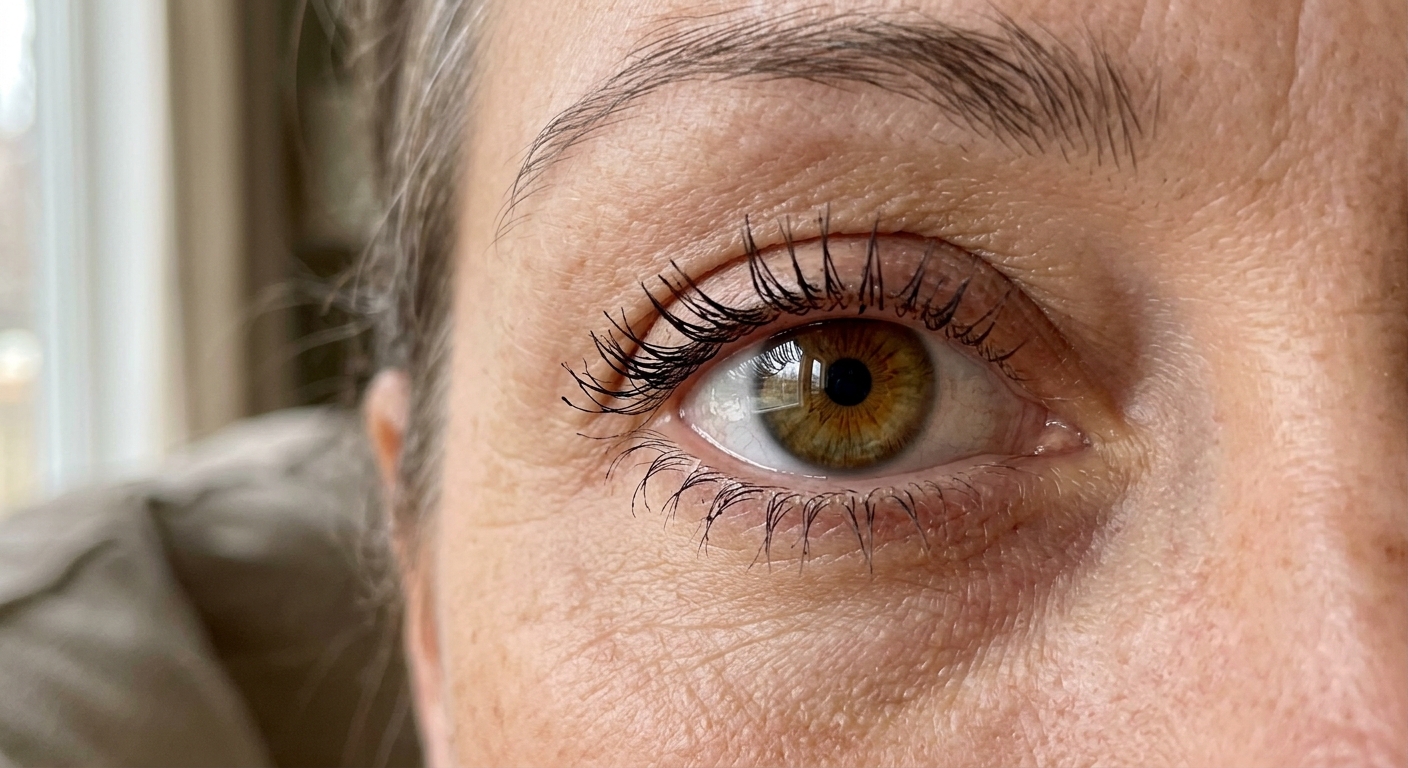
Glowing skin is not just shiny skin. When people judge a face as radiant, they are mostly reacting to three things: how evenly coloured the skin is, how smooth its surface is, and how well hydrated the outer layer looks.
Colour evenness turns out to matter more than most people assume. In a study that cropped cheek skin from 170 women and girls aged 11 to 76, 353 raters judged skin with a more even spread of melanin and redness as healthier, more attractive and younger, and the evenness of each image tracked how old raters guessed the person was [1]. Each image showed only a patch of cheek, so facial features and expression played no part in those judgements.
Your skin can look older than it really is simply because its colour is patchy, long before a single deep wrinkle appears.
Surface smoothness is the second piece. A smooth surface reflects light in one even sheet, while a rough, flaky one scatters it and reads as dull. If your skin has looked flat and grey for months, our guide to dull skin covers the common causes, from slow shedding to dehydration and sun damage.
Two kinds of glow serum
Most products sold as glow serums fall into one of two camps.
Your skin can look older than it really is simply because its colour is patchy, long before a single deep wrinkle appears.
Optical glow serums use light-reflecting particles such as mica, pearl powder or fine pigments, often with glycerin or oils for a wet look. They work the moment they dry, like a sheer highlighter. They also wash off, slide off oily areas by midday, and change nothing about the skin underneath. There is nothing wrong with that, as long as you know you are buying makeup.
Treatment glow serums use actives that change the skin over weeks: antioxidants, exfoliating acids, niacinamide and humectants. They look like any other serum on the first day. The payoff is a surface that reflects more light and a tone that looks more even, even with nothing on your face.
Many products blend both. Read the ingredient list: if mica or “CI 77891” sits near the top and the actives come at the very end, the glow is mostly cosmetic.
Ingredients with real evidence
Vitamin C
Skin naturally holds high levels of vitamin C, which it uses to build collagen and to neutralise the free radicals produced by sunlight [2]. Topical vitamin C has the most direct radiance evidence of any glow ingredient.
In a 3-month split-face trial of 19 adults aged 36 to 72 with mild to moderate sun damage, a topical ascorbic acid serum improved fine wrinkling, roughness, skin tone and sallowness more than the plain serum used on the other half of the face [3]. Skin replica analysis showed a measurable smoothing of the surface [3].
Pure ascorbic acid is unstable, so look for opaque or airless packaging, and expect a mild tingle on sensitive skin.
Niacinamide
Niacinamide is the quiet workhorse of glow serums. In a 12-week split-face study of 50 women with signs of sun damage, 5% niacinamide reduced fine lines, dark spots, red blotchiness and sallowness, and improved elasticity, compared with the vehicle [4]. Less yellowing and less blotchiness are exactly the changes that make skin look clearer and brighter. It is also well tolerated, which makes it a safe base for a daily glow routine.
Your skin needs about 3 months of daily vitamin C to look less sallow, far longer than the few hours of shine a shimmer serum gives.
Lactic and glycolic acid
Exfoliating acids loosen the dead cells that dull the surface. Lactic acid is the gentler option. In a 3-month study, both 5% and 12% lactic acid improved smoothness, texture and fine lines, while only the 12% strength also thickened and firmed the deeper dermis [5].
Acids in a glow serum should be modest. More is not better: daily high-strength acids can strip the barrier and leave skin red and tight, which is the opposite of glowing.
Hyaluronic acid
Hydrated skin cells sit flatter and reflect more light. In a 60-day study of 76 women, creams with 0.1% hyaluronic acid improved hydration and elasticity at every molecular weight tested, and the lower-weight forms also reduced wrinkle depth [6]. Hyaluronic acid works best on damp skin and under a moisturizer that holds the water in.
Why the glow from a serum fades
Optical glow fades because it sits on top. Treatment glow fades for a different reason: skin keeps renewing itself. Shedding slows with age, and dull, dead cells linger on the surface for longer, which is why the same serum that worked at 30 can feel weaker at 50. Our guide to skin cell turnover explains how this cycle changes over the decades.
Your skin needs about 3 months of daily vitamin C to look less sallow, far longer than the few hours of shine a shimmer serum gives.
This is also why it makes sense to judge a treatment glow serum after 8 to 12 weeks, not after a week.
How to build a glow routine
- Morning: a vitamin C or niacinamide serum, then moisturizer, then broad-spectrum sunscreen. Sun damage is the main driver of uneven tone, so the sunscreen is part of the glow plan, not an optional extra.
- Evening, two or three nights a week: a gentle lactic acid serum on clean skin, followed by moisturizer.
- Other evenings: a hyaluronic acid serum and a richer moisturizer, or a retinoid (see below).
- Optional: an optical glow serum or highlighter over sunscreen for events or photos.
Avoid putting a strong acid and a retinoid on the same night, and introduce one new active at a time. If you mainly want to fade spots rather than add radiance, our comparison of the best brightening serum options covers tyrosinase inhibitors and tranexamic acid in more depth.
Glow after 40 runs on collagen
After 40, much of what reads as lost glow comes from deeper changes. Collagen and the water-holding molecules in the dermis decline, so the skin is thinner, less plump and slower to repair. A serum that only treats the surface can only do so much. Our guide to glowing skin over 40 covers the lifestyle and routine side of this, from sleep to sun habits.
Retinol is the topical ingredient best known for working at that deeper level. In a 24-week trial in older adults, 0.4% retinol improved fine wrinkling and increased collagen production and water-retaining glycosaminoglycans compared with the vehicle [7]. Thicker, better-hydrated skin reflects light more evenly, which is why a nightly retinoid pairs naturally with a morning vitamin C serum.
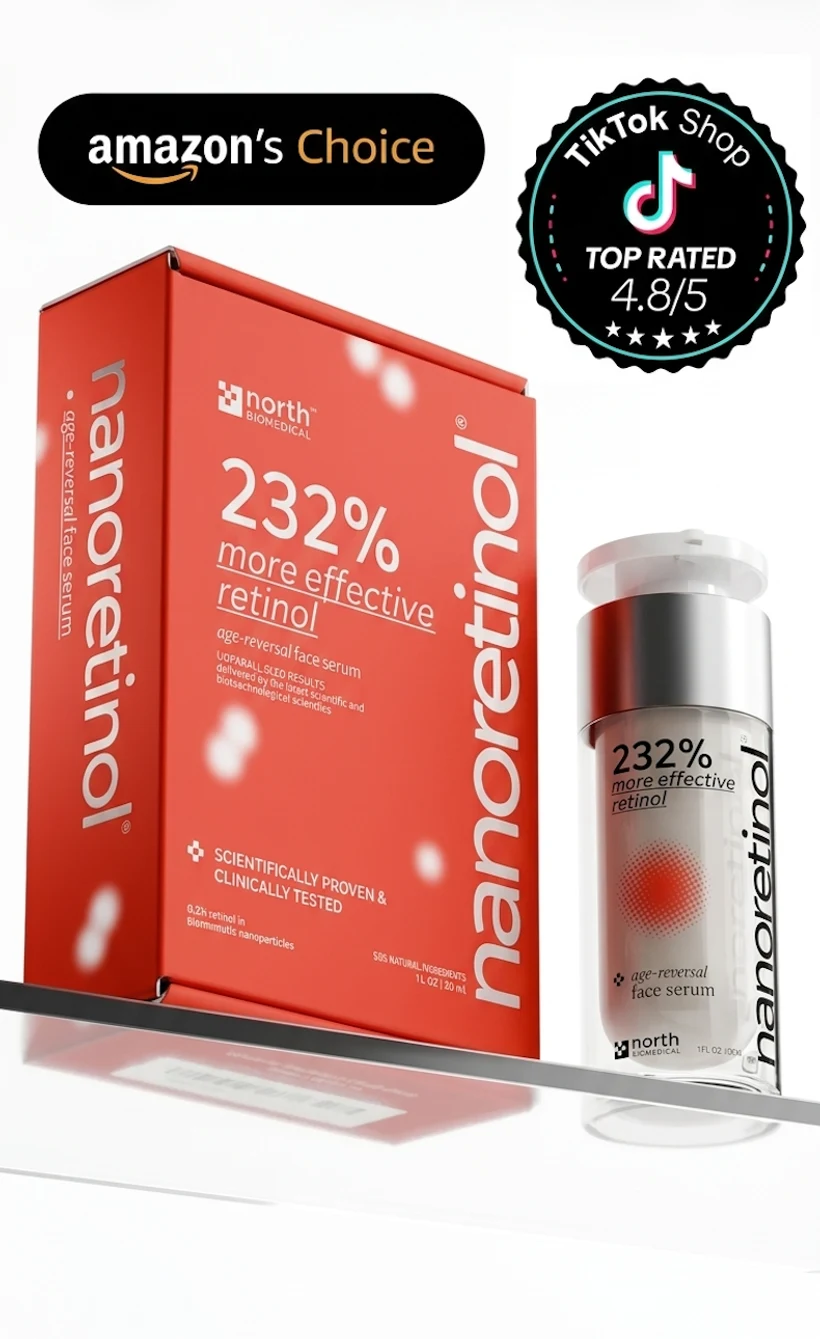
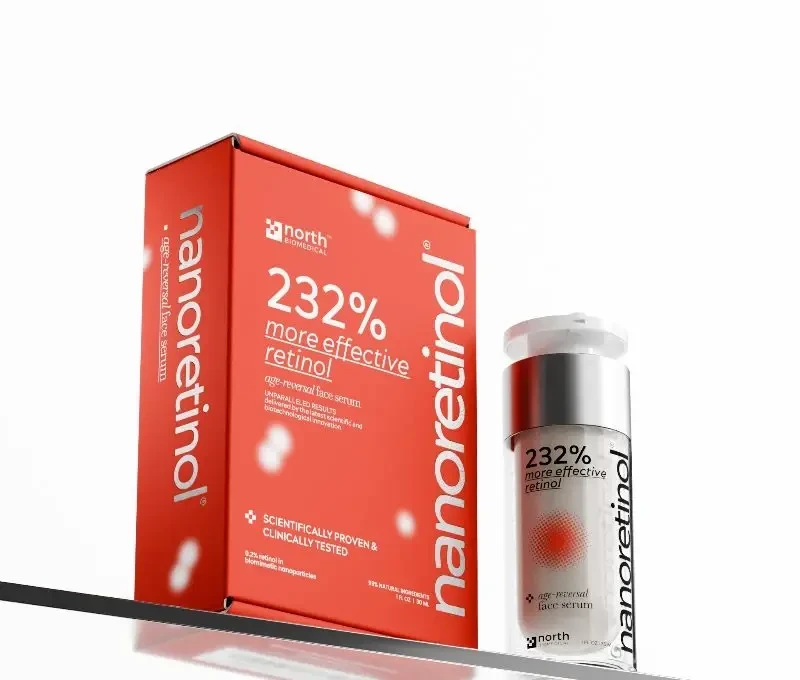
The trade-off with retinol has always been irritation, especially at the start. Nanoretinol is designed for exactly that problem. It carries 0.2% retinol inside biomimetic lipid nanoparticles, in a light, water-based gel suitable for all skin types, including sensitive skin. In North Biomedical’s clinical study, it was 232% more effective in collagen recovery and 73% more effective in elastin recovery than conventional retinol, and users saw a 61% increase in skin firmness and a 56% increase in elasticity after 56 days, with milder side effects than conventional retinol [8].
Use Nanoretinol at night on the evenings without an acid, keep vitamin C or niacinamide for the morning, and finish every day with sunscreen. That combination works on the surface and on the layer underneath it.
References
- Matts PJ, Fink B, Grammer K, Burquest M. “Color Homogeneity and Visual Perception of Age, Health, and Attractiveness of Female Facial Skin.” Journal of the American Academy of Dermatology. 2007;57(6):977-984. doi:10.1016/j.jaad.2007.07.040
- Pullar JM, Carr AC, Vissers MCM. “The Roles of Vitamin C in Skin Health.” Nutrients. 2017;9(8):866. doi:10.3390/nu9080866
- Traikovich SS. “Use of Topical Ascorbic Acid and Its Effects on Photodamaged Skin Topography.” Archives of Otolaryngology–Head & Neck Surgery. 1999;125(10):1091-1098. doi:10.1001/archotol.125.10.1091
- Bissett DL, Oblong JE, Berge CA. “Niacinamide: A B Vitamin That Improves Aging Facial Skin Appearance.” Dermatologic Surgery. 2005;31(7 Pt 2):860-865. doi:10.1111/j.1524-4725.2005.31732
- Smith WP. “Epidermal and Dermal Effects of Topical Lactic Acid.” Journal of the American Academy of Dermatology. 1996;35(3 Pt 1):388-391. PubMed: 8784274
- Pavicic T, Gauglitz GG, Lersch P, Schwach-Abdellaoui K, Malle B, Korting HC, Farwick M. “Efficacy of Cream-Based Novel Formulations of Hyaluronic Acid of Different Molecular Weights in Anti-Wrinkle Treatment.” Journal of Drugs in Dermatology. 2011;10(9):990-1000. PubMed: 22052267
- Kafi R, Kwak HS, Schumacher WE, Cho S, Hanft VN, Hamilton TA, et al. “Improvement of Naturally Aged Skin with Vitamin A (Retinol).” Archives of Dermatology. 2007;143(5):606-612. doi:10.1001/archderm.143.5.606
- North Biomedical LLC. “Nanoretinol vs. Conventional Retinol: Efficacy in Collagen and Elastin Recovery.” Clinical Study Summary, 2024. Study summary