
How to Get Glowing Skin Over 40: The Science of Radiance — and How to Get It Back
Your skin's natural glow doesn't disappear with age — it slows down. Here's the science of restoring it.
What “Glowing Skin” Actually Is
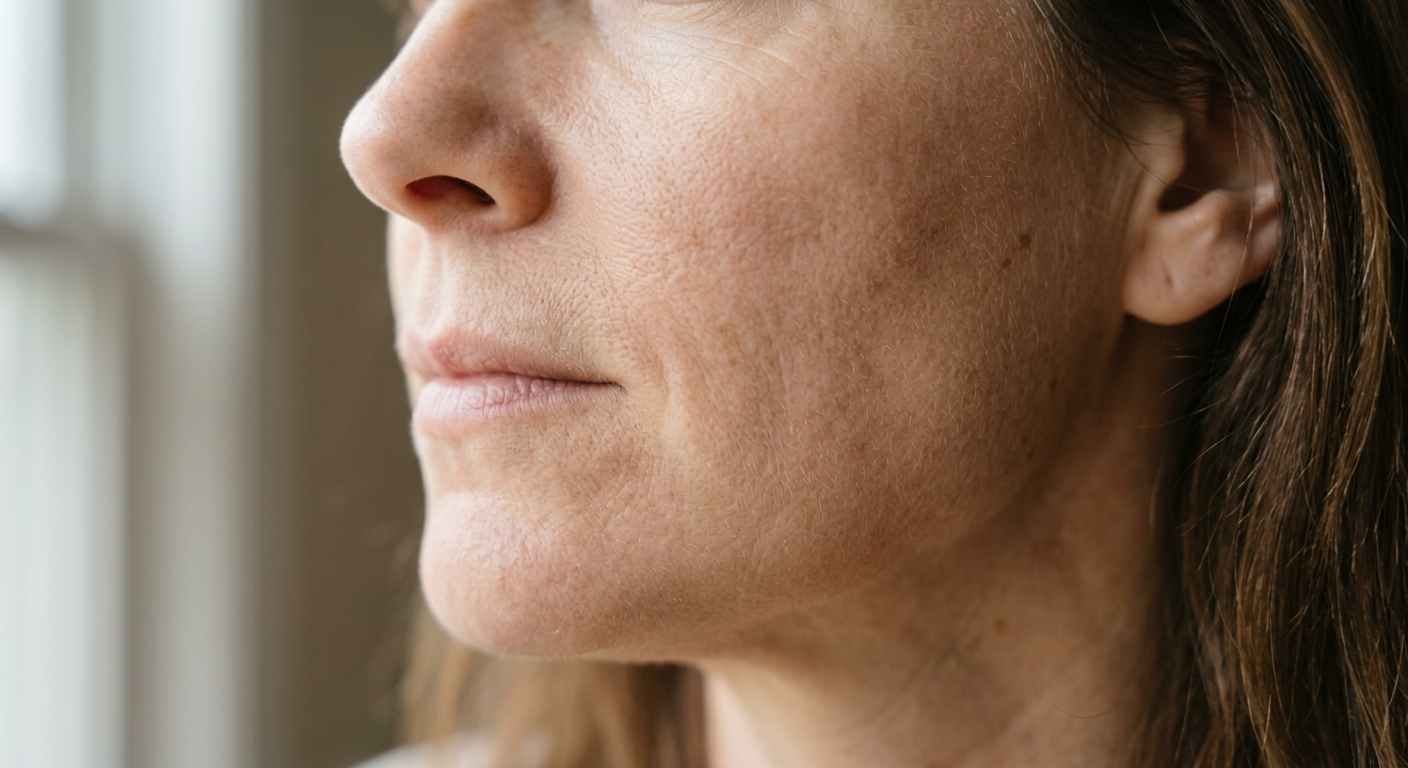
Before there can be a solution, there needs to be a definition. Glowing skin isn’t a vague aesthetic — it’s a specific optical phenomenon that happens when two types of light interact with your skin in the right proportion.
Research published in Skin Research and Technology decomposed the perception of facial radiance into two distinct optical components: surface reflection (light bouncing off the outermost skin surface) and subsurface scattering (light that penetrates the epidermis, scatters through the dermis, and returns diffused) [4]. What reads as a glow is the balanced combination of both. Too much surface reflection alone creates a hard, waxy sheen. Too little surface reflection, with only subsurface depth, produces a flat, lackluster appearance.
The surface component is where most of the aging-related loss happens. A smooth, even skin surface acts like a partially reflective mirror — bouncing light in predictable, pleasing ways. A rough, uneven surface covered with accumulated dead corneocytes and micro-texture irregularities scatters light chaotically, creating the flat appearance most people associate with tired-looking skin.
This is, fundamentally, a turnover problem. Makeup can borrow some of that glow while turnover catches up, and our guide to the best bronzer for mature skin explains which formulas manage it convincingly. The same optics decide the best highlighter for mature skin, where fine pearl reads as glow and coarse glitter reads as texture.
The Turnover Equation
Human skin continuously replaces its outer layers through epidermal renewal: basal keratinocytes divide, migrate upward, flatten, and eventually shed from the surface as corneocytes. In young adults, this cycle takes roughly 28 days. As skin ages, the cycle lengthens substantially.
A foundational study by Grove and Kligman published in the Journal of Gerontology measured stratum corneum transit times in younger vs. older adults and found that the renewal cycle lengthened by more than 10 days with age [1]. Older skin retains dead cells at the surface significantly longer before shedding them. Those retained corneocytes accumulate unevenly, creating the surface roughness and micro-texture that kills light reflection.
Slower cell turnover equals duller skin — not because the underlying skin is damaged, but because the surface isn’t being cleared.
This matters for product strategy. If the core problem is accumulated dead cells at the surface, the solution isn’t adding more moisture on top. It’s accelerating the process that clears them.
Glowing skin isn’t a vague aesthetic — it’s a specific optical phenomenon that happens when two types of light interact with your skin in the right proportion.
The Two-Track Approach to Glowing Skin After 40
Restoring radiance requires working on both the surface (clearing dead cells, improving light reflection) and the subsurface (rebuilding the collagen density that creates healthy depth and bounce). These two tracks work synergistically but need distinct tools.
Track 1 — Accelerate Surface Cell Turnover
Retinol is the most clinically validated ingredient for normalizing epidermal cell turnover in aging skin. A study by Shao et al. in the International Journal of Cosmetic Science demonstrated that topical 0.4% retinol applied to aged human skin significantly increased epidermal thickness through enhanced keratinocyte proliferation, with improvements in skin texture and luminosity directly corresponding to these epidermal changes [2]. A 2023 review in Biomolecules confirmed the mechanism: retinol counteracts age-related epidermal thinning and turnover slowdown through direct upregulation of keratinocyte proliferation pathways [3].
Exfoliating acids (AHAs) take a complementary approach: rather than stimulating new cells from below, they dissolve the bonds between accumulated dead cells at the surface, accelerating shedding. Glycolic acid at pH 4 stimulates epidermal renewal in human skin explants while also boosting collagen levels [5]. Used two to three times per week, a glycolic or lactic acid toner clears the surface buildup that dulls skin between retinol applications.
The two work well together — with one caveat. AHAs and retinol should not be applied simultaneously. Alternating nights (exfoliant one evening, retinol the next), or AHA in the morning and retinol at night, allows them to complement rather than interfere with each other.
Track 2 — Rebuild Subsurface Depth
Vitamin C (L-ascorbic acid) is the most evidence-backed ingredient for improving the subsurface component of skin radiance. Its role is twofold: as a cofactor in collagen synthesis (without it, proline and lysine residues in collagen cannot be properly hydroxylated), and as an antioxidant that neutralizes the free radicals generated by UV exposure and metabolic activity that would otherwise degrade the collagen matrix.
In a six-month double-blind randomized trial by Humbert et al. in Experimental Dermatology, a 5% topical vitamin C cream produced statistically significant improvements in overall skin appearance, measurable reductions in surface roughness, and improved ultrastructural collagen organization compared to placebo in women with photoaged skin [6]. The improvements in surface texture directly corresponded to improved light reflection — the optical mechanism behind radiance.
Hyaluronic acid adds a plumping effect. It draws water into the dermis and epidermis, increasing the volume that light has to scatter through. Well-hydrated skin appears more luminous because the collagen and dermal components are properly spaced and supported. This is why even healthy skin looks dull when dehydrated.
Clinical results include a 61% increase in skin firmness and 56% increase in skin elasticity within 56 days — improvements that depend on the same cellular machinery governing skin radiance.
Why Retinol Delivery Matters for Glow
The biggest barrier to retinol’s benefits isn’t the science — it’s delivery. Conventional retinol formulations use chemical emulsifiers and carrier systems that disrupt the skin’s lipid barrier to force the ingredient through. This irritation-first approach leads many women over 40 to discontinue retinol before the dermal effects — the collagen rebuilding and cell turnover normalization — have time to accumulate.
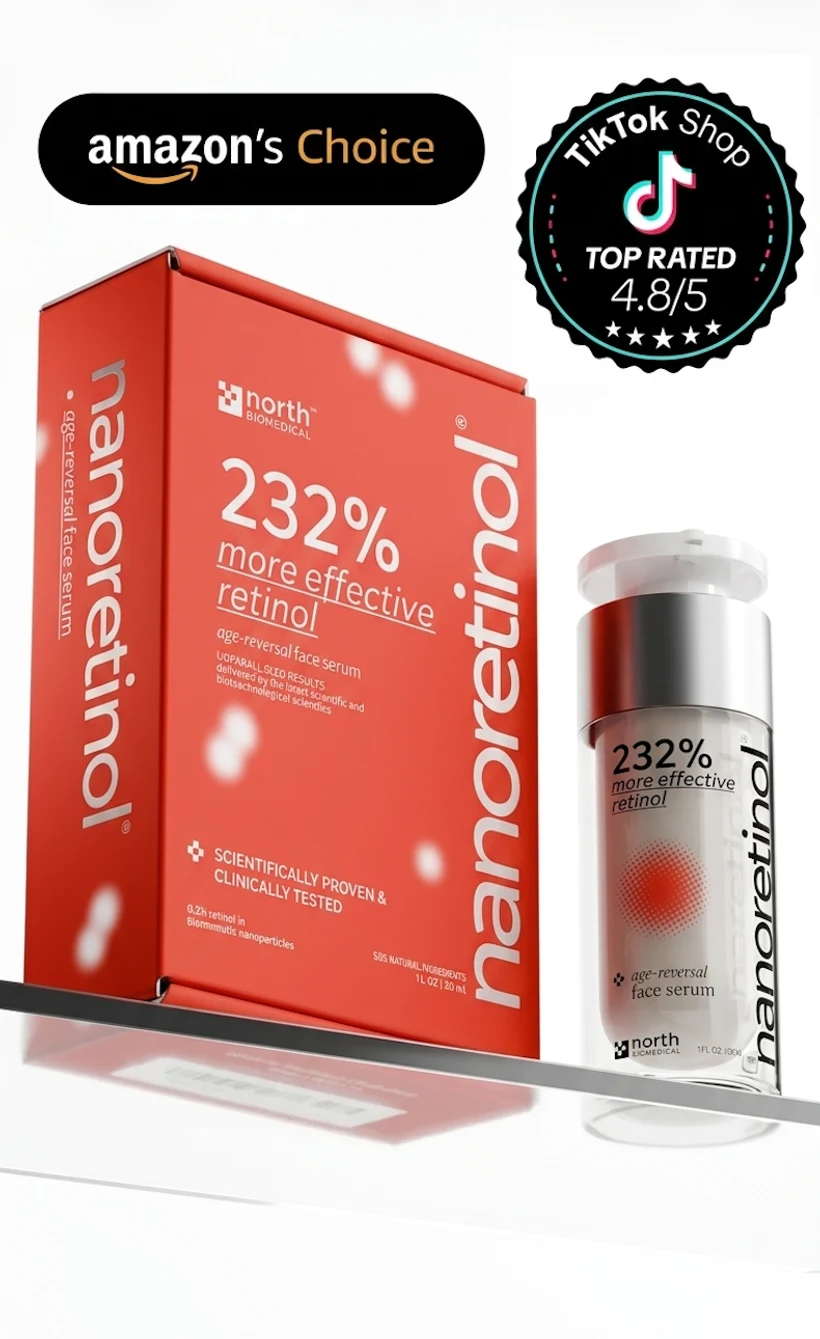
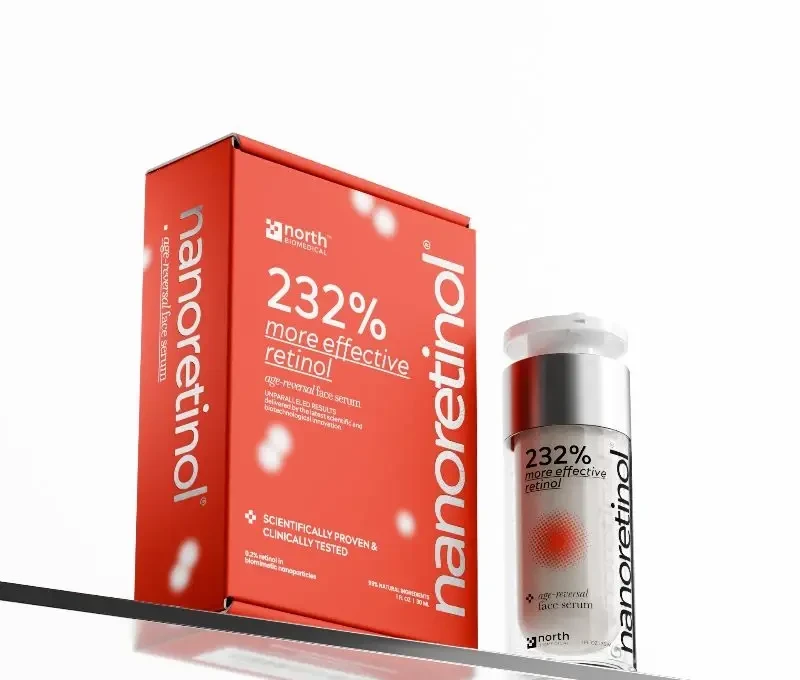
Nanoretinol addresses this differently. The retinol is encapsulated in biomimetic lipid nanoparticles — particles externally identical to the skin’s own cell membranes — that pass through the epithelial barrier without disrupting it. The retinol is released gradually once inside, directly activating the keratinocyte proliferation pathways that restore normal cell turnover. Clinical results include a 61% increase in skin firmness and 56% increase in skin elasticity within 56 days — improvements that depend on the same cellular machinery governing skin radiance.
Skin that renews faster, with better structural support underneath, reflects light more evenly. That is what glowing skin looks like after 40.
Lifestyle Factors That Move the Needle
Skincare actives do the heavy lifting, but a few lifestyle inputs meaningfully support or undermine them:
Sleep. During deep sleep, growth hormone levels peak and epidermal repair — including basal keratinocyte proliferation — accelerates. Chronic sleep deprivation measurably slows epidermal barrier recovery, which lengthens the already-slow cell turnover cycle. Eight hours isn’t a beauty myth; it’s a biological requirement for the system that creates skin glow.
Hydration. The stratum corneum needs a minimum moisture content to function as a barrier and shed properly. Below that threshold, corneocytes don’t detach cleanly — they aggregate and stack, roughening the surface and disrupting light reflection. Adequate water intake supports the hydration gradient that drives healthy skin shedding.
Antioxidant-rich diet. Free radicals generated by UV, pollution, and metabolic processes oxidize the collagen matrix — reducing the subsurface scattering that contributes to depth and glow. A diet rich in polyphenols (berries, dark leafy greens) and carotenoids (sweet potato, tomatoes) provides the substrates for internal antioxidant defense that topical vitamin C can’t fully replace.
For more on the exact mechanisms behind vitamin C serum for anti-aging skin, including its brightening pathway and the evidence behind optimal concentrations, our full guide covers the clinical data. And for a deeper look at the biology of skin cell turnover and aging, that piece explains the full renewal cycle with clinical context.
Building the Routine
A practical glow-focused routine for women over 40:
Morning: Gentle cleanser → vitamin C serum (L-ascorbic acid, 10–15%) → hydrating serum → moisturizer → SPF 30+ (non-negotiable: UV damage is the single largest driver of the collagen degradation that creates dull skin)
Evening (alternating): Gentle cleanser → AHA exfoliant (glycolic or lactic, 2–3×/week) OR encapsulated retinol (on off-exfoliant nights) → moisturizer
Consistency over 8–12 weeks produces visible change. Cell turnover acceleration compounds: each new cohort of keratinocytes responds slightly better to the retinol signal as receptor upregulation accumulates. The glow that emerges isn’t from a single product applied once. It’s from a surface that’s finally being renewed at the rate it was meant to.
References
- Grove GL, Kligman AM. “Age-associated changes in human epidermal cell renewal.” Journal of Gerontology. 1983;38(2):137–142. doi:10.1093/geronj/38.2.137
- Shao Y, He T, Fisher GJ, Voorhees JJ, Quan T. “Molecular basis of retinol anti-ageing properties in naturally aged human skin in vivo.” International Journal of Cosmetic Science. 2017;39(1):56–65. doi:10.1111/ics.12348
- Quan T. “Human Skin Aging and the Anti-Aging Properties of Retinol.” Biomolecules. 2023;13(11):1614. doi:10.3390/biom13111614
- Matsubara A, Liang Z, Sato Y, Uchikawa K. “Analysis of human perception of facial skin radiance by means of image histogram parameters of surface and subsurface reflections from the skin.” Skin Research and Technology. 2012;18(3):265–271. doi:10.1111/j.1600-0846.2011.00570.x
- Narda M, Trullas C, Brown A, Piquero-Casals J, Granger C, Fabbrocini G. “Glycolic acid adjusted to pH 4 stimulates collagen production and epidermal renewal without affecting levels of proinflammatory TNF-alpha in human skin explants.” Journal of Cosmetic Dermatology. 2021;20(2):513–521. doi:10.1111/jocd.13570
- Humbert PG, Haftek M, Creidi P, Lapière C, Nusgens B, Richard A, Schmitt D, Rougier A, Zahouani H. “Topical ascorbic acid on photoaged skin. Clinical, topographical and ultrastructural evaluation: double-blind study vs. placebo.” Experimental Dermatology. 2003;12(3):237–244. doi:10.1034/j.1600-0625.2003.00008.x