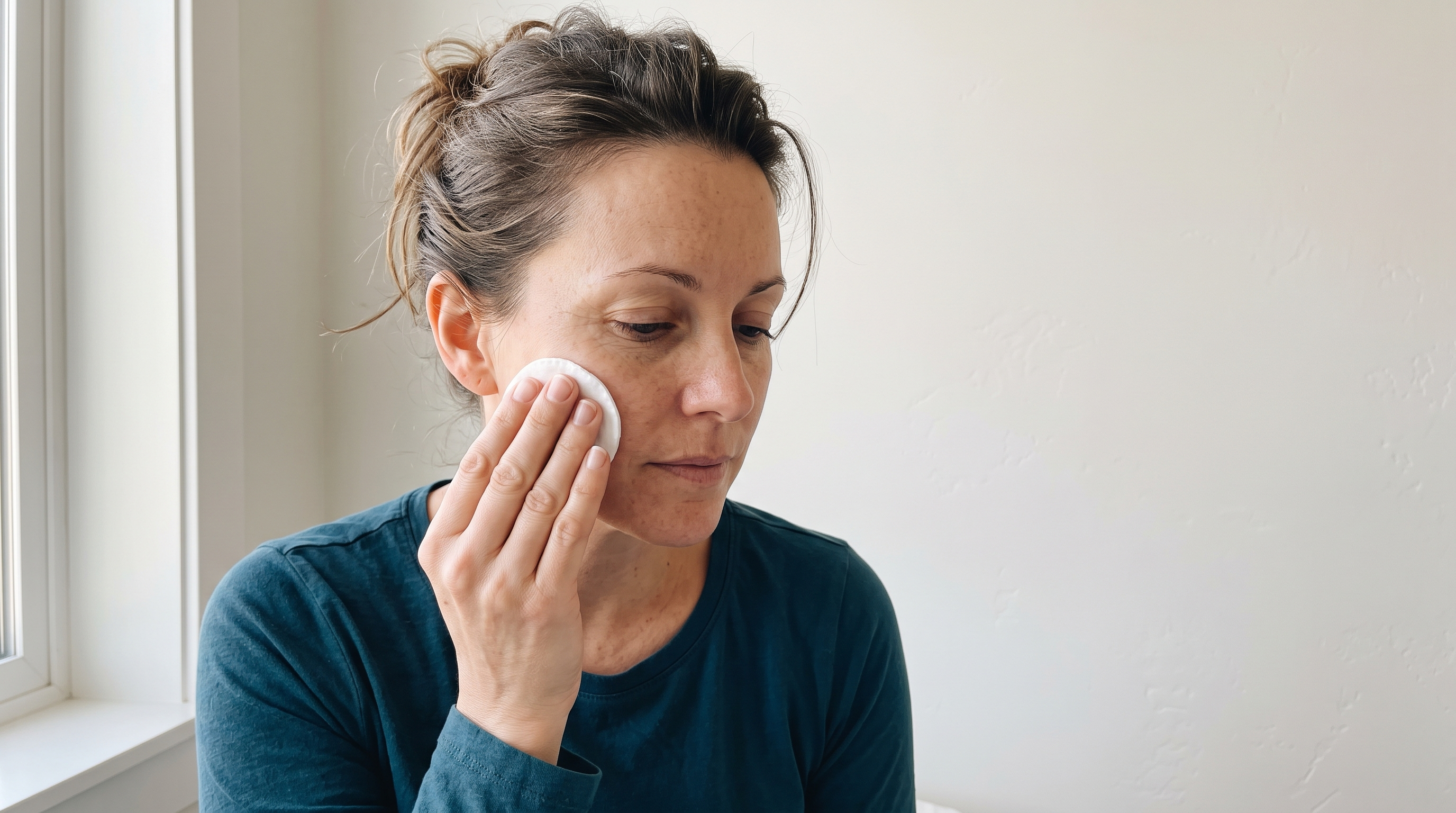
Toner Pads: What They Actually Deliver and How to Use Them Safely
Pre-soaked pads change the dose, add friction and sit in an opened jar for weeks, so the format matters as much as the acid on the label
Toner pads are one of the fastest-growing formats in skincare, helped along by Korean brands that turned a jar of pre-soaked cotton rounds into a daily ritual. They are convenient, travel well and make an exfoliating step feel effortless. That last quality is exactly why they deserve more thought than a bottle of liquid toner.
A pad is not simply toner on cotton. The format changes how much product reaches your face, adds a mechanical element that liquid alone does not have, and keeps a water-rich formula in an opened jar that gets handled every day. Each of those details matters more than the brand.
Two very different products share one name
The first thing to establish is which kind of pad you are buying, because the category covers two jobs.
Exfoliating pads are soaked in hydroxy acids: glycolic or lactic acid (alpha hydroxy acids), salicylic acid (a beta hydroxy acid) or gluconolactone and lactobionic acid (polyhydroxy acids). They loosen the bonds between dead surface cells so they shed faster, which smooths texture and brightens tone [1].
Hydrating or soothing pads are soaked in humectants and calming extracts such as panthenol, centella or heartleaf, usually with little or no acid. In Korean routines they are often laid on the cheeks for a few minutes as a quick toner mask.
These two products belong in different places in a routine. A soothing pad can be used daily by most people. An exfoliating pad is a treatment, and it needs the same caution as any acid product.
A toner pad is not simply toner on cotton, because the pad decides how much reaches your face and how hard it is rubbed in.
What the pad itself changes
Dose becomes less predictable. With a liquid toner you choose how much to pour. With a pad the manufacturer chooses how much liquid to load, and your skin receives only the part that transfers off the cotton. Pads near the top of a jar can dry out while those at the bottom sit saturated, so the amount of acid you apply can vary from one day to the next.
Friction adds to the chemistry. Many pads have a textured or embossed side designed for exfoliation. Rubbing that surface across skin that is also being chemically exfoliated stacks two forms of exfoliation into one step. Used with a light hand, that is fine. Scrubbed on vigorously every morning, it is how people end up with stinging, shiny, over-exfoliated skin.
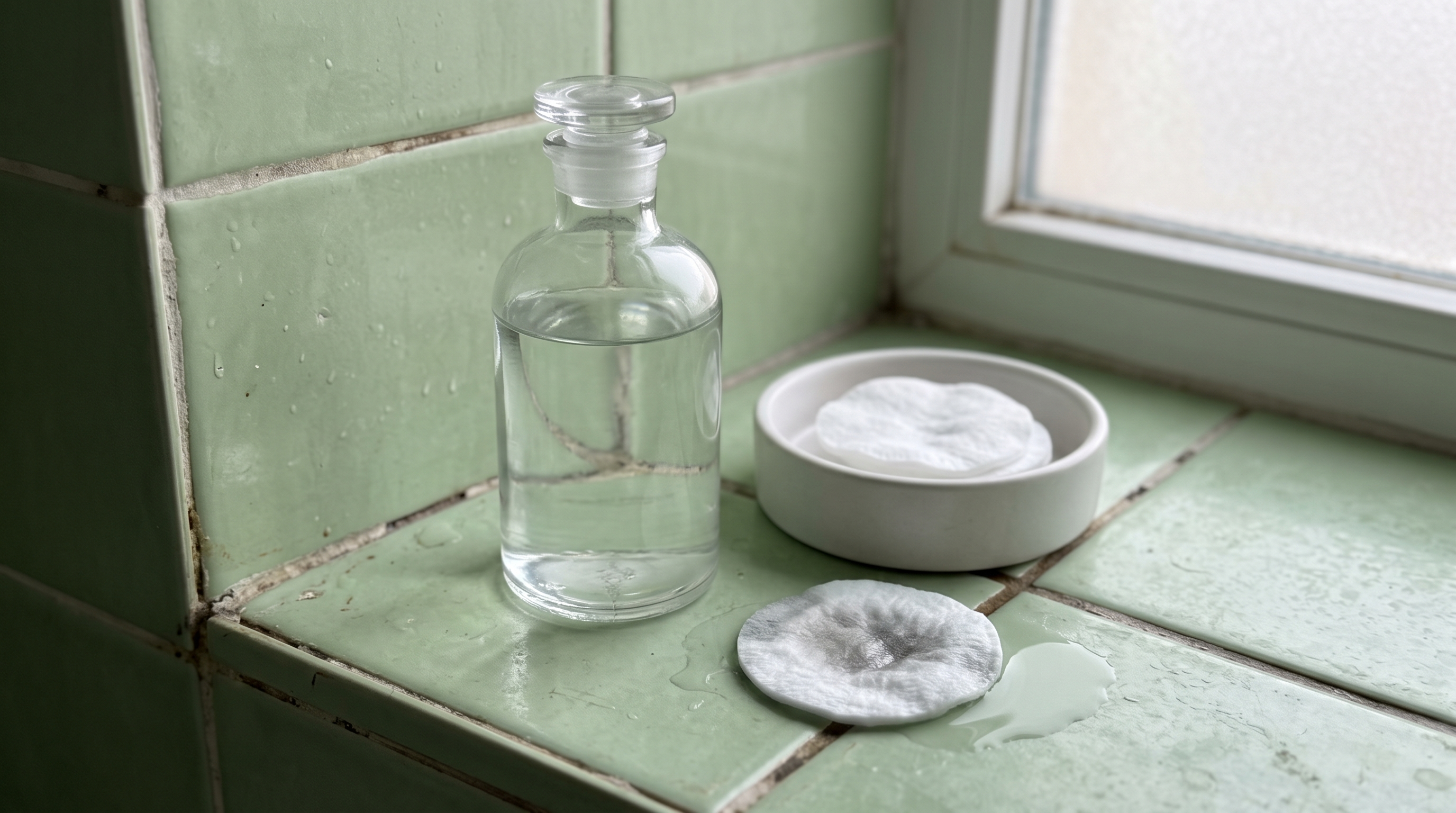
The jar is an open, water-rich environment. Products with high water content are at particular risk of microbial contamination, and organisms including Staphylococcus aureus and Pseudomonas aeruginosa are frequently found in contaminated cosmetics [2]. A jar that is opened daily, sometimes with wet fingers, relies heavily on its preservative system. Use the tweezers or spatula if one is supplied, close the lid tightly, and respect the period-after-opening symbol on the pack.
How the acids compare
Not every exfoliating acid behaves the same way on a pad.
Glycolic acid is the smallest alpha hydroxy acid, penetrates fastest and exfoliates most visibly, which also makes it the most likely to sting. Our guide to glycolic acid toner explains why the pH of a formula decides how much of the labelled percentage is actually active.
Lactic acid is slightly larger, a little gentler and also acts as a humectant.
Salicylic acid is oil-soluble, so it works inside pores, which makes BHA pads a better fit for oily and congestion-prone skin than for dry, mature skin. The broader trade-offs are laid out in our AHA vs BHA comparison.
Polyhydroxy acids such as gluconolactone offer many of the benefits of alpha hydroxy acids without the sensory irritation that limits their use. Grimes and colleagues describe them as compatible with clinically sensitive skin, humectant, and able to strengthen barrier function [3]. For reactive or mature skin, a PHA pad is the most sensible starting point, as we discuss in our guide to PHA exfoliants for mature skin.
Whether a hydroxy acid helps or harms skin depends substantially on its concentration, as a review in Molecules concluded [4]. A pad that looks mild because it is soaked in a thin liquid can still deliver a meaningful acid dose if you use it daily.
The sun sensitivity nobody mentions on the jar
Exfoliating pads are often marketed as a morning step. That deserves a caveat. In a randomised, double-blind study of 29 people, 10% glycolic acid at pH 3.5 applied six days a week for four weeks made skin measurably more sensitive to ultraviolet light, increasing sunburn cell formation and lowering the dose needed to cause redness [5]. The effect disappeared within a week of stopping.
Reviews of hydroxy acid safety, including one co-authored by a retired FDA scientist, emphasise the same point: prolonged use on sun-exposed skin needs daily sun protection [6]. If you use an acid pad in the morning, broad-spectrum sunscreen afterwards is not optional. Many people are better served using exfoliating pads in the evening instead.
Four weeks of 10% glycolic acid left skin measurably quicker to burn, and the effect was gone within a week of stopping.
How often, and how to use them well
Most people do not need an exfoliating pad every day. Two or three evenings a week is a reasonable ceiling for normal skin, and once or twice a week for sensitive or mature skin. Our guide on how often to exfoliate your face covers the signs that you have crossed the line: tightness, stinging from plain moisturizer, a waxy shine, or sudden sensitivity to products that used to be fine.
A few practical rules make pads much safer:
- Use the smooth side first. Save the textured side for areas that genuinely need it, such as the nose and chin, and never scrub.
- Sweep once. One pass over each area is enough. Going over the same patch repeatedly adds dose and friction.
- Keep away from the eye area and lips, and from any broken or freshly shaved skin.
- Follow with a bland moisturizer. Let the acid step be the only active in that part of the routine.
- Keep acid pads and retinoids on separate nights. Alternating avoids stacking two irritating steps and makes it easier to identify what is causing a reaction.
What pads can and cannot change
Exfoliating pads work on the stratum corneum, the dead outer layer of skin. They can improve texture, smooth rough patches and make skin look brighter within weeks [1]. What they do not do is rebuild the collagen and elastin in the dermis, which is where wrinkles and loss of firmness actually originate.
For that, retinol has the stronger evidence. In a randomised, vehicle-controlled trial, 0.4% retinol applied for 24 weeks improved fine wrinkling and increased procollagen I and glycosaminoglycans in aged skin [7].
Where Nanoretinol fits
The reason many people rely on acid pads rather than retinol is that conventional retinol has a reputation for redness and peeling. That reputation largely comes from the delivery system: conventional formulas often use solvents and petroleum-derived penetration enhancers that push retinol through the barrier by disrupting it.
Nanoretinol encapsulates stabilised 0.2% retinol in biomimetic lipid nanoparticles that the skin recognises as its own, so it passes the barrier without that disruption. North Biomedical’s clinical study summary reports 232% greater effectiveness in collagen recovery and 73% greater effectiveness in elastin recovery than conventional retinol, with a 61% increase in skin firmness over 56 days of use. Apply it on the evenings you are not using an acid pad, and wear sunscreen the next day.
Choosing your pad
Decide first whether you want a soothing pad or an exfoliating one. If you want exfoliation, choose the acid for your skin rather than for the trend: PHA for sensitive or mature skin, lactic for dry skin, salicylic for oily and congested skin, glycolic only once you know you tolerate acids. Use a light hand, keep the jar clean and closed, and let the pad handle the surface while something else handles the structure beneath it.
References
- Green BA, Yu RJ, Van Scott EJ. “Clinical and cosmeceutical uses of hydroxyacids.” Clinics in Dermatology. 2009;27(5):495-501. doi:10.1016/j.clindermatol.2009.06.023
- Lundov MD, Moesby L, Zachariae C, Johansen JD. “Contamination versus preservation of cosmetics: a review on legislation, usage, infections, and contact allergy.” Contact Dermatitis. 2009;60(2):70-78. doi:10.1111/j.1600-0536.2008.01501.x
- Grimes PE, Green BA, Wildnauer RH, Edison BL. “The use of polyhydroxy acids (PHAs) in photoaged skin.” Cutis. 2004;73(2 Suppl):3-13. PMID: 15002656
- Tang SC, Yang JH. “Dual effects of alpha-hydroxy acids on the skin.” Molecules. 2018;23(4):863. doi:10.3390/molecules23040863
- Kaidbey K, Sutherland B, Bennett P, et al. “Topical glycolic acid enhances photodamage by ultraviolet light.” Photodermatology, Photoimmunology & Photomedicine. 2003;19(1):21-27. doi:10.1034/j.1600-0781.2003.00013.x
- Kornhauser A, Coelho SG, Hearing VJ. “Applications of hydroxy acids: classification, mechanisms, and photoactivity.” Clinical, Cosmetic and Investigational Dermatology. 2010;3:135-142. doi:10.2147/CCID.S9042
- Kafi R, Kwak HS, Schumacher WE, et al. “Improvement of naturally aged skin with vitamin A (retinol).” Archives of Dermatology. 2007;143(5):606-612. doi:10.1001/archderm.143.5.606