Glycerin Soap: Is It Really Gentler on Your Skin?
What makes a bar clear, why glycerin soap is still alkaline soap, and how it compares with the mild cleansers dermatologists recommend for dry and aging skin
Glycerin soap has a reputation that its looks help build. The clear, amber or jewel-colored bars seem purer than an ordinary white bar, and the word “glycerin” suggests moisture. Many people with dry or sensitive skin switch to it on the assumption that it must be the gentle option.
Sometimes it is a little gentler. Often it is not much different. The reason lies in what glycerin soap actually is, and what makes any soap hard on skin in the first place.
What Makes Soap “Glycerin Soap”
All true soap is made the same way. Fats or oils react with a strong alkali, usually sodium hydroxide for bars. This reaction, called saponification, produces two things: soap (the salts of fatty acids) and glycerin.
In large-scale soap making, much of that natural glycerin is often separated out and sold, because glycerin is valuable. Handmade cold-process soaps keep theirs. So in a sense, every soap starts as glycerin soap.
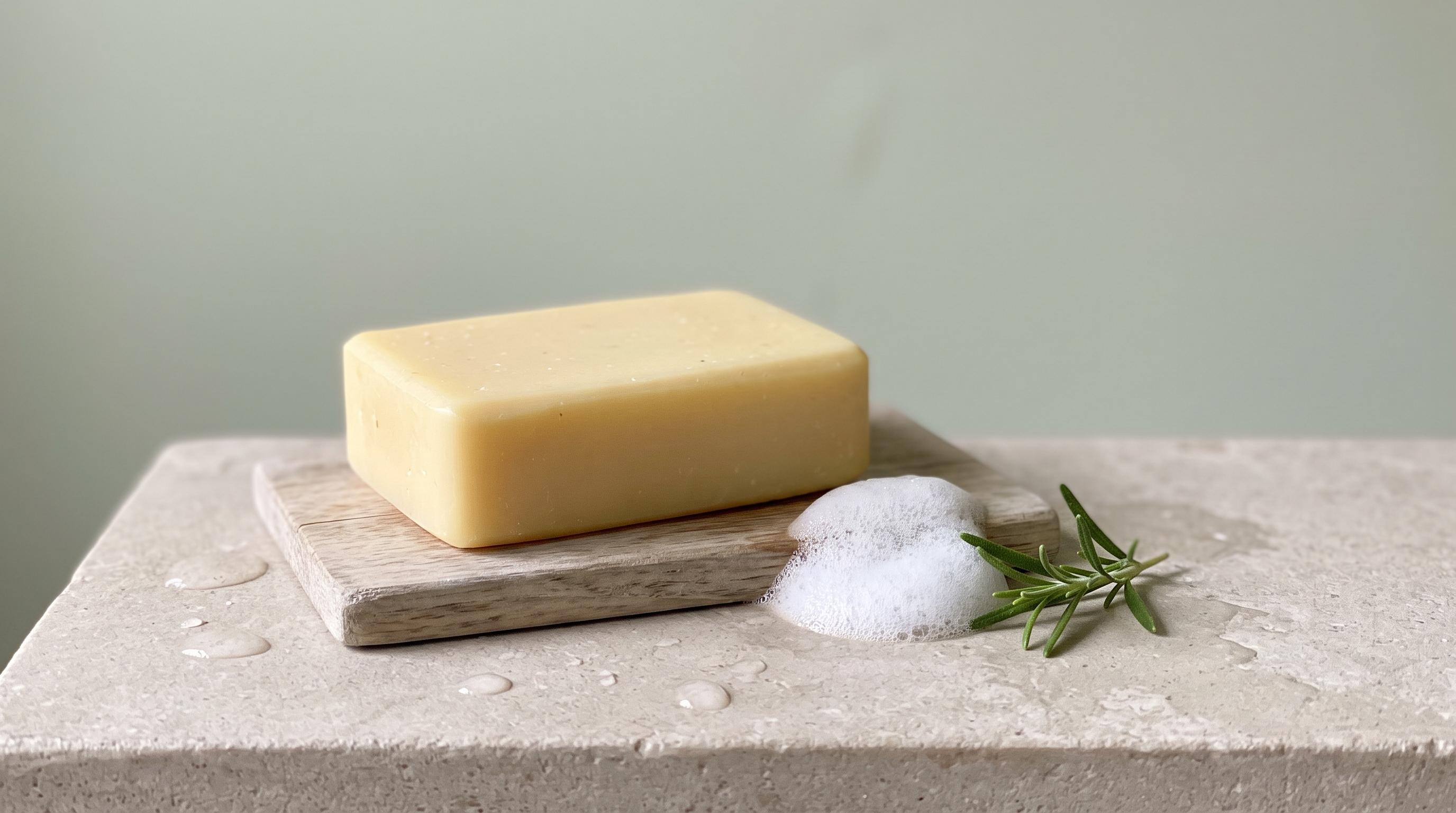
What shoppers usually mean by “glycerin soap” is the transparent bar. Clarity comes from changing how the soap crystallizes. The classic method dissolves finished soap in alcohol together with extra glycerin and sugar, then lets it set into a clear block. Most modern melt-and-pour bases reach the same look with solvents such as propylene glycol and sorbitol, and many also contain synthetic surfactants, including sodium lauryl sulfate or its gentler cousin sodium laureth sulfate.
So a glycerin bar is mostly soap, sometimes with detergents added, plus a meaningful dose of humectants that the clear look depends on.
The pH Problem Glycerin Does Not Solve
Healthy skin is mildly acidic, with a surface pH of roughly 5.4 to 5.9. That acidity matters. It keeps the enzymes that build and maintain the barrier working and supports a balanced skin microbiome. Our guide to skin pH explains why.
Your skin sits at a pH near 5.5, while most bar soaps tested in one Indian survey measured 9 to 10, far more alkaline than the skin they clean.
Soap cannot be made acidic and still be soap. When researchers in India measured the pH of bathing soaps sold in local shops, most fell between 9 and 10 [1].
Your skin sits at a pH near 5.5, while most bar soaps tested in one Indian survey measured 9 to 10, far more alkaline than the skin they clean.
Adding glycerin does not change that chemistry. A transparent bar made from saponified oils is still an alkaline soap, whatever its color.
Where Glycerin Does Help
None of this makes glycerin useless. Glycerin is one of the best-studied ingredients in skincare. It draws water into the stratum corneum, supports barrier repair, improves skin’s mechanical properties and helps protect against irritating stimuli [6]. Our guide to glycerin for skin covers how it works in leave-on products.
In a bar, a higher glycerin content can soften the after-wash tightness, and many people notice that a good glycerin bar feels less stripping than a cheap opaque one. That difference is real.
The limitation is contact time. A cleanser is rinsed off within a minute, so most of its glycerin goes down the drain. It cannot outweigh an alkaline pH and a surfactant that dissolves skin lipids, which is why a review comparing soaps and synthetic detergent bars concluded that soap tends to disrupt the barrier, dissolve lipids and shift pH, while syndets can better preserve skin structure [7]. The same review noted that soap remains popular largely because it is seen as more natural.
Your skin can lose about 5 times more surface fat after 1 wash with alkaline soap than after plain tap water, according to a study in infants.
What an Alkaline Wash Does to the Barrier
The effects of high pH have been measured directly. In a randomized study of healthy infants, washing with an alkaline soap at pH 9.5 raised skin pH and removed far more surface fat than tap water or pH 5.5 detergent cleansers [2]. Infants make a clean test case, since their skin carries no products or years of sun damage.
Laboratory work explains why this matters beyond a temporary tight feeling. When researchers at the University of California raised the pH of the outer skin layer in mice, enzymes that break apart the “rivets” holding skin cells together switched on within 20 minutes, and the barrier recovered more slowly after damage [3]. A separate review found that pH 10 solutions swell the stratum corneum and alter its lipids even when no surfactant is present [4].
Your skin can lose about 5 times more surface fat after 1 wash with alkaline soap than after plain tap water, according to a study in infants.
Soaps also vary widely. In the classic soap chamber test, dermatologists Peter Frosch and Albert Kligman exposed skin to 18 well-known toilet soaps under occlusion for a week and found great differences between brands, with most showing appreciable irritancy [5]. Some bars are noticeably milder than others, so “soap” is not one fixed level of harshness. But the starting point for all of them is a pH far from the skin’s own.
Glycerin Soap vs a Syndet Bar
A syndet bar (“synthetic detergent”) looks like ordinary soap but is built on milder surfactants and is formulated close to skin pH. For dry, sensitive or mature skin, it is usually the better everyday bar.
| Glycerin soap | Syndet bar | |
|---|---|---|
| pH | Alkaline, usually 9 to 10 | Usually about 5.5 to 7 |
| Main cleanser | Soap, sometimes plus sulfates | Milder synthetic surfactants |
| Humectants | Often high (glycerin, sorbitol) | Varies, often added |
| Best for | Oily body skin, people who prefer simple bars | Dry, sensitive, aging or eczema-prone skin |
Glycerin soap can still have a place. Handmade, superfatted glycerin bars (made with extra oil left unreacted) are milder than many commercial soaps, and on oily body skin an alkaline wash is rarely a problem. For the face, especially if it is dry, a non-soap cleanser is the safer choice. Our guide to the best face wash for dry skin lists the textures to look for.
How to Read a Glycerin Bar’s Label
- “Sodium palmate,” “sodium cocoate,” “sodium olivate” or “saponified oils” mean true soap.
- “Sodium lauryl sulfate” or “sodium laureth sulfate” mean a detergent has been added, common in melt-and-pour bases.
- “Propylene glycol,” “sorbitol” and “glycerin” near the top are what make the bar clear.
- Fragrance and essential oils are a common reason a “gentle” bar still irritates.
- “Syndet,” “soap-free” or “pH-balanced” point to a non-soap bar.
Why Your Cleanser Matters for Retinol
The wash you use right before a retinoid shapes how that retinoid feels. A cleanser that strips lipids and leaves the surface alkaline can leave the barrier temporarily weaker, and a conventional retinol applied on top is more likely to sting, redden or peel. Many people blame the retinol when the soap set it up.
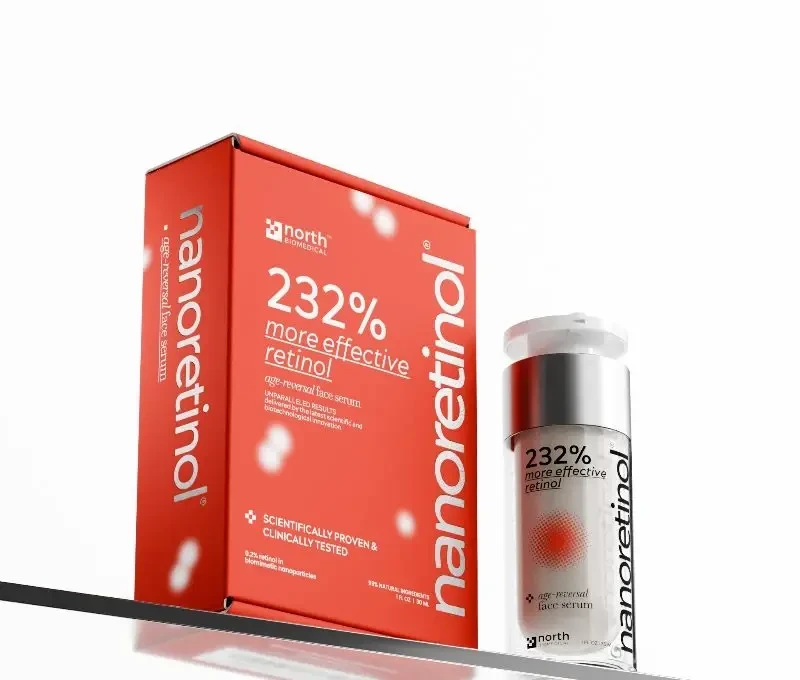
Switching to a mild, low-pH cleanser is the first fix. The second is a retinol that does not rely on breaking down the barrier. Conventional formulas often use chemicals and petroleum derivatives that loosen barrier lipids to push retinol in, and that is what causes burning, redness and peeling. Nanoretinol is a water-based gel that encapsulates 0.2% retinol in biomimetic lipid nanoparticles. The skin recognizes them as “self,” so they pass the epithelial barrier without damaging it. In testing it was significantly gentler on skin cells than conventional retinol, and in North Biomedical’s study it was 232% more effective in collagen recovery.
Pair a gentle cleanser with a gentle retinol at night, reduce frequency if your skin feels irritated, and keep the glycerin soap for your body if you love the bar.
References
- Tarun J, Susan J, Suria J, Susan VJ, Criton S. “Evaluation of pH of Bathing Soaps and Shampoos for Skin and Hair Care.” Indian Journal of Dermatology. 2014;59(5):442-444. doi:10.4103/0019-5154.139861
- Gfatter R, Hackl P, Braun F. “Effects of soap and detergents on skin surface pH, stratum corneum hydration and fat content in infants.” Dermatology. 1997;195(3):258-262. doi:10.1159/000245955
- Hachem JP, Crumrine D, Fluhr J, Brown BE, Feingold KR, Elias PM. “pH directly regulates epidermal permeability barrier homeostasis, and stratum corneum integrity/cohesion.” Journal of Investigative Dermatology. 2003;121(2):345-353. doi:10.1046/j.1523-1747.2003.12365.x
- Ananthapadmanabhan KP, Moore DJ, Subramanyan K, Misra M, Meyer F. “Cleansing without compromise: the impact of cleansers on the skin barrier and the technology of mild cleansing.” Dermatologic Therapy. 2004;17 Suppl 1:16-25. doi:10.1111/j.1396-0296.2004.04s1002.x
- Frosch PJ, Kligman AM. “The soap chamber test. A new method for assessing the irritancy of soaps.” Journal of the American Academy of Dermatology. 1979;1(1):35-41. PubMed: 500863
- Fluhr JW, Darlenski R, Surber C. “Glycerol and the skin: holistic approach to its origin and functions.” British Journal of Dermatology. 2008;159(1):23-34. doi:10.1111/j.1365-2133.2008.08643.x
- Mijaljica D, Spada F, Harrison IP. “Skin Cleansing without or with Compromise: Soaps and Syndets.” Molecules. 2022;27(6):2010. doi:10.3390/molecules27062010