Hyaluronic Acid vs Glycerin: Which Humectant Your Skin Actually Needs
One is the most famous molecule in skincare. The other quietly outperforms it in most bathrooms.
One of these ingredients has a marketing budget and the other has a century of clinical use. Hyaluronic acid appears on the front of the bottle in serif capitals. Glycerin usually appears third on the ingredient list, unmentioned, doing most of the work.
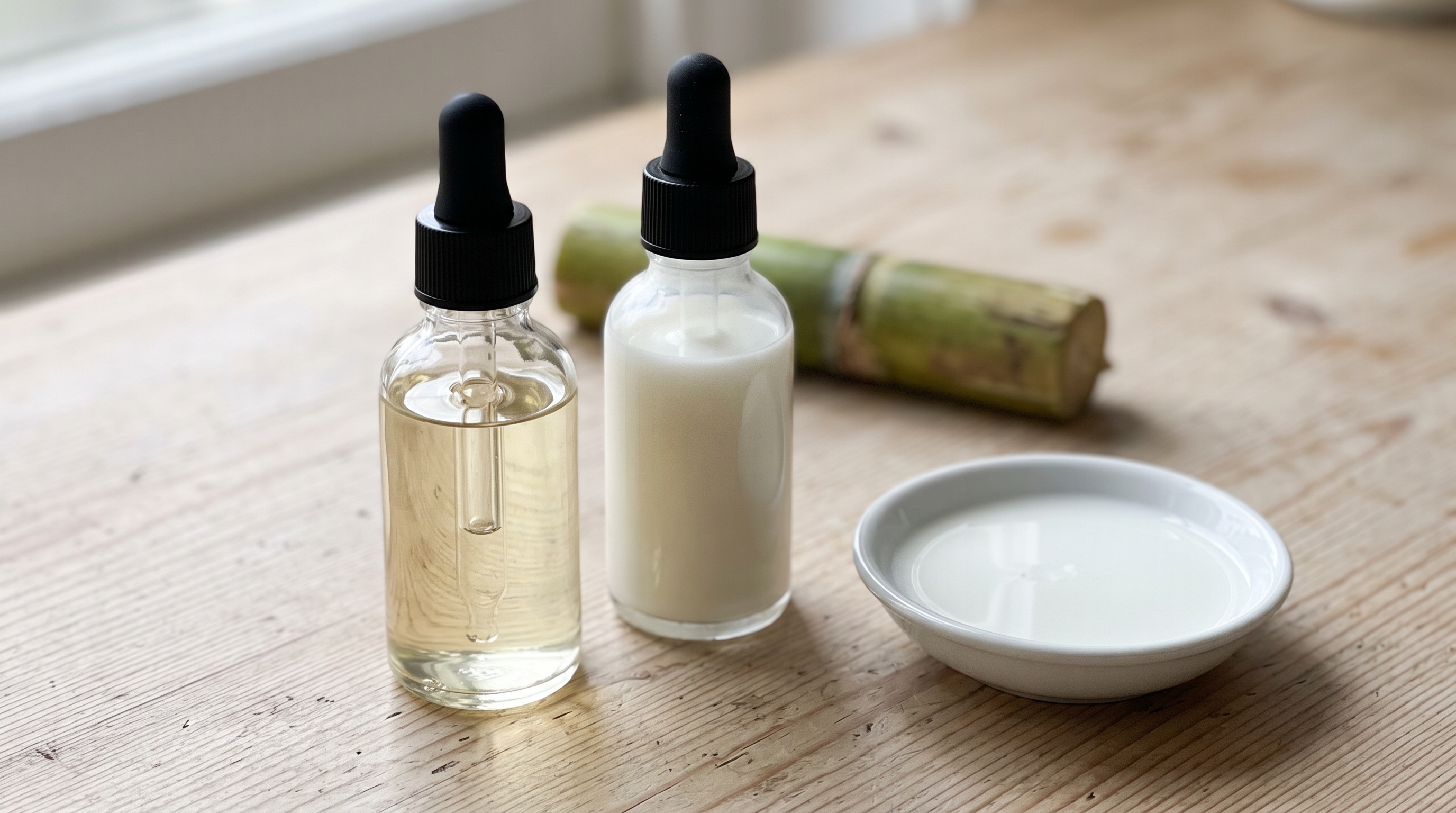
They belong to the same functional class, which is why comparing them is worth doing properly. Both are humectants: water-binding molecules that pull moisture toward the skin’s surface and hold it there. Where they differ is in size, in where they end up, and in how they behave when the air around you is dry.
What Both Molecules Are Doing
Skin hydration is governed by the stratum corneum’s ability to retain water, which depends on its natural moisturising factor, its lipid structure, and how much water is arriving from the layers below [1]. A humectant intervenes by holding water molecules in place. Neither ingredient “adds moisture” in any meaningful sense. Both manage water that is already present or is drawn in from the environment.
That distinction matters because it explains why humectants sometimes disappoint. A humectant with nothing above it to slow evaporation will surrender the water it gathered, and in dry air it can pull moisture from the deeper epidermis outward.
Neither molecule creates water, so both of them are only as good as whatever you seal them in with.
Neither molecule creates water, so both of them are only as good as whatever you seal them in with.
Where Glycerin Wins
Glycerin is small, roughly 92 daltons, which means it penetrates the stratum corneum readily and works from inside the tissue rather than only on top of it. Skin also has dedicated machinery for moving it: aquaporin-3, a channel protein in keratinocyte membranes, transports glycerol as well as water, and glycerol transport through that channel is central to normal stratum corneum hydration and elasticity [2]. A comprehensive review of glycerol in skin describes it as contributing not only to hydration but to barrier repair and to the desquamation process itself [3].
The clinical record is unglamorous and solid. A placebo-controlled, double-blind randomised study of a glycerol-based emollient found significant improvement in skin hydration and barrier measures on compromised skin [4].
Glycerin also has the advantage of being humidity-tolerant. Because it moves into the tissue and integrates with the skin’s own water-handling system, it does not depend on ambient moisture to the same degree.
Where Hyaluronic Acid Wins
Hyaluronic acid is enormous by comparison. Native forms run into the millions of daltons, and even the cosmetic grades sold as low molecular weight sit in the tens of thousands. A tape-stripping study measuring topical hyaluronic acid across the skin layers confirmed what the size predicts: the larger fractions concentrate in the uppermost layers, with penetration strongly dependent on molecular weight [5].
Staying on the surface is not a flaw. High-molecular-weight hyaluronic acid forms a hydrated film that gives an immediate visual plumping effect and reduces water loss, and it does this more dramatically than glycerin does. If you want fine lines to soften within ten minutes of application, hyaluronic acid is the better tool.
It also has proper trial evidence. A double-blind randomised controlled trial in older adults with xerosis compared topical hyaluronic acid of different molecular weights and found meaningful improvement in dryness measures [6], and a multicentre evaluation of a topical hyaluronic acid serum reported improvements in hydration and the appearance of fine lines [7].
The Humidity Problem Nobody Puts on the Box
Here is the practical fork in the road. In a humid room, a hyaluronic acid serum has plenty of atmospheric water to draw on and performs beautifully. In a dry one, in winter heating, on a plane, in air conditioning, the equation inverts. A large humectant sitting on the surface with a steep moisture gradient beneath it can move water the wrong way, and barrier disruption, dehydration and inflammation then reinforce each other [8].
If your hyaluronic acid serum makes your skin feel tighter than before you applied it, your room is too dry for it.
If your hyaluronic acid serum makes your skin feel tighter than before you applied it, your room is too dry for it.
Glycerin is far less exposed to this failure mode because much of it is no longer sitting at the surface. This single mechanism explains most of the “hyaluronic acid does nothing for me” reports, and it is usually fixed by applying to damp skin and sealing immediately, or by switching to glycerin in the dry months. Our guide to dehydrated skin covers the wider pattern, and skin flooding explains the layering technique built around this exact problem.
Which One Should You Buy
Choose glycerin if you live somewhere dry or heated, if your skin is genuinely dry rather than dehydrated, if you have a compromised barrier, or if you want the cheaper and more reliable option. It is in almost every decent moisturiser already. Full detail in our guide to glycerin for skin.
Choose hyaluronic acid if you want immediate visual plumping, if you live somewhere humid, if your skin is oily and you want hydration without heaviness, or if you are layering under an occlusive. Our guide to the benefits of hyaluronic acid goes deeper on molecular weight.
Choose both, which is what most well-built formulas already do. They are complementary rather than competing, and there is no interaction to manage.
The Thing Neither of Them Does
Hydration makes skin look better immediately and it is a legitimate goal. It is also cosmetic in the strict sense. A well-hydrated stratum corneum reflects light more evenly and sits more smoothly, so fine lines soften. Stop applying and the effect fades within a day or two, because nothing underneath has changed.
Wrinkles that persist on well-hydrated skin are structural, caused by fragmented collagen and degraded elastin in the dermis, and no humectant of any molecular weight reaches that tissue or instructs the cells in it.
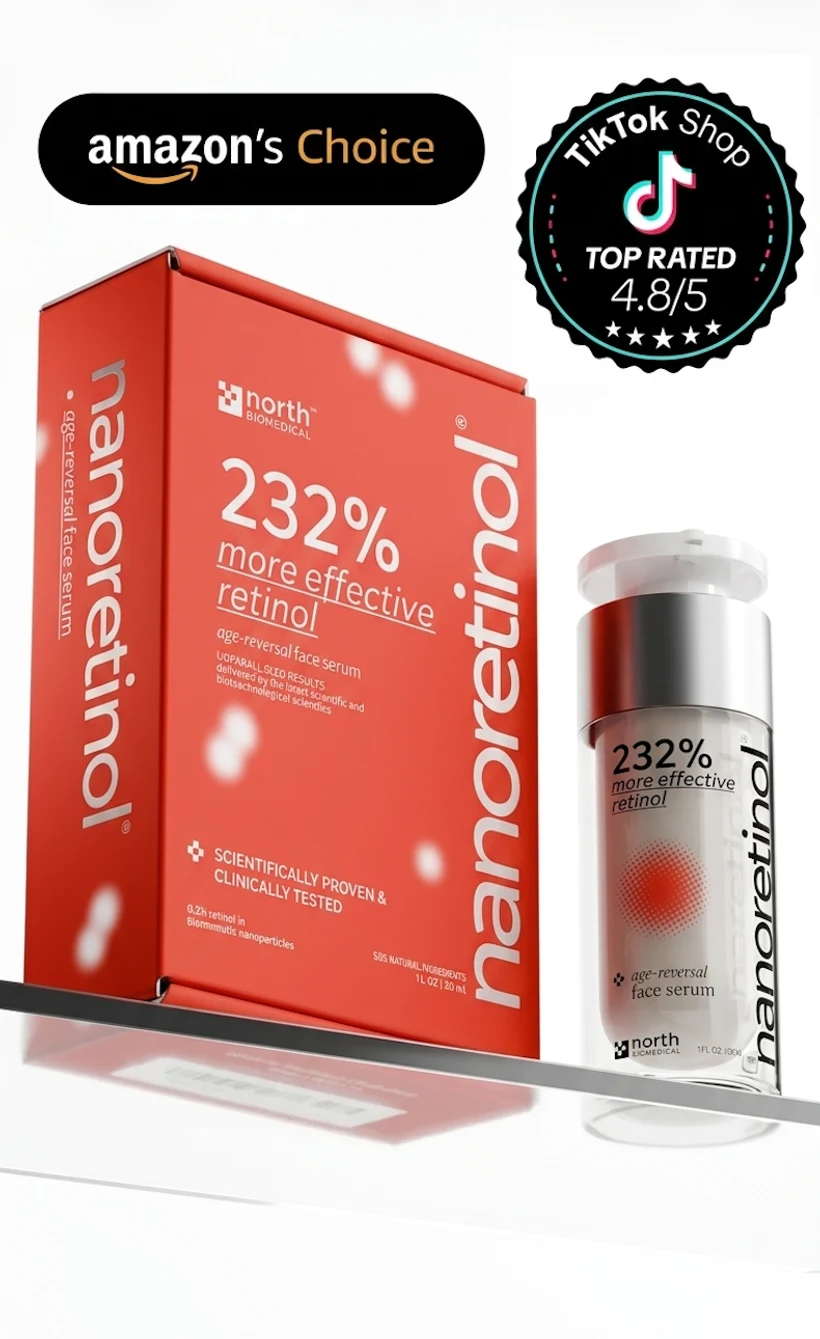
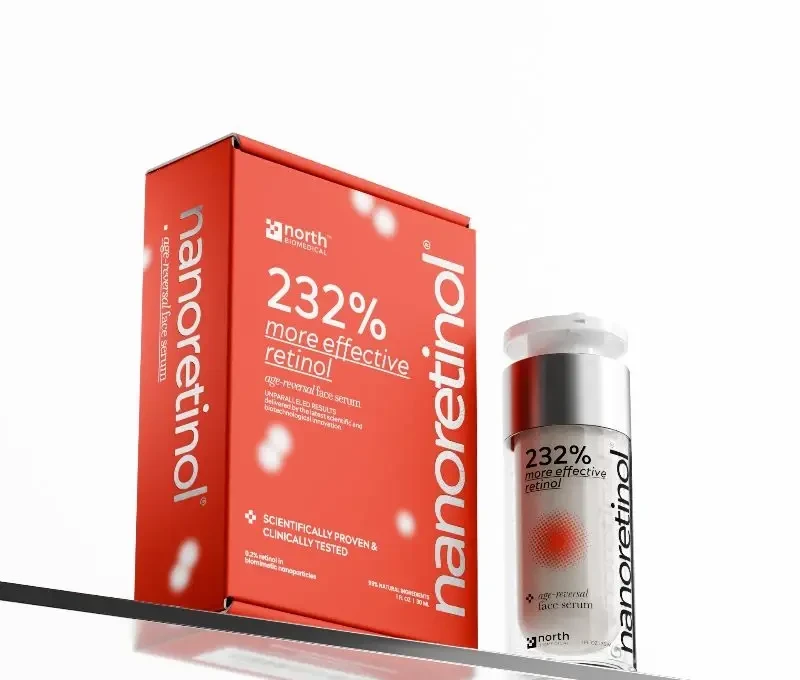
Retinoids remain the best-documented topical answer to that layer, and the long-standing obstacle has been getting them there without provoking the irritation that makes people quit. Nanoretinol approaches it through delivery rather than dose, encapsulating retinol in biomimetic lipid nanoparticles the skin recognises as its own and admits without the barrier being broken down. In North Biomedical’s clinical study summary, Nanoretinol vs. Conventional Retinol: Efficacy in Collagen and Elastin Recovery (2024), that approach delivered 232% greater collagen recovery and 73% greater elastin recovery than conventional retinol, with a 56% increase in skin elasticity over 56 days.
The Short Version
Glycerin is the better everyday humectant for most people in most climates, and it is already in your moisturiser. Hyaluronic acid is the better immediate-effect ingredient and earns its place in humid air or under an occlusive layer. Neither one is doing anything about the collagen, which is a separate line item in your routine and the one that decides how your skin looks in five years.
References
- Verdier-Sévrain S, Bonté F. “Skin hydration: a review on its molecular mechanisms.” Journal of Cosmetic Dermatology. 2007;6(2):75-82. doi:10.1111/j.1473-2165.2007.00300.x
- Hara-Chikuma M, Verkman AS. “Aquaporin-3 functions as a glycerol transporter in mammalian skin.” Biology of the Cell. 2005;97(7):479-486. doi:10.1042/BC20040104
- Fluhr JW, Darlenski R, Surber C. “Glycerol and the skin: holistic approach to its origin and functions.” British Journal of Dermatology. 2008;159(1):23-34. doi:10.1111/j.1365-2133.2008.08643.x
- Breternitz M, Kowatzki D, Langenauer M, Elsner P, Fluhr JW. “Placebo-controlled, double-blind, randomized, prospective study of a glycerol-based emollient on eczematous skin in atopic dermatitis: biophysical and clinical evaluation.” Skin Pharmacology and Physiology. 2008;21(1):39-45. doi:10.1159/000111134
- Grégoire S, Man PD, Maudet A, Bacqueville D, Levêque N, Bessou-Touya S, Duplan H, Queille-Roussel C. “Hyaluronic acid skin penetration evaluated by tape stripping using ELISA kit assay.” Journal of Pharmaceutical and Biomedical Analysis. 2023;224:115205. doi:10.1016/j.jpba.2022.115205
- Muhammad P, Novianto E, Setyorini M, Legiawati L, Yusharyahya SN, Rihatmadja R. “Effectiveness of topical hyaluronic acid of different molecular weights in xerosis cutis treatment in elderly: a double-blind, randomized controlled trial.” Archives of Dermatological Research. 2024;316(6):329. doi:10.1007/s00403-024-03003-2
- Robinson DM, Vega J, Palm MD, Kaufman J, Callender VD, Ahn K. “Multicenter evaluation of a topical hyaluronic acid serum.” Journal of Cosmetic Dermatology. 2022;21(9):3848-3858. doi:10.1111/jocd.15241
- Bize C, Le Gélébart E, Moga A, Payré B, Garcia C. “Barrier disruption, dehydration and inflammation: Investigation of the vicious circle underlying dry skin.” International Journal of Cosmetic Science. 2021;43(6):729-737. doi:10.1111/ics.12748