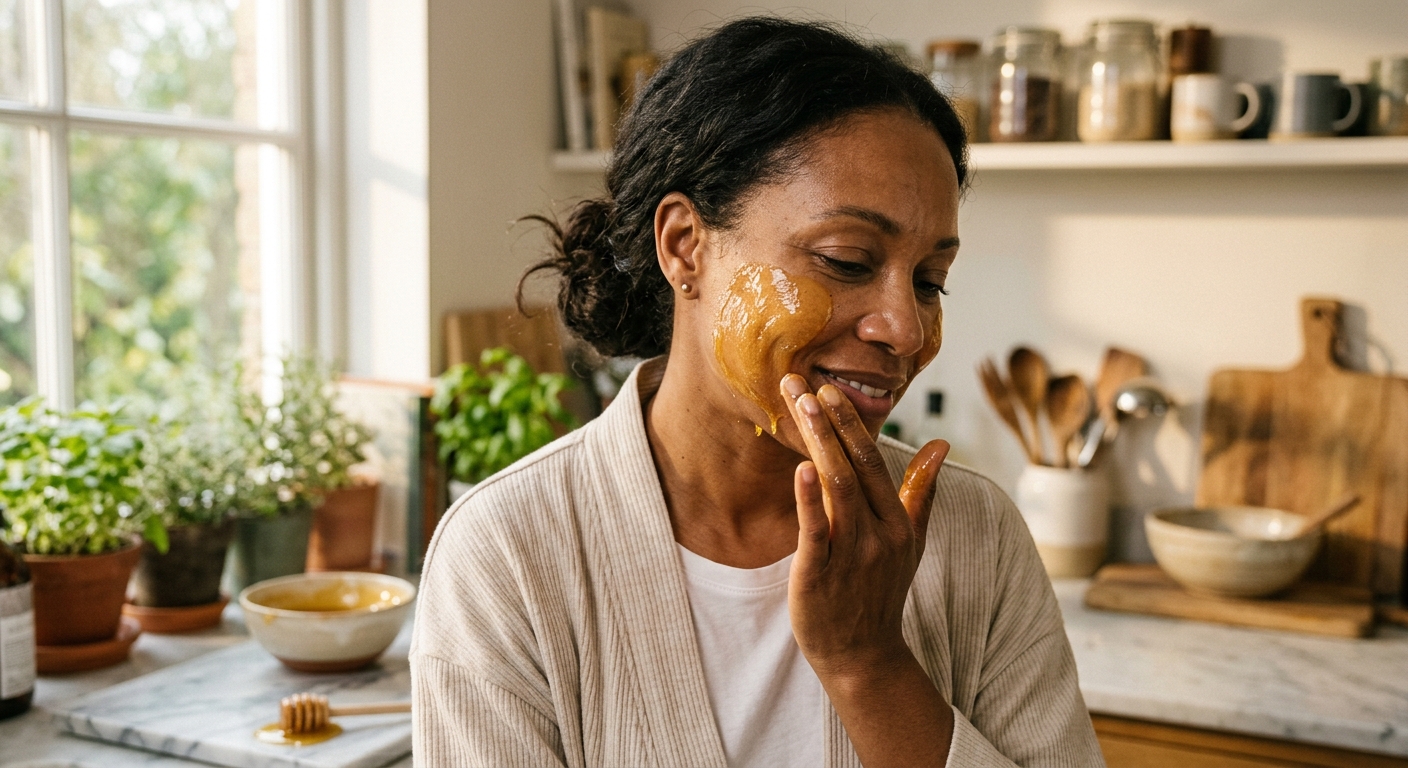
Manuka Honey for Skin: What the Science Actually Supports (and What It Doesn't)
The unique chemistry behind manuka, the clinical evidence for skin healing and aging, and where it fits in a real routine
There is a reason manuka honey costs three to ten times more than regular honey, and it is not branding. The honey produced by bees foraging on the manuka tree (Leptospermum scoparium) in New Zealand and parts of southeastern Australia contains a chemical compound called methylglyoxal at concentrations roughly a hundred times higher than conventional honey [1]. That compound is the reason your dermatologist’s wound dressing in the hospital may have manuka honey impregnated into it, and it is the reason the ingredient has migrated from clinical wound care into prestige skincare bottles over the past fifteen years.
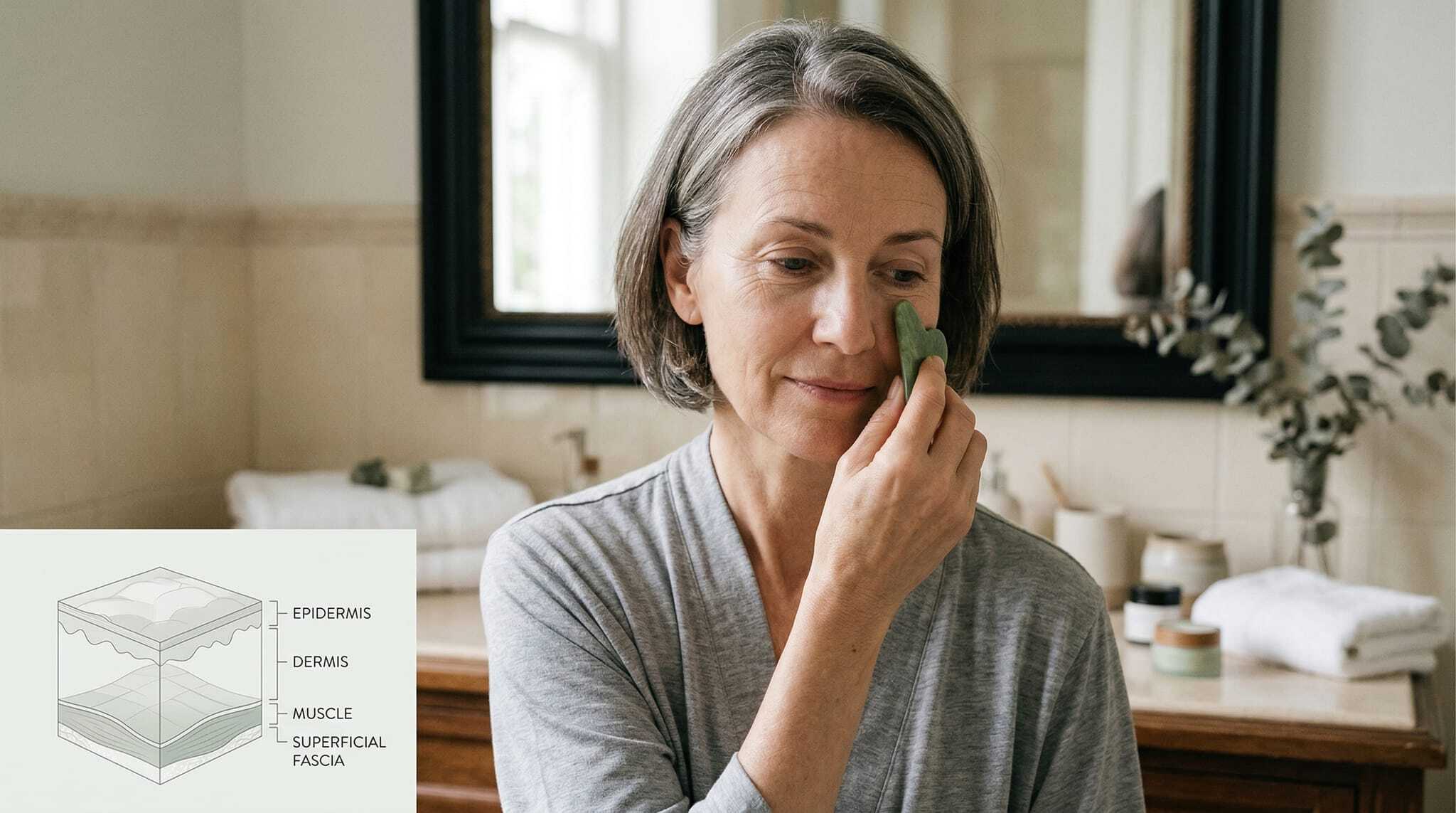
Whether manuka honey deserves a place in your aging-skin routine — and what it can realistically do — depends on which claims you are reading. Some of them are backed by hospital-grade clinical evidence. Others are extrapolations from wound-care research that do not transfer cleanly to a face that is mostly intact.
What Makes Manuka Different
All honey has some antibacterial activity. The combination of low water content, low pH, and a slow release of hydrogen peroxide from glucose oxidase activity creates an environment most microbes cannot survive in. This is why honey has been used as a topical wound treatment for at least four thousand years, with documented entries in Egyptian medical papyri.
What separates manuka is methylglyoxal — abbreviated MGO. In manuka honey, MGO is produced from dihydroxyacetone in the nectar of the manuka flower as the honey ages. The result is a stable, non-peroxide antibacterial activity that does not depend on hydrogen peroxide and is not deactivated by catalase enzymes present in wound fluid [2]. This is medically important: regular honey loses much of its antibacterial activity once applied to a wet wound, while manuka retains it.
UMF (Unique Manuka Factor) and MGO ratings on jars are attempts to quantify this activity. UMF 10+ corresponds roughly to MGO levels of 263 mg/kg or higher; UMF 20+ corresponds to MGO levels above 829 mg/kg. For meaningful skin effects, the consensus among researchers studying topical honey is that you want at least UMF 10+, and ideally 15+, to be confident the antibacterial properties are present in clinically relevant concentrations.
What the Clinical Evidence Says
The strongest evidence for manuka honey on skin comes from wound healing. A retrospective clinical study of fifteen patients with chronic non-healing extraoral wounds documented complete wound epithelialization by week four, with average wound depth decreasing from 5.72 mm to 0.88 mm — a statistically significant outcome — and no reported adverse effects throughout the four-week treatment course [3]. Multiple randomized controlled trials and a Cochrane systematic review have produced converging evidence that medical-grade honey accelerates the healing of mild-to-moderate burns and partial-thickness wounds, though the evidence base for other wound types is mixed [4].
Whether manuka honey deserves a place in your aging-skin routine — and what it can realistically do — depends on which claims you are reading.
A separate body of research has examined topical manuka honey for inflammatory skin conditions and acne. A randomized controlled interventional trial measuring inflammatory markers (IL-1β, IL-17, and CRP) found that manuka honey gel and manuka honey nanofiber dressings produced reductions in inflammation and improvements in psychosocial impact comparable to clindamycin gel — the standard topical antibiotic — over a four-week treatment course in mild-to-moderate acne. By contrast, an earlier randomized trial of kanuka honey (a different but related New Zealand honey) plus over-the-counter antibacterial soap did not demonstrate benefit over soap alone, suggesting that the specific honey variety and the delivery vehicle matter [4].
For aging skin specifically, the evidence is thinner and more mechanistic. Honey’s high osmotic effect draws moisture into the stratum corneum, which improves apparent hydration. Its phenolic and flavonoid content provides antioxidant capacity. And its anti-inflammatory mechanisms — including modulation of the skin’s innate immune response and reductions in pro-inflammatory cytokines [4] — would be expected to support an aging-skin routine where chronic low-grade inflammation contributes to collagen breakdown.
What the evidence does not support is the claim that manuka honey on its own meaningfully reverses wrinkles or restores collagen. There are no clinical trials of topical manuka honey on photoaged facial skin showing changes in wrinkle depth or dermal collagen content. The case for manuka in mature skin is supportive — barrier, hydration, anti-inflammation, antimicrobial protection during compromised barrier states — not transformative.
Where Manuka Belongs in an Aging-Skin Routine
The most defensible use of manuka honey in a mature-skin routine is as a weekly or twice-weekly mask, not a daily leave-on. Twenty minutes of manuka honey directly on cleansed skin, rinsed off with lukewarm water, lets the osmotic, anti-inflammatory, and antimicrobial effects play out without subjecting your routine to the stickiness, sugar load, and potential for breakouts that come with leaving honey on overnight.
Honey-based serums and creams formulated with concentrated manuka extracts are a different tool. Used daily, they trade some of the raw honey’s potency for cosmetic elegance. The trade is reasonable if the formulation has sufficient honey extract concentration; many “manuka” products use it at trace levels for marketing rather than function. Look at the ingredient list — manuka honey or Leptospermum scoparium honey extract should appear in the top half, not buried after the preservatives.
For barrier-compromised skin — flaring rosacea, retinoid-induced irritation, post-procedure healing, eczema-prone — manuka has a stronger evidence base than most botanical ingredients. The combination of antimicrobial protection (which matters when the barrier is permeable) and anti-inflammatory action makes it useful exactly when a more aggressive active would set things back.
It is not a substitute for the actives that actually rebuild the dermal collagen matrix as skin ages.
A Caveat on Diabetic and Compromised Skin
The methylglyoxal that gives manuka honey its antibacterial advantage is the same molecule that, at higher concentrations, has been raised as a potential concern in healing diabetic ulcers — methylglyoxal participates in advanced glycation end-product formation, which is a well-documented driver of impaired wound healing in diabetes [1]. The clinical literature on manuka for diabetic wounds is mixed; some studies show benefit, others raise concerns about MGO’s potential to interfere with normal healing in this specific population [1].
For ordinary cosmetic use on intact skin, this is not a practical worry. For active diabetic ulcers or seriously compromised skin, manuka honey should be a clinician-supervised decision, not a self-directed one.
Where Manuka Cannot Substitute
Manuka honey is a supportive ingredient. It is not a substitute for the actives that actually rebuild the dermal collagen matrix as skin ages.
The single most evidence-backed topical for restructuring aging skin remains the retinoid family. Retinoids activate nuclear retinoic acid receptors in fibroblasts, upregulating collagen I and collagen III synthesis while inhibiting matrix metalloproteinases that degrade existing collagen [5]. Decades of clinical trials show measurable improvements in fine wrinkles, photoaging, and skin firmness — outcomes that no honey, no matter how high its UMF rating, can replicate.
The catch with conventional retinol is the same catch that drives some users toward “gentler” alternatives like manuka in the first place: irritation, dryness, flaking, and the early-stage worsening that the retinol purge describes. Most of this irritation is a delivery problem, not a mechanism problem. The retinol molecule itself is highly effective on fibroblasts in cell culture; the issue is getting it past a stratum corneum engineered to keep things out.
This is the gap Nanoretinol was developed to close. Rather than driving retinol past the barrier with chemical penetration enhancers — which inevitably trigger the irritation cycle — Nanoretinol encapsulates retinol inside biomimetic lipid nanoparticles whose membrane is recognized by skin cells as “self.” The nanoparticle crosses the epithelial barrier intact, releasing retinol where fibroblasts actually live. Because penetration is by recognition rather than disruption, the formulation works at 0.2% — gentle enough for sensitive skin and barrier-compromised states — while still delivering 232% greater collagen recovery and 73% greater elastin recovery than conventional retinol in clinical assays, with skin firmness gains of 61% and elasticity gains of 56% over fifty-six days of use [6].
Layered with a weekly manuka mask for barrier and inflammation support, this is the kind of combination that addresses both the “rebuild” and the “protect” sides of mature-skin care without forcing you to choose between them.
A Realistic Read on Manuka Honey
If you are over forty and dealing with a sensitive or compromised barrier, rosacea-prone skin, or recurrent low-grade breakouts, manuka honey is one of the more clinically defensible “natural” ingredients you can add to a routine — provided it is genuine, high-UMF, and used in a way that respects what the evidence actually supports. As a weekly mask, as a barrier-support layer during retinol breaks, or as a properly formulated leave-on that keeps the methylglyoxal and phenolic content meaningful, it earns its place.
What it does not do is rebuild dermal collagen. For that, the rules of the molecule dictate the answer: a retinoid is required, and the only meaningful question is whether you can get one delivered to the cells that need it without paying the irritation tax that has historically been the price of conventional retinol.
References
- Majtan J. “Methylglyoxal—A Potential Risk Factor of Manuka Honey in Healing of Diabetic Ulcers.” Evidence-Based Complementary and Alternative Medicine. 2011;2011:Article ID 295494. doi:10.1093/ecam/neq013
- McLoone P, Oluwadun A, Warnock M, Fyfe L. “Honey: A Therapeutic Agent for Disorders of the Skin.” Central Asian Journal of Global Health. 2016;5(1):241. doi:10.5195/cajgh.2016.241
- Kapoor N, Yadav R. “Manuka honey: A promising wound dressing material for the chronic nonhealing discharging wounds: A retrospective study.” National Journal of Maxillofacial Surgery. 2021;12(2):233-237. doi:10.4103/njms.NJMS_154_20
- McLoone P, Tabys D, Fyfe L. “Honey Combination Therapies for Skin and Wound Infections: A Systematic Review of the Literature.” Clinical, Cosmetic and Investigational Dermatology. 2020;13:875-888. doi:10.2147/CCID.S282143
- Mukherjee S, Date A, Patravale V, Korting HC, Roeder A, Weindl G. “Retinoids in the treatment of skin aging: an overview of clinical efficacy and safety.” Clinical Interventions in Aging. 2006;1(4):327-348. doi:10.2147/ciia.2006.1.4.327
- North Biomedical LLC. “Nanoretinol vs. Conventional Retinol: Efficacy in Collagen and Elastin Recovery.” Clinical Study Summary. 2024. Study PDF