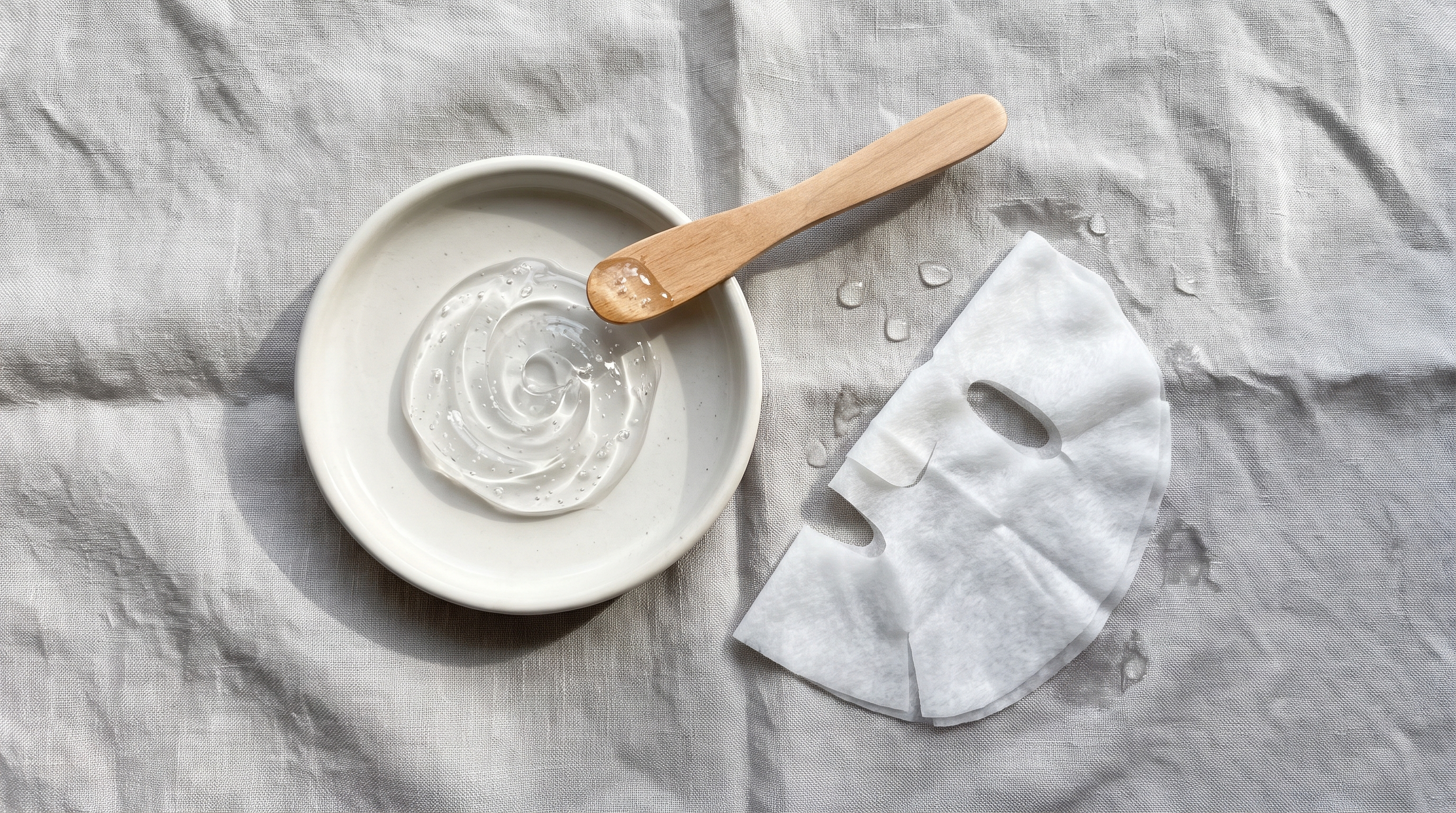
Hyaluronic Acid Face Mask: What It Does for Dry, Aging Skin and How to Use One
Sheet, gel, cream and overnight hyaluronic acid masks all promise plump, dewy skin. Here is how much water a mask really adds, how long it lasts, and how to keep it from leaving skin tight
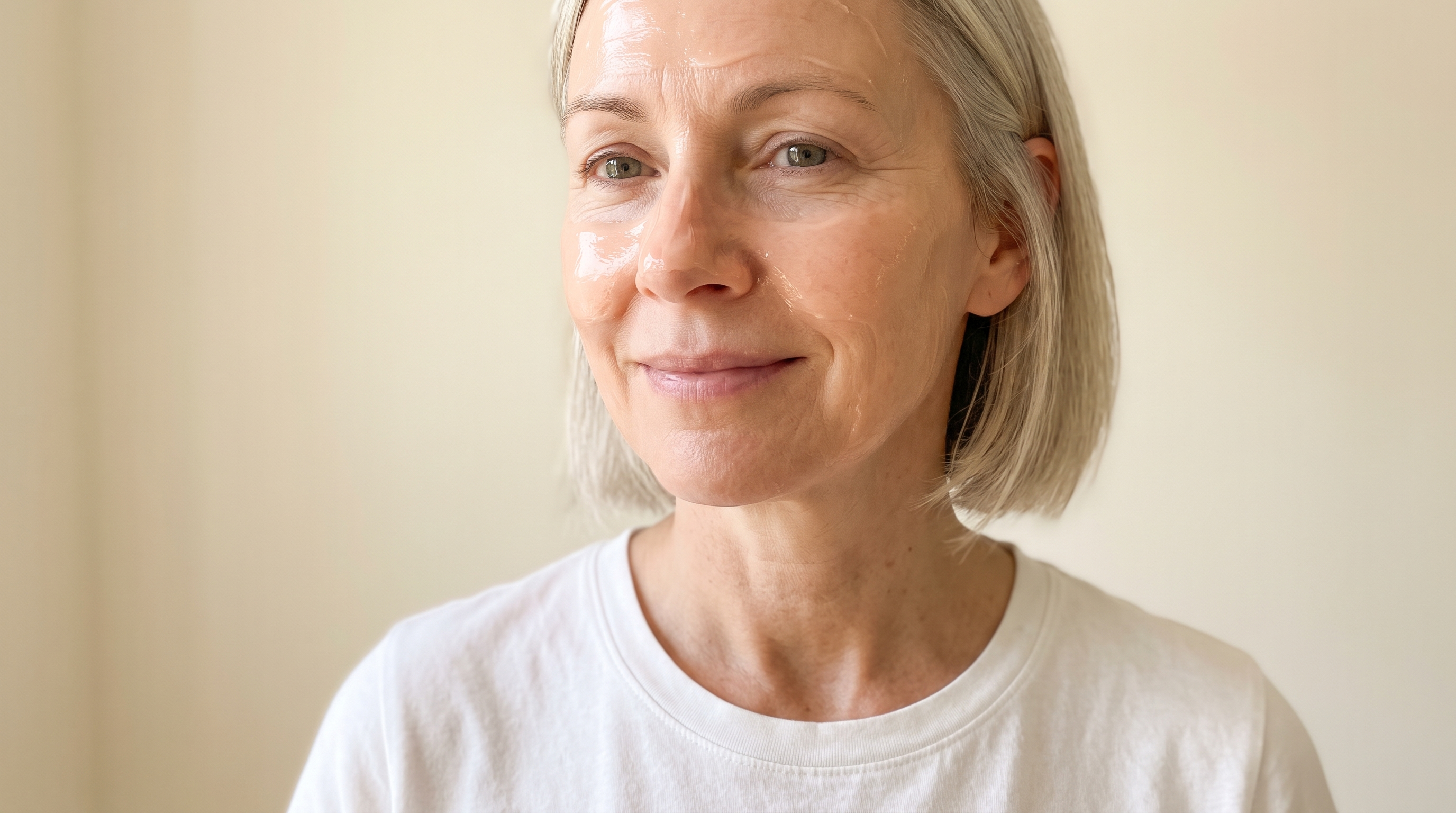
Hyaluronic acid has become the default ingredient for thirsty skin, and the face mask is its most theatrical form. You peel a sheet out of its pouch or smooth on a cool gel, wait a quarter of an hour, and your face comes back softer, plumper and visibly dewier. Fine lines around the eyes look shallower. For an evening, skin looks rested.
That effect is real, but it is mostly water, and water leaves. This guide explains what hyaluronic acid can and cannot do from a mask, how the different mask formats compare, how long to wear one, and how to make the result last longer than the drive to dinner.
What hyaluronic acid does in skin
Hyaluronic acid, or HA, is a sugar chain your body already makes. In the dermis it sits between collagen and elastin fibres and holds water, which helps keep skin full and springy. It is one of the most water-hungry molecules in the body, and the amount in skin falls with age and sun exposure, which is part of why older skin looks thinner and drier [1].
When you put HA on the surface, it works as a humectant. It pulls water into the outer layer of skin, the stratum corneum, and holds it there. That is why skin feels instantly smoother: corneocytes swell slightly with water and the surface reflects light more evenly. It is a surface effect. A mask does not refill the HA your dermis has lost. If you want the bigger picture on the molecule itself, our guide to hyaluronic acid benefits covers it in depth.
Why molecular weight matters
Not all HA is the same size, and size decides where it ends up.
- High molecular weight HA (around 1,000 kDa and above) is too large to pass through the stratum corneum. In a Raman imaging study of human skin, HA of 1,000 to 1,400 kDa stayed on the surface, while low molecular weight HA of 20 to 300 kDa passed through the outer layer [2]. Large HA forms a film that slows water loss and feels silky.
- Low molecular weight HA gets deeper into the upper skin. In a 60-day trial, 76 women aged 30 to 60 applied 0.1% HA creams of five different sizes around one eye and a plain cream around the other. All of the HA creams improved hydration and elasticity, but only the 50 and 130 kDa versions measurably reduced wrinkle depth [3].
Your skin gets most of a sheet mask’s benefit in under 25 minutes, and wearing one longer than that can leave it drier than before you started.
The best masks list more than one size, sometimes as “sodium hyaluronate”, “hydrolyzed hyaluronic acid” or “multi-molecular hyaluronic acid”. A blend gives you both the surface film and the deeper hydration.
Your skin gets most of a sheet mask’s benefit in under 25 minutes, and wearing one longer than that can leave it drier than before you started.
How long to leave a mask on
Longer is not better. A randomized study in healthy volunteers compared masks soaked in plain water, hyaluronan or a ferment lysate, worn for 5, 15, 25 or 40 minutes. Hydration rose at first and then fell, and so did water loss through the skin. Dryness was the most common complaint, especially with plain water masks worn longer than 25 minutes, while shorter wear improved hydration and reduced redness [4].
The practical rule is simple. Follow the label, usually 10 to 20 minutes, and take the mask off before it starts to dry out on your face. Pat the leftover essence in rather than rinsing it away.
Sheet, gel, cream or overnight?
- Sheet masks. Cotton, bio-cellulose or hydrogel soaked in a watery HA essence. The sheet holds the liquid against skin, which boosts the short-term water gain. They are best for a fast pre-event plump. Our guide to sheet masks compares the materials.
- Gel masks. A clear gel applied in a thick layer and tissued off or rinsed after 10 to 15 minutes. Good for normal and oily skin that dislikes residue.
- Cream masks. HA in a richer base with oils, ceramides or squalane. These suit dry and mature skin because the base seals the water in.
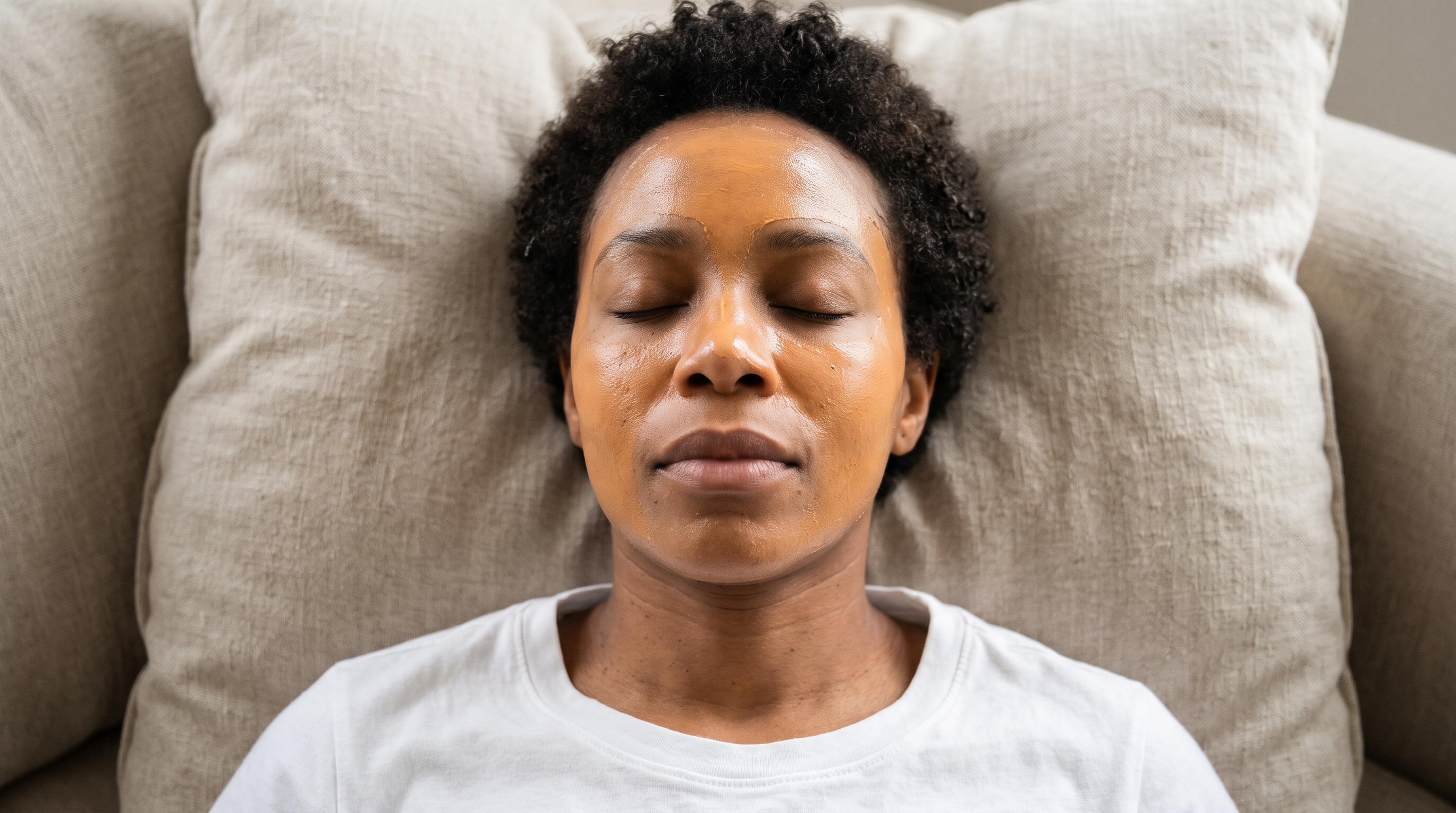
- Overnight masks. A thin final layer you sleep in. They combine HA with occlusive ingredients and act like an extra-rich night cream. See our guide to overnight face masks for how they work.
Your skin held 55% more water after 6 weeks of twice-daily hyaluronic acid serum in one trial, a far steadier gain than any single mask night can give.
Why an HA mask can leave skin tight
This is the most common complaint, and it comes down to physics. A humectant pulls water from wherever it can. In humid air it draws moisture from the environment. In a dry, heated room it can pull water up from deeper skin, and once the mask is off, that water evaporates from the surface.
Good moisturization depends on three things working together: humectants to attract water, emollients to smooth the surface, and occlusive ingredients to slow evaporation [5]. A mask that is almost all water and HA gives you only the first of these. The fix is to finish with a moisturizer, or choose a cream or overnight mask that includes its own sealant.
Your skin held 55% more water after 6 weeks of twice-daily hyaluronic acid serum in one trial, a far steadier gain than any single mask night can give.
What daily HA does that a mask cannot
That longer-term figure comes from a six-week study of 40 women aged 30 to 65 with sun-damaged skin. A twice-daily HA serum raised hydration by 134% right after application. More importantly, hydration was still 55% higher at week six, and the dermatologist saw a 31% improvement in fine lines [6].
The lesson is that consistency beats intensity. A mask is a weekly treat; a daily HA layer under your moisturizer does more of the work. If you want one, our ranking of the best hyaluronic acid serums is a good place to start.
How to get the most from an HA mask
- Cleanse and leave your face slightly damp.
- Apply the mask for the time on the label, usually 10 to 20 minutes.
- Remove it before it dries, and press the leftover essence into the skin.
- Seal with a moisturizer straight away, especially in winter or air conditioning.
- Use one two or three times a week, or the night before an event.
HA is among the gentlest skincare ingredients and suits almost every skin type, including sensitive skin. Fragrance and alcohol in some masks are more likely to irritate than the HA itself, so check the label if you react easily.
Water fades, collagen stays
A hyaluronic acid mask is excellent at what it does: it floods the outer skin with water, softens fine lines, and makes skin look rested for a day. What it cannot do is replace the collagen that holds skin firm. Lines that come back the next morning are a sign of that deeper loss.
Retinol is the best-studied topical way to rebuild collagen; in one trial it increased collagen production in naturally aged skin over 24 weeks [7]. Nanoretinol delivers 0.2% retinol in biomimetic lipid nanoparticles, in a light, water-based gel that layers easily under an HA mask or moisturizer. In North Biomedical’s clinical study, it was 232% more effective in collagen recovery and 73% more effective in elastin recovery than conventional retinol, with a 61% increase in firmness after 56 days and milder side effects [8]. Keep the HA mask for plumping nights, and let a gentle nightly retinol do the long-term rebuilding.
References
- Papakonstantinou E, Roth M, Karakiulakis G. “Hyaluronic Acid: A Key Molecule in Skin Aging.” Dermato-Endocrinology. 2012;4(3):253-258. doi:10.4161/derm.21923
- Essendoubi M, Gobinet C, Reynaud R, Angiboust JF, Manfait M, Piot O. “Human Skin Penetration of Hyaluronic Acid of Different Molecular Weights as Probed by Raman Spectroscopy.” Skin Research and Technology. 2016;22(1):55-62. doi:10.1111/srt.12228
- Pavicic T, Gauglitz GG, Lersch P, Schwach-Abdellaoui K, Malle B, Korting HC, Farwick M. “Efficacy of Cream-Based Novel Formulations of Hyaluronic Acid of Different Molecular Weights in Anti-Wrinkle Treatment.” Journal of Drugs in Dermatology. 2011;10(9):990-1000. PubMed:22052267
- Wang Y, Cao Y, Huang X, Zhang M, Hu J, Li L, Xiong L. “Short-Term Skin Reactions and Changes in Stratum Corneum Following Different Ways of Facial Sheet Mask Usage.” Journal of Tissue Viability. 2024;33(4):831-839. doi:10.1016/j.jtv.2024.06.012
- Rawlings AV, Harding CR. “Moisturization and Skin Barrier Function.” Dermatologic Therapy. 2004;17(Suppl 1):43-48. doi:10.1111/j.1396-0296.2004.04s1005.x
- Draelos ZD, Diaz I, Namkoong J, Wu J, Boyd T. “Efficacy Evaluation of a Topical Hyaluronic Acid Serum in Facial Photoaging.” Dermatology and Therapy. 2021;11(4):1385-1394. doi:10.1007/s13555-021-00566-0
- Kafi R, Kwak HS, Schumacher WE, Cho S, Hanft VN, Hamilton TA, et al. “Improvement of Naturally Aged Skin with Vitamin A (Retinol).” Archives of Dermatology. 2007;143(5):606-612. doi:10.1001/archderm.143.5.606
- North Biomedical LLC. “Nanoretinol vs. Conventional Retinol: Efficacy in Collagen and Elastin Recovery.” Clinical Study Summary, 2024. Study summary