
Hydrating Serum: Which Ingredients Actually Hold Water in Your Skin
Hyaluronic acid gets the attention, but it is only one of several humectants that can rehydrate skin. Here is how to match a hydrating serum to the kind of dryness you have
Tight skin after cleansing, makeup that clings to dry patches, fine lines that look deeper by mid-afternoon. These are the moments that send people looking for a hydrating serum, and there is no shortage of options. Nearly every brand now sells one, and most of them lead with the same ingredient: hyaluronic acid.
Hyaluronic acid is a good ingredient. Choosing the best hydrating serum for your skin comes down to three questions: what kind of dryness you have, which humectants the formula uses, and what you layer on top.
What a hydrating serum actually does
A hydrating serum is built around humectants, ingredients that attract and hold water in the outermost layer of skin, the stratum corneum. That layer normally stays supple thanks to its own water-binding compounds, known collectively as natural moisturizing factor, along with the lipids that stop water from escaping [1].
When that system falls behind, from age, weather, harsh cleansing or active ingredients, skin looks dull, feels tight and shows fine lines more clearly. A humectant serum tops up the water-holding capacity. It does not repair the lipid barrier on its own, and it does not build collagen, but it can make skin look smoother and plumper within minutes.
Dry or dehydrated? The distinction that decides what you buy
These words get used interchangeably, but they describe different problems.
Dehydrated skin is short on water. It can happen to any skin type, including oily skin, and often shows up as tightness, dullness and fine crisscross lines that appear and disappear. A humectant serum is the direct fix. Our guide to dehydrated skin covers the common triggers.
Choosing the best hydrating serum for your skin comes down to three questions: what kind of dryness you have, which humectants the formula uses, and what you layer on top.
Dry skin is short on oil and barrier lipids. It tends to be rough, flaky and uncomfortable, and it needs lipids and occlusives as much as humectants.
Many people have both at once, especially after 40, which is why a hydrating serum works best as the first half of a two-step routine rather than a complete solution, and our explainer on serum vs moisturizer walks through where one ends and the other begins.
The humectant toolkit: more than hyaluronic acid
Reading past the front label reveals a range of water-binding ingredients, each with a slightly different job.
Hyaluronic acid. A large sugar molecule that holds a great deal of water at the skin surface. In a 6-week study of 40 women aged 30 to 65 with photoaging, a hyaluronic acid serum used twice daily raised skin hydration by 134% immediately after application and by 55% at week 6, with visible improvements in smoothness, plumpness and fine lines [2]. Multi-weight formulas, combining large and smaller fragments, are common in serums. Our guide to the best hyaluronic acid serum covers how to choose among them.
Glycerin. The unglamorous workhorse. Glycerin is a small molecule that the skin already produces and transports through dedicated water channels. Research shows it improves stratum corneum hydration, barrier function and skin elasticity, protects against irritants and speeds barrier repair [3]. It is inexpensive, which is why it rarely headlines a label, but it is one of the best-documented humectants in dermatology. A serum with glycerin high on the ingredient list is often doing more of the hydrating than the hyaluronic acid named on the front.
Panthenol (provitamin B5). Panthenol is a humectant with a second talent: it supports barrier repair and soothes irritated skin. Decades of studies confirm its moisturizing and barrier-enhancing effects [4], which makes it a good pick for skin that stings easily.
At 10% or less, urea acts as a moisturizer, while above 10% it starts to soften and loosen thickened, rough skin.
Urea. A natural component of the skin’s own moisturizing factor. At 10% or less, urea acts as a moisturizer, while above 10% it starts to soften and loosen thickened, rough skin [5]. Low-percentage urea serums suit dehydrated skin that also feels slightly rough.
Polyglutamic acid. A newer humectant that forms a flexible film on skin and is often paired with hyaluronic acid. The published clinical evidence is thinner than for glycerin or hyaluronic acid, but it is well tolerated. Our overview of polyglutamic acid explains what is and is not known.
The best hydrating serums usually combine two or three of these rather than relying on one.
Why humidity and layering matter
Humectants work by pulling water toward them. In humid air, some of that water can come from the environment. In dry air, whether desert climates, winter heating or a long flight, a humectant draws water mainly from deeper layers of your own skin, and without a seal on top, that water can evaporate.
Glycerin’s hydrating effect is particularly valued in conditions made worse by dry, cold weather [3]. But whichever humectant you choose, the rule is the same: apply your serum to slightly damp skin, then follow within a minute or two with a moisturizer containing emollients and an occlusive such as squalane, shea butter, dimethicone or petrolatum. Moisturizers function as both a water seal and a delivery vehicle for other ingredients [6], and pairing the two steps is what turns a quick plumping effect into lasting comfort.
How to choose a hydrating serum
A short checklist, by skin type:
- Dehydrated or oily skin: a light gel with glycerin and hyaluronic acid, followed by a light moisturizer.
- Dry, mature skin: a serum combining hyaluronic acid, glycerin and panthenol, followed by a richer cream.
- Sensitive or reactive skin: a fragrance-free formula with panthenol and few other ingredients.
- Rough, dehydrated skin: a serum with low-percentage urea.
- All skin types: look for glycerin in the first few ingredients, avoid heavy fragrance and high alcohol content, and do not pay a premium for a single “hero” ingredient if the rest of the formula is thin.
Where hydration ends and repair begins
A hydrating serum can make fine lines look softer within minutes, because water swells the surface layers. That is a real, visible effect, but a temporary one. The deeper reason skin looks drier and more lined with age is the gradual loss of collagen, elastin and the water-binding molecules that live in the dermis beneath, and no humectant rebuilds those.
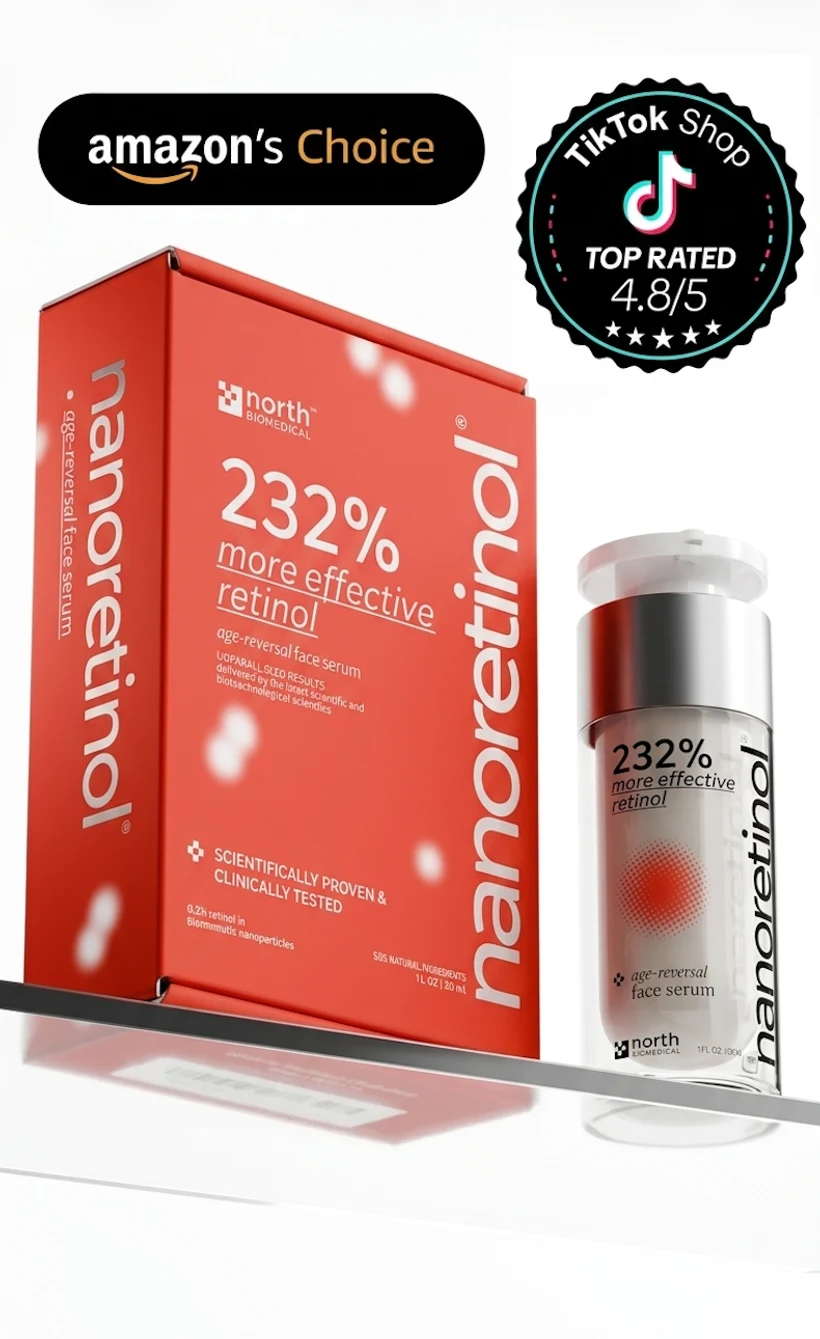
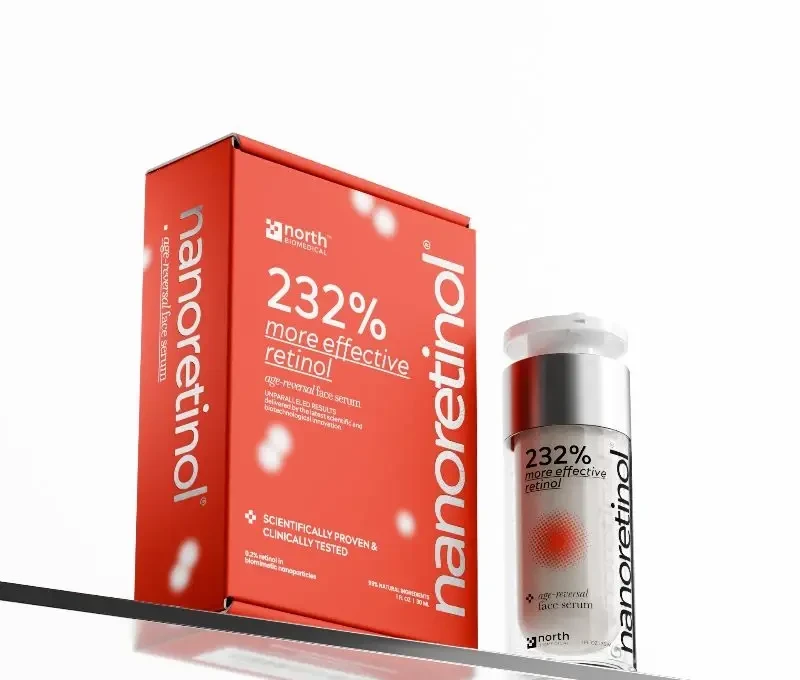
That is where retinol comes in, and it is why a hydrating serum and a retinol pair so well. The serum keeps the surface comfortable, and that support can make a nightly retinol easier to tolerate. Nanoretinol is designed to be the gentle half of that pairing. It encapsulates stabilized 0.2% retinol in biomimetic lipid nanoparticles that skin recognizes as its own, so the retinol reaches skin cells without breaking down the barrier. As the nanoparticles release their retinol, skin cells absorb the phospholipids in their membranes, nourishing skin without an oily residue. In North Biomedical’s study summary, Nanoretinol was 232% more effective in collagen recovery than conventional retinol, and 56 days of use produced a 61% increase in firmness and a 56% increase in elasticity [7].
A simple routine: hydrating serum on damp skin morning and night, a moisturizer on top, sunscreen by day, and Nanoretinol at night for the collagen that hydration alone cannot replace.
References
- Rawlings AV, Harding CR. “Moisturization and skin barrier function.” Dermatologic Therapy. 2004;17(Suppl 1):43-48. doi:10.1111/j.1396-0296.2004.04s1005.x
- Draelos ZD, Diaz I, Namkoong J, Wu J, Boyd T. “Efficacy Evaluation of a Topical Hyaluronic Acid Serum in Facial Photoaging.” Dermatology and Therapy. 2021;11(4):1385-1394. doi:10.1007/s13555-021-00566-0
- Fluhr JW, Darlenski R, Surber C. “Glycerol and the skin: holistic approach to its origin and functions.” British Journal of Dermatology. 2008;159(1):23-34. doi:10.1111/j.1365-2133.2008.08643.x
- Proksch E, de Bony R, Trapp S, Boudon S. “Topical use of dexpanthenol: a 70th anniversary article.” Journal of Dermatological Treatment. 2017;28(8):766-773. doi:10.1080/09546634.2017.1325310
- Celleno L. “Topical urea in skincare: A review.” Dermatologic Therapy. 2018;31(6):e12690. doi:10.1111/dth.12690
- Draelos ZD. “The science behind skin care: Moisturizers.” Journal of Cosmetic Dermatology. 2018;17(2):138-144. doi:10.1111/jocd.12490
- North Biomedical LLC. “Nanoretinol vs. Conventional Retinol: Efficacy in Collagen and Elastin Recovery.” Clinical Study Summary, 2024. Study summary