Hyperdilute Radiesse: How the Collagen-Building Injectable Works on Crepey Skin
Why diluted calcium hydroxylapatite became the go-to for crepey necks and hands — and the at-home version of the same idea.
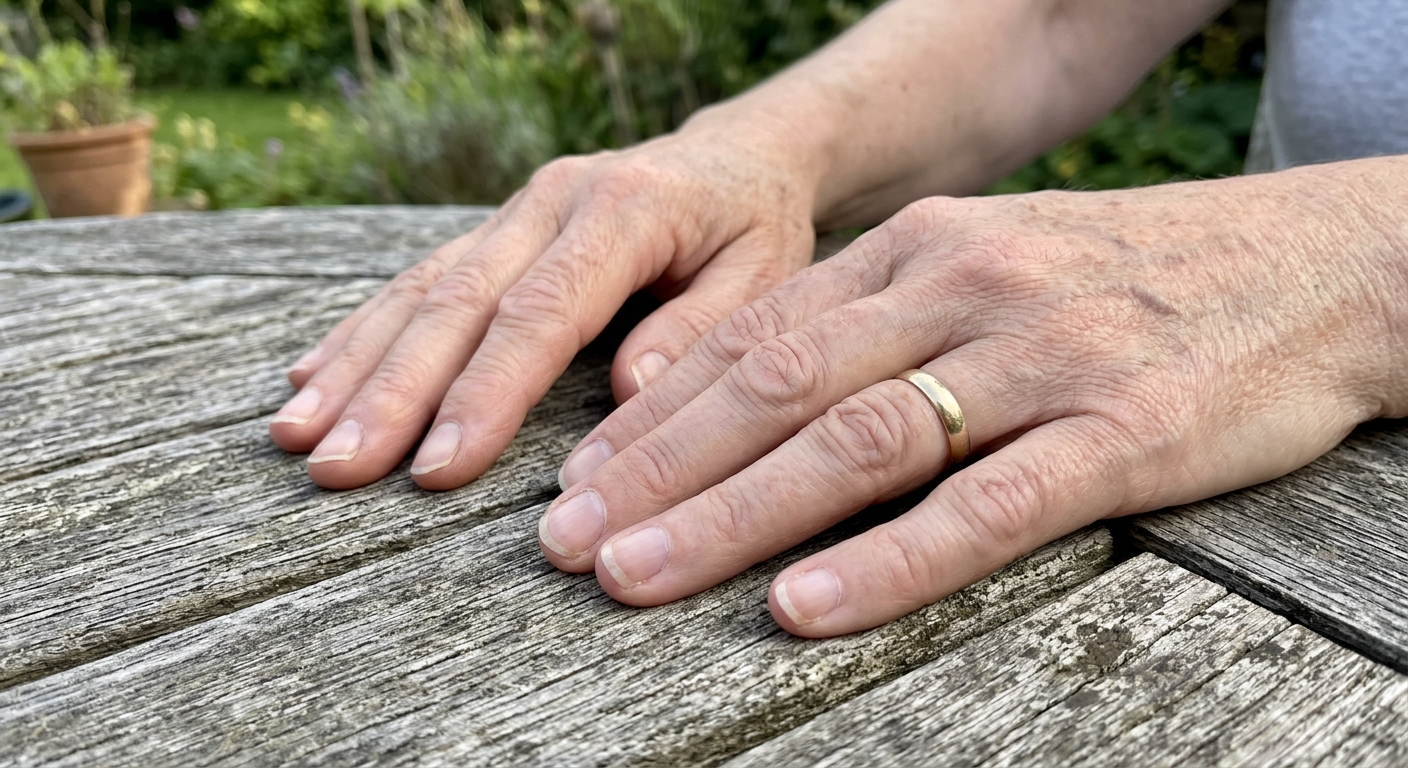
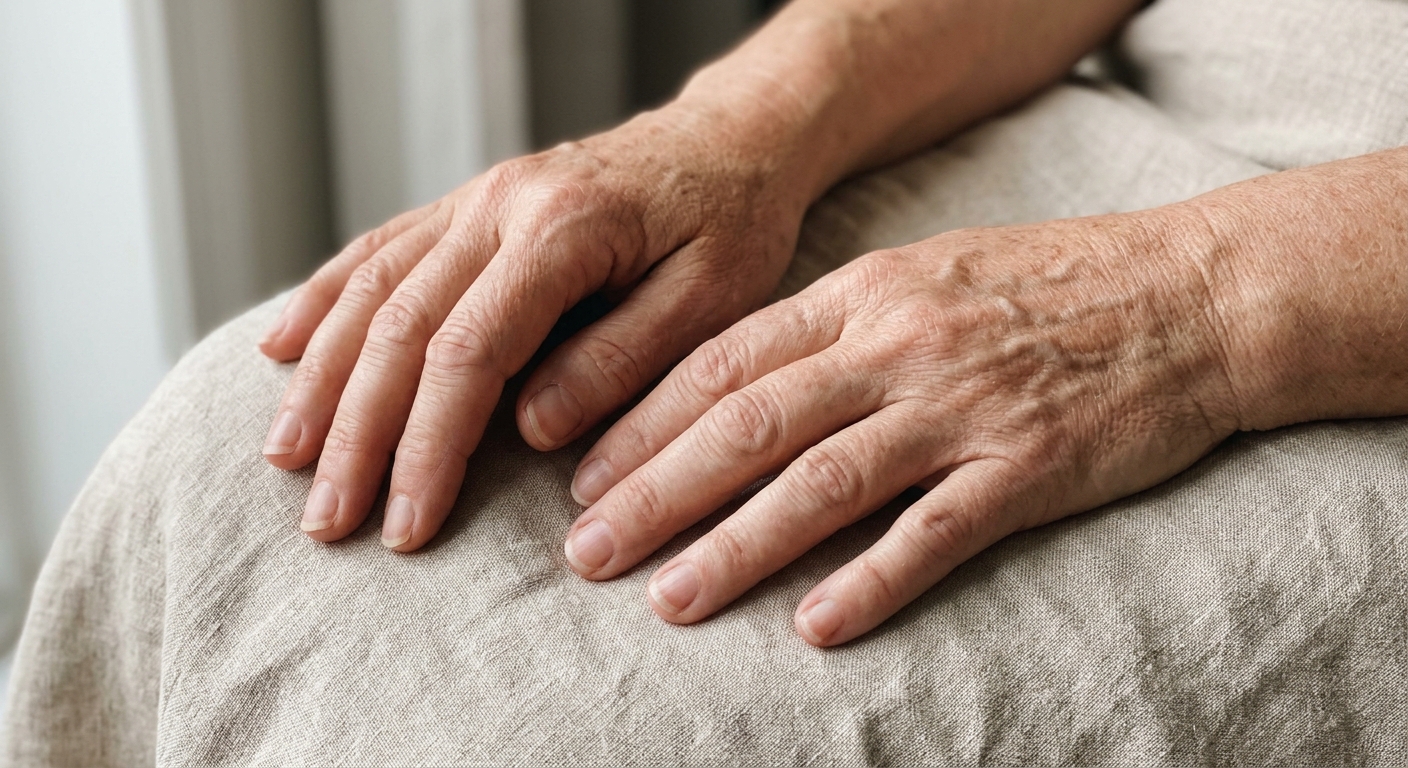
There is a particular kind of skin laxity that no moisturizer ever seems to touch: the fine, crinkled, tissue-paper texture that appears on the neck, the chest, and the backs of the hands. It is not a wrinkle you can point to, exactly — it is a loss of substance, a sense that the skin has gone thin and slack. For this complaint, one in-office treatment has surged in popularity: hyperdilute Radiesse. If you have spent any time researching crepey skin, you have almost certainly seen it recommended. Here is what it actually is, what the evidence supports, and why the principle behind it is one your own skincare routine can borrow.
From Filler to Collagen Stimulator
Radiesse is the brand name for calcium hydroxylapatite, or CaHA — a substance made of microscopic calcium-based spheres suspended in a gel. In its standard, undiluted form it has been used for years as a volumizing filler for deeper facial folds. But somewhere along the way, injectors discovered that if you dilute it heavily with saline and lidocaine — “hyperdilution” — it stops behaving like a filler and starts behaving like something more interesting: a biostimulator spread thinly across a broad area of skin.
The mechanism is elegant. Once placed in the dermis, the calcium microspheres act as a benign scaffold, and the simple physical presence of that scaffold provokes the skin’s fibroblasts into action. This is mechanotransduction — cells responding to a physical cue by ramping up production. The result is new collagen laid down around and between the microspheres, gradually thickening and tightening tissue that had gone thin.
If you have spent any time researching crepey skin, you have almost certainly seen it recommended.
What the Histology Shows
This is not marketing hand-waving; it is visible under a microscope. A detailed narrative review of CaHA as a regenerative treatment catalogued its histologic effects across multiple studies: immunohistochemical analyses of treated skin show a significant rise in type I and type III collagen, alongside increased elastin and new blood-vessel formation, sustained for months after a single session [1]. The same review described not just more collagen but better-organized collagen — fibers that are denser and better aligned, the architectural hallmark of younger skin [1]. More recent mechanistic work has mapped how the calcium scaffold drives this fibroblast activation and extracellular-matrix remodeling at the cellular level [2].
The clinical results follow the biology. In a study of hyperdiluted CaHA for neck rejuvenation, researchers used ultrasound to measure dermal thickness and documented measurable firming and improved skin quality after treatment [3]. And in a case series specifically protocolizing the hyperdiluted approach across the face, neck, décolletage, and hands, the authors reported consistent improvements in skin tightness and texture in exactly the crepey, thin-skinned zones that frustrate people most [4].
The Honest Limitations
Hyperdilute Radiesse is a real treatment with real data behind it, but it asks a lot. It is an injectable, performed by a trained provider, often across large areas that require multiple syringes and sometimes multiple sessions. Costs add up quickly, bruising is common, and — like all biostimulation — the collagen it builds is subject to your body’s normal turnover, so the effect is not permanent. It is also fundamentally a texture and thickness treatment; it will not lift a heavily sagging jawline or replace the volume of a true facelift. For the right person with crepey neck or hand skin and a budget to match, it can be genuinely useful. For many others, the cost-to-benefit math is harder to justify.
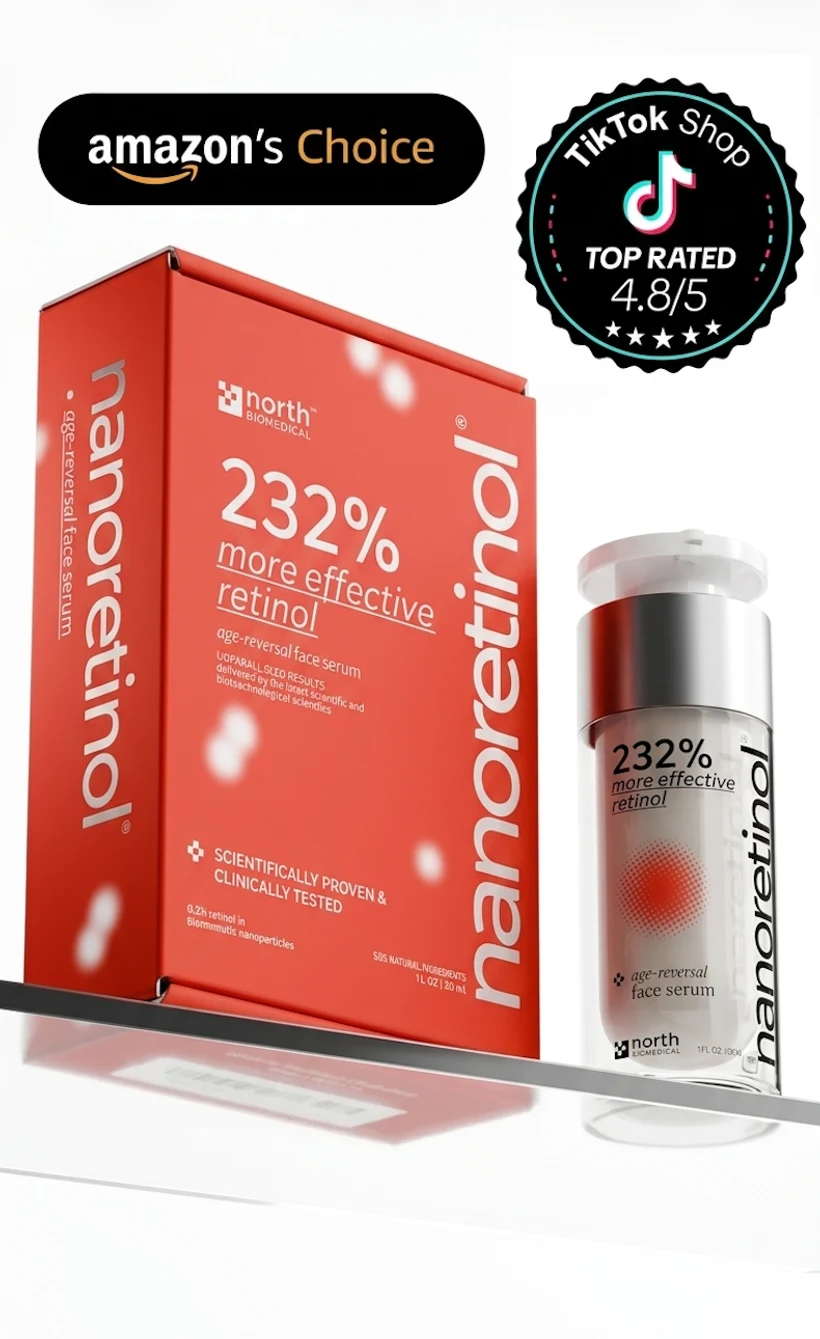
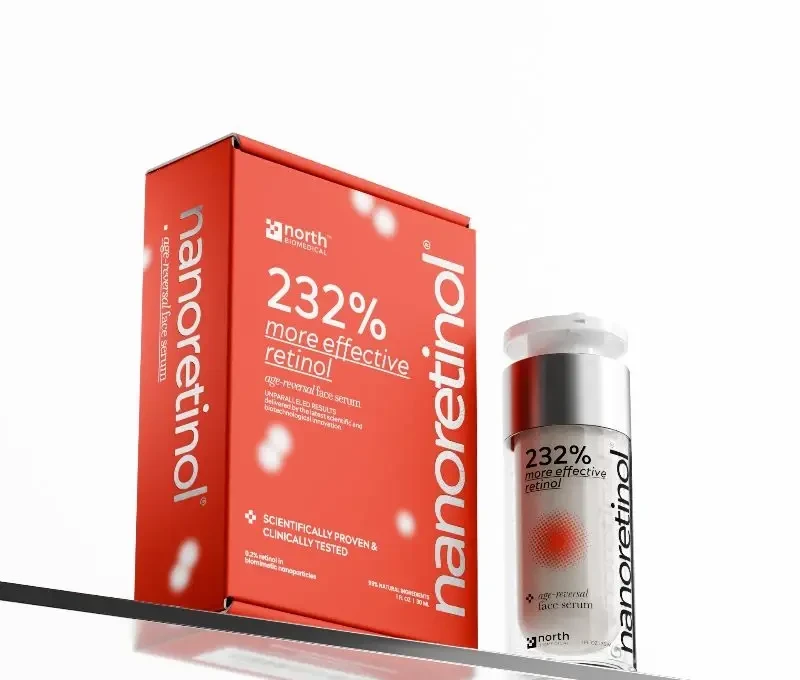
Nanoretinol was designed around that exact problem: it carries a stabilized 0.2% retinol inside biomimetic lipid nanoparticles that the skin accepts as “self” and lets pass without barrier damage.
You Already Own a Biostimulator
Here is the part the before-and-after galleries rarely mention: the entire premise of hyperdilute Radiesse — signal the fibroblasts, rebuild the collagen — is the same premise behind the most evidence-backed ingredient in all of skincare. The reason crepey skin appears in the first place is collagen loss. Classic research on aging skin showed that fibroblasts in older skin produce less collagen and break down more of it, leaving the dermis progressively thinner and more fragile [5]. Anything that reverses that equation — whether a calcium scaffold or a topical molecule — is working toward the same goal.
Retinoids reverse it from the top down. By binding to receptors inside skin cells, they switch on the genes that drive new collagen synthesis while suppressing the enzymes that degrade it. Decades of clinical work establish topical retinol as a genuine collagen-builder that thickens the dermis and improves the look of fine, crepey skin over time, with a well-characterized safety profile [6]. Unlike an injection, it is something you apply yourself, every night, for the cost of a serum — a slow, steady biostimulation that compounds month after month.
The historic obstacle has been irritation, especially on the body’s thinner skin. Conventional retinol forces its way through the skin barrier by disrupting it, which is why necks and chests so often respond with redness and flaking. Nanoretinol was designed around that exact problem: it carries a stabilized 0.2% retinol inside biomimetic lipid nanoparticles that the skin accepts as “self” and lets pass without barrier damage. Because efficient delivery — not a high percentage — is what gets retinol to the fibroblasts, this water-based gel reaches its target while staying gentle. In North Biomedical’s clinical study, the encapsulated form delivered +232% greater collagen recovery and +73% greater elastin recovery than conventional retinol, with markedly lower cytotoxicity — and a 56-day trial measured a 61% increase in skin firmness and a 56% increase in elasticity. Those are precisely the metrics — firmness, elasticity, dermal density — that hyperdilute Radiesse is also chasing.
Choosing Your Approach
If you are weighing an in-office biostimulator, it helps to know that you can begin building the same collagen tonight, at home, for a fraction of the price. A consistent nightly retinoid, paired with daily sunscreen to protect the collagen you still have, is the foundation that makes every other treatment work better — and for milder crepey neck and aging hand concerns, it is often enough on its own. Think of injections, when you choose them, as an accelerant on top of that foundation rather than a substitute for it. The underlying battle — against skin laxity and thinning dermis — is won by whatever keeps your fibroblasts building, most reliably and most affordably, over the long haul. For more on the topical side of this strategy, see our guide to using retinol on the neck.
References
- Aguilera SB, McCarthy A, Khalifian S, Lorenc ZP, Goldie K, Chernoff WG. “The Role of Calcium Hydroxylapatite (Radiesse) as a Regenerative Aesthetic Treatment: A Narrative Review.” Aesthetic Surgery Journal. 2023;43(10):1063-1090. doi:10.1093/asj/sjad173
- van Loghem J. “Calcium Hydroxylapatite in Regenerative Aesthetics: Mechanistic Insights and Mode of Action.” Aesthetic Surgery Journal. 2025;45(4):393-403. doi:10.1093/asj/sjae196
- de Almeida ART, Marques ERMC, Contin LA, de Almeida CT, Muniz M. “Efficacy and Tolerability of Hyperdiluted Calcium Hydroxylapatite (Radiesse) for Neck Rejuvenation: Clinical and Ultrasonographic Assessment.” Clinical, Cosmetic and Investigational Dermatology. 2023;16:1341-1349. doi:10.2147/CCID.S407561
- Massidda E. “Starting Point for Protocols on the Use of Hyperdiluted Calcium Hydroxylapatite (Radiesse®) for Optimizing Age-Related Biostimulation and Rejuvenation of Face, Neck, Décolletage and Hands: A Case Series Report.” Clinical, Cosmetic and Investigational Dermatology. 2023;16:3427-3439. doi:10.2147/CCID.S420068
- Varani J, Dame MK, Rittié L, Fligiel SE, Kang S, Fisher GJ, Voorhees JJ. “Decreased collagen production in chronologically aged skin: roles of age-dependent alteration in fibroblast function and defective mechanical stimulation.” The American Journal of Pathology. 2006;168(6):1861-1868. doi:10.2353/ajpath.2006.051302
- Kafi R, Kwak HS, Schumacher WE, Cho S, Hanft VN, Hamilton TA, King AL, Neal JD, Varani J, Fisher GJ, Voorhees JJ, Kang S. “Improvement of naturally aged skin with vitamin A (retinol).” Archives of Dermatology. 2007;143(5):606-612. doi:10.1001/archderm.143.5.606