
Hyperpigmentation on Cheeks: Why It Lands Here and How to Treat It
The cheeks are ground zero for sun spots and melasma. Here's the anatomy behind it — and a realistic plan to even out the most exposed real estate on your face.
Pigment is not random. If you map where dark patches show up on a woman’s face, the cheeks win almost every time — the broad plane that runs from the cheekbone down toward the jaw, and the apples that catch the light when you smile. People often assume this is bad luck. It isn’t. The cheeks are simply the most exposed, most hormonally reactive, and most frequently inflamed real estate on the entire face, and pigment follows all three of those forces.
Understanding why discoloration concentrates here is the key to treating it without wasting months on the wrong approach. (For the bigger picture across the whole face, start with our overview of hyperpigmentation on the face.)
The Cheeks Take the Most Sun
Hold your hand a few inches in front of your nose and notice the geometry. The cheekbones jut forward and angle slightly upward, which means they catch sunlight more directly than the recessed areas around the eyes or under the jaw. Over years, that translates into a heavier cumulative UV dose right across the midface.
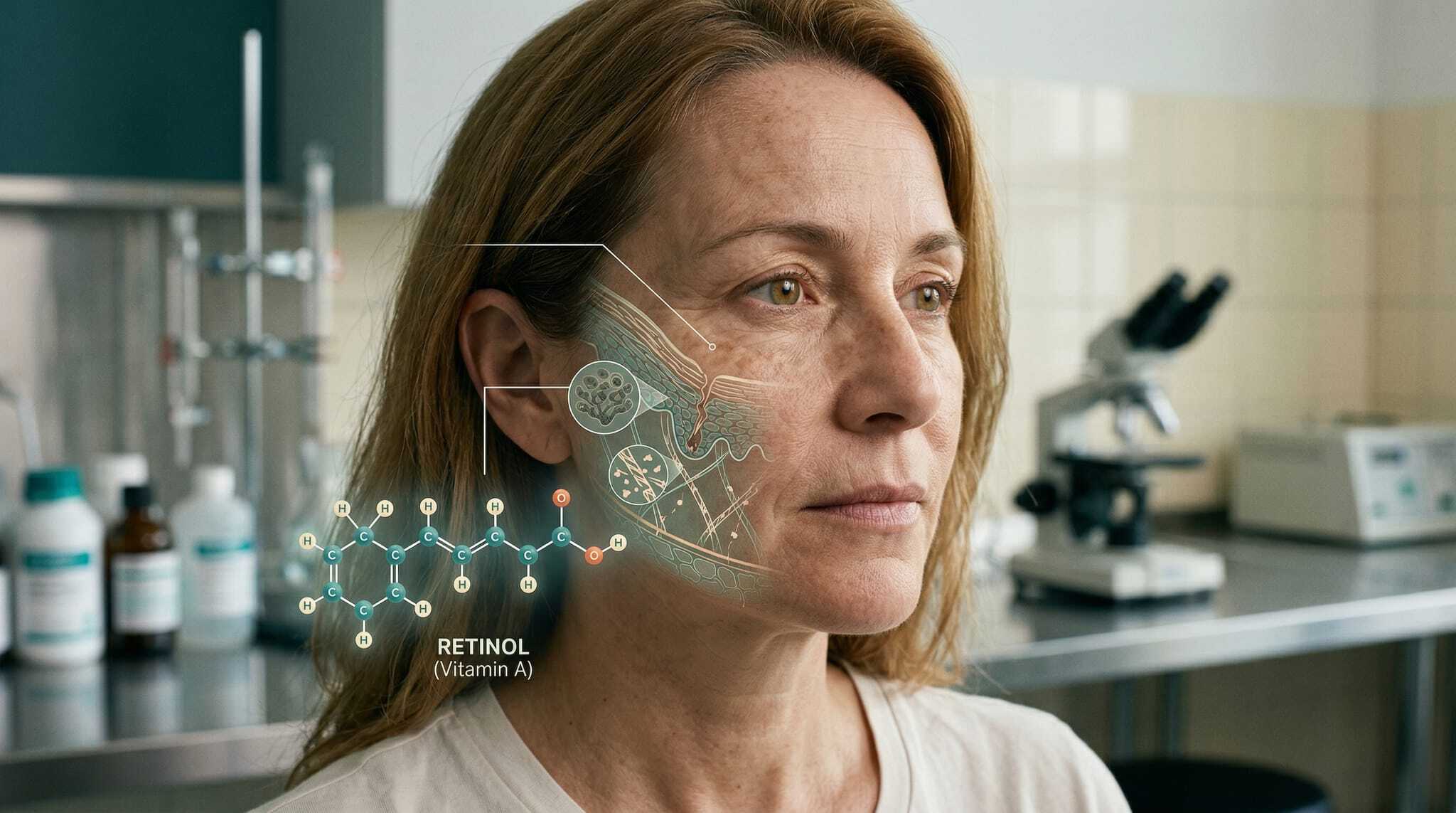
There’s an unsettling demonstration of this in the research on one-sided sun exposure: drivers who spend years with one cheek closer to the side window often develop visibly more pigmentation and aging on that side. The cheek is, in effect, a billboard for a lifetime of light. Because melanin is produced specifically as a response to UV damage [1], the most sun-exposed surface naturally accumulates the most spots. If your discoloration reads as flat brown spots scattered across the cheekbones, it overlaps heavily with classic sun damage on the face.
If your discoloration reads as flat brown spots scattered across the cheekbones, it overlaps heavily with classic sun damage on the face.
Melasma’s Favorite Address
The cheeks are also where melasma sets up shop. This hormonally-influenced pigmentation tends to appear in large, symmetric, blurry patches across both cheeks — the “mask of pregnancy” pattern — and it is notoriously tied to a trio of triggers: ultraviolet light, visible light, and heat.
That last factor surprises people. Even the warmth from a stove, a sauna, or a hot commute can nudge melasma-prone cheeks toward more pigment, independent of sunburn. And visible light from the sun (and to a lesser extent screens) is now recognized as a real driver, which is why dermatologists increasingly recommend tinted, iron-oxide sunscreens for these patients rather than clear formulas [2]. If your cheek pigmentation is patchy and symmetrical rather than spotty, our dedicated melasma treatment guide is the better deep-dive.
The Marks Acne Leaves Behind
The third cheek-specific culprit is post-acne pigmentation. Breakouts cluster on the cheeks for many adults, and every inflamed blemish can leave a flat brown or tan mark once it heals — post-inflammatory hyperpigmentation. These marks aren’t scars; they’re pigment, and they will fade, but slowly. The frustrating twist is that picking or over-treating them creates more inflammation and therefore more pigment. We cover the full strategy in our guide to post-inflammatory hyperpigmentation.
Three different causes, one location. The encouraging part is that the treatment ladder for all three is remarkably similar.
Red, flaking cheeks aren’t just uncomfortable; the inflammation can trigger fresh post-inflammatory pigment, which is the opposite of what you want.
A Realistic Plan for Cheek Pigmentation
Protect the most exposed surface first
Since the cheeks absorb the most light, they benefit most from disciplined protection. A broad-spectrum sunscreen with a tint (iron oxides) shields against the visible light that clear formulas miss, and the evidence shows this matters: in a randomized trial, sunscreen that also blocked short-wavelength visible light produced significantly fewer melasma relapses than UV-only protection [3]. Reapplication on the cheeks throughout the day does more for your results than any serum.
Fade what’s already there
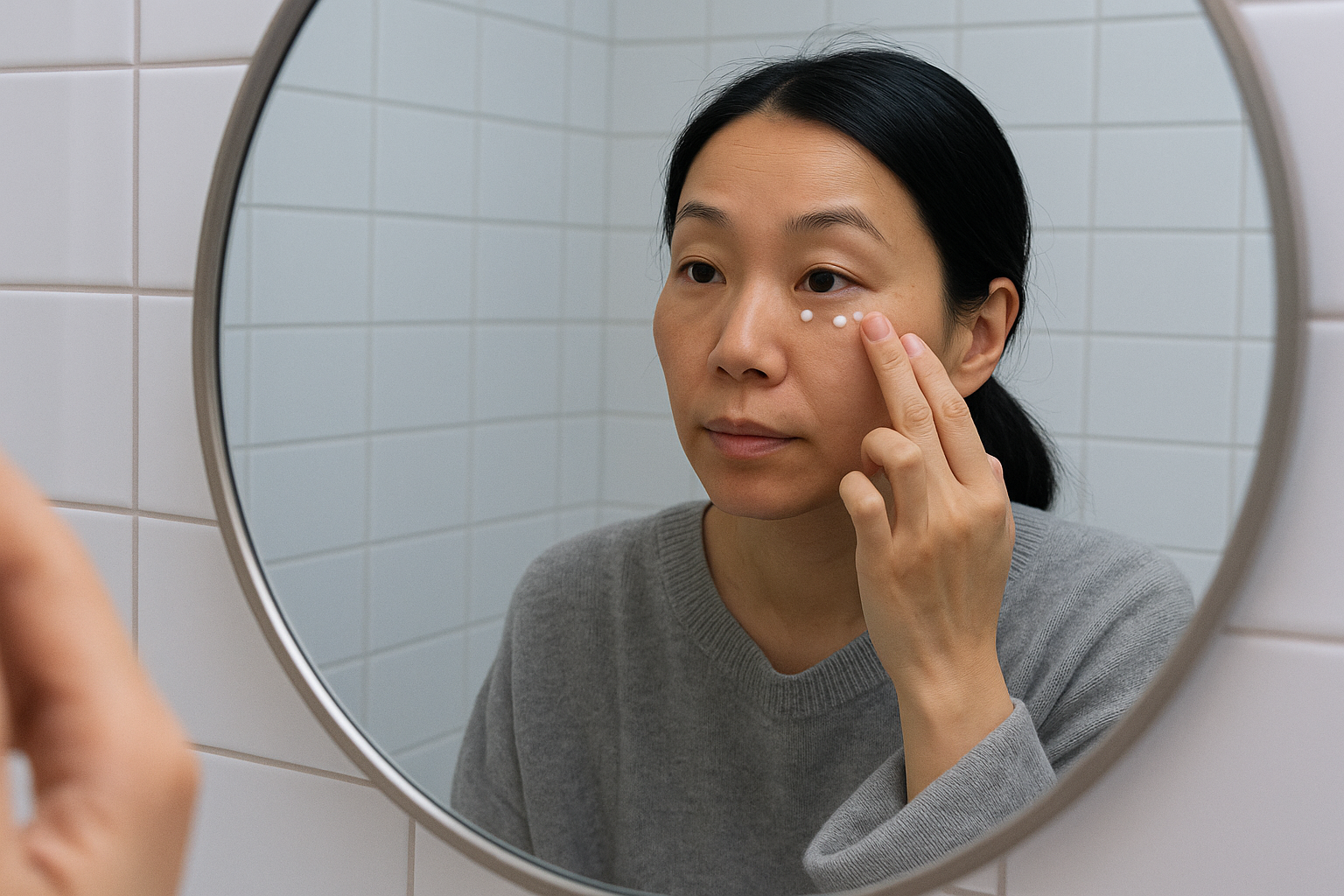
Topical brighteners that interrupt melanin production are the workhorses. Tranexamic acid has accumulated particularly strong evidence — a 2024 meta-analysis of randomized controlled trials confirmed it meaningfully reduces melasma severity [4]. Vitamin C, niacinamide, and azelaic acid are reliable partners, and you can layer them with the right routine — see our notes on the benefits of niacinamide for a gentle daily option.
Keep cell turnover high with a retinoid
For cheeks specifically, retinoids do double duty: they fade existing pigment and they help prevent the new post-acne marks that keep the cycle going. A classic vehicle-controlled clinical trial showed that topical tretinoin significantly improved melasma, primarily by reducing epidermal pigment — though the benefit appeared slowly, over months rather than weeks [5]. That timeline is the rule for all retinoids on pigment: real, durable fading, but only with consistency. A well-tolerated retinoid for dark spots is the long-game anchor of any cheek-evening routine.
Why Gentleness Decides the Outcome
Here’s the trap with the cheeks. They’re a large, visible, often sensitive area — and conventional retinol’s irritation tends to show up first and worst exactly here. Red, flaking cheeks aren’t just uncomfortable; the inflammation can trigger fresh post-inflammatory pigment, which is the opposite of what you want. Many people quit their retinol during this phase, right before it would have started working.
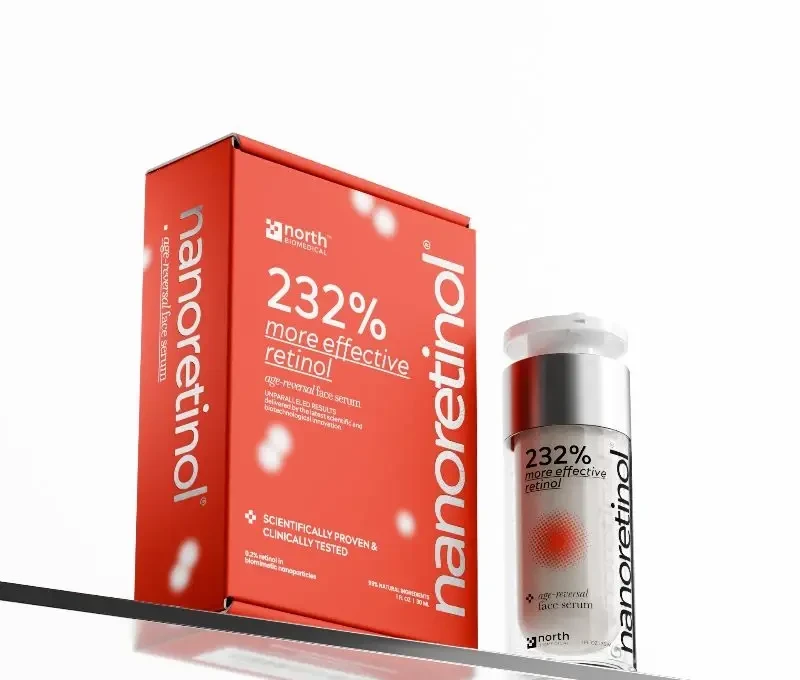
Nanoretinol was engineered around this exact problem. Rather than forcing retinol through the skin barrier with harsh penetration enhancers, North Biomedical encapsulates it in biomimetic lipid nanoparticles the skin accepts as its own, delivering a stabilized 0.2% retinol without the barrier disruption that causes burning and peeling. The clinical data showed it was significantly gentler on skin cells than conventional retinol, with drastically reduced cytotoxicity, while still outperforming standard retinol on collagen recovery by 232%. For the broad, reactive canvas of the cheeks, that tolerability is what makes long-term consistency — and therefore real fading — actually achievable.
The Long View
Cheek pigmentation is the visible sum of years of sun, hormones, and inflammation, so it answers to a patient, layered plan rather than a single product. Shield the most exposed surface every single day, fade existing pigment with proven brighteners, and keep turnover high with a retinoid you can tolerate indefinitely. Give that combination a full season before you judge it. The cheeks took the brunt of your sun exposure — with the right routine, they can also be the first place your even tone comes back.
References
- Yardman-Frank JM, Fisher DE. “Skin pigmentation and its control: From ultraviolet radiation to stem cells.” Experimental Dermatology. 2021;30(4):560-571. PMID: 33320376
- Morgado-Carrasco D, Piquero-Casals J, Granger C, Trullàs C, Passeron T. “Melasma: The need for tailored photoprotection to improve clinical outcomes.” Photodermatology, Photoimmunology & Photomedicine. 2022;38(6):515-521. PMID: 35229368
- Boukari F, Jourdan E, Fontas E, Montaudié H, Castela E, Lacour JP, et al. “Prevention of melasma relapses with sunscreen combining protection against UV and short wavelengths of visible light: A prospective randomized comparative trial.” Journal of the American Academy of Dermatology. 2015;72(1):189-190.e1. PMID: 25443629
- Calacattawi R, Alshahrani M, Aleid M, Aleid F, Basamih K, Alsugair G, et al. “Tranexamic acid as a therapeutic option for melasma management: meta-analysis and systematic review of randomized controlled trials.” Journal of Dermatological Treatment. 2024;35(1):2361106. PMID: 38843906
- Griffiths CE, Finkel LJ, Ditre CM, Hamilton TA, Ellis CN, Voorhees JJ. “Topical tretinoin (retinoic acid) improves melasma. A vehicle-controlled, clinical trial.” British Journal of Dermatology. 1993;129(4):415-421. PMID: 8217756