Lactic Acid Serum: Strength, pH and How to Use It Without Irritation
Lactic acid is the gentle alpha hydroxy acid that smooths and hydrates at the same time. Here is how to read a serum's real strength and fit it into an anti-aging routine
If your skin looks dull, feels rough under your fingertips, or makeup sits unevenly no matter how carefully you apply it, a lactic acid serum is one of the most forgiving ways to fix it. It exfoliates more gently than glycolic acid, it tends to leave skin feeling more hydrated rather than stripped, and it is widely available in leave-on formulas at drugstore prices.
But two serums that both say “10% lactic acid” can behave very differently on your face. Understanding why comes down to strength, pH and how often you use it.
What lactic acid does in your skin
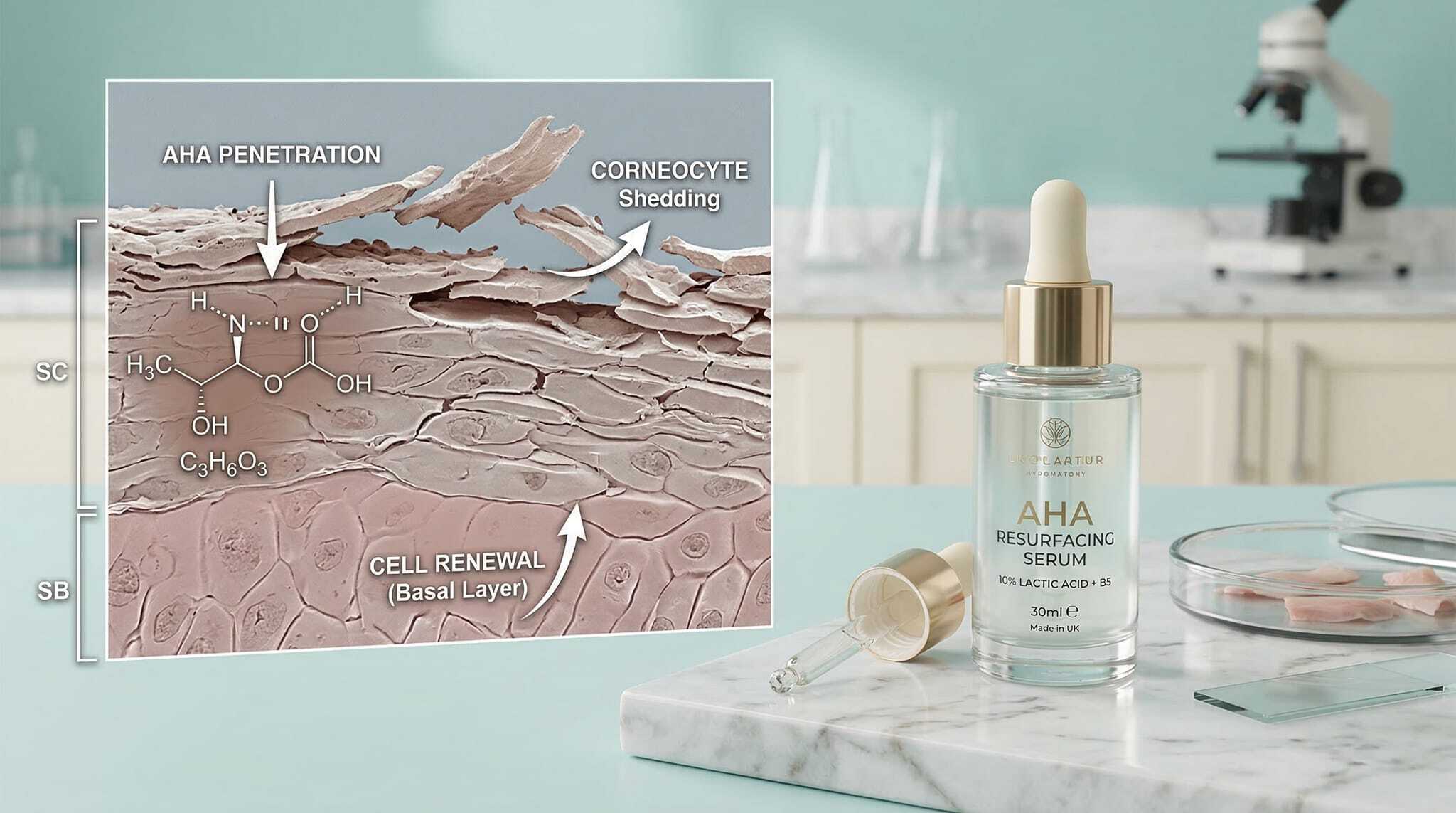
Lactic acid is an alpha hydroxy acid (AHA), originally derived from sour milk and now usually made by fermentation. Like other AHAs, it loosens the bonds that hold dead cells together at the skin surface, so they shed more evenly. The result is smoother texture, a brighter surface that reflects light better, and a more even look to rough or dull patches [1].
Two things set lactic acid apart from glycolic acid. It is a slightly larger molecule, so it penetrates more slowly and is generally better tolerated. And it does something most exfoliants do not: it helps the skin hold on to water. For a fuller picture of the ingredient itself, see our guide to lactic acid for skin, and for a head-to-head, our comparison of lactic acid vs glycolic acid.
The hydration bonus: lactic acid and ceramides
In a series of laboratory and clinical experiments, lactic acid increased the production of ceramides, the lipids that form much of the skin’s water-tight barrier. The L-form of lactic acid, the natural one, was the most effective: lotions containing it raised stratum corneum ceramide levels by 48%, which translated into better barrier function and greater resistance to dryness [2].
But two serums that both say “10% lactic acid” can behave very differently on your face.
That is why lactic acid is often the first acid dermatologists suggest for dry or mature skin. If a label specifies “L-lactic acid,” that is a small point in its favour.
5% or 12%? What the strength changes
Concentration matters more than most product pages admit. In a 3-month study, people applied either 5% or 12% lactic acid twice daily. Both strengths improved skin smoothness, texture and the look of lines, and both thickened the epidermis. But only the 12% formula also increased firmness and thickness in the dermis, the deeper layer where collagen lives [3].
In other words, lower strengths work mainly at the surface, while higher strengths reach further. That does not mean stronger is always better. Most leave-on serums sit between 5% and 10%, and for daily or near-daily use that range balances results with comfort. A longer, 22-week vehicle-controlled trial of 8% L-lactic acid cream in women aged 40 to 70 found that 71% of users improved by at least one grade in overall photodamage, compared with 40% on the base cream alone, with improvements in mottled pigmentation, sallowness and roughness on the forearms [4].
Why pH matters as much as the percentage
Here is the detail that explains why two “10%” serums can feel so different. An AHA only exfoliates effectively when a good portion of it is in its free acid form, and that depends on the formula’s pH [5].
Lactic acid’s pKa, the point at which half the acid is in its active form, is about 3.9. A serum formulated near that pH delivers meaningful exfoliation. A serum buffered to pH 5 or higher contains the same amount of lactic acid on paper, but far less of it is available to exfoliate, so it behaves more like a gentle moisturizer. For consumer products, the US Cosmetic Ingredient Review panel concluded that AHAs are safe at 10% or less with a final pH of 3.5 or higher, alongside directions to use sun protection.
Over-exfoliation shows up as stinging when you apply plain moisturizer, a shiny tight look, or new redness and breakouts.
Most brands do not print the pH on the bottle. Clues help: a noticeable tingle for a minute after application suggests an active, lower-pH formula; no sensation at all may mean a gentler, higher-pH one. Neither is wrong. They are simply suited to different skin.
How to choose a lactic acid serum
- Sensitive or new to acids: 5% lactic acid, or a buffered 10%, used two or three nights a week. Our guide to the gentlest exfoliators for sensitive skin covers even milder options.
- Normal, dry or mature skin with texture concerns: 10% lactic acid, a few nights a week, building up as tolerated.
- Look for a stated percentage, a fragrance-free base, and supporting hydrators such as glycerin or hyaluronic acid.
- Skip serums that stack lactic acid with glycolic, salicylic and retinoids in one bottle unless you already tolerate each on its own.
How often to use it
More is not better with acids. Most people do best with a lactic acid serum two to four nights per week, rather than every night. Over-exfoliation shows up as stinging when you apply plain moisturizer, a shiny tight look, or new redness and breakouts. If that happens, pause for a week and restart less often. Our guide on how often to exfoliate your face explains how to find your rhythm.
Sunscreen is not optional
AHAs make skin temporarily more vulnerable to UV. In a controlled study, four weeks of a 10% glycolic acid product increased the number of sunburn cells after UV exposure and lowered the dose needed to cause redness. The effect disappeared within a week of stopping [6]. Glycolic acid was the AHA tested, but the finding is why every AHA product, lactic acid included, should be paired with a broad-spectrum sunscreen every morning.
Lactic acid and retinol: alternate, do not stack
Lactic acid works from the surface down, smoothing and brightening. Retinol works from the inside out, signalling skin cells to renew and fibroblasts to build collagen, which is what firms skin and softens deeper lines. The two are complementary, but applying both on the same night is a common recipe for irritation.
The simplest approach is to alternate: lactic acid serum on two or three nights, retinol on the others, with a plain moisturizer on any night your skin feels sensitive.
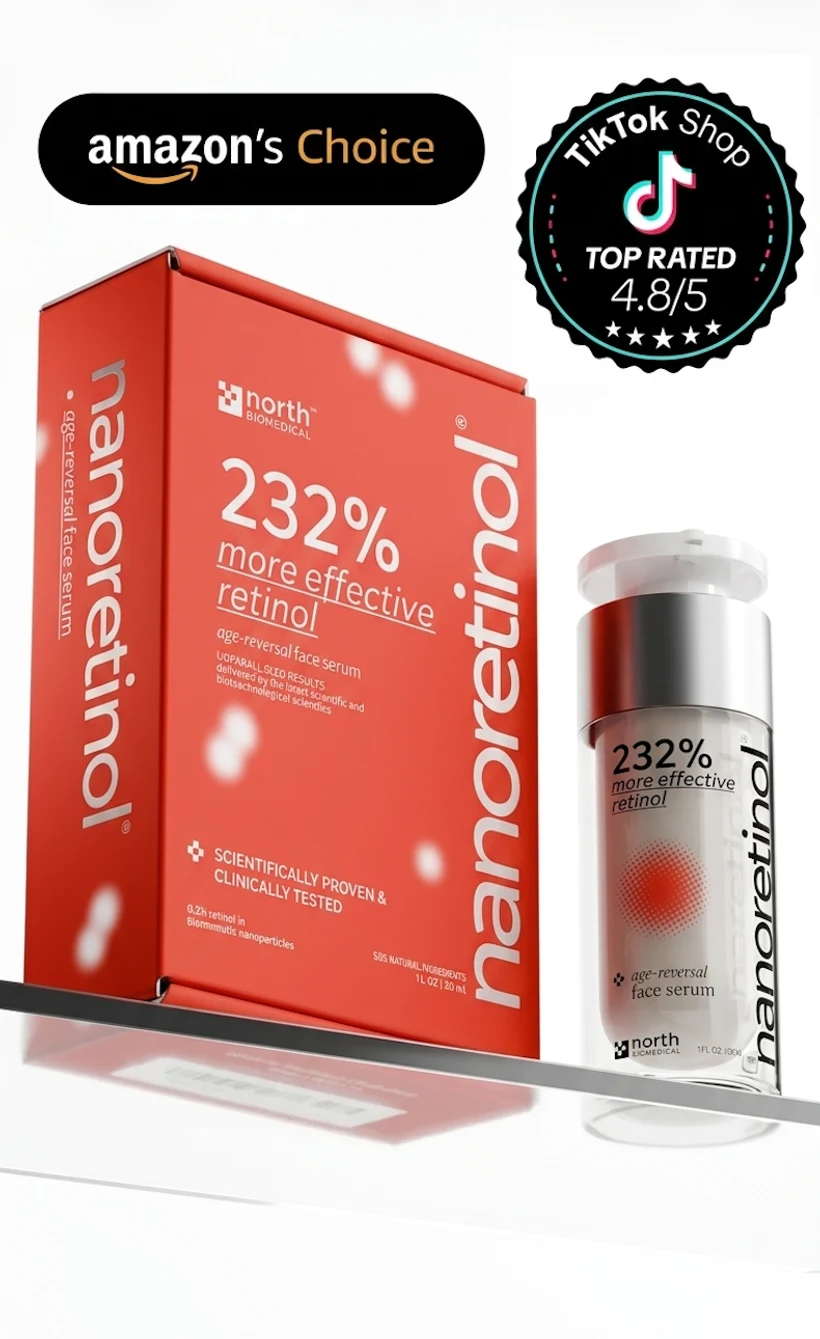
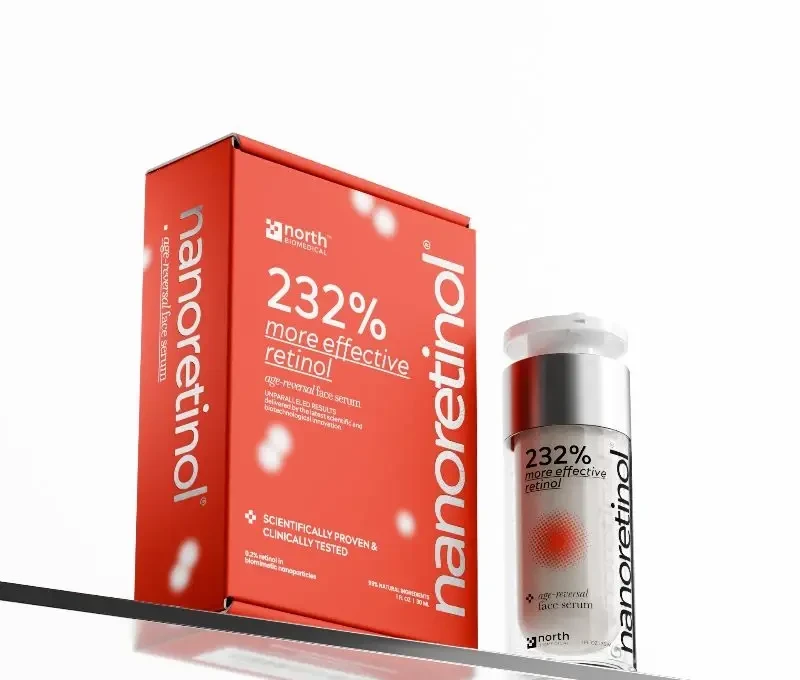
That schedule works best with a retinol that does not add its own irritation. Nanoretinol encapsulates stabilized 0.2% retinol in biomimetic lipid nanoparticles that skin recognizes as its own, so the retinol reaches skin cells without breaking down the barrier the way conventional formulations can. In North Biomedical’s study summary, Nanoretinol was 232% more effective in collagen recovery and 73% more effective in elastin recovery than conventional retinol, with a 61% increase in firmness after 56 days of use [7]. Paired with a lactic acid serum on alternate nights and sunscreen every morning, it covers both halves of the job: a smoother surface and firmer skin beneath it.
References
- Tang SC, Yang JH. “Dual Effects of Alpha-Hydroxy Acids on the Skin.” Molecules. 2018;23(4):863. doi:10.3390/molecules23040863
- Rawlings AV, Davies A, Carlomusto M, et al. “Effect of lactic acid isomers on keratinocyte ceramide synthesis, stratum corneum lipid levels and stratum corneum barrier function.” Archives of Dermatological Research. 1996;288(7):383-390. doi:10.1007/BF02507107
- Smith WP. “Epidermal and dermal effects of topical lactic acid.” Journal of the American Academy of Dermatology. 1996;35(3 Pt 1):388-391. PubMed: 8784274
- Stiller MJ, Bartolone J, Stern R, et al. “Topical 8% glycolic acid and 8% L-lactic acid creams for the treatment of photodamaged skin. A double-blind vehicle-controlled clinical trial.” Archives of Dermatology. 1996;132(6):631-636. doi:10.1001/archderm.1996.03890300047009
- Kornhauser A, Coelho SG, Hearing VJ. “Applications of hydroxy acids: classification, mechanisms, and photoactivity.” Clinical, Cosmetic and Investigational Dermatology. 2010;3:135-142. doi:10.2147/CCID.S9042
- Kaidbey K, Sutherland B, Bennett P, et al. “Topical glycolic acid enhances photodamage by ultraviolet light.” Photodermatology, Photoimmunology & Photomedicine. 2003;19(1):21-27. doi:10.1034/j.1600-0781.2003.00013.x
- North Biomedical LLC. “Nanoretinol vs. Conventional Retinol: Efficacy in Collagen and Elastin Recovery.” Clinical Study Summary, 2024. Study summary