Makeup Wipes: Are Makeup Remover Wipes Bad for Your Skin?
What is really in a wipe, how much makeup one actually removes, the friction and allergy problem, and how to use them without paying for it later
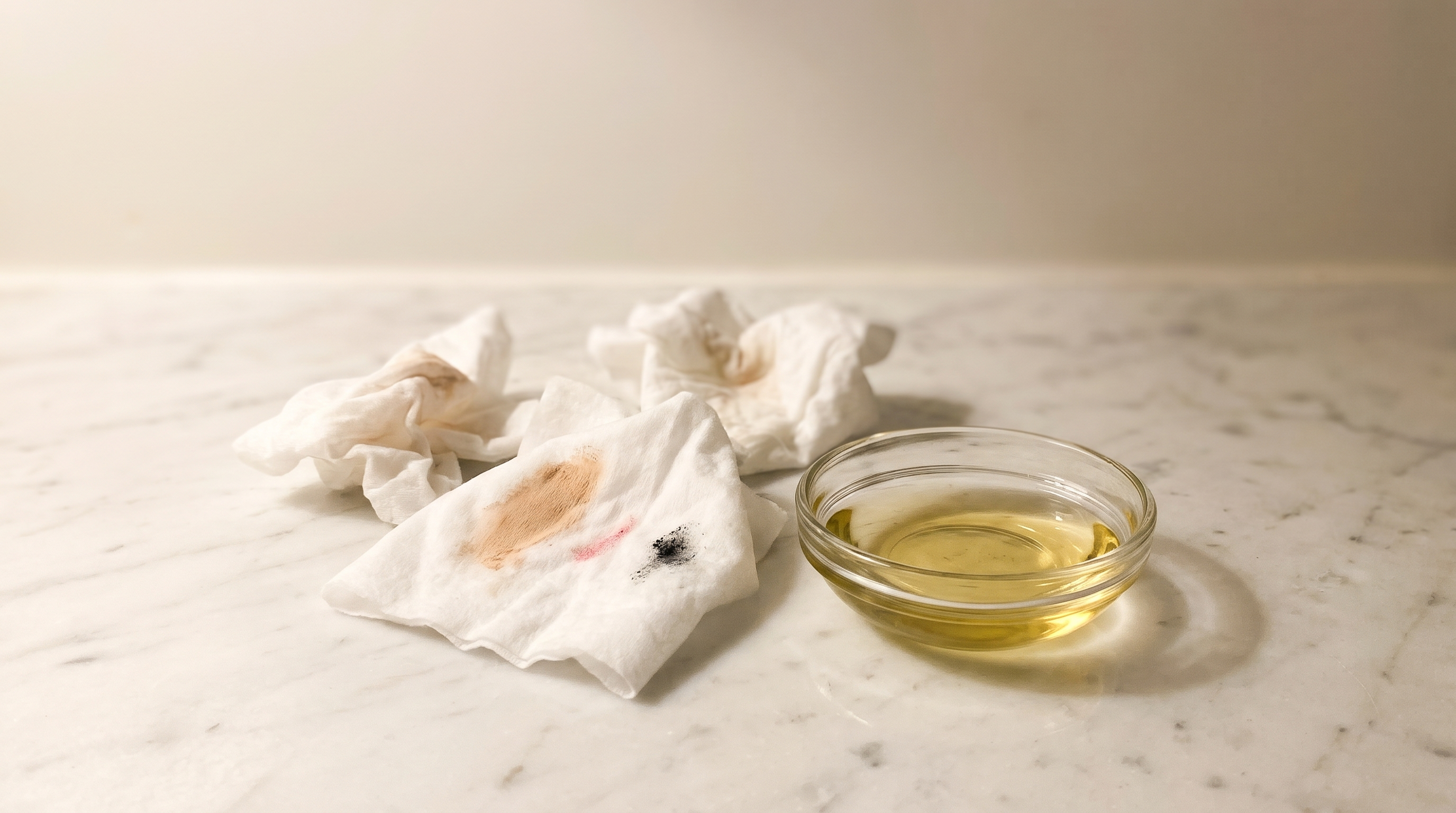
Makeup wipes are the convenience food of skincare. One pull from the pack, a few swipes and the day’s foundation seems to be gone. They are popular for a reason: after a late night, a wipe is far better than sleeping in a full face of makeup.
But dermatologists rarely recommend them as an everyday cleanser, and the reasons are more specific than “wipes are bad.” The problems come from three places: what is soaked into the cloth, what the cloth does to your skin as you rub, and what it leaves behind. Once you understand those three, you can decide when a wipe is fine and when it is costing your skin more than it saves you.
What Is Actually in a Makeup Wipe
A makeup wipe is a sheet of non-woven fibre soaked in a thin cleansing lotion. That lotion has to do several jobs at once. It needs surfactants to lift oil and pigment, solvents or emollients to loosen long-wear makeup, and a strong preservative system, because a wet cloth sealed in a warm pack for months is an ideal home for bacteria and mould.
When researchers at the University of Minnesota read the ingredient lists of 178 facial wipes from four large retailers, they found an average of 16.7 ingredients per wipe [1]. Fragrance appeared in 63.5% of them and phenoxyethanol in 53.9%. Other common entries included propylene glycol, glucoside surfactants, parabens and botanical extracts such as aloe, chamomile and witch hazel. The authors’ conclusion was blunt: facial wipes are a rich and underrecognized source of potential allergens [1].
There is a historical warning here too. In the early 2010s, the preservative methylisothiazolinone was widely used in wet wipes, and doctors reported children with persistent rashes that cleared only once their parents stopped using baby wipes [2]. Manufacturers have largely moved away from it; in the Minnesota sample, it appeared in just 2.2% of facial wipes [1]. Fragrance, however, is still in most of them.
The Rinse Problem
The biggest difference between a wipe and a cleanser is not the formula. It is the missing step. With a regular face wash, the surfactants touch your skin for a minute and are then rinsed away with water. With a wipe, nothing is rinsed. The cleansing lotion, its preservatives and its fragrance dry down on your face and stay there all night.
Your skin sits under a wipe’s leftover surfactant for 8 hours or more, far longer than the 60 seconds a rinse-off cleanser ever stays on it.
Your skin sits under a wipe’s leftover surfactant for 8 hours or more, far longer than the 60 seconds a rinse-off cleanser ever stays on it.
That matters because surfactants do not only dissolve makeup. They also extract and intercalate into the lipids that hold the outer skin barrier together, and the fatty acids in that barrier are especially easy to strip [3]. Short contact followed by rinsing limits the damage. Hours of contact with no rinse gives the residue far more time to work on your barrier.
Micellar water has the same rinse issue, which is why our guide to micellar water recommends a splash of water afterwards when your skin is reactive.
Friction: The Part Nobody Mentions
Wipes rely on mechanical action. To lift long-wear foundation or waterproof mascara, most people press down and drag the cloth across the same patch of skin several times. That repeated rubbing is a form of low-grade friction injury.
A controlled study on washing and drying practices found that soap-and-water washing followed by towel drying raised water loss through the skin and increased redness, with damage that appeared to build up the more often skin was washed [4]. Rubbing with a damp textile is exactly what a wipe does, usually around the eyes, where the skin is thinnest.
Your skin around the eyes is the thinnest on your face, so 10 hard swipes there do far more harm than 1 slow pass with a cleansing oil.
This is also why a wipe often leaves a faint ring of mascara or foundation at the hairline and jaw. The cloth spreads makeup as much as it lifts it, and the residue you cannot see often ends up in pores overnight.
Your skin around the eyes is the thinnest on your face, so 10 hard swipes there do far more harm than 1 slow pass with a cleansing oil.
When Wipes Are Fine
None of this makes a single wipe dangerous. There are situations where a wipe is clearly the better choice:
- After a late night. If the alternative is going to bed in makeup, use the wipe. Sleeping in foundation and mascara is worse, as our article on sleeping in makeup explains.
- Travel, gyms and long flights. A wipe removes sweat, sunscreen and grime when there is no sink.
- Spot fixes. Cleaning up a smudged eyeliner or a foundation mark on your collar is what wipes do best.
The problem is daily, nightly use as your only cleanse, especially for anyone with dry, sensitive or mature skin, or anyone using active ingredients at night.
How to Choose a Gentler Wipe
If you keep wipes in your routine, the label is your best tool:
- Fragrance-free, not just “unscented”. Unscented products can contain masking fragrance. Look for fragrance or parfum to be absent from the ingredient list entirely.
- Short ingredient lists. Fewer botanicals and fewer preservatives mean fewer potential allergens [1].
- A soft, thick cloth. Thicker, textured sheets carry more lotion and need less pressure.
- Plant fibre where possible. Many wipes are made from polyester blends. Lab tests show a single wet wipe can shed hundreds to nearly 2,000 plastic microfibres when it gets wet [5], and discarded wipes have become a recognised source of microplastic pollution [6]. Never flush them, even when the pack says “flushable”.
How to Use a Wipe Without Paying for It
Technique matters as much as the product:
- Press, then lift. Hold the wipe over closed eyes for 10 to 15 seconds to soften mascara, then sweep once, outward, instead of scrubbing.
- Use a fresh section for each area. One corner for eyes, a clean area for each cheek.
- Rinse afterwards. A splash of lukewarm water removes most of the leftover lotion and fragrance, which closes the biggest gap between a wipe and a cleanser.
- Follow with a proper cleanse when you can. A balm or oil first, then a gentle cleanser, removes long-wear makeup with far less rubbing. Our guides to cleansing balm and double cleansing walk through both steps.
Why This Matters Most on Retinol Nights
The skin you wipe late at night is the same skin you treat a few minutes later. If you use a night retinoid, a barrier already roughed up by friction and coated in fragrance residue is far more likely to sting, flake or turn red. Many people blame the retinol for irritation that started with how they took their makeup off.
A cleaner sequence is simple: remove makeup gently, rinse, let your skin dry completely, then apply your retinoid. And the retinoid itself matters. Conventional retinol formulas often rely on chemicals and petroleum derivatives that loosen the lipids of the skin barrier to push the active through, which adds to any damage done during cleansing.
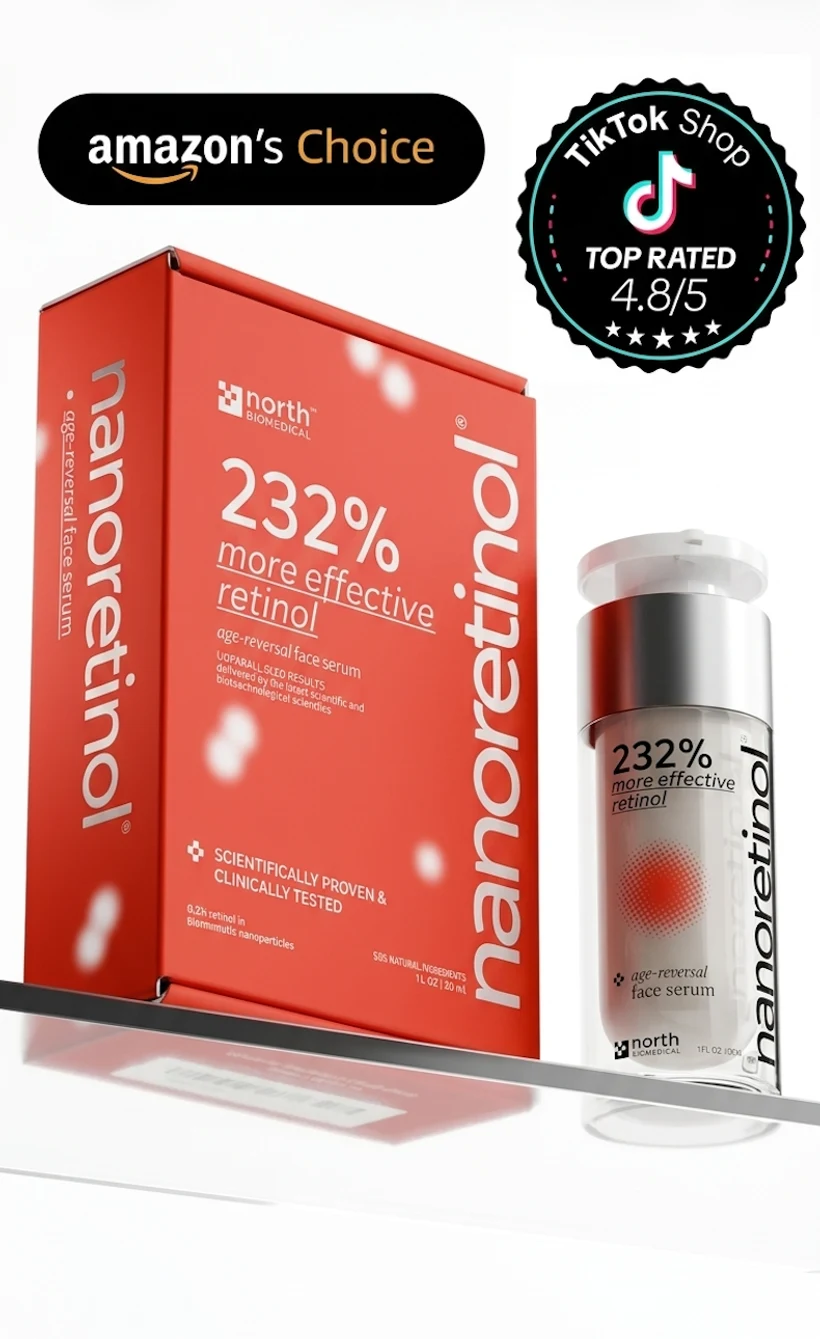
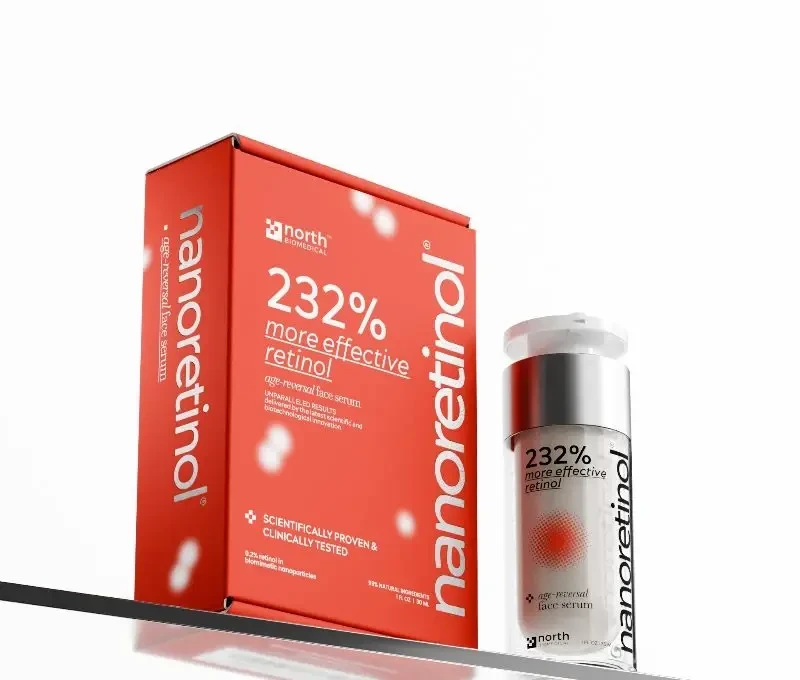
Nanoretinol, from North Biomedical, takes a different route. Its 0.2% retinol is carried in biomimetic lipid nanoparticles that pass through the skin barrier without damaging it, in a water-based gel made with 99% natural ingredients. In laboratory testing it was 232% more effective than conventional retinol in collagen recovery, and in clinical use it raised skin firmness by 61% in 56 days, with side effects that, when present, were milder than those of conventional retinol. It is a good match for a routine built around gentle cleansing.
The Takeaway
Makeup wipes are a useful backup, not a cleanser. They leave surfactant and fragrance on your skin, they depend on friction, and they shed plastic fibres. Keep a fragrance-free pack for travel and late nights, rinse after using one, and on most evenings let an oil or balm do the work instead. Your skin, and whatever you put on it next, will be better for it.
References
- Aschenbeck KA, Warshaw EM. “Allergenic Ingredients in Facial Wet Wipes.” Dermatitis. 2017;28(6):353-359. doi:10.1097/DER.0000000000000268
- Chang MW, Nakrani R. “Six children with allergic contact dermatitis to methylisothiazolinone in wet wipes (baby wipes).” Pediatrics. 2014;133(2):e434-e438. doi:10.1542/peds.2013-1453
- Ananthapadmanabhan KP, Mukherjee S, Chandar P. “Stratum corneum fatty acids: their critical role in preserving barrier integrity during cleansing.” International Journal of Cosmetic Science. 2013;35(4):337-345. doi:10.1111/ics.12042
- Voegeli D. “The effect of washing and drying practices on skin barrier function.” Journal of Wound, Ostomy and Continence Nursing. 2008;35(1):84-90. doi:10.1097/01.WON.0000308623.68582.d7
- Lee J, Jeong S, Chae KJ. “Discharge of microplastics fibres from wet wipes in aquatic and solid environments under different release conditions.” Science of the Total Environment. 2021;784:147144. doi:10.1016/j.scitotenv.2021.147144
- Hu T, Shen M, Tang W. “Wet wipes and disposable surgical masks are becoming new sources of fiber microplastic pollution during global COVID-19.” Environmental Science and Pollution Research International. 2022;29(1):284-292. doi:10.1007/s11356-021-17408-3