
Best Eye Makeup Remover: How to Take It All Off Without Aging Your Eyelids
The chemistry that dissolves pigment instead of demanding friction, and why that distinction matters more after fifty
Most people evaluate an eye makeup remover on one question: did the makeup come off. That is the wrong question, because almost anything will get makeup off eventually if you rub long enough.
The better question is how many passes it took. Every pass is mechanical force applied to the most fragile skin on your body, repeated nightly for decades. Over a thirty-year makeup habit that is somewhere north of ten thousand removals. The product that gets you there in three seconds and the product that gets you there in thirty are not doing the same amount of damage, even though both technically worked.
The skin you are cleaning is unlike anywhere else
Eyelid skin is not simply a thinner version of cheek skin. A functional analysis of facial regions found the eyelid to be the softest and smoothest area of the face, with extremely low surface lipid levels and the weakest barrier integrity of any facial site measured, compensated only by unusually large superficial corneocytes that help it hold water [1].
Read that again in practical terms. The area you scrub hardest has the least oil on it and the weakest barrier. Cheek skin has sebum and a robust lipid matrix to buffer a cleanser. Your eyelids have almost neither.
Friction is the cost you are actually paying
Rubbing skin is not a neutral act. Frictional melanosis, studied clinically and ultrastructurally in patients with a habit of repeated rubbing, produces visible hyperpigmentation through melanocyte disruption and the release of melanosomes into the dermis [2]. That research examined chronic friction on the body rather than the eye area specifically, but the mechanism is not site-specific. Mechanical stress on skin causes pigmentary and structural consequences.
This reframes the whole category. A remover’s job is to make the pigment let go of your skin so your hands do not have to. Dissolving power is the product feature. Everything else is packaging.
Four chemistries, ranked by how much rubbing they demand
Biphasic removers. The two-layer bottles you shake before using. The oil phase dissolves waterproof and film-forming polymers, the water phase carries away water-soluble pigment, and together they handle the full contents of an eye look in one application. For waterproof mascara and long-wear liner, these require the fewest passes of any format. They leave a light oily residue, which is why they belong before a cleanser rather than instead of one.
Most people evaluate an eye makeup remover on one question: did the makeup come off.
Cleansing balms and oils. Excellent solvents. The variable that decides whether a balm is good or annoying is its emulsifier load. Enough emulsifier and the balm turns milky on contact with water and rinses off completely. Too little and it leaves an occlusive film across the lash line that blurs vision and irritates the eye for the next hour. If a balm has ever left you squinting, that is the emulsifier, not your eyes.
Micellar water. Genuinely gentle and clinically reasonable. A prospective study of 60 subjects found a micellar-water-based cleansing routine reduced redness by 16 percent and rosacea-associated symptoms by 57.1 percent compared with a control group [3]. The limitation is solvency. Micellar water lifts water-soluble makeup well and struggles against waterproof films, which is where people compensate by rubbing. Used on ordinary mascara it is one of the best options available. Used against waterproof mascara it becomes a friction delivery system.
Foaming face washes. The worst choice for the eye area, and the most common. Their cleaning power comes from surfactants, and the mechanism has been characterized for decades: a multiparametric human study of sodium lauryl sulfate established that surfactant exposure disrupts stratum corneum barrier function and raises transepidermal water loss [4]. On a site that already has the weakest barrier on the face, that is the wrong tool. Foaming cleansers belong on the rest of your face after the eye makeup is already gone.
Our deeper looks at micellar water and cleansing balms cover how each performs across the whole face.
The technique that beats any product upgrade
Saturate a pad. Close the eye. Rest the pad on the lashes and lid and hold it there, without moving it, for twenty seconds. Then draw it downward and outward in one slow stroke. Repeat once if needed.
The twenty seconds is the entire trick. Solvents need dwell time to break a polymer film, and holding still gives them that time at zero mechanical cost. Almost everyone skips it and substitutes scrubbing, which is trading a free variable for an expensive one. Upgrading your technique this way will do more for your eye area than upgrading your product.
Foaming cleansers belong on the rest of your face after the eye makeup is already gone.
Two smaller rules. Use a soft reusable cloth or a dense cotton round rather than a thin one that shreds and requires more pressure. And work downward, following the direction of the lashes, so you are not lifting them against the follicle.
What the label claims are worth
“Ophthalmologist tested” means the formula was assessed for ocular irritation. It is meaningful and worth having on an eye product. “Dermatologist tested” tells you nothing about the eye specifically. “Oil-free” is neutral rather than good, because oil is the thing that dissolves waterproof makeup. Choosing oil-free for waterproof mascara is choosing to rub more.
The exception is lash extensions, where oil degrades the adhesive and oil-free is the correct call.
There is also a reason to take all of it off rather than most of it. A controlled study of 42 women found that regular eyeliner users had significantly shorter tear breakup time, at 3.0 seconds versus 5.8 seconds, along with worse meibomian gland grading than non-users [5]. Cosmetic residue left along the lash margin has somewhere to go, and the glands that keep your tear film stable sit right there.
Why the math changes after menopause
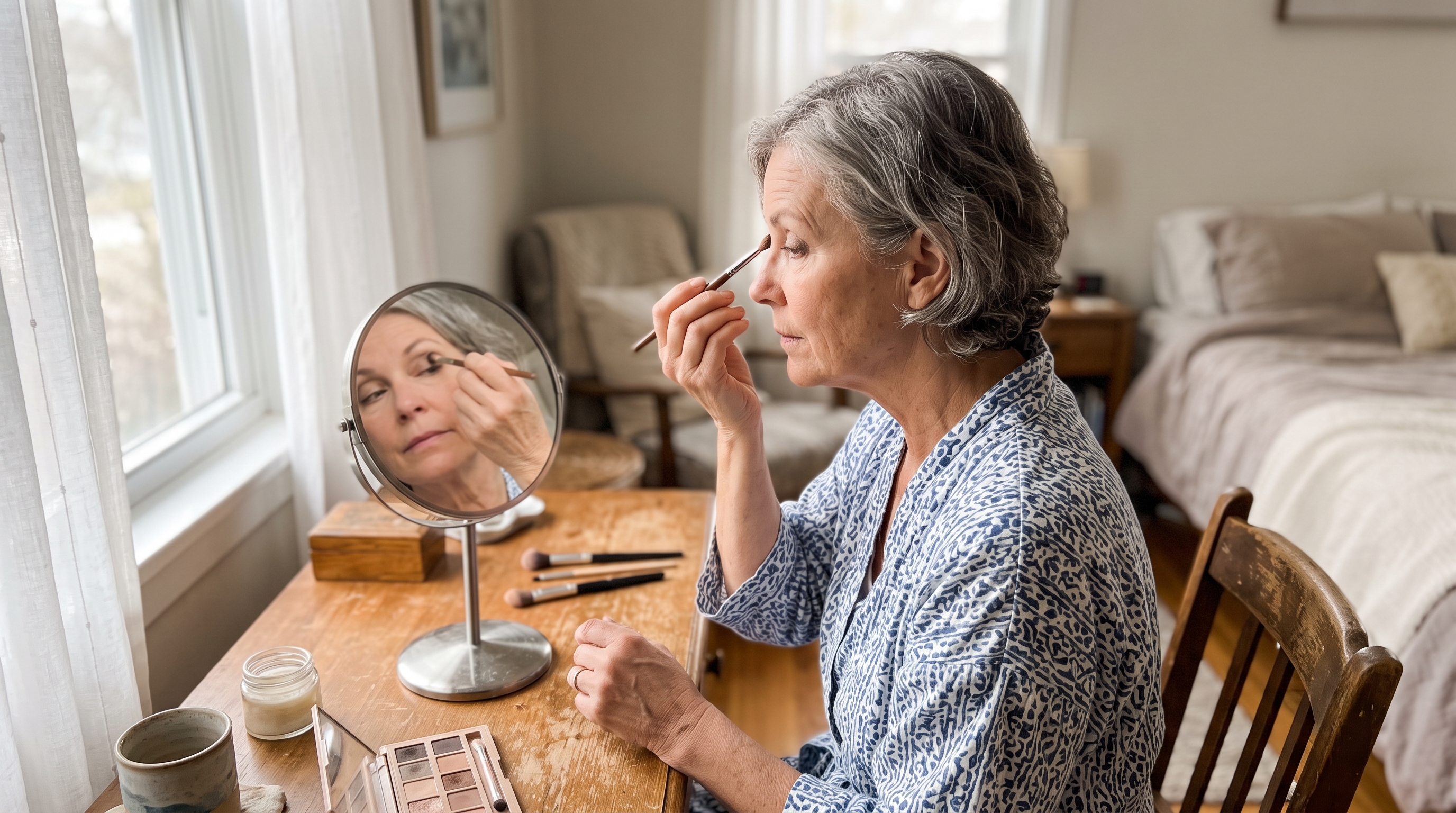
Mature eyelids tolerate less, and the reason is measurable. A 2022 study found that postmenopausal skin shows reduced total ceramide content and shorter ceramide chain lengths compared with premenopausal skin, tracking with estradiol levels, and that hormone replacement prevented the change [6]. Ceramides are a core component of the lipid mortar holding the barrier together.
So the same removal routine that was fine at thirty-five is being applied to a barrier with less lipid in it. Nothing about your habits changed. The material did.
The damage that is already there
Better removal stops you adding to the problem. It does not undo what three decades of nightly friction and ordinary aging already did, and if your lids are already showing crepiness or the hollowing that reads as dark circles, that is accumulated collagen and elastin loss in the dermis.
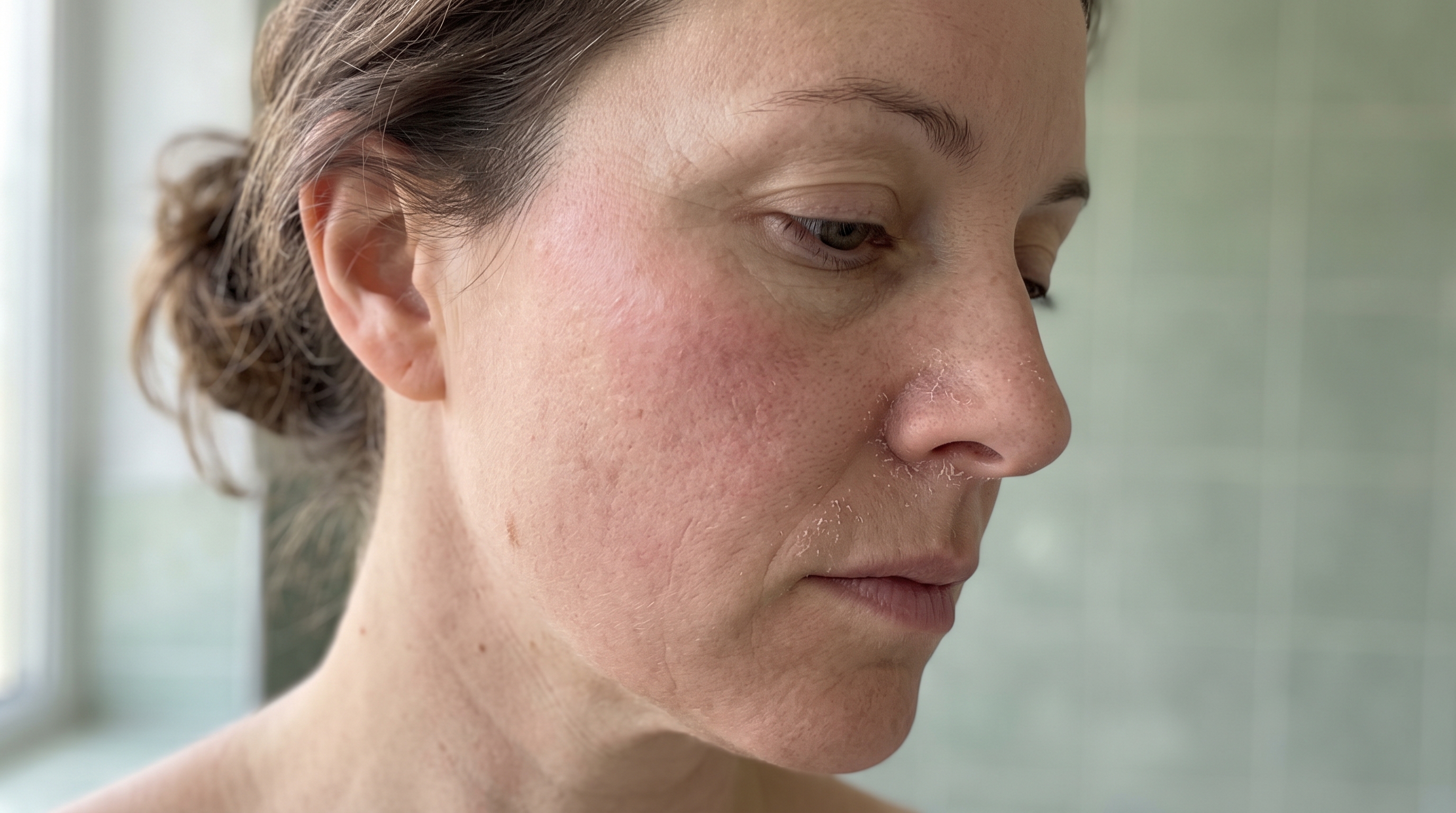
Rebuilding it is a delivery problem. Retinol is the most studied ingredient for dermal remodeling, but conventional formulations barely cross the epithelial barrier, and many force their way through using chemicals and petroleum derivatives that break the barrier down. Around the eye, that is where the burning and peeling comes from, and it is why most people give up.
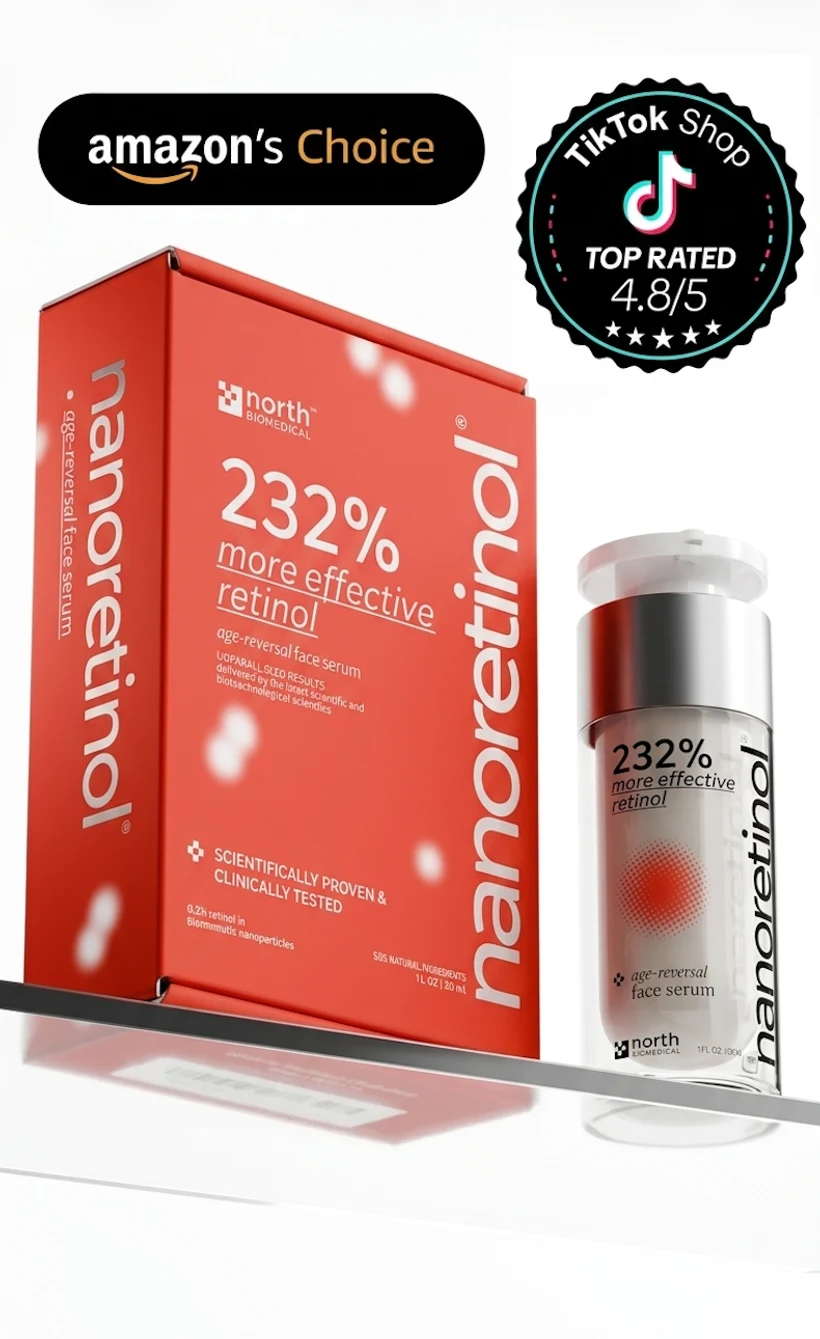
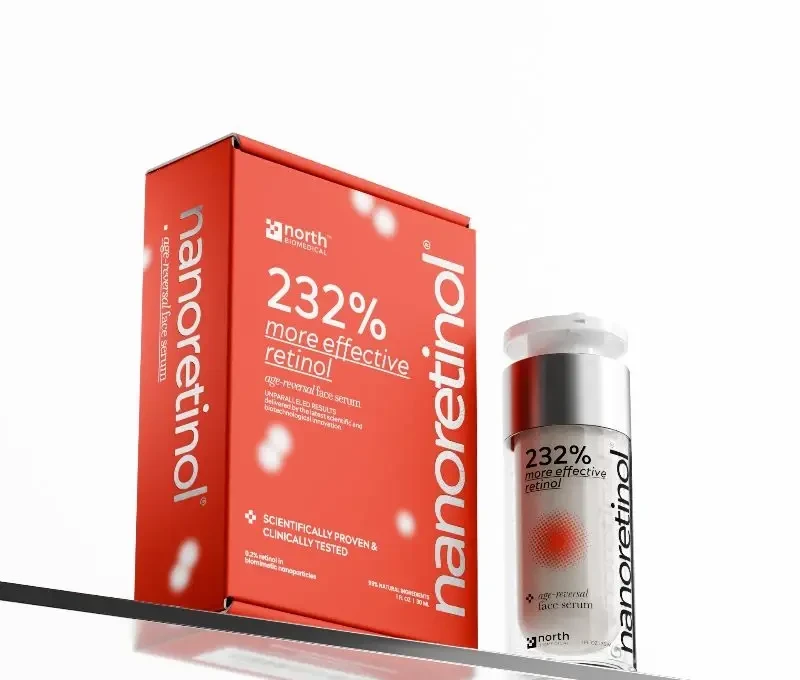
Nanoretinol was built around that obstacle. It carries 0.2 percent stabilized retinol inside biomimetic lipid nanoparticles that the body reads as self and lets through intact, so the barrier stays whole. North Biomedical’s study measured it as 232 percent more effective than conventional retinol for collagen recovery and 73 percent more effective for elastin recovery, with drastically reduced cytotoxicity. The formula is water-based, 99 percent natural, and safe for use on the eye contour.
Judge it by the passes, not the result
Pick a remover matched to what you actually wear. Waterproof mascara and long-wear liner want a biphasic or a well-emulsified balm. Ordinary mascara and shadow are fine with micellar water. Then hold the pad still for twenty seconds and count your strokes.
If you are down to two, you have found the right product. If you are still at eight, the product is wrong regardless of what the bottle promises.
References
- Pratchyapruit W, Kikuchi K, Gritiyarangasan P, Aiba S, Tagami H. “Functional Analyses of the Eyelid Skin Constituting the Most Soft and Smooth Area on the Face: Contribution of Its Remarkably Large Superficial Corneocytes to Effective Water-Holding Capacity of the Stratum Corneum.” Skin Research and Technology. 2007;13(2):169-175. PMID: 17374058
- Al-Aboosi M, Abalkhail A, Kasim O, Al-Khatib A, Qarqaz F, Todd D, Al-Khidour M, Obeidate F. “Friction Melanosis: A Clinical, Histologic, and Ultrastructural Study in Jordanian Patients.” International Journal of Dermatology. 2004;43(4):261-264. PMID: 15090007
- Guertler A, Jøntvedt NM, Clanner-Engelshofen BM, Cappello C, Sager A, Reinholz M. “Efficacy and Safety Results of Micellar Water, Cream and Serum for Rosacea in Comparison to a Control Group.” Journal of Cosmetic Dermatology. 2020;19(10):2627-2633. PMID: 32623833
- Lévêque JL, de Rigal J, Saint-Léger D, Billy D. “How Does Sodium Lauryl Sulfate Alter the Skin Barrier Function in Man? A Multiparametric Approach.” Skin Pharmacology. 1993;6(2):111-115. PMID: 8352948
- Prabhasawat P, Chirapapaisan C, Chitkornkijsin C, Pinitpuwadol W, Saiman M, Veeraburinon A. “Eyeliner Induces Tear Film Instability and Meibomian Gland Dysfunction.” Cornea. 2020;39(4):473-478. PMID: 31724986
- Kendall AC, Pilkington SM, Wray JR, Newton VL, Griffiths CEM, Bell M, Watson REB, Nicolaou A. “Menopause Induces Changes to the Stratum Corneum Ceramide Profile, Which Are Prevented by Hormone Replacement Therapy.” Scientific Reports. 2022;12(1):21715. doi:10.1038/s41598-022-26095-0