Marula Oil for Skin: Why This African Oil Belongs in a Mature Skin Routine (and When It Outperforms Argan)
What clinical research actually says about marula oil for hydration, barrier function, and pairing with retinol
If you have shopped facial oils in the last decade, you have almost certainly seen marula oil on a label, often with copy implying it is some kind of African miracle. The reality is more interesting than the marketing: marula oil is an unusually well-studied plant oil with measurable benefits for mature skin, and it is one of the few facial oils with peer-reviewed clinical data behind its barrier and hydration claims.
It is also, for some skin concerns, the wrong tool. Knowing when marula belongs in your routine — and what it cannot do on its own — separates an effective layered routine from a closet full of pretty bottles.
What Marula Oil Actually Is
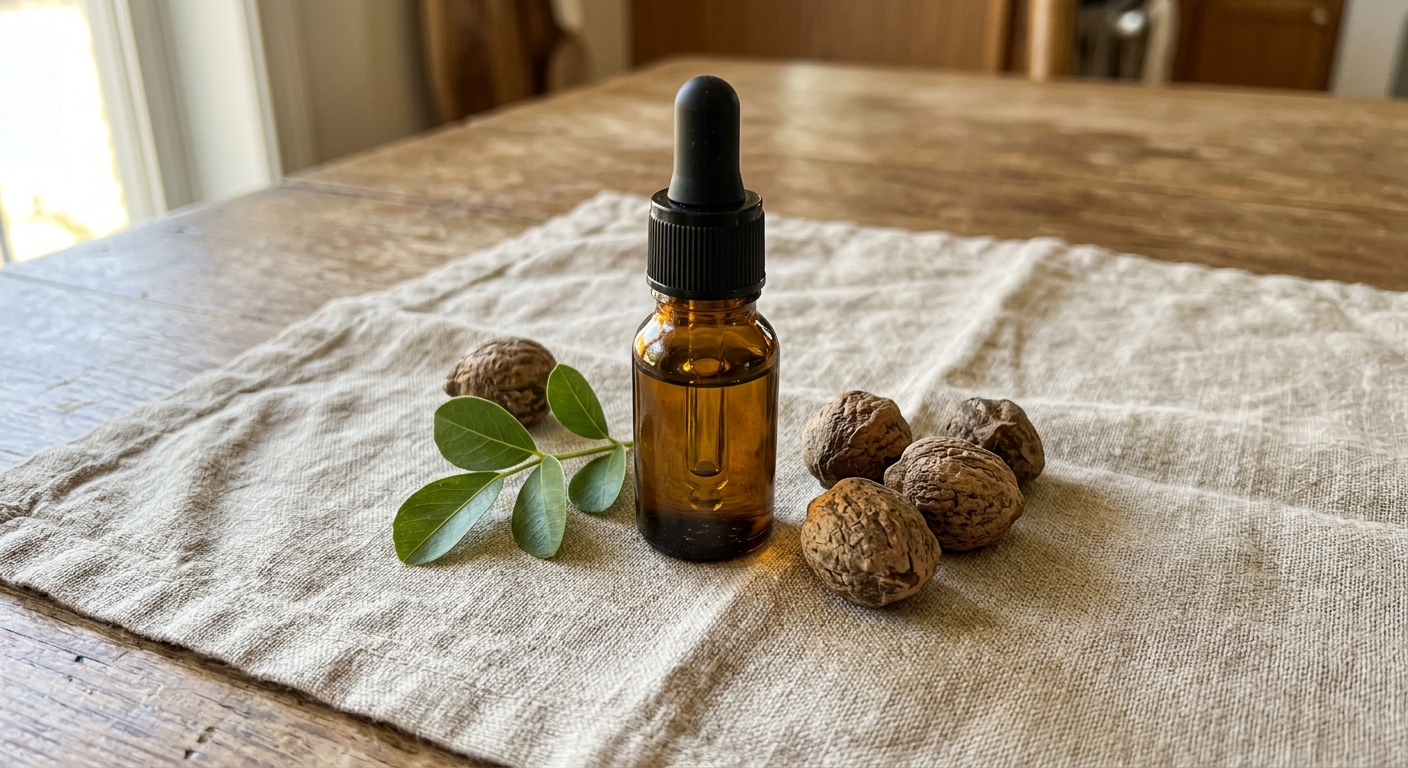
Marula oil is pressed from the kernels inside the fruit of Sclerocarya birrea, a tree native to the wooded grasslands of southern Africa. Cosmetic-grade marula oil is typically cold-pressed from the seeds rather than extracted from the fruit pulp, which is why high-quality versions are pale yellow and have a faint, nutty smell rather than a strong fruity one.
Chemically, marula oil is dominated by a single fatty acid: oleic acid, which makes up roughly 69 percent of the total composition, followed by palmitic acid at about 15 percent and linoleic acid at around 9 percent [1]. It is also unusually rich in oxidative stabilizers — vitamin E (tocopherol), vitamin C precursors, and a range of polyphenols — which is why marula oil resists rancidity longer than most facial oils and why it has been used for centuries in southern Africa as a leather treatment as well as a skin emollient.
That oleic-dominant profile is the key to understanding both what marula does well and where it falls short.
What the Clinical Data Says
The most-cited clinical evaluation of marula oil enrolled twenty healthy adult women and used three quantitative skin instruments — a chromameter to measure color and erythema, an Aquaflux device to measure transepidermal water loss, and a corneometer to measure stratum corneum hydration — over a four-week assessment window [1]. Marula oil was found to be a non-irritant. It produced measurable hydrating and moisturizing effects on dry skin, and it delivered an occlusive effect on normal skin while showing only moderate prevention of transepidermal water loss compared to a heavy-occlusive standard.
Argan is roughly 45 percent oleic acid and 35 percent linoleic acid, with the remainder split between palmitic and stearic.
In plain language: marula does what a good emollient is supposed to do. It increases the water content of the stratum corneum, creates a partial seal that slows water loss, and does not irritate. It is not as occlusive as petrolatum, but it is far more cosmetically elegant — non-greasy, fast-absorbing, and pleasant on the face.
A separate line of research has examined marula’s anti-aging potential at the enzyme level. Extracts of marula stems have been shown to inhibit elastase and collagenase — two enzymes whose elevated activity contributes to the breakdown of dermal collagen and elastin in aging skin [2]. This work was conducted on extracts (not the seed oil), so it does not translate directly to the bottle of marula oil on a bathroom shelf, but it does suggest that the Sclerocarya birrea plant produces bioactives with mechanistic relevance to skin aging.
How Marula Compares to Argan Oil
Argan oil, marula’s most direct shelf competitor, has a very different fatty acid profile. Argan is roughly 45 percent oleic acid and 35 percent linoleic acid, with the remainder split between palmitic and stearic. The much higher linoleic acid content makes argan a better fit for skin types prone to clogged pores, since linoleic-rich oils are associated with thinner sebum and lower comedone formation. Marula, with its oleic-heavy profile, is the better choice for genuinely dry or barrier-compromised skin — the kind of skin that often appears in the post-menopausal years as ceramide and lipid output declines.
There is no universally “better” oil. There is a better fit for a specific skin state. After fifty, when transepidermal water loss climbs and the lipid barrier thins, marula’s heavier emollient profile is generally the more useful tool. For combination or breakout-prone skin, argan typically wins.
The Penetration-Enhancer Question
One of the more interesting and underdiscussed properties of oleic acid is that it is a known penetration enhancer. Research on the stratum corneum has long shown that oleic acid disrupts the lipid lamellae of the outer skin layer, increasing the permeability of substances applied alongside it [3]. This is why it appears in transdermal drug delivery research — including some patch formulations — and it is the reason high-oleic plant oils can amplify the absorption of other actives layered with them.
Penetration is achieved by recognition, not disruption, which is why the formulation runs at 0.2% retinol and remains gentle enough for sensitive skin while still delivering 232% greater collagen recovery and 73% greater elastin recovery than conventional retinol in clinical assays.
For mature skin, this property cuts both ways. Layered with a fragile water-soluble active, oleic-rich marula can help that active reach the lower epidermis. But oleic acid in high concentrations can also disrupt the very barrier it is supposed to support, especially on already-compromised skin. The clinical study cited above tested marula at cosmetic-relevant concentrations and found it non-irritating; that result probably does not extend to undiluted, repeated, occlusive overnight application on broken or eczematous skin.
The takeaway is practical: marula is a strong emollient and a moderate penetration enhancer at normal use levels. It is not a barrier-rebuilding ceramide product. If your barrier is acutely compromised — flaking, stinging, reactive — marula is a reasonable supportive layer over a ceramide-based moisturizer, not a substitute for one.
When Marula Belongs in a Routine With Retinol
This is where marula becomes genuinely interesting for skin in the forties and beyond. Conventional retinol is irritating in a way that has nothing to do with its mechanism of action — it is irritating because the formulation has to brute-force its way past a barrier the skin is actively trying to keep intact. Layering marula oil over a retinol serum (after the retinol has absorbed) cushions the experience: the oleic-heavy emollient seals in moisture, the polyphenols and tocopherol contribute supplementary antioxidant capacity, and the perceived sting and dryness drop.
What marula cannot do is solve the underlying delivery problem. If retinol is sitting on the skin’s surface because the stratum corneum will not let it through, no amount of emollient layering converts surface-bound retinol into active retinoic acid in the dermis. The penetration that matters is not enhanced enough by oleic acid to compensate for the basic mismatch between conventional retinol formulations and the skin’s barrier biology.
This is the gap Nanoretinol was designed to close. Rather than relying on penetration enhancers to drag retinol past the barrier, Nanoretinol encapsulates retinol inside biomimetic lipid nanoparticles whose membrane is recognized by the skin as “self” — a biological Trojan horse rather than a chemical battering ram. Penetration is achieved by recognition, not disruption, which is why the formulation runs at 0.2% retinol and remains gentle enough for sensitive skin while still delivering 232% greater collagen recovery and 73% greater elastin recovery than conventional retinol in clinical assays [5]. Marula oil pairs cleanly on top — its emollient and antioxidant contributions complement the rebuilding work happening underneath.
How to Actually Use Marula Oil
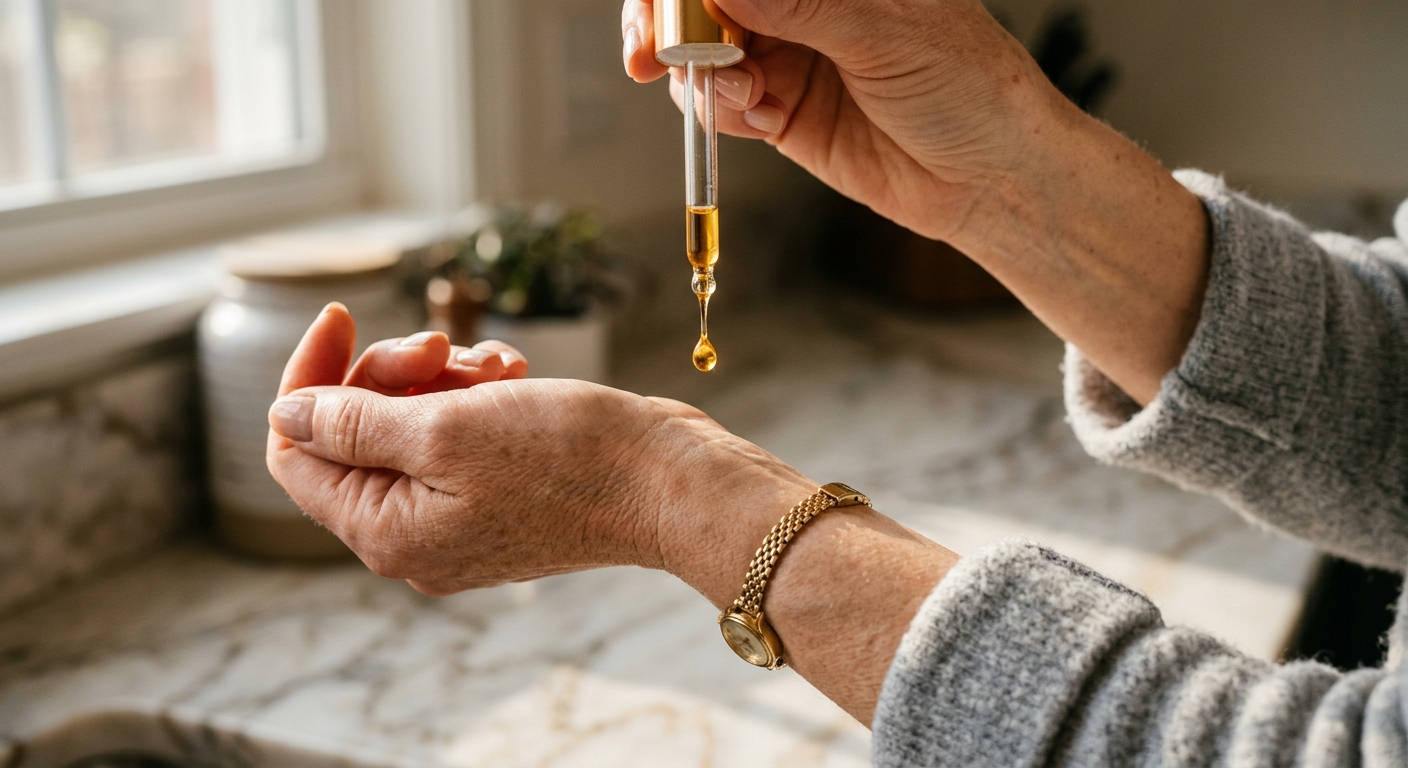
For most mature-skin routines, three to five drops at the end of an evening routine is sufficient. Press, rather than rub, onto skin that is still slightly damp from a hyaluronic-acid serum or moisturizer. Press into the neck and the back of the hands too — both areas have weaker barriers and benefit from the same support. Avoid the under-eye area on the first few applications until you know how your skin responds.
Look for cold-pressed, virgin marula oil with a single-ingredient label. Refined marula oils are often deodorized and lightly bleached, which strips out a meaningful fraction of the polyphenol content responsible for the antioxidant claims. The good versions smell faintly nutty. The disappointing ones smell like nothing at all.
What Marula Cannot Do
Marula oil will not significantly fade hyperpigmentation. It will not noticeably thicken the skin barrier on its own (a ceramide-based moisturizer does that more reliably). And it will not act as a meaningful retinoid alternative — the bakuchiol comparison is the closest plant-based retinol surrogate, and even that does not match the clinical efficacy of a true retinoid in stimulating dermal collagen synthesis [4].
Treated as one supporting player in a layered routine — emollience, hydration, antioxidant insurance, and a soft cushion against retinol-related dryness — marula earns its place. Treated as a one-bottle anti-aging solution, it disappoints. Most expensive facial oils do.
References
- Komane B, Vermaak I, Summers B, Viljoen A. “Safety and efficacy of Sclerocarya birrea (A.Rich.) Hochst (Marula) oil: A clinical perspective.” Journal of Ethnopharmacology. 2015;176:327-335. doi:10.1016/j.jep.2015.10.037
- Shoko T, Maharaj VJ, Naidoo D, Tselanyane M, Nthambeleni R, Khorombi E, Apostolides Z. “Anti-aging potential of extracts from Sclerocarya birrea (A. Rich.) Hochst and its chemical profiling by UPLC-Q-TOF-MS.” BMC Complementary and Alternative Medicine. 2018;18:54. doi:10.1186/s12906-018-2112-1
- Schafer N, Balwierz R, Biernat P, Ochędzan-Siodłak W, Lipok J. “Natural Ingredients of Transdermal Drug Delivery Systems as Permeation Enhancers of Active Substances through the Stratum Corneum.” Molecular Pharmaceutics. 2023;20(7):3278-3297. doi:10.1021/acs.molpharmaceut.3c00126
- Mukherjee S, Date A, Patravale V, Korting HC, Roeder A, Weindl G. “Retinoids in the treatment of skin aging: an overview of clinical efficacy and safety.” Clinical Interventions in Aging. 2006;1(4):327-348. doi:10.2147/ciia.2006.1.4.327
- North Biomedical LLC. “Nanoretinol vs. Conventional Retinol: Efficacy in Collagen and Elastin Recovery.” Clinical Study Summary. 2024. Study PDF