Retinol Cleanser: Can a Retinol Face Wash Do Anything in 60 Seconds?
Retinol face washes promise anti-aging while you cleanse. What a rinse-off product can and cannot leave on your skin, when a retinoid wash makes sense, and which cleanser to pair with a real retinol
A retinol cleanser sounds like the perfect shortcut. You already wash your face twice a day, so why not get your anti-aging step done at the same time? The bottles promise smoother texture, fewer fine lines and a “gentle introduction” to retinol, all in the time it takes to rinse.
The problem is time. Retinol is a slow worker. It has to soak through the outer layer of the skin, get converted inside your cells into retinoic acid, and then switch on the genes that rebuild collagen. A face wash is on your skin for about a minute before it goes down the drain. This guide explains what that means in practice, when a retinol wash can still earn its place, and what to use instead if firmer skin is the real goal.
How retinol actually works on skin
Retinol is not active on its own. Once it crosses into the skin, enzymes turn it into retinaldehyde and then into retinoic acid, the form that binds to receptors in your skin cells. In a classic University of Michigan study, retinol left on the skin produced the same kind of cellular changes as prescription retinoic acid and thickened the epidermis, without the redness that retinoic acid caused [1].
Those changes take consistent, prolonged contact. In a comparison study published in 2016, four weeks of leave-on retinol raised collagen gene activity and procollagen levels in the skin, and twelve weeks reduced visible facial wrinkles [2]. Earlier work on naturally aged skin found similar collagen gains after 24 weeks of leave-on retinol lotion [3].
Your skin needs retinol to sit on it for hours, night after night for 12 weeks, far longer than the 60 seconds a face wash gives it.
Why a retinol face wash leaves so little behind
Think of a retinol cleanser like tea brewed for five seconds. The ingredients are technically in the cup, but very little has had time to come out. A cleanser has three things working against it:
- Contact time. Most people lather for 30 to 60 seconds. Retinol is fat-loving and moves slowly into the outer layer, so most of it is still sitting on the surface when you rinse.
- Surfactants. The whole job of a cleanser is to lift oils and oil-soluble substances off the skin. Retinol is one of those oil-soluble substances, so the same detergent that removes sunscreen and sebum carries much of the retinol away with it.
- Dilution. Water and foam spread a small amount of retinol across a large area, then wash it off.
Your skin needs retinol to sit on it for hours, night after night for 12 weeks, far longer than the 60 seconds a face wash gives it.
Even dermatologists who deliberately shorten retinoid contact do not go anywhere near a minute. “Short contact therapy,” a technique used to make prescription retinoid gels easier to tolerate, still leaves the gel on the skin for 30 to 60 minutes before it is washed off [4]. A cleanser offers a small fraction of that.
This does not mean a retinol cleanser does nothing. Some retinol will stay in the top layer, so a rinse-off product is not entirely inert. But no published trial shows a rinse-off retinol matching the collagen results of a leave-on product, and you should not expect it to replace one.
When a retinoid wash can still make sense
There are a few situations where a retinol cleanser is a reasonable choice:
- A very cautious first step. If your skin reacts to almost everything, a few weeks of a retinol wash can let you see whether you tolerate retinol at all before moving to a leave-on product. Our retinol for beginners guide covers the slower ramp-up that usually works better.
- Body areas. Some people use retinoid washes on the chest or back, where a leave-on product is awkward to apply. The same contact-time limits apply.
- Mild texture and oil. Many retinol cleansers also contain exfoliating acids, which do work quickly on rough texture. In those formulas, the acid may be doing more than the retinol.
If you already use a leave-on retinol, adding a retinol cleanser is usually a mistake. You stack two sources of irritation with little extra benefit, which raises the odds of the dryness and peeling described in our guide to retinol side effects.
What actually matters in a cleanser for retinol users
The more useful question is not “should my cleanser contain retinol?” but “will my cleanser make my retinol easier or harder to use?” Harsh cleansers strip barrier lipids and damage skin proteins, which leaves skin tight, dry and itchy [5]. Put retinol on top of a stripped barrier and it stings more than it should.
Your skin will tolerate a nightly retinol far better when it is washed with a mild cleanser that has a pH close to 5.5 than with a harsh foaming soap.
Your skin will tolerate a nightly retinol far better when it is washed with a mild cleanser that has a pH close to 5.5 than with a harsh foaming soap.
The same review found that high-pH washes swell the outer skin layer and loosen its lipids, even when no detergent is present [5]. Synthetic detergent bars and liquid “syndets” cause less protein damage and dryness than traditional alkaline soaps [6]. In practice, look for:
- Mild surfactants such as coco-glucoside, decyl glucoside, sodium cocoyl isethionate or betaines, rather than a high level of sodium lauryl sulfate.
- A label that says pH-balanced or “low pH”, or a cream, milk or gel texture rather than a squeaky-clean foam.
- Barrier helpers such as glycerin, ceramides or plant oils, which reduce the lipid loss of each wash.
- No scrubbing particles or strong acids on the nights you apply retinol.
Our roundup of the best face wash for aging skin applies these rules to specific formula types.
How to read a retinol cleanser label
If you still want to try one, a few details tell you how serious the product is:
- Where retinol sits in the list. Retinol near the end, after fragrance and preservatives, means a token amount.
- Packaging. Retinol breaks down in light and air. A clear pump bottle that sits in a sunny bathroom for three months will lose potency.
- Other actives. Glycolic, lactic or salicylic acid alongside retinol makes the wash stronger and more likely to sting. Use it no more than every other day at first.
- Marketing claims. Phrases like “retinol-infused” with no percentage often mean the product leans on the name more than the dose.
A better routine: gentle wash, leave-on retinol
For most people, the routine that works is simple. Wash with a mild, low-pH cleanser, pat your skin dry, wait a few minutes, then apply a leave-on retinol to dry skin at night. Follow with moisturizer if you need it, and wear sunscreen every morning. Our step-by-step guide on how to use retinol explains how often to apply and how to adjust if you get dry patches.
The cleanser’s job is to protect your barrier. The retinol’s job is to stay put long enough to reach the cells that make collagen.
Put retinol where it can stay
A retinol face wash is mostly a convenience product: pleasant, easy, and largely rinsed away. If your goal is firmer skin and softer lines, the retinol has to stay on your skin, and it has to be gentle enough to use every night.
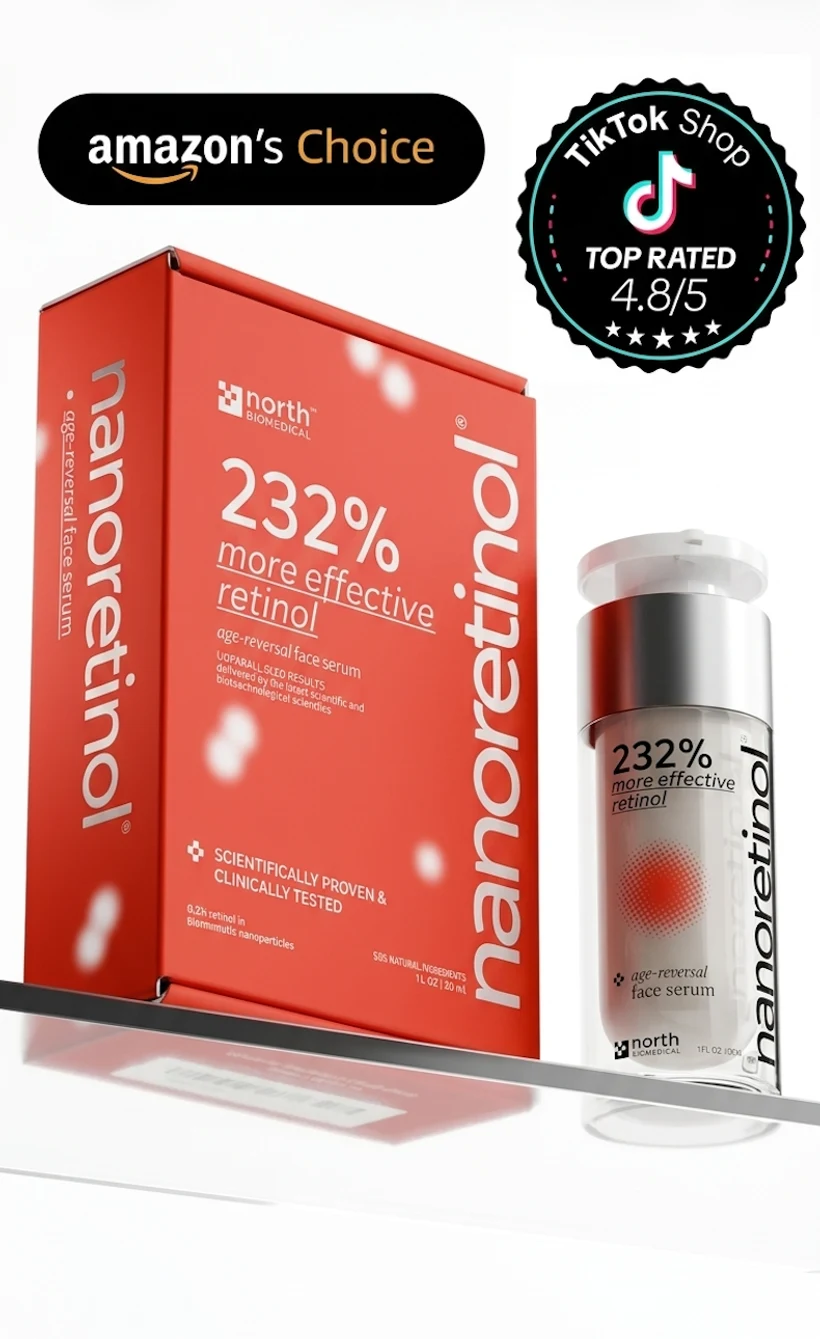
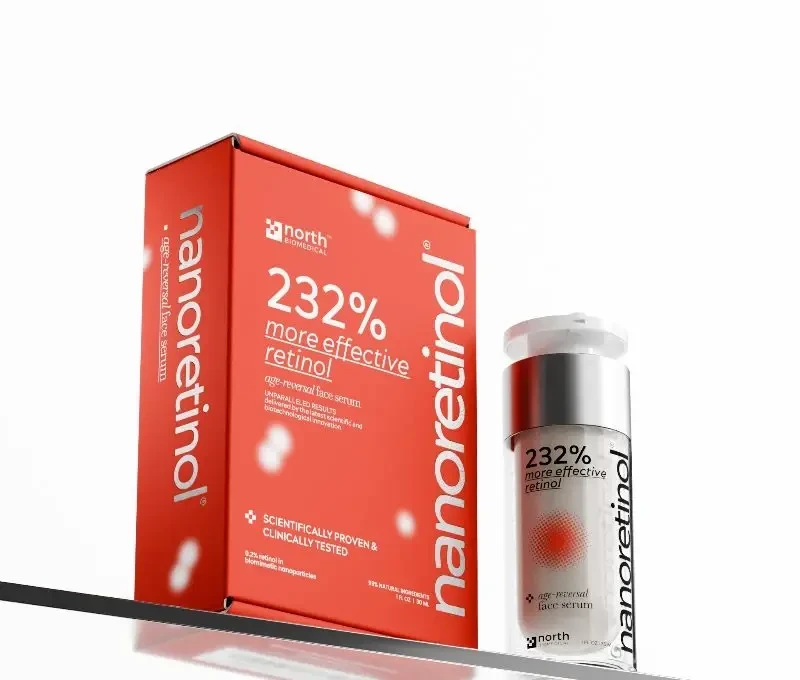
That is the problem Nanoretinol was designed to solve. Its 0.2% retinol is encapsulated in biomimetic lipid nanoparticles that the skin recognizes as its own, so the retinol passes the outer barrier without the harsh solvents that cause burning and peeling. In North Biomedical’s study, Nanoretinol was 232% more effective in collagen recovery and 73% more effective in elastin recovery than conventional retinol, and users saw a 61% increase in firmness and a 56% increase in elasticity after 56 days [7]. Pair it with a gentle cleanser, and let the leave-on step do the work.
References
- Duell EA, Kang S, Voorhees JJ. “Unoccluded retinol penetrates human skin in vivo more effectively than unoccluded retinyl palmitate or retinoic acid.” Journal of Investigative Dermatology. 1997;109(3):301-305. doi:10.1111/1523-1747.ep12335788
- Kong R, Cui Y, Fisher GJ, et al. “A comparative study of the effects of retinol and retinoic acid on histological, molecular, and clinical properties of human skin.” Journal of Cosmetic Dermatology. 2016;15(1):49-57. doi:10.1111/jocd.12193
- Kafi R, Kwak HS, Schumacher WE, et al. “Improvement of naturally aged skin with vitamin A (retinol).” Archives of Dermatology. 2007;143(5):606-612. doi:10.1001/archderm.143.5.606
- Bertolani MB, Rodighiero E, Gandolfi M, et al. “Efficacy and tolerability of short contact therapy with tretinoin, clindamycin, and glycolic acid gel in acne: A randomized, controlled, assessor-blinded two-center trial: The MASCOTTE study.” Dermatologic Therapy. 2021;34(1):e14724. doi:10.1111/dth.14724
- Ananthapadmanabhan KP, Moore DJ, Subramanyan K, et al. “Cleansing without compromise: the impact of cleansers on the skin barrier and the technology of mild cleansing.” Dermatologic Therapy. 2004;17(Suppl 1):16-25. doi:10.1111/j.1396-0296.2004.04s1002.x
- Draelos ZD. “The science behind skin care: Cleansers.” Journal of Cosmetic Dermatology. 2018;17(1):8-14. doi:10.1111/jocd.12469
- North Biomedical LLC. “Nanoretinol vs. Conventional Retinol: Efficacy in Collagen and Elastin Recovery.” Clinical Study Summary, 2024. Study summary