Spicule Serum: What Those Tiny Needles Actually Do to Your Skin
Microscopic sponge needles promise microneedling in a bottle. What spicules are, what the studies measured, why they prickle, and who should skip them
Spicule serums are one of the stranger success stories in recent skincare. They look like any other serum, often a pale, slightly gritty gel, but they are sold with an unusual warning: expect a prickling feeling when you massage it in. That prickle is the point. The serum is full of microscopic needles made by marine sponges, and the promise is that they open the skin just enough to let the rest of the formula in, like a derma roller you can buy in a bottle.
Some of that is backed by real lab work. Some of it stretches what the studies actually show. Here is what spicules are, what they do to the skin, and what to keep in mind before you try one.
What a spicule is
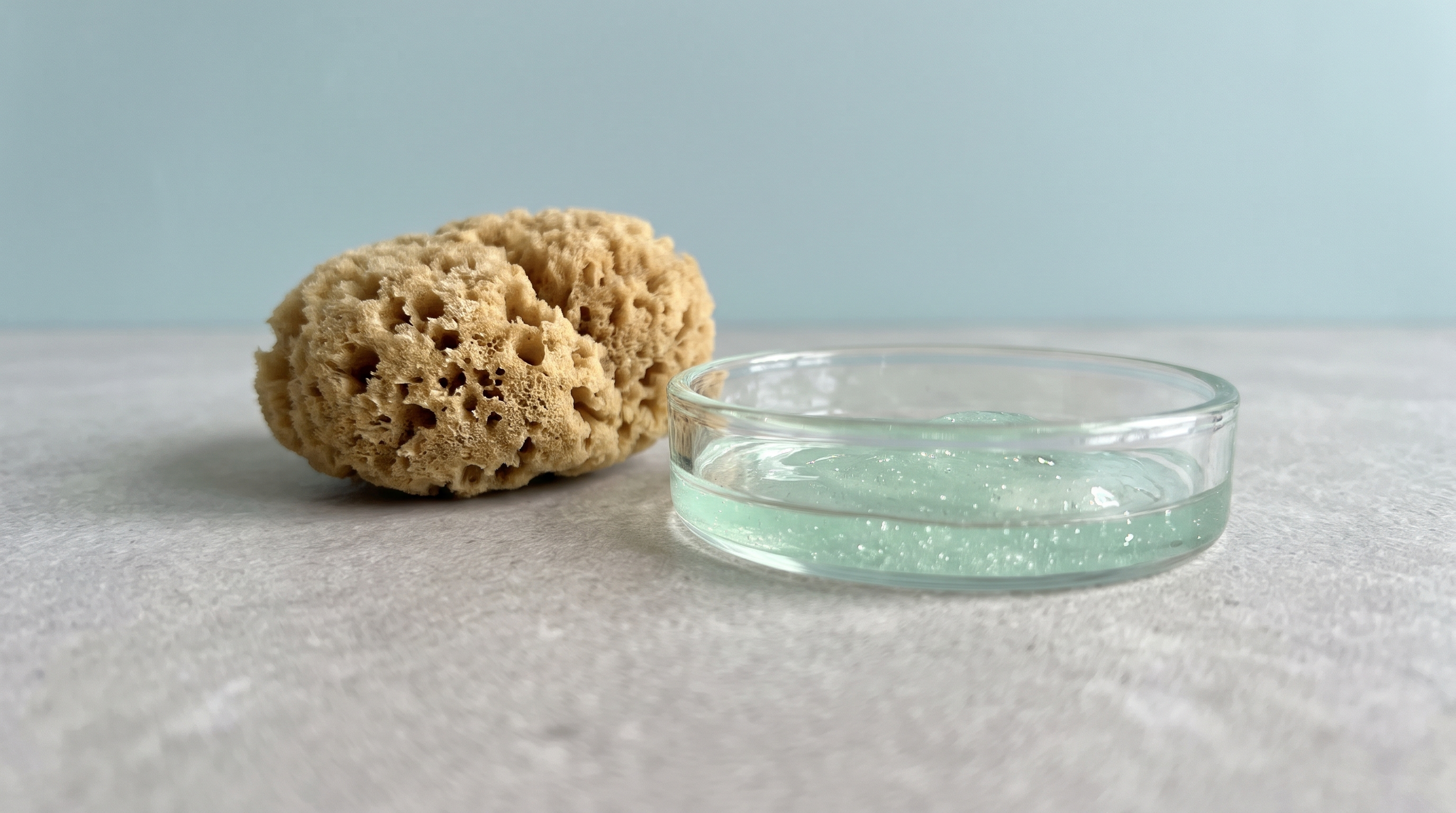
Sponges are simple sea animals, and many of them build their skeletons out of tiny glass-like rods called spicules. Under a microscope, they look like a pile of needles with sharp tips. Cosmetic labs harvest them from sponges, most often a species called Haliclona, purify them and suspend them in a gel or cream.
Once massaged in, the spicules work their way into the outer layer and lodge there. In one detailed study, spicules from Haliclona created around 850 tiny channels in every square millimeter of skin, each reaching about 49 micrometers deep, roughly half the width of a human hair [1]. That depth stays within the outer layers of the skin, which is why spicules prickle rather than hurt or bleed.
Your skin can carry these tiny channels for up to 5 days after one application, far longer than the 2 hours most microneedle holes take to close.
That difference is the heart of how spicules work, and also the main thing to understand about their side effects.
Your skin can carry these tiny channels for up to 5 days after one application, far longer than the 2 hours most microneedle holes take to close.
What the studies actually measured
Better delivery, mostly in the lab
The strongest evidence for spicules is about delivery. In tests on pig skin, spicules combined with flexible fat-based carriers pushed about 19 times more hyaluronic acid into the skin than the same solution applied to untreated skin, and about 3.6 times more than a derma roller used with the same carriers [1]. In that study, the channels gradually closed over about five days, and the skin showed only minimal, short-lived redness [1].
Other teams have used spicules to deliver everything from growth factors to stem cell products. In mice with sun-damaged skin, a stem cell product applied with spicules reached deeper into the skin and improved signs of photoaging [2]. Those are promising results, but mouse skin is thinner and more permeable than human skin, so they do not translate directly.
Small human trials
The human evidence is limited but real. In a split-face study of 20 adults aged 33 to 54, one side of the face was treated daily for 4 weeks with a cream containing dissolvable micro-spicules and a growth factor, and the other side with the growth factor cream alone. The spicule side showed a greater increase in the depth and density of the deeper skin layer at 4 and 8 weeks, with no significant side effects [3].
A 2025 study combined spicules coated with a stem cell product and reported fewer visible pores after one use, and fewer wrinkles and less pigmentation after two weeks [4]. That trial had no comparison group, and its authors worked for the company making the product, so it is best read as early evidence.
Notice what these trials have in common: the spicules were always paired with an active ingredient, and the results were credited to better delivery of that active. No good study shows that spicules alone rebuild collagen in a meaningful way. Traditional needling with rollers and pens is compared in our guide to at-home microneedling, which covers the tools and the evidence.
Your skin stays more open to everything you apply for 1 to 5 days after a spicule treatment, so a strong acid on top can sting far more than usual.
Why spicule serums prickle and turn skin pink
When spicules lodge in the skin, they are a mild, controlled injury. That is why your face may tingle, turn pink and feel sensitive for a day or two, especially with stronger formulas or when you use the product on consecutive days.
The more important issue is time. Research on microneedles in people found that tiny skin punctures normally reseal within about 2 hours, but stay open much longer, up to 40 hours, when the skin is covered by a sealing patch [5]. Spicules behave differently from needles because they can stay lodged in the outer layer rather than being pulled straight out, and in the Haliclona study their channels took days to close [1]. While those channels are open, anything you put on top gets an easier route in, including ingredients you would not normally want going deeper.
Your skin stays more open to everything you apply for 1 to 5 days after a spicule treatment, so a strong acid on top can sting far more than usual.
Spicule serum vs. a derma roller
- Depth: home derma rollers usually reach a few tenths of a millimeter. Spicules stay shallower, which is part of why they feel milder.
- Duration: roller channels close within hours. Spicule channels can stay open for days.
- Coverage: spicules spread evenly wherever you massage them, while rollers create neat lines of punctures.
- Hygiene: a single-use serum avoids the bacteria that build up on a reused roller head.
For what to apply after any kind of needling, our guide to the best serum for microneedling explains which ingredients are safest on freshly opened skin.
How to use one safely
- Start slowly: once or twice a week at first, and never on broken, sunburned or irritated skin.
- Keep the rest of the routine plain: skip exfoliating acids, vitamin C at high strength, fragrance and retinoids on spicule nights and the following day.
- Expect tingling, not pain: stinging that lasts or a rash means the product is too strong for you.
- Protect your skin from the sun: freshly treated skin is more sensitive, so daily sunscreen matters even more.
- Skip it if: you have active acne, eczema, rosacea flares, a tendency to dark marks after irritation, or very sensitive skin.
Spicule serums are best thought of as a short-term texture and glow treatment. If dull, uneven texture is your main concern, our guide on how to fix skin texture lays out the options with the strongest evidence.
A different way to get ingredients in
Spicules solve a real problem. The outer layer of the skin is built to keep things out, and most skincare ingredients never get far past it. Spicules force a way through by puncturing that layer, and the price is tingling, redness and a barrier that stays open for days.
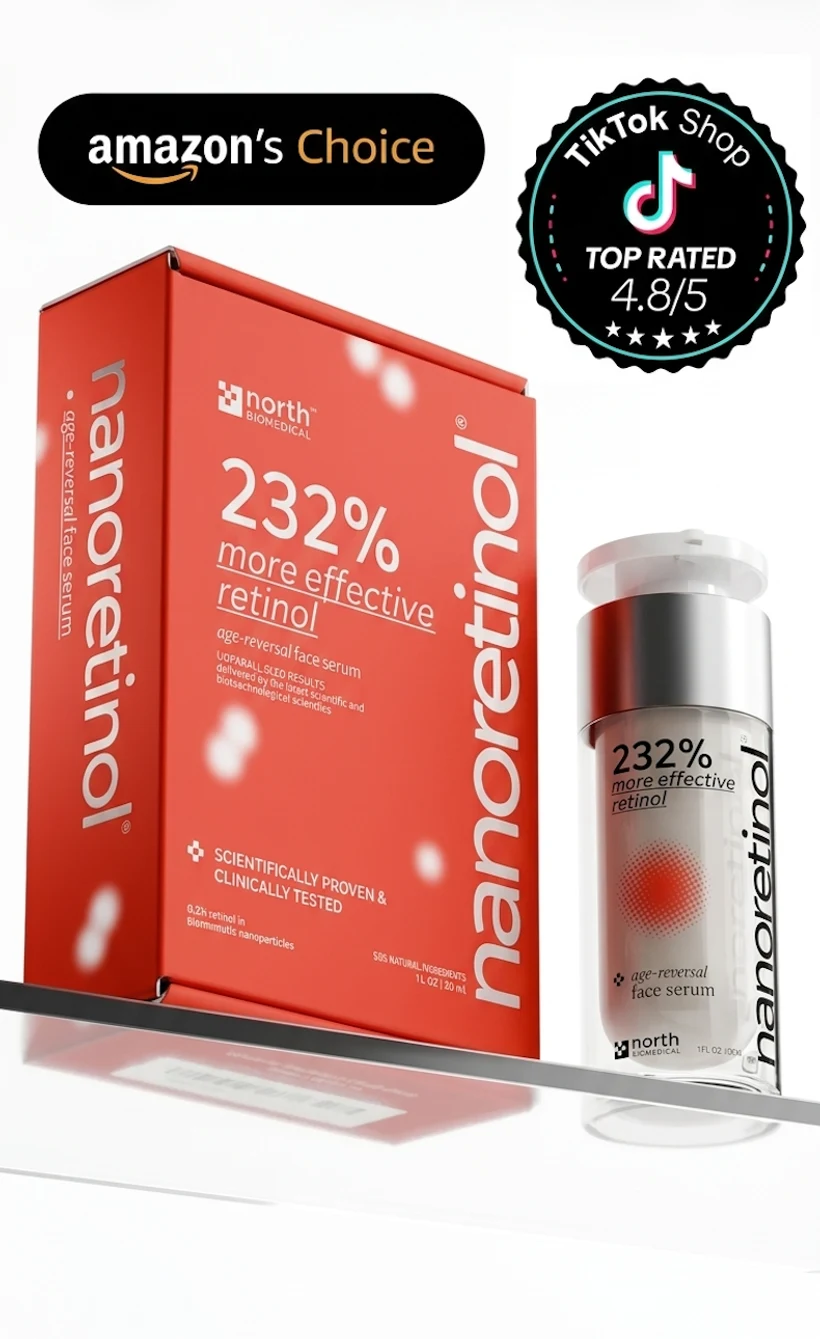
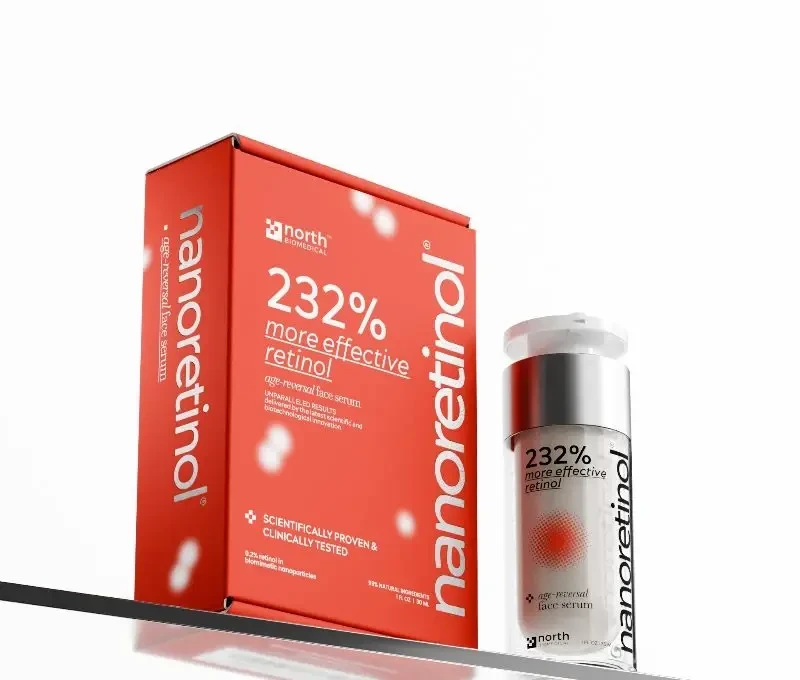
Lipid nanoparticles approach the same problem from the opposite direction. Nanoretinol carries 0.2% retinol inside biomimetic lipid nanoparticles that resemble the skin’s own cell membranes, so they pass through an intact barrier instead of breaking it. In clinical testing over 56 days, users saw a 61 percent increase in skin firmness and a 56 percent increase in elasticity, and in laboratory testing Nanoretinol was 232 percent more effective in collagen recovery than conventional retinol [6]. Because retinol should never go on freshly needled skin, leave at least a full day between a spicule treatment and your retinol if you use both, and use sunscreen every morning.
References
- Zhang C, Zhang K, Zhang J, et al. “Skin delivery of hyaluronic acid by the combined use of sponge spicules and flexible liposomes.” Biomaterials Science. 2019;7(4):1299-1310. doi:10.1039/c8bm01555d
- Zhang K, Yu L, Li FR, et al. “Topical Application of Exosomes Derived from Human Umbilical Cord Mesenchymal Stem Cells in Combination with Sponge Spicules for Treatment of Photoaging.” International Journal of Nanomedicine. 2020;15:2859-2872. doi:10.2147/IJN.S249751
- Ha JM, Lim CA, Han K, et al. “The Effect of Micro-Spicule Containing Epidermal Growth Factor on Periocular Wrinkles.” Annals of Dermatology. 2017;29(2):187-193. doi:10.5021/ad.2017.29.2.187
- Lee NE, Kim JE, Bang CY, et al. “Nano-Encapsulated Spicule System Enhances Delivery of Wharton’s Jelly MSC Secretome and Promotes Skin Rejuvenation: Preclinical and Clinical Evaluation.” International Journal of Molecular Sciences. 2025;26(20):10024. doi:10.3390/ijms262010024
- Gupta J, Gill HS, Andrews SN, et al. “Kinetics of skin resealing after insertion of microneedles in human subjects.” Journal of Controlled Release. 2011;154(2):148-155. doi:10.1016/j.jconrel.2011.05.021
- North Biomedical LLC. “Nanoretinol vs. Conventional Retinol: Efficacy in Collagen and Elastin Recovery.” Clinical Study Summary, 2024. Study summary