Stem Cell Skincare: Does It Actually Work, or Is It Clever Marketing?
The science behind plant stem cell creams, what the labels really mean, and the proven alternative that does what they promise.
Few phrases sell a face cream faster than “stem cells.” It sounds like the cutting edge of regenerative medicine bottled for your bathroom shelf — the promise that you can switch your skin’s own renewal machinery back on. The serums are often beautifully packaged and priced to match. But strip away the language, and a fair question remains: does stem cell skincare actually do anything, or are you paying a premium for biology that does not survive contact with your skin?
The honest answer requires separating what the science shows from what the marketing implies. They are not the same thing.
What “Stem Cell Skincare” Really Contains
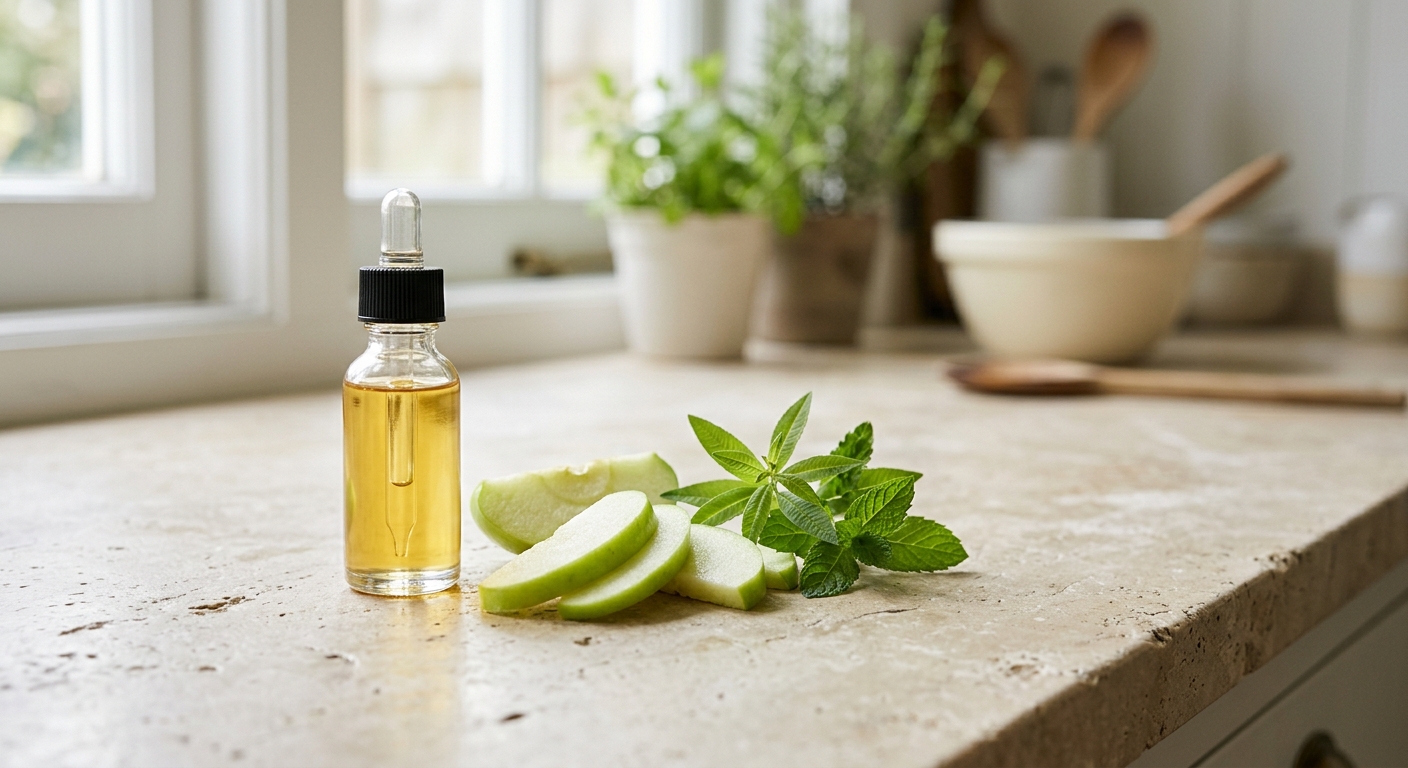
The first surprise is that almost no over-the-counter “stem cell” product contains living stem cells at all. Living cells cannot survive being stabilized, preserved, and shelved in a jar for months. What these products actually contain are plant stem cell extracts — most famously from a rare Swiss apple — along with the proteins and antioxidant compounds those cultured plant cells produce.
The theory, as laid out in cosmetic-science reviews, is that these extracts release growth factors and protective compounds that could stimulate your skin’s own renewal and shield it from UV stress [1]. It is a genuinely interesting idea, and plant cell cultures do produce bioactive molecules with measurable antioxidant properties in the lab.
The problem is the leap from “interesting in a dish” to “transformative on your face.”
Few phrases sell a face cream faster than “stem cells.” It sounds like the cutting edge of regenerative medicine bottled for your bathroom shelf — the promise that you can switch your skin’s own renewal machinery back on.
The Two Problems the Marketing Skips
There are two scientific hurdles that the glossy claims tend to glide past.
The first is a biological mismatch. Reviewers of the field point out a basic objection: plant stem cells are built to direct the growth of plant cells, not human ones. The signals that tell an apple cell to divide have no established receptor or pathway in human skin, and many scientists argue their effect on our cells may be negligible [2]. A growth factor that orchestrates a leaf is not necessarily speaking a language your skin understands.
The second is delivery. Even the genuinely useful molecules in these extracts tend to be large and fragile, and the outermost layer of your skin is a barrier specifically designed to keep large molecules out. A compound that cannot penetrate to the living layers of the dermis cannot remodel anything down there, no matter how impressive its résumé in a petri dish.
This is the gap between the headline and the reality. Much of the most-cited evidence for these ingredients also comes from manufacturer-sponsored testing rather than independent trials, which is reason for healthy caution rather than blind faith. The same delivery and evidence questions dog other “regenerative” trends — it is worth reading our breakdowns of growth factor serums and exosomes for skin with the same critical eye.
So Is It a Scam?
Not exactly — and that nuance matters. A plant-stem-cell serum is usually a perfectly pleasant antioxidant product. The extracts can offer real free-radical protection, and the surrounding formula is often rich in hydrators that make skin look plumper and smoother in the short term. You are not being sold poison.
The irony is sharp: the “switch your renewal back on” outcome that stem cell marketing borrows is exactly what a proven retinoid actually accomplishes.
What you are being sold is a moisturizer with an antioxidant boost, dressed in the vocabulary of regenerative medicine and priced as if it rebuilds your dermis. If your goal is comfortable, well-hydrated skin, it may deliver. If your goal is to genuinely thicken aging skin and rebuild lost collagen, the evidence says you are aiming the wrong tool at the problem.
What Actually Rebuilds Aging Skin
Here is where the contrast becomes stark. While stem cell creams struggle to clear the evidence bar, one ingredient family has decades of independent, peer-reviewed proof that it does the very thing those products promise: retinoids.
In a study on naturally aged skin, vitamin A (retinol) was shown to counteract the cellular decline of aging — reducing the collagen-degrading enzymes that thin our skin while actively stimulating new collagen production [3]. A separate clinical trial applying retinol to the aged skin of older adults found significant improvements in fine wrinkles, along with increased collagen, confirmed by biopsy rather than by a brand’s in-house panel [4]. This is the difference between a hopeful mechanism and a measured result. If you want the full picture, our deep dive on how to boost collagen production walks through the pathways.
The irony is sharp: the “switch your renewal back on” outcome that stem cell marketing borrows is exactly what a proven retinoid actually accomplishes.
Where Real Delivery Science Lives
The legitimate frontier in skincare is not exotic source material — it is delivery. The reason conventional retinol sometimes underperforms is the same barrier problem that defeats plant extracts: getting an active where it needs to go, intact, without wrecking the skin to do it.
That is the engineering problem Nanoretinol was built to solve. Rather than relying on hype-friendly ingredients, it takes a genuinely proven active — retinol — and wraps it in biomimetic lipid nanoparticles that the skin recognizes as “self” and admits without breaching the barrier. It is the same class of nanoparticle delivery technology used in advanced drug therapies, applied to the one anti-aging ingredient that already has the receipts. In testing, this approach delivered 232% greater collagen recovery and 73% better elastin recovery than conventional retinol, while clinical use showed a 61% increase in skin firmness over 56 days — and it did so while proving significantly gentler on skin cells. That is what the marriage of a proven active and real delivery science looks like, as opposed to a novel source material in search of a mechanism.
The Takeaway
Stem cell skincare is not snake oil, but it is oversold. Plant stem cell extracts are reasonable antioxidants wearing a borrowed lab coat, held back by a biological mismatch and a barrier they cannot cross. If you enjoy one as a hydrating antioxidant step, there is no harm in it. But if you want skin that is measurably firmer and more resilient, spend your money where the independent evidence actually points — on a proven retinoid, delivered in a form your skin will let in.
References
- Trehan S, Michniak-Kohn B, Beri K. “Plant stem cells in cosmetics: current trends and future directions.” Future Science OA. 2017;3(4):FSO226. doi:10.4155/fsoa-2017-0026
- Moruś M, Baran M, Rost-Roszkowska M, Skotnicka-Graca U. “Plant stem cells as innovation in cosmetics.” Acta Poloniae Pharmaceutica. 2014;71(5):701-707. PubMed: 25362798
- Varani J, Warner RL, Gharaee-Kermani M, Phan SH, Kang S, Chung JH, Wang ZQ, Datta SC, Fisher GJ, Voorhees JJ. “Vitamin A antagonizes decreased cell growth and elevated collagen-degrading matrix metalloproteinases and stimulates collagen accumulation in naturally aged human skin.” Journal of Investigative Dermatology. 2000;114(3):480-486. doi:10.1046/j.1523-1747.2000.00902.x
- Kafi R, Kwak HS, Schumacher WE, Cho S, Hanft VN, Hamilton TA, King AL, Neal JD, Varani J, Fisher GJ, Voorhees JJ, Kang S. “Improvement of naturally aged skin with vitamin A (retinol).” Archives of Dermatology. 2007;143(5):606-612. doi:10.1001/archderm.143.5.606