Growth Factor Serum: The Science-Backed Anti-Aging Ingredient Dermatologists Swear By
How EGF, TGF, and FGF signal your skin to rebuild itself — and what to look for in a serum
What Are Growth Factors and Why Do They Matter for Skin?
Growth factors are small signaling proteins that your body produces naturally. They tell cells when to divide, when to repair, and when to produce structural proteins like collagen and elastin. In skin, the most studied growth factors include epidermal growth factor (EGF), transforming growth factor beta (TGF-β), fibroblast growth factor (FGF), and platelet-derived growth factor (PDGF) [1].
Each plays a distinct role. EGF stimulates keratinocyte proliferation and wound repair. TGF-β drives collagen synthesis in fibroblasts. FGF promotes new blood vessel formation and tissue remodeling. Together, they orchestrate the skin’s ability to maintain itself — a process that slows considerably after 40 [2].
The concept behind growth factor serums is straightforward: if aging skin produces fewer of these signaling proteins, supplementing them topically should help restart the repair machinery. The question is whether that logic survives contact with clinical evidence.
How Growth Factor Serums Work at the Cellular Level
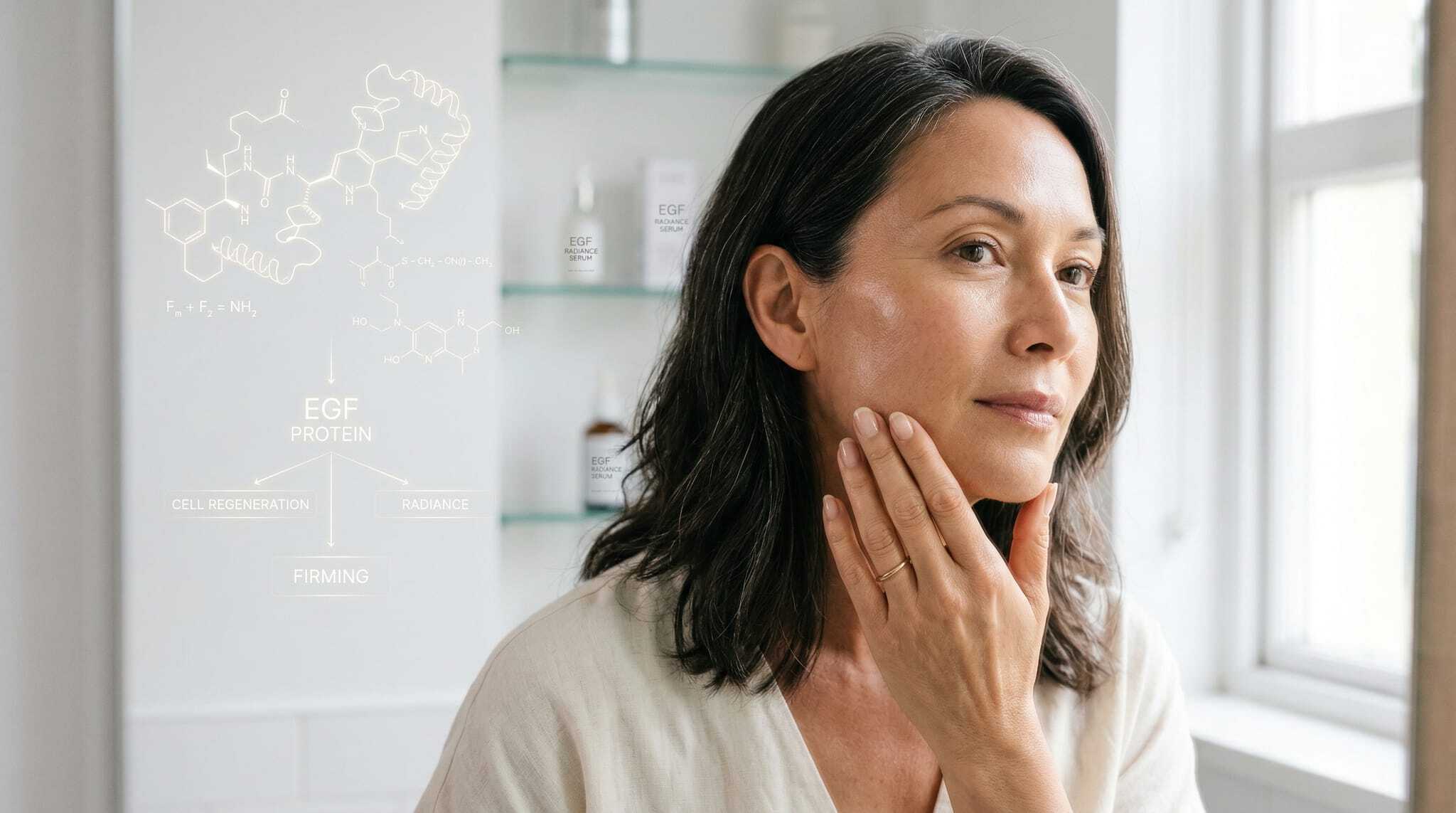
When you apply a growth factor serum, the active proteins bind to specific tyrosine kinase receptors on the surface of skin cells. EGF, for instance, binds to EGFR — a receptor expressed on keratinocytes, fibroblasts, and endothelial cells throughout the skin [1]. This binding triggers intracellular signaling cascades, primarily the PI3K/AKT and ERK/MAPK pathways, which regulate cell survival, proliferation, and migration [2].
The downstream effects include increased production of hyaluronic acid, type I and type III collagen, and elastin. In vitro studies have demonstrated that recombinant human EGF (rhEGF) promotes the migration and contractility of aged fibroblasts and upregulates both hyaluronic acid and collagen synthesis [2]. This is significant because it means growth factors do not just tell young cells to work harder — they can reactivate aged cells that have slowed down.
What the Clinical Evidence Actually Shows
The research on topical growth factors is promising but still maturing. A 2021 systematic review examined 49 studies on rhEGF for skin regeneration and anti-aging, finding that most clinical trials pointed to effective reversal of skin aging signs [3]. However, the review noted that many studies lacked robust randomization and control groups.
Among the stronger evidence: Schouest et al. demonstrated that a three-month topical application of EGF-containing serum significantly improved brown pigmentation, skin texture, pore size, and wrinkles in 29 women with photoaged skin [2]. Draelos (2016) showed in a 60-patient clinical trial that daily application of a serum combining hyaluronic acid with EGF produced statistically significant improvements in skin quality compared to hyaluronic acid alone, with differences emerging as early as week two [3].
A separate study by Shin et al. found that EGF-containing hyaluronic acid filler induced type I and type III collagen production while downregulating the expression of MMP-9 — a matrix metalloproteinase responsible for breaking down existing collagen [2]. This dual action of stimulating new collagen while protecting existing stores is particularly relevant for women over 40, whose collagen degradation outpaces production.
EGF, TGF, FGF: Understanding the Different Growth Factors
Not all growth factor serums are equal, and not all growth factors do the same thing. Here is what each major type contributes:
Epidermal Growth Factor (EGF) is the most widely studied for topical skincare. It promotes keratinocyte proliferation, accelerates wound healing, and stimulates collagen synthesis. It is the growth factor with the most clinical backing for anti-aging applications [1].
Transforming Growth Factor Beta (TGF-β) is a potent stimulator of collagen and elastin production in dermal fibroblasts. It plays a central role in wound healing and tissue remodeling, making it particularly valuable for skin that has lost structural density [4].
When you apply a growth factor serum, the active proteins bind to specific tyrosine kinase receptors on the surface of skin cells.
Fibroblast Growth Factor (FGF) promotes angiogenesis — the formation of new blood vessels — and supports fibroblast activity. Better microcirculation means more nutrients reaching the dermis, which supports overall skin health and repair capacity [4].
Platelet-Derived Growth Factor (PDGF) recruits fibroblasts and smooth muscle cells to areas of tissue damage, coordinating the repair response. It works synergistically with other growth factors rather than acting alone [4].
The most effective serums typically combine multiple growth factors rather than relying on a single type. This mimics the body’s own approach to wound healing, where dozens of growth factors work in concert.
Growth Factors vs. Retinol and Peptides: Different Mechanisms, Shared Goals
If you are already using retinol or peptides, you might wonder where growth factors fit. The three categories work through fundamentally different mechanisms but converge on the same outcomes — more collagen, better cell turnover, and improved skin structure.
Retinol works by binding to retinoic acid receptors in the nucleus, directly altering gene expression to upregulate collagen synthesis and accelerate cell turnover [5]. It is the most evidence-backed topical anti-aging ingredient in dermatology.
Peptides are short amino acid sequences that act as signaling molecules, often mimicking fragments of collagen or other structural proteins. Copper peptides, for instance, stimulate collagen and elastin through a different pathway than growth factors [6].
Growth factors operate upstream of both — they activate entire cellular programs rather than targeting individual genes or receptors. This makes them powerful but also harder to control in a formulation.
The practical implication: these ingredients are complementary, not competing. A routine combining retinol for gene-level collagen upregulation with growth factors for broader cellular activation can theoretically produce results that neither achieves alone.
The Delivery Challenge: Why Most Growth Factors Underperform
Here is where the science gets complicated. Growth factors are large proteins — EGF has a molecular weight of approximately 6,045 daltons. The general rule in dermatology is that molecules larger than 500 daltons struggle to penetrate the stratum corneum, the outermost layer of skin [7].
This means most growth factor serums face a fundamental delivery problem. The active ingredient may be scientifically valid, but if it cannot reach the dermal fibroblasts and keratinocytes where it needs to act, the clinical benefit will be limited.
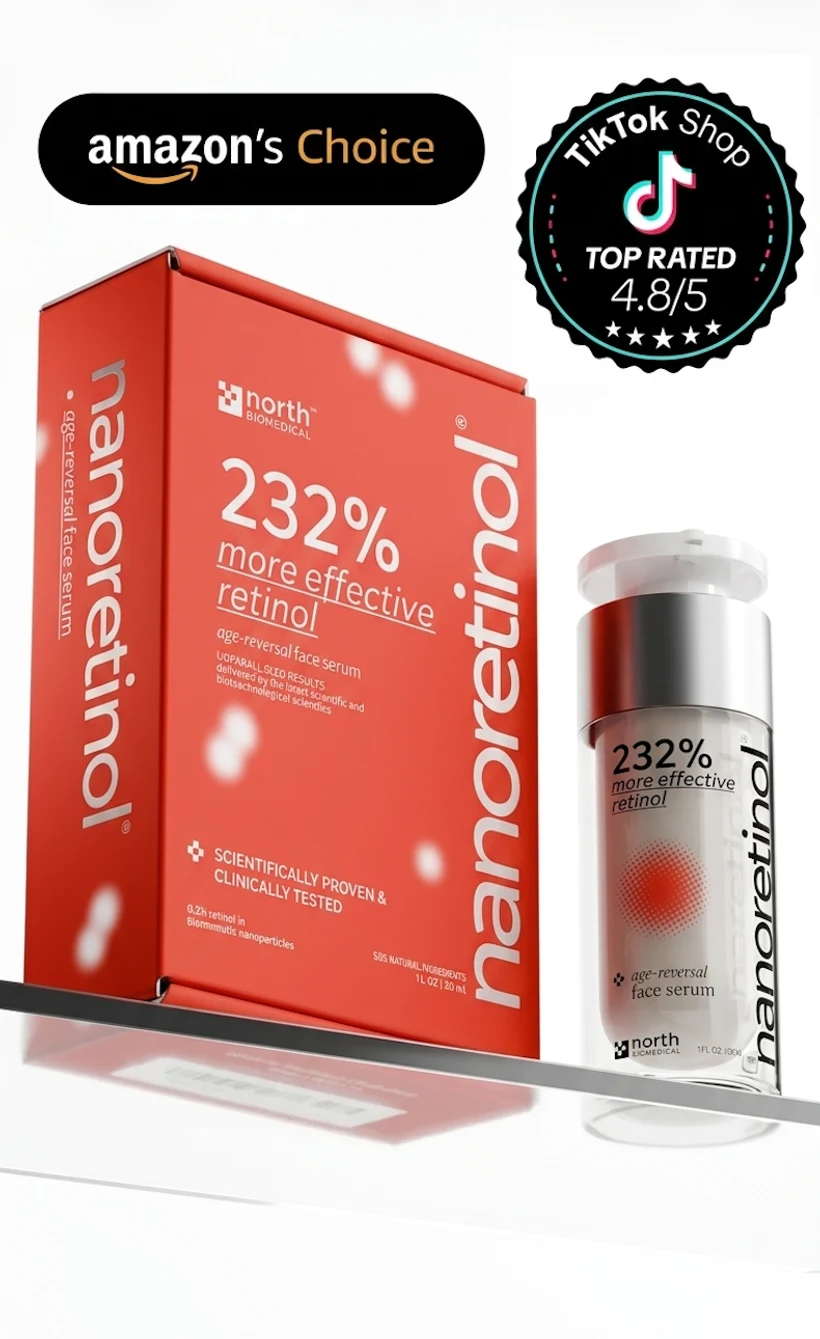
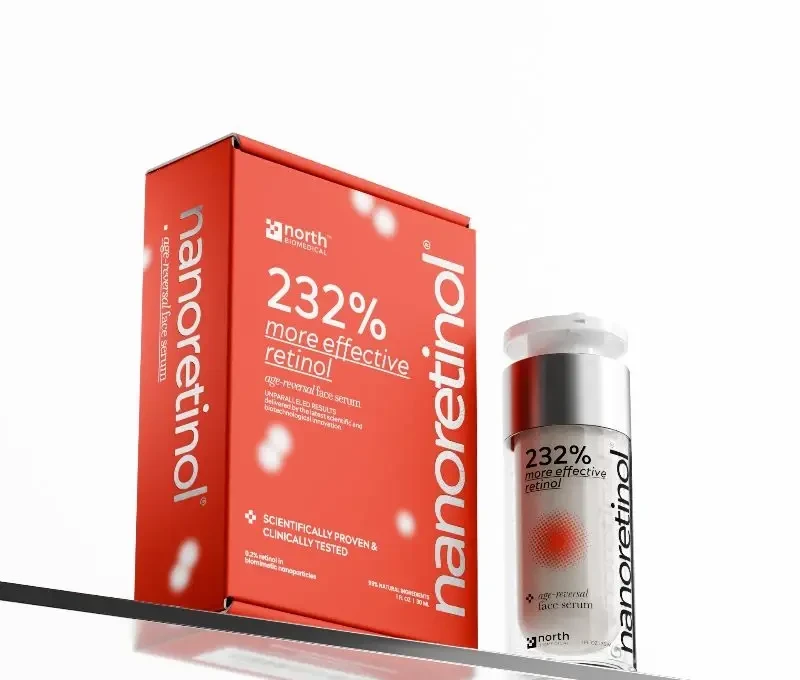
Nanoretinol®, for example, uses biomimetic lipid nanoparticles to deliver retinol past the epithelial barrier — achieving 232% greater collagen recovery than conventional retinol at the same concentration.
This is why delivery technology matters as much as the active ingredient itself. Advanced formulations use strategies like liposomal encapsulation, nanotechnology-based carriers, and micro-needling pretreatment to improve penetration [2]. Research has shown that rhEGF delivered via nanoparticle carriers or microporation achieves significantly better results than conventional topical application [3].
The same principle applies across anti-aging skincare. Nanoretinol®, for example, uses biomimetic lipid nanoparticles to deliver retinol past the epithelial barrier — achieving 232% greater collagen recovery than conventional retinol at the same concentration [8]. Whether the active ingredient is retinol or EGF, the delivery system determines how much of it actually reaches the cells that need it.
What to Look for When Choosing a Growth Factor Serum
If you are considering adding a growth factor serum to your routine, here is what separates a well-formulated product from an expensive placebo:
Recombinant human growth factors (rhEGF, rhTGF-β) are produced via bioengineering and are bioidentical to the growth factors your skin produces naturally. These are preferable to plant-derived or animal-derived alternatives, which may not bind as effectively to human receptors [1].
Stability matters. Growth factors are proteins, and proteins degrade when exposed to heat, light, and oxygen. Look for formulations with appropriate stabilization technology — airless pump packaging, opaque containers, and formulation buffers that maintain protein integrity [4].
Concentration is important but insufficient alone. A higher concentration of EGF means nothing if the formulation cannot deliver it past the skin barrier. Prioritize products that disclose their delivery mechanism.
Complementary ingredients. The best formulations pair growth factors with hyaluronic acid for hydration, niacinamide for barrier support, or peptides for synergistic collagen stimulation.
A Practical Approach to Growth Factors in Your Routine
Growth factor serums work best as part of a multi-pronged anti-aging strategy, not as a standalone solution. A science-based approach might look like this:
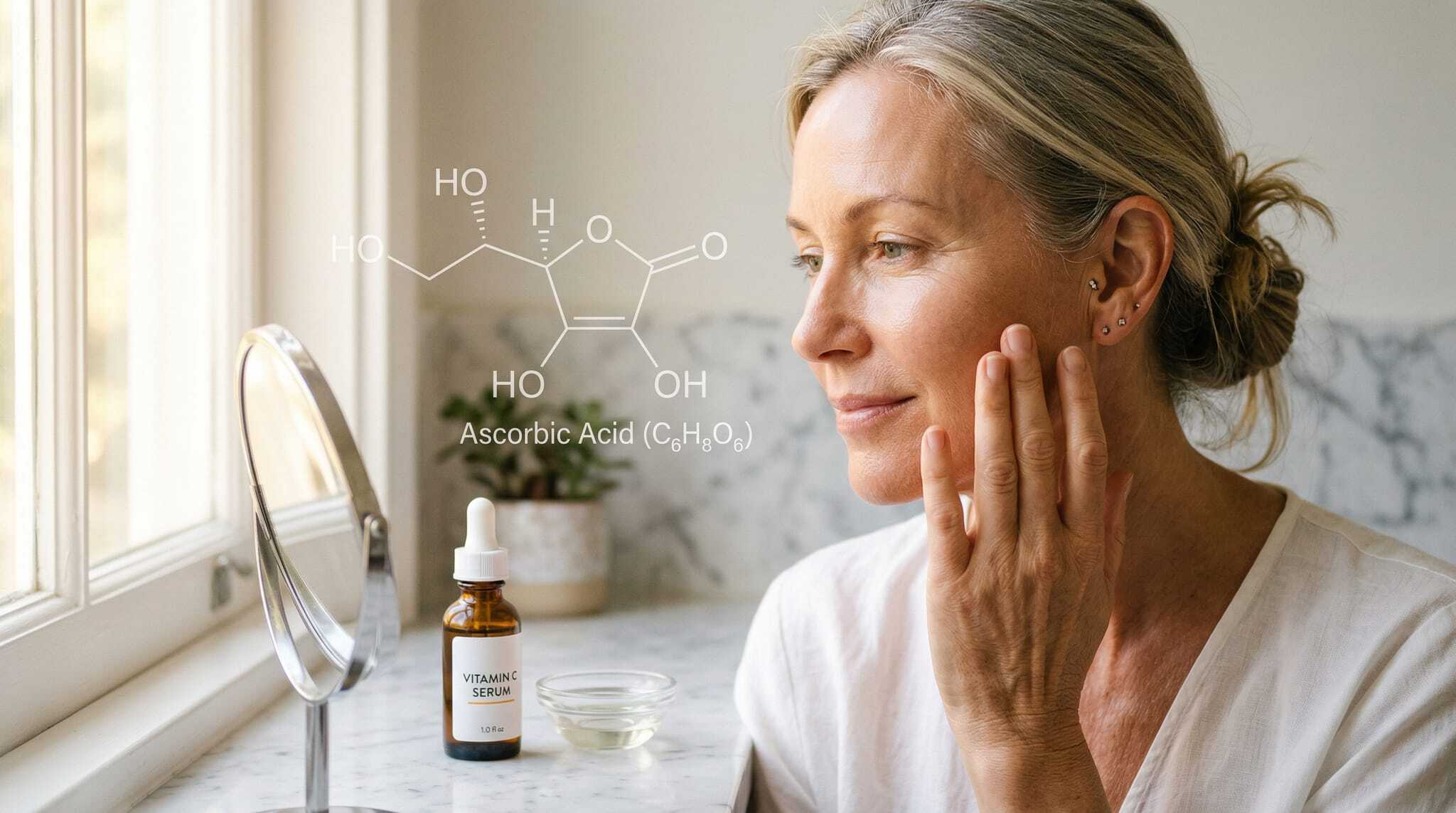
Morning: Antioxidant serum (vitamin C or similar) → growth factor serum → sunscreen
Evening: Gentle cleanser → retinol (such as Nanoretinol®) → growth factor serum or peptide serum → moisturizer
The key principle is layering ingredients that work through different mechanisms. Growth factors activate cellular repair programs. Retinol upregulates collagen gene expression. Antioxidants protect against the oxidative damage that degrades both collagen and growth factor receptors.
Give any growth factor product at least 8–12 weeks of consistent use before evaluating results. The cellular processes these products target — collagen synthesis, extracellular matrix remodeling — operate on biological timescales, not cosmetic ones.
References
-
Lee K, Silva EA, Mooney DJ. “Growth factor delivery-based tissue engineering: general approaches and a review of recent developments.” Journal of the Royal Society Interface. 2011;8(55):153-170. doi:10.1098/rsif.2010.0223
-
Park KY, Kim J. “The use of epidermal growth factor in dermatological practice.” International Wound Journal. 2023;20(7):2414-2423. doi:10.1111/iwj.14075
-
Oliveira MG, Pereira-Santos L, Campelo MBD, et al. “Epidermal Growth Factor in Aesthetics and Regenerative Medicine: Systematic Review.” Journal of Cosmetic Dermatology. 2021;20(9):2721-2728. doi:10.1111/jocd.14098
-
Berlanga-Acosta J, Gavilondo-Cowley J, López-Saura P, et al. “Epidermal growth factor in clinical practice — a review of its biological actions, clinical indications and safety implications.” International Wound Journal. 2009;6(5):331-346. doi:10.1111/j.1742-481X.2009.00622.x
-
Mukherjee S, Date A, Patravale V, et al. “Retinoids in the treatment of skin aging: an overview of clinical efficacy and safety.” Clinical Interventions in Aging. 2006;1(4):327-348. doi:10.2147/ciia.2006.1.4.327
-
Pickart L, Vasquez-Soltero JM, Margolina A. “GHK Peptide as a Natural Modulator of Multiple Cellular Pathways in Skin Regeneration.” BioMed Research International. 2015;2015:648108. doi:10.1155/2015/648108
-
Bos JD, Meinardi MMHM. “The 500 Dalton rule for the skin penetration of chemical compounds and drugs.” Experimental Dermatology. 2000;9(3):165-169. doi:10.1034/j.1600-0625.2000.009003165.x
-
North Biomedical LLC. “Nanoretinol® vs. Conventional Retinol: Efficacy in Collagen and Elastin Recovery.” Clinical Study Summary, 2024.