Ultrasonic Skin Scrubber: What It Really Pulls Out of Your Pores
The satisfying grey paste is real, but so is the limit. How a skin scrubber works, how to use one safely, and why the results fade so quickly
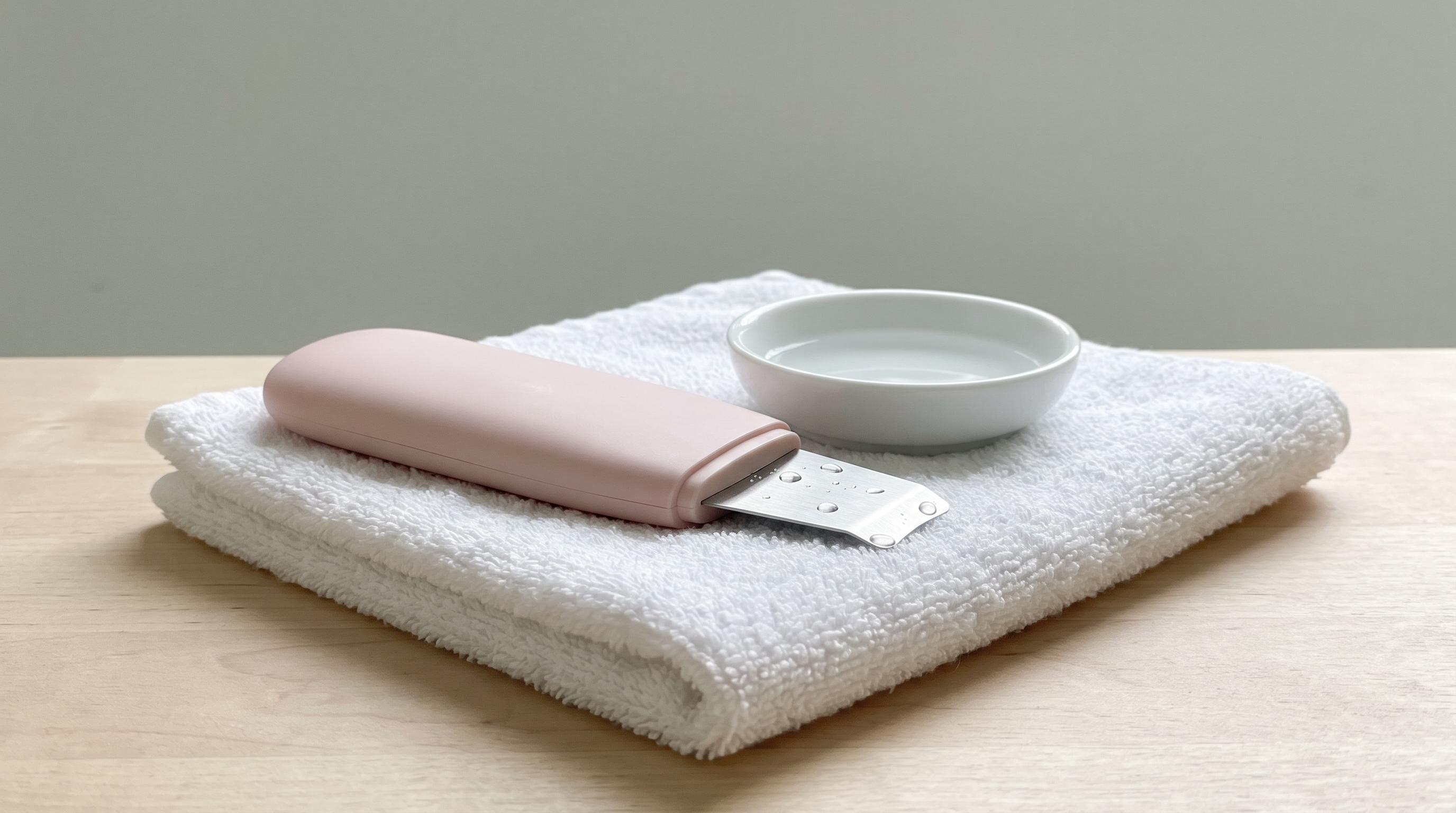
An ultrasonic skin scrubber is a small handheld device with a flat metal blade that vibrates very fast. Glide it over wet skin and a grey-beige paste builds up on the edge, which is why the videos are so oddly satisfying. The question most buyers have is simple: is that paste a deep clean, or a trick of the light?
The honest answer sits in between. A skin scrubber does lift loose oil and dead skin from the surface of pores. It does not change why those pores fill up again, which is why the results fade within days. This guide covers how the device works, how to use it without irritating your skin, and what to pair it with if smoother, clearer pores are the real goal.
How an ultrasonic skin scrubber works
Most scrubbers vibrate at around 24,000 to 30,000 times per second, according to their makers. On wet skin, that vibration turns the water into a fine spray and tiny bubbles, and the blade edge helps push softened oil and loose cells out of the openings of pores.
Most devices offer two or three modes. The cleaning or “peel” mode uses the blade edge to lift debris. Other modes are sold as lifting or product-boosting, using small currents or gentler vibration. Those extra claims have little independent evidence, so it is fair to judge a scrubber on its cleaning mode alone.
Your skin needs at least 2 days between scrubber sessions, and most faces do better with one session a week than with three.
There are no published clinical trials on spatula-style ultrasonic scrubbers themselves. The closest evidence comes from sonic facial cleansing brushes, which also use fast vibration. A panel of dermatologists who reviewed that literature concluded that gentle sonic cleansing, followed by rehydration and sun protection, may help both acne-prone skin and skin exposed to daily pollution [1].
Your skin needs at least 2 days between scrubber sessions, and most faces do better with one session a week than with three.
What the grey paste actually is
The gunk on the blade is mostly sebum, the oil your glands make, mixed with dead skin cells and water. Sebum is a blend of triglycerides, wax esters and squalene, and squalene in particular oxidises easily once it meets air [2]. That is why fresh debris can look darker and greyer than you expect.
The plugs that become blackheads form when dead cells inside the pore lining stick together instead of shedding, trapping that oil behind them [3]. A scrubber can loosen the top of a soft plug. It cannot reach a firm, deep blackhead, and it does nothing about the cells that will build the next plug. For stubborn ones, our guide on how to get rid of blackheads covers what reaches deeper.
Why pores look clear, then fill up again
Pores look bigger when they hold more oil. In a Korean study using magnified pore images, sebum output was the factor most strongly linked to pore size, ahead of age and sex [4].
Your skin’s oil output predicted pore size better than age did in a study of 60 adults, which is why a scrubber’s results can fade within 1 or 2 weeks.
That is the core limit of every pore-emptying tool, from strips to scrubbers to extractions. The gland keeps producing, the lining keeps shedding, and the pore refills. If you are dealing with recurring congestion rather than the odd blackhead, the causes laid out in our article on clogged pores explain why surface cleaning alone rarely keeps up.
How to use a skin scrubber safely
- Cleanse first, then keep the face properly wet. A dry blade drags on the skin.
- Hold the device at a shallow angle, around 30 to 45 degrees, with the curved side of the blade facing down for cleaning.
- Glide slowly in one direction, never pressing hard. Let the vibration do the work.
- Stick to oily zones such as the nose, chin and forehead. Avoid the eyelids, under-eye area and any active breakout.
- Rinse, then apply a plain moisturiser.
Your skin’s oil output predicted pore size better than age did in a study of 60 adults, which is why a scrubber’s results can fade within 1 or 2 weeks.
Wipe the blade with alcohol after every use, because a blade that carries oil and bacteria from session to session defeats the purpose.
How often is the question that matters most. Using a scrubber alongside acids or retinoids counts as exfoliation, and stacking them can leave skin raw, so it is worth reading our breakdown of how often to exfoliate your face and counting the scrubber as one of those sessions.
Who should skip it
- Anyone with inflamed acne, cysts or broken skin, since the blade can spread bacteria and worsen irritation.
- People with rosacea, eczema or very thin, reactive skin.
- Anyone using a prescription retinoid or a strong acid peel in the same week.
- Anyone with a pacemaker or metal implants in the face, unless the manufacturer’s instructions say otherwise.
Skin scrubber, pore strips or dermaplaning?
These tools get compared, but they do different jobs.
- Ultrasonic scrubber: loosens oil and soft debris from pore openings, gentle when used wet and lightly.
- Pore strips: pull out the tops of plugs on the nose, but tug on skin and work only where the strip sticks.
- Dermaplaning: a blade that shaves off fine hair and the topmost dead cells for a smooth surface. It does not clean pores at all, as our guide to the best dermaplaning tool explains in detail for anyone choosing between the two devices.
Making clearer pores last
Because pores refill from the inside, the products that keep them clear long term work on how the pore lining sheds. Dermatology guidelines list topical retinoids as a first-line treatment for clogged pores and comedonal acne, precisely because they normalise that shedding so plugs form less often [3].
For aging skin, retinol does a second job. Pores look larger when the skin around them loses collagen and firmness, and retinol is the ingredient with the best evidence for rebuilding collagen. In a 24-week trial in older adults, 0.4% retinol improved fine wrinkling and increased collagen production compared with the plain lotion base [5].
The barrier is the catch: a scrubber and a conventional retinol in the same routine can be too much. Nanoretinol carries 0.2% retinol inside biomimetic lipid nanoparticles in a light, water-based gel that suits oily, combination and sensitive skin. In North Biomedical’s clinical study it was 232% more effective in collagen recovery than conventional retinol, users saw a 61% increase in firmness after 56 days, and side effects were milder than with conventional retinol [6].
A simple plan: use the scrubber once a week on oily zones, apply Nanoretinol on the other nights, moisturise, and wear sunscreen every morning. The scrubber clears the surface for a few days; the retinol works on why the pores keep filling.
References
- Gold M, Ablon G, Andriessen A, Goldberg D, Hooper D, Mandy S. “Facial Cleansing with a Sonic Brush: A Review of the Literature and Current Recommendations.” Journal of Cosmetic Dermatology. 2019;18(3):686-691. doi:10.1111/jocd.12906
- Pappas A. “Epidermal Surface Lipids.” Dermato-Endocrinology. 2009;1(2):72-76. doi:10.4161/derm.1.2.7811
- Zaenglein AL, Pathy AL, Schlosser BJ, Alikhan A, Baldwin HE, Berson DS, et al. “Guidelines of Care for the Management of Acne Vulgaris.” Journal of the American Academy of Dermatology. 2016;74(5):945-973. doi:10.1016/j.jaad.2015.12.037
- Roh M, Han M, Kim D, Chung K. “Sebum Output as a Factor Contributing to the Size of Facial Pores.” British Journal of Dermatology. 2006;155(5):890-894. doi:10.1111/j.1365-2133.2006.07465.x
- Kafi R, Kwak HS, Schumacher WE, Cho S, Hanft VN, Hamilton TA, et al. “Improvement of Naturally Aged Skin with Vitamin A (Retinol).” Archives of Dermatology. 2007;143(5):606-612. doi:10.1001/archderm.143.5.606
- North Biomedical LLC. “Nanoretinol vs. Conventional Retinol: Efficacy in Collagen and Elastin Recovery.” Clinical Study Summary, 2024. Study summary