
Vitamin D for Skin: What It Really Does (and What It Can't)
Vitamin D is essential for healthy skin cells — but the anti-aging promises on the supplement aisle deserve a closer look.
Walk down any supplement aisle and vitamin D gets sold as close to a cure-all — better mood, stronger bones, and, increasingly, younger-looking skin. Your skin is genuinely tied to vitamin D in a way few other nutrients can claim. But if you are taking a daily capsule hoping to smooth wrinkles and firm sagging skin, it is worth knowing exactly what vitamin D can and cannot do — because the honest answer reshapes how you should spend your skincare effort.
Your Skin Is a Vitamin D Factory
Here is the fact that makes vitamin D unique among skin nutrients: your skin doesn’t just use vitamin D, it makes it. When UVB light hits the epidermis, it converts a cholesterol-derived molecule (7-dehydrocholesterol) into vitamin D3. Around 80% of the body’s vitamin D is produced this way, right in the skin’s own cells.
And those same skin cells, the keratinocytes, are remarkable in another way. As a foundational review of vitamin D in the skin explains, keratinocytes are not only the body’s primary vitamin D source but also carry the full enzymatic machinery to convert vitamin D into its active form and the vitamin D receptor to respond to it [1]. Through that receptor, active vitamin D helps regulate how skin cells in the basal layer multiply and then mature as they rise toward the surface — the orderly renewal that keeps the barrier intact.
So vitamin D is not a fad ingredient bolted onto skincare. It is woven into the basic biology of how your skin builds and maintains itself.
What Vitamin D Does for Aging Skin
Because vitamin D influences skin cell turnover, barrier formation, and the skin’s immune defenses, a deficiency tends to show up on the skin. Low vitamin D status has been associated with barrier dysfunction and inflammatory skin conditions, and researchers have mapped several protective roles relevant to aging.
Your skin is genuinely tied to vitamin D in a way few other nutrients can claim.
A 2025 review on vitamin D and the aging skin describes how the vitamin helps counter oxidative stress, dampens chronic inflammation, and supports barrier function — three of the core drivers of skin aging [2]. A separate review focused on skin aging and age-related skin conditions reaches a similar conclusion, noting vitamin D’s antioxidant activity, its support of DNA repair after UV exposure, and its role in keeping keratinocytes behaving normally [3]. In short, having enough vitamin D is part of the foundation for resilient skin.
But “enough” is the operative word — and it is where the marketing tends to overreach.
The Limit of the Supplement Bottle
Correcting a true deficiency is worth doing for your overall health, and your skin benefits from not being deficient. What the evidence does not support is the idea that piling on extra vitamin D — beyond what your body needs — visibly reverses wrinkles, firms sagging skin, or works like a topical anti-aging treatment.
The reality is that vitamin D’s skin roles are about maintaining normal function, not actively remodeling aged skin. Once you are no longer deficient, more capsules don’t translate into more collagen or smoother texture. Visible anti-aging — softening etched lines, improving firmness and elasticity — comes from actives applied to the skin that directly stimulate its renewal and rebuilding machinery. A pill simply can’t target your face the way a well-formulated topical can. For the bigger picture on which nutrients actually move the needle, see our guide to the best vitamins for skin, and remember that since your skin makes vitamin D from sunlight, daily sunscreen on aging skin remains essential — the small trade-off in synthesis is far outweighed by preventing the UV damage that ages skin in the first place.
A pill simply can’t target your face the way a well-formulated topical can.
Where to Actually Spend Your Anti-Aging Effort
If your goal is visibly younger skin, the most productive plan is straightforward:
- Fix a deficiency, then move on. Get your level checked, supplement if it’s low, and stop expecting the bottle to do a serum’s job.
- Protect what you have. Daily sunscreen prevents the UV-driven oxidative stress and collagen breakdown that vitamin D can only partly buffer against.
- Layer in antioxidants. Topical antioxidants like vitamin C complement the skin’s own defenses; our vitamin C serum guide covers how.
- Use a proven renewal active. This is where measurable change in lines and firmness comes from.
That last point is the one with the deepest evidence behind it.
The Topical That Does What a Vitamin Can’t
The most studied topical for visibly remodeling aged skin is a vitamin A derivative — retinol. A systematic review of randomized controlled trials confirms that topical retinoids measurably improve wrinkles, texture, and the signs of photoaging by directly driving skin cell turnover and collagen production [4]. Where oral vitamin D supports the baseline health of skin cells, retinol actively rebuilds the structures that aging erodes. They work on entirely different levels, which is why one cannot substitute for the other.
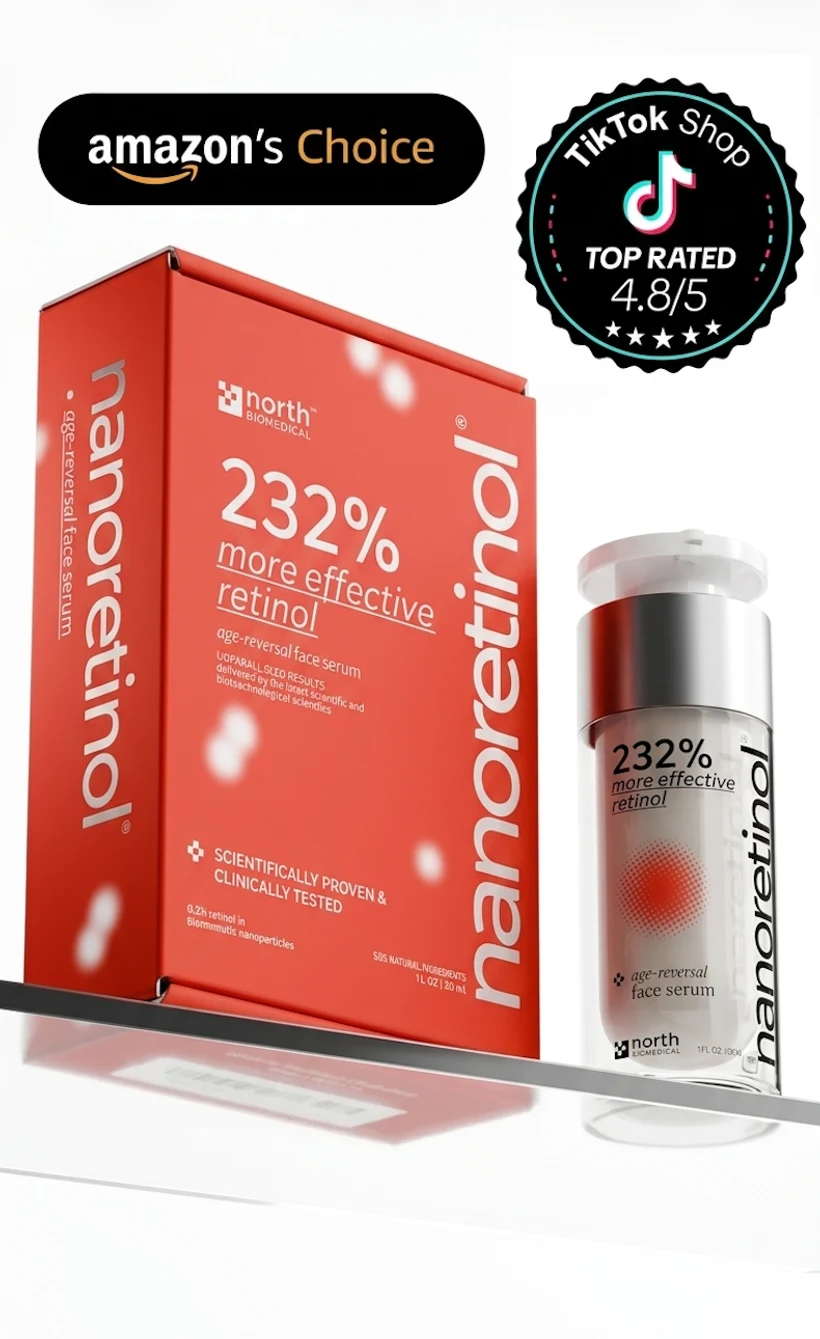
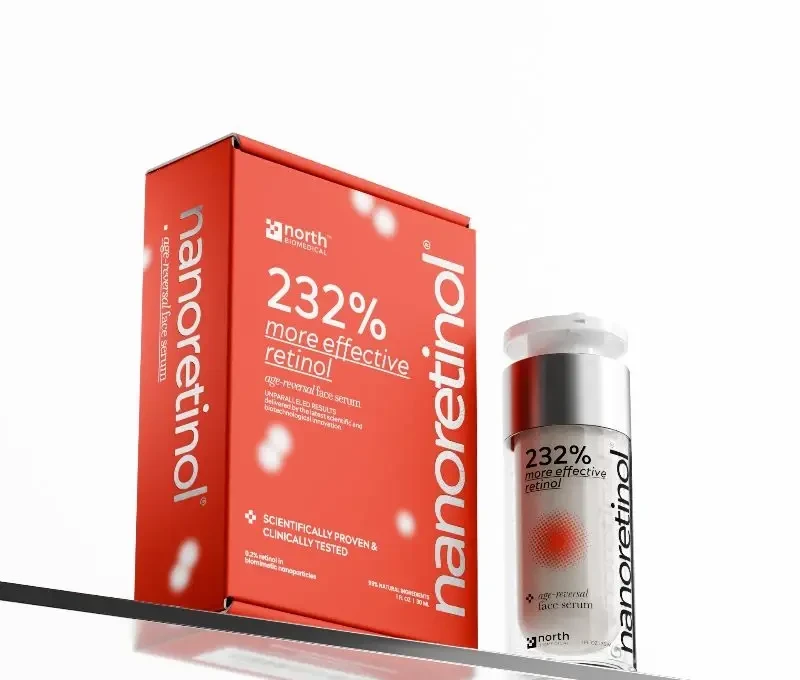
The historical drawback to retinol has been tolerability: conventional formulas rely on chemicals and petroleum derivatives that disrupt the skin barrier to force the active in, causing the redness and peeling that drive people to quit. Nanoretinol takes a different route. It encapsulates a stabilized 0.2% retinol inside biomimetic lipid nanoparticles that the skin recognizes as “self” and lets through the barrier intact — no disruption required. The result is the renewal benefit retinol is known for, delivered with significantly less irritation, in a light, water-based, 99% natural-ingredient formula. It is the kind of targeted, applied-to-the-skin tool that a supplement, by its nature, can never be.
The Honest Takeaway
Vitamin D earns its place in skin biology — your skin makes it, uses it, and functions worse without it. Keep your levels healthy, because deficiency genuinely undermines the barrier and invites inflammation. Just don’t ask a supplement to do a topical’s work. For the visible signs of aging, your effort is better spent on sun protection, antioxidants, and a gentle, well-delivered retinol that targets the renewal machinery directly — the part of the equation a pill was never built to reach.
References
- Bikle DD. “Vitamin D Metabolism and Function in the Skin.” Molecular and Cellular Endocrinology. 2011;347(1-2):80-89. doi:10.1016/j.mce.2011.05.017
- Gao H, Xie T, Zhang Y, Zhao S, Su L, Chen Z, Wang G. “Vitamin D and the aging skin: insights into oxidative stress, inflammation, and barrier function.” Immunity & Ageing. 2025;22:49. doi:10.1186/s12979-025-00536-6
- Ambagaspitiya SS, Appuhamillage GA, Wimalawansa SJ. “Impact of Vitamin D on Skin Aging, and Age-Related Dermatological Conditions.” Frontiers in Bioscience (Landmark Edition). 2025;30(1):25463. doi:10.31083/FBL25463
- Sitohang IBS, Makes WI, Sandora N, Suryanegara J. “Topical tretinoin for treating photoaging: A systematic review of randomized controlled trials.” International Journal of Women’s Dermatology. 2022;8(1):e003. doi:10.1097/JW9.0000000000000003