Vitamin C Face Cream: Why the Cream Format Changes the Chemistry
Pure vitamin C is hard to keep stable in a moisturizer, so most creams use derivatives with very different evidence. Here is how to tell what you are buying
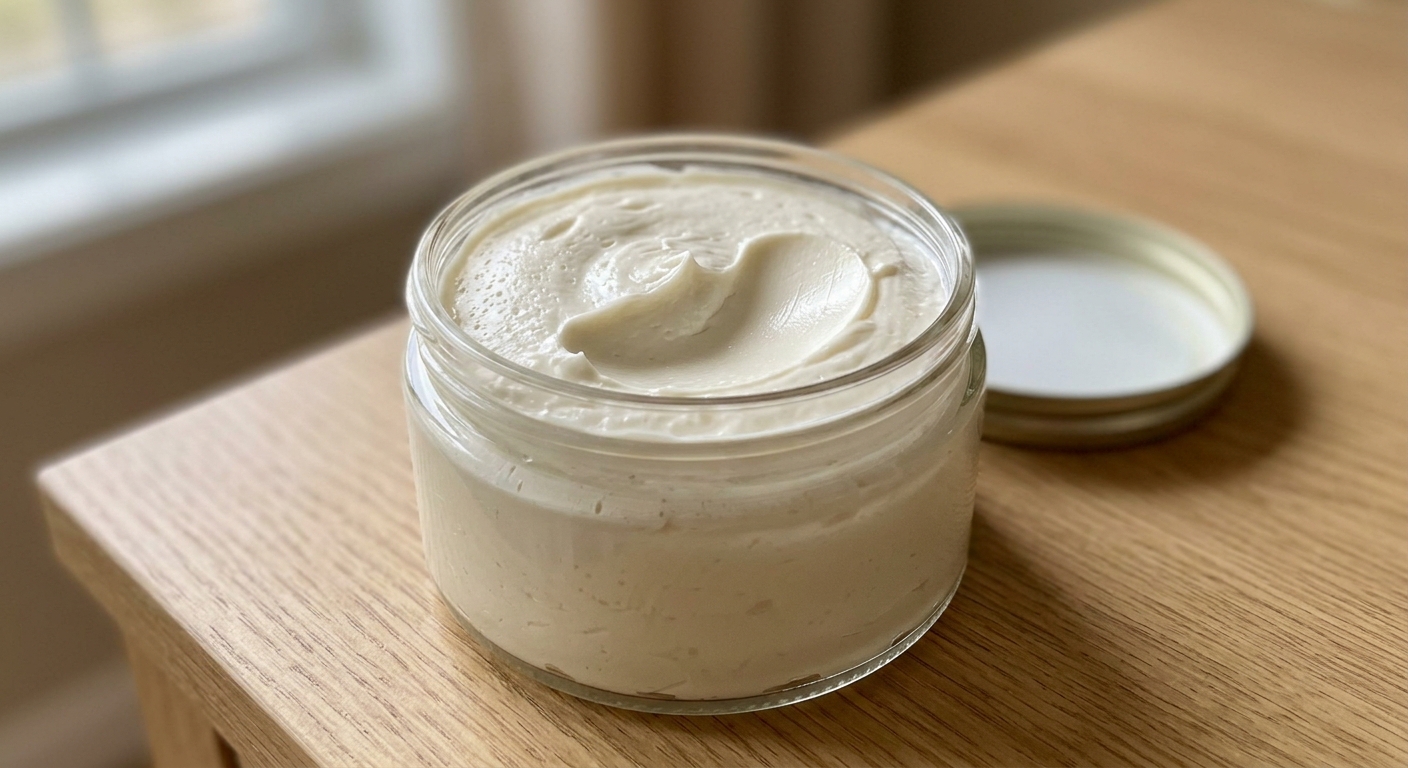
A vitamin C face cream sounds like the most efficient idea in skincare: your antioxidant and your moisturizer in one step. Plenty of people choose one for exactly that reason, and some of those creams are genuinely good. Others contain vitamin C mostly in name, because the cream format creates chemical problems that a serum is designed to avoid.
Understanding those problems takes about five minutes, and it changes how you read every vitamin C label afterwards.
Why vitamin C is worth putting on skin
Vitamin C is not a trend ingredient. Skin holds high concentrations of it, and it is an essential cofactor for the enzymes that stabilise and cross-link collagen. It also neutralises the reactive oxygen species generated by ultraviolet light and pollution [1]. Humans cannot make their own vitamin C, and levels in skin fall with age and sun exposure.
Topically, vitamin C has three main jobs in an anti-aging routine: antioxidant protection that complements sunscreen, support for collagen production, and gradual brightening through inhibition of melanin formation [2]. Getting any of those benefits depends on the molecule surviving in the jar and then reaching the living layers of skin.
The stability problem
The form of vitamin C with the most research behind it is L-ascorbic acid. It is also fragile. In water, and especially with exposure to air and light, it oxidises to dehydroascorbic acid and then onward to compounds that turn the product yellow, orange and eventually brown [2].
Pinnell and colleagues at Duke University defined the conditions L-ascorbic acid needs to work. In their studies, it had to be formulated at a pH below 3.5 to enter the skin, with absorption peaking at a concentration of 20%. Skin levels saturated after three daily applications and took about four days to fall by half [3].
Pure vitamin C only gets into skin at a pH most face creams are simply not designed to sit at.
That is the heart of the cream problem. Most moisturizers are emulsions with a high water content and a pH closer to that of skin, which is around 4.5 to 5.5. A strongly acidic, water-rich cream is harder to formulate, less comfortable to wear and more prone to degrading L-ascorbic acid. So most vitamin C creams take one of two routes: an anhydrous (water-free) base that protects pure ascorbic acid, or a more stable derivative.
The derivatives, and what the evidence says
Derivatives are modified forms of vitamin C designed to resist oxidation. They are not interchangeable, and a review of vitamin C stability and penetration found that their conversion to active vitamin C and their clinical evidence vary widely [4].
Magnesium ascorbyl phosphate (MAP) is water-soluble and stable at skin-friendly pH. In a study using a 10% MAP cream, it was absorbed into the epidermis and produced significant lightening in 19 of 34 patients with melasma or age spots [5]. That is real evidence for brightening, though a smaller evidence base for wrinkles.
Sodium ascorbyl phosphate (SAP) is a close relative, also stable in water-based formulas, and commonly used in lighter creams and gels.
Ascorbyl glucoside is vitamin C bound to glucose, which enzymes in skin can release gradually. It is popular in Asian brightening creams, but its clinical evidence is thinner than that of L-ascorbic acid.
Tetrahexyldecyl ascorbate is oil-soluble, which suits creams and oils well and may help it cross the lipid-rich outer skin. Our dedicated guide to tetrahexyldecyl ascorbate covers the research in detail.
Ascorbyl palmitate is an older oil-soluble derivative that appears in many inexpensive creams, often at low concentrations.
One caution is worth keeping in mind. In Pinnell’s pig skin studies, magnesium ascorbyl phosphate and ascorbyl palmitate did not raise skin levels of L-ascorbic acid [3]. That does not mean they do nothing, since some derivatives appear to act in their own right, but it does mean a derivative cream cannot borrow the evidence built for pure ascorbic acid serums.
Creams that have actually been tested
The encouraging news is that vitamin C in a cream format has clinical support when it is formulated properly.
In a six-month, randomised, double-blind trial, a cream containing 5% vitamin C was compared with its base on the photoaged neck and arms of healthy women. Both the dermatologist and the volunteers rated the vitamin C side as significantly better, skin replicas showed a denser microrelief with fewer deep furrows, and electron microscopy found evidence of elastic tissue repair [6].
A properly made 5% vitamin C cream measurably smoothed sun-damaged skin over six months, which is more than most jars can claim.
A second double-blind, half-face study used 10% ascorbic acid combined with 7% tetrahexyldecyl ascorbate in an anhydrous polysilicone gel for 12 weeks. The treated side showed significantly lower photoaging scores, and biopsies showed increased new collagen in the upper dermis along with more messenger RNA for type I collagen [7]. The formula’s water-free base is the point: it protected the ascorbic acid rather than asking it to survive in an emulsion.
How to choose a vitamin C face cream
A few questions separate the useful creams from the decorative ones:
- Which form is it? Look at the ingredient list. L-ascorbic acid or ascorbic acid in an anhydrous or low-water base is the best studied. A derivative such as MAP, SAP or tetrahexyldecyl ascorbate is more stable but carries its own, generally smaller, evidence base.
- Where is it on the list? Vitamin C listed after the preservatives and fragrance is present at a very low level.
- How is it packaged? Opaque, airless pumps or tubes protect vitamin C far better than open jars that expose the cream to air every day.
- Is it changing colour? A cream that turns noticeably yellow or orange has oxidised and lost much of its activity.
- Are there supporting antioxidants? Vitamin E and ferulic acid help. In one well-known study, adding ferulic acid to a solution of 15% L-ascorbic acid and 1% vitamin E improved the vitamins’ chemical stability and doubled the photoprotection from about four-fold to about eight-fold [8]. Our guide to ferulic acid serum explains the combination.
If you want the strongest possible dose of pure vitamin C, a serum is still the more reliable format, and our guide to the best vitamin C serum covers how to choose one. A cream makes the most sense when simplicity matters more to you than maximum potency, or when your skin reacts to acidic serums.
Morning vitamin C, evening repair
Vitamin C does its best work in the morning under sunscreen, where it helps neutralise the oxidative stress that sunscreen filters let through. That leaves the evening free for the ingredient with the strongest evidence for rebuilding collagen: retinol. The two work well as a day and night pair, as we explain in our guide to retinol and vitamin C together.
Where Nanoretinol fits
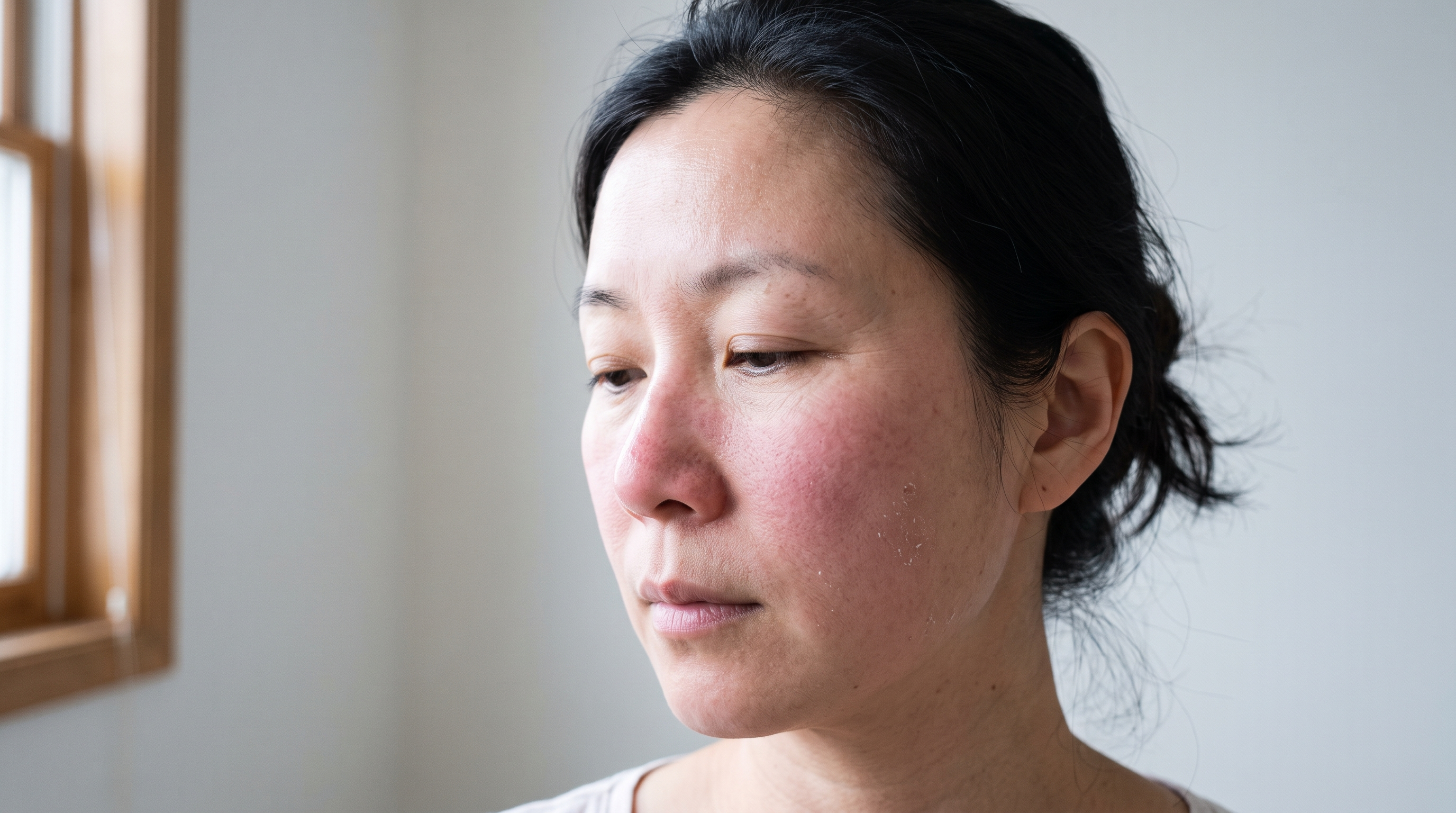
The obstacle for many people is that conventional retinol irritates. Its formulations often rely on solvents and petroleum-derived penetration enhancers that force retinol through the skin barrier by disrupting it, which is what causes the redness and flaking.
Nanoretinol encapsulates stabilised 0.2% retinol in biomimetic lipid nanoparticles that the skin recognises as its own, delivering retinol without damaging the barrier. Its nanoparticles also contain sodium ascorbyl phosphate and tocopheryl acetate alongside the retinol. North Biomedical’s clinical study summary reports 232% greater effectiveness in collagen recovery and 73% greater effectiveness in elastin recovery compared with conventional retinol, and in 56 days of use a 61% increase in firmness and a 56% increase in elasticity. Apply it at night, and keep your vitamin C cream and sunscreen for the morning.
Reading past the front of the jar
“Vitamin C” on the front of a cream tells you very little. The form, the base, the packaging and the position on the ingredient list tell you almost everything. Choose a cream that has solved the stability problem, use it in the morning, and let a well-delivered retinol handle the structural work at night.
References
- Pullar JM, Carr AC, Vissers MCM. “The roles of vitamin C in skin health.” Nutrients. 2017;9(8):866. doi:10.3390/nu9080866
- Telang PS. “Vitamin C in dermatology.” Indian Dermatology Online Journal. 2013;4(2):143-146. doi:10.4103/2229-5178.110593
- Pinnell SR, Yang H, Omar M, et al. “Topical L-ascorbic acid: percutaneous absorption studies.” Dermatologic Surgery. 2001;27(2):137-142. doi:10.1046/j.1524-4725.2001.00264.x
- Stamford NPJ. “Stability, transdermal penetration, and cutaneous effects of ascorbic acid and its derivatives.” Journal of Cosmetic Dermatology. 2012;11(4):310-317. doi:10.1111/jocd.12006
- Kameyama K, Sakai C, Kondoh S, et al. “Inhibitory effect of magnesium L-ascorbyl-2-phosphate (VC-PMG) on melanogenesis in vitro and in vivo.” Journal of the American Academy of Dermatology. 1996;34(1):29-33. doi:10.1016/S0190-9622(96)90830-0
- Humbert PG, Haftek M, Creidi P, et al. “Topical ascorbic acid on photoaged skin. Clinical, topographical and ultrastructural evaluation: double-blind study vs. placebo.” Experimental Dermatology. 2003;12(3):237-244. doi:10.1034/j.1600-0625.2003.00008.x
- Fitzpatrick RE, Rostan EF. “Double-blind, half-face study comparing topical vitamin C and vehicle for rejuvenation of photodamage.” Dermatologic Surgery. 2002;28(3):231-236. doi:10.1046/j.1524-4725.2002.01129.x
- Lin FH, Lin JY, Gupta RD, et al. “Ferulic acid stabilizes a solution of vitamins C and E and doubles its photoprotection of skin.” Journal of Investigative Dermatology. 2005;125(4):826-832. doi:10.1111/j.0022-202X.2005.23768.x