The Best Cream for Wrinkled Skin: What the Science Actually Rewards
How to read a label and find a cream that rebuilds, not just coats
Stand in the skincare aisle and every jar promises the same thing: smoother, firmer, younger skin. The prices swing from a few dollars to a few hundred, the packaging gets more luxurious as the numbers climb, and almost none of it tells you what actually matters — whether the formula inside can do anything to skin that is already wrinkled. Most can’t. They hydrate, they blur, they make skin look plumper for a few hours, and then the water evaporates and you are back where you started.
If you want a cream that changes wrinkled skin rather than temporarily disguising it, you have to stop shopping by promises and start shopping by ingredients. Here is what the evidence actually rewards.
Why Wrinkled Skin Needs More Than Moisture
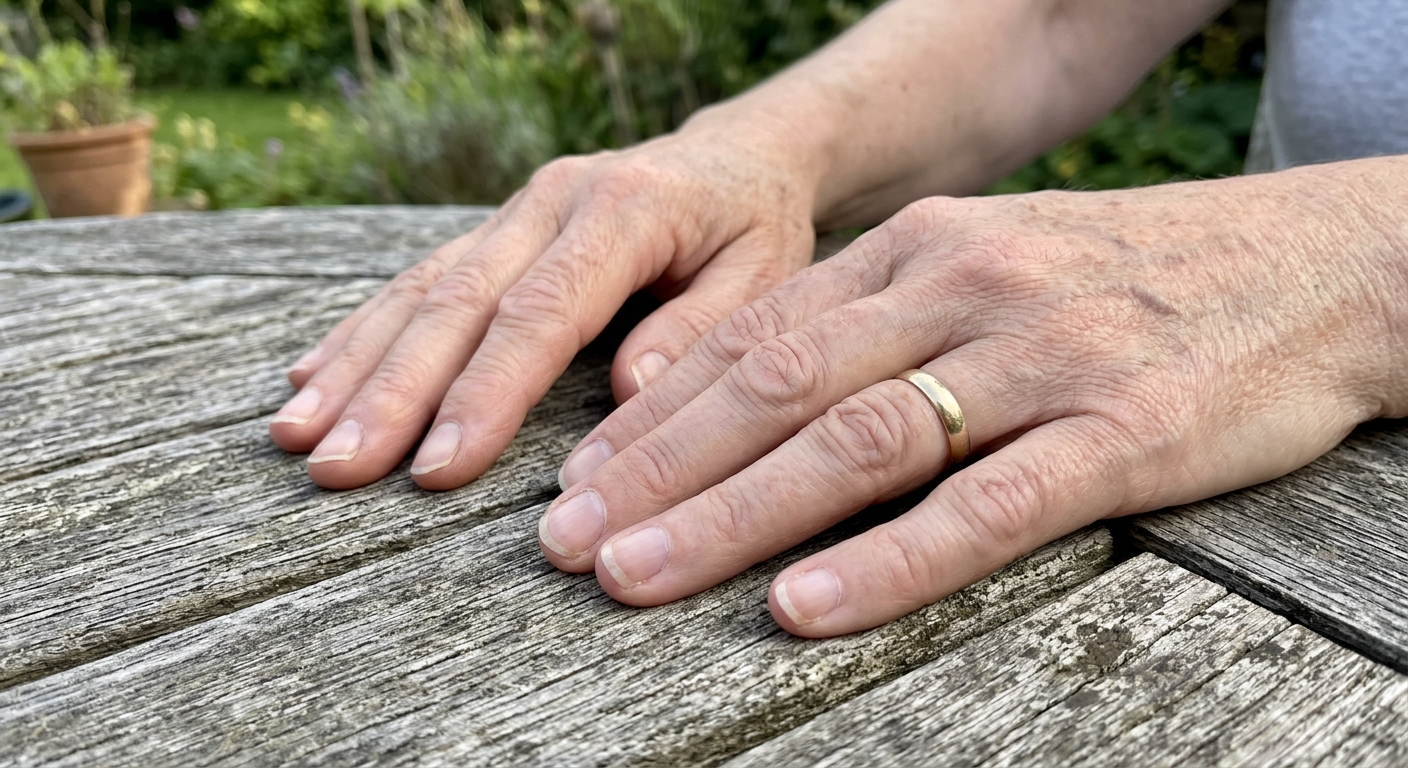
Wrinkles are not a surface problem. They form because the dermis — the living layer beneath the surface — is losing the collagen and elastin that once held it taut. As we age, the fibroblasts that manufacture these proteins become sluggish. When researchers examined skin from older donors, they found markedly lower production of type I collagen, the protein most responsible for firmness, tied directly to this decline in fibroblast function [1]. Skin collagen is thought to drop by roughly 1% per year, and once it thins, the surface has nothing to drape over — so it creases and folds.
A basic moisturizer does nothing about that. It sits on top, softens the outermost layer, and fills fine lines with water. Useful, but temporary. To genuinely improve wrinkled skin, a cream has to send a signal deep enough to wake those fibroblasts back up. Only a short list of ingredients has been proven to do it.
The One Ingredient That Rebuilds
If a wrinkle cream contains only one active worth paying for, it should be a retinoid. Retinol — the over-the-counter member of the family — is the most studied anti-aging ingredient in existence, and the evidence is not subtle. In a randomized, double-blind, vehicle-controlled trial on naturally aged skin, topical retinol significantly reduced fine wrinkles compared with the placebo cream and increased the skin’s production of glycosaminoglycans and procollagen — the raw materials of firm, cushioned skin [2].
If you want a cream that changes wrinkled skin rather than temporarily disguising it, you have to stop shopping by promises and start shopping by ingredients.
That is the mechanism worth understanding: retinoids don’t fill wrinkles, they instruct skin to rebuild the structure underneath them. It is the difference between painting over a crack and repairing the wall. If you take one thing from this article, let it be that a serious cream for wrinkled skin is built around a retinoid, and everything else is supporting cast. (Our retinol concentration guide explains why a higher number on the label isn’t always better.)
The Supporting Cast Worth Having
A retinoid does the heavy structural work, but a well-designed cream surrounds it with ingredients that address the other faces of aging skin.
Peptides are short chains of amino acids that act as messengers, nudging skin to produce more collagen. In a 12-week double-blind, split-face study, the peptide palmitoyl pentapeptide — better known as Matrixyl — significantly reduced wrinkles and fine lines compared with placebo [3]. They pair well with retinoids and are gentle enough for those who find stronger actives irritating; you can read more in our overview of peptides for skin.
Vitamin C is both an antioxidant and a genuine collagen cofactor. In a six-month double-blind study, a topical vitamin C cream significantly improved the overall photoaging score versus placebo, softened deep furrows, and showed microscopic evidence of dermal repair [4].
Hyaluronic acid won’t rebuild collagen, but it is the best-proven humectant for the plumping side of the equation.
Hyaluronic acid won’t rebuild collagen, but it is the best-proven humectant for the plumping side of the equation. A topical hyaluronic acid serum used for six weeks produced a sustained 55% increase in skin hydration along with measurable improvements in fine lines and smoothness [5]. It makes skin look immediately better while the retinoid does its slower, deeper work.
Ceramides rebuild the barrier itself. A review of a dozen studies found ceramide-containing formulas matched or outperformed standard moisturizers at reducing water loss and restoring barrier function [6] — which matters enormously when you’re using a retinoid, because a strong barrier is what lets you tolerate one. Our guide to ceramides for skin goes deeper.
What to Ignore on the Label
Just as important is knowing what not to pay for. “Collagen” listed as an ingredient in a cream cannot replace the collagen in your dermis — the molecule is far too large to penetrate, and it simply sits on the surface. Vague “firming complexes,” “plant stem cells,” and gold flakes are marketing, not medicine. And a sky-high price tells you about the packaging and the brand, not the concentration or quality of the active inside.
The label test is simple: look for a retinoid near the top of the ingredient list, a peptide or vitamin C in support, hyaluronic acid and ceramides for comfort — and be skeptical of everything that leads with a story instead of a molecule.
The Problem Even Good Creams Share
Here is the frustrating part. Even when a cream contains the right retinoid, most of it never arrives. The skin barrier is built to keep foreign molecules out, so a large fraction of any topical retinol is turned away at the door, and the portion that forces its way through often brings the redness, flaking, and stinging that drive people to abandon the jar within weeks. The industry’s usual answer — raise the concentration — tends to increase the irritation faster than the benefit.
The smarter fix is to change how the retinol is delivered, not how much you slather on. Nanoretinol encapsulates retinol inside biomimetic lipid nanoparticles that the skin recognizes as its own and admits through the barrier intact — no chemical disruption, no barrier damage. That efficient delivery is why a low, gentle 0.2% concentration can outperform harsher conventional formulas: in North Biomedical’s clinical testing it proved 232% more effective at collagen recovery and 73% more effective at elastin recovery than ordinary retinol, with users seeing a 61% rise in firmness and a 56% rise in elasticity over 56 days. It is water-based, 99% natural, vegan, and gentle enough to use nightly — the retinoid backbone a cream for wrinkled skin is supposed to have, actually reaching where it’s needed.
Choosing With Confidence
You don’t need the most expensive jar on the shelf. You need one built around a retinoid that your skin will actually absorb, supported by peptides, vitamin C, hyaluronic acid, and ceramides, and free of the filler that pads out the price. Match the formula to how wrinkled skin actually ages — structure first, hydration second, story never — and the cream you choose will do something the aisle rarely delivers: change your skin instead of coating it. For a broader comparison of finished products, see our roundup of the best wrinkle creams. If your budget is closer to twenty dollars than two hundred, our guide to the best drugstore wrinkle cream explains where that money actually goes.
References
- Varani J, Dame MK, Rittié L, et al. “Decreased Collagen Production in Chronologically Aged Skin: Roles of Age-Dependent Alteration in Fibroblast Function and Defective Mechanical Stimulation.” The American Journal of Pathology. 2006;168(6):1861-1868. doi:10.2353/ajpath.2006.051302
- Kafi R, Kwak HSR, Schumacher WE, et al. “Improvement of Naturally Aged Skin With Vitamin A (Retinol).” Archives of Dermatology. 2007;143(5):606-612. doi:10.1001/archderm.143.5.606
- Robinson LR, Fitzgerald NC, Doughty DG, Dawes NC, Berge CA, Bissett DL. “Topical palmitoyl pentapeptide provides improvement in photoaged human facial skin.” International Journal of Cosmetic Science. 2005;27(3):155-160. doi:10.1111/j.1467-2494.2005.00261.x
- Humbert PG, Haftek M, Creidi P, et al. “Topical ascorbic acid on photoaged skin. Clinical, topographical and ultrastructural evaluation: double-blind study vs. placebo.” Experimental Dermatology. 2003;12(3):237-244. doi:10.1034/j.1600-0625.2003.00008.x
- Draelos ZD, Diaz I, Namkoong J, Wu J, Boyd T. “Efficacy Evaluation of a Topical Hyaluronic Acid Serum in Facial Photoaging.” Dermatology and Therapy. 2021;11(4):1385-1394. doi:10.1007/s13555-021-00566-0
- Kono T, Miyachi Y, Kawashima M. “Clinical significance of the water retention and barrier function-improving capabilities of ceramide-containing formulations: A qualitative review.” The Journal of Dermatology. 2021;48(12):1807-1816. doi:10.1111/1346-8138.16175