Dark Spots on Chest: What Causes Them and How to Actually Fade Them
Why the décolletage accumulates hyperpigmentation — and the evidence-backed treatments that reverse it
The Part of You That Time Forgot
Most people have a skincare routine for their face. A much smaller number extend it to the neck. Almost nobody thinks about the chest.
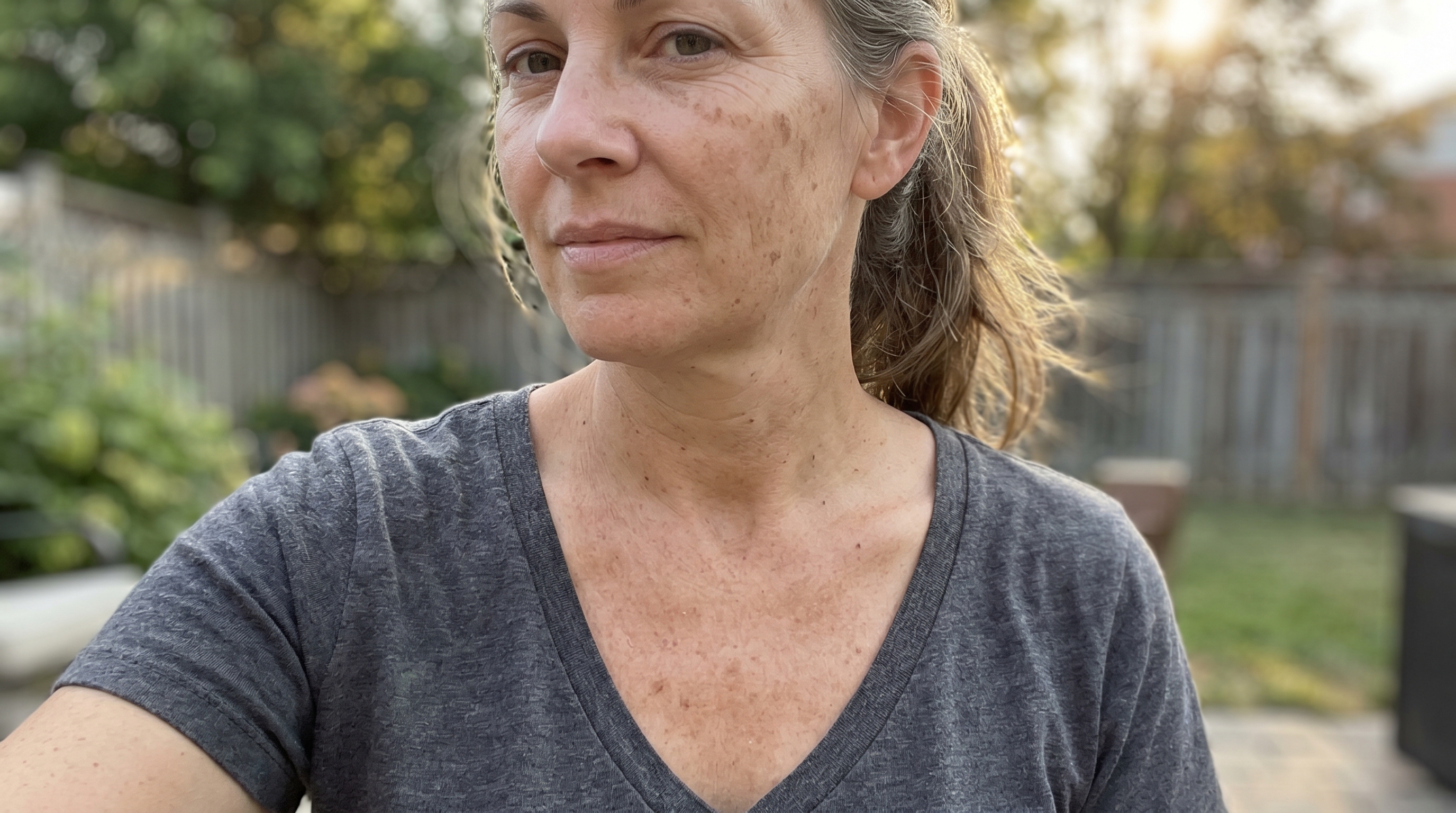
This neglect has consequences. The décolletage — the skin of the upper chest, from the collarbone downward — receives more cumulative UV exposure than almost any other area of the body. It spends decades exposed in V-neck tops, open collars, and swimwear, often without sunscreen, and with none of the daily cleansing, retinol application, or antioxidant serum that has become standard for the face.
By the time the dark spots appear, the damage is decades old. But appearing is not the same as permanent. With the right ingredients and realistic expectations, chest hyperpigmentation is one of the more responsive areas to treat.
What Those Dark Spots Actually Are
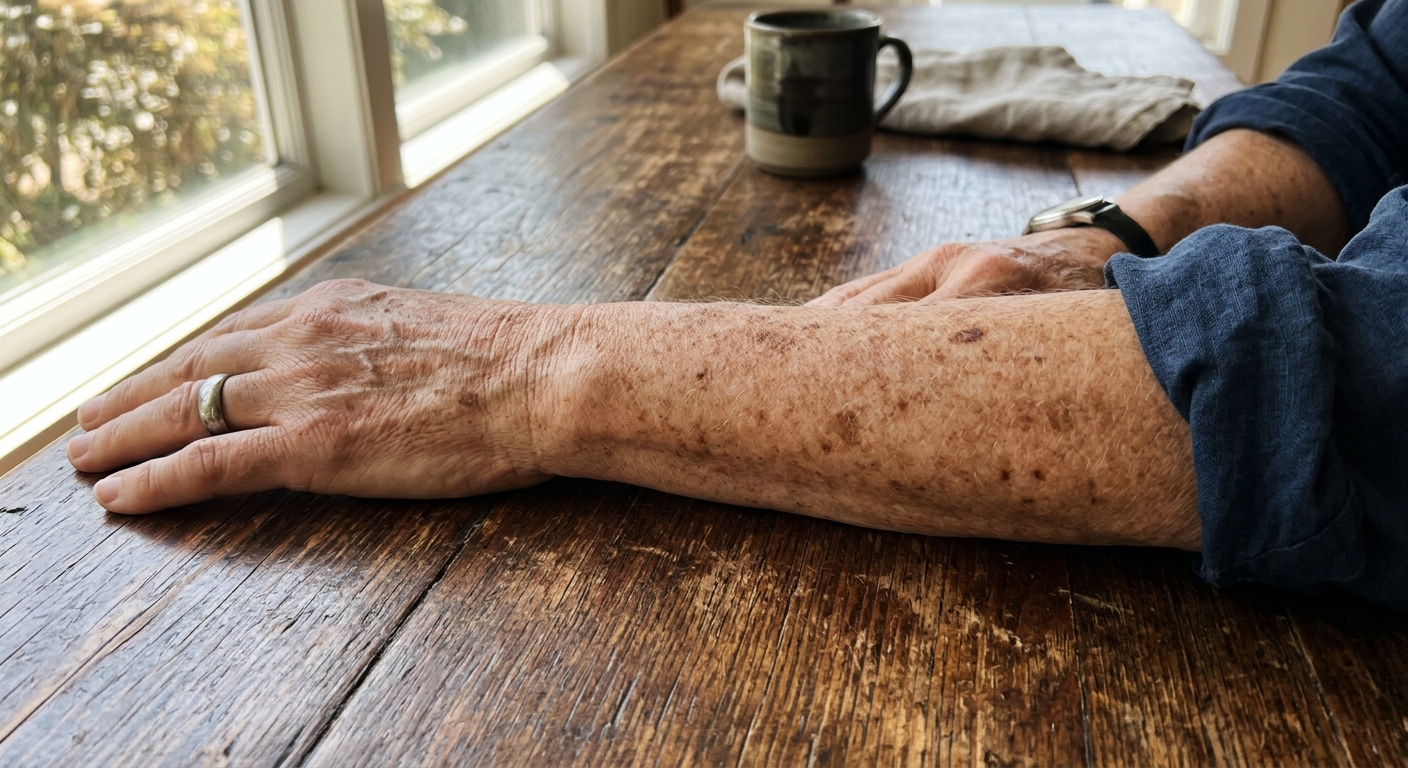
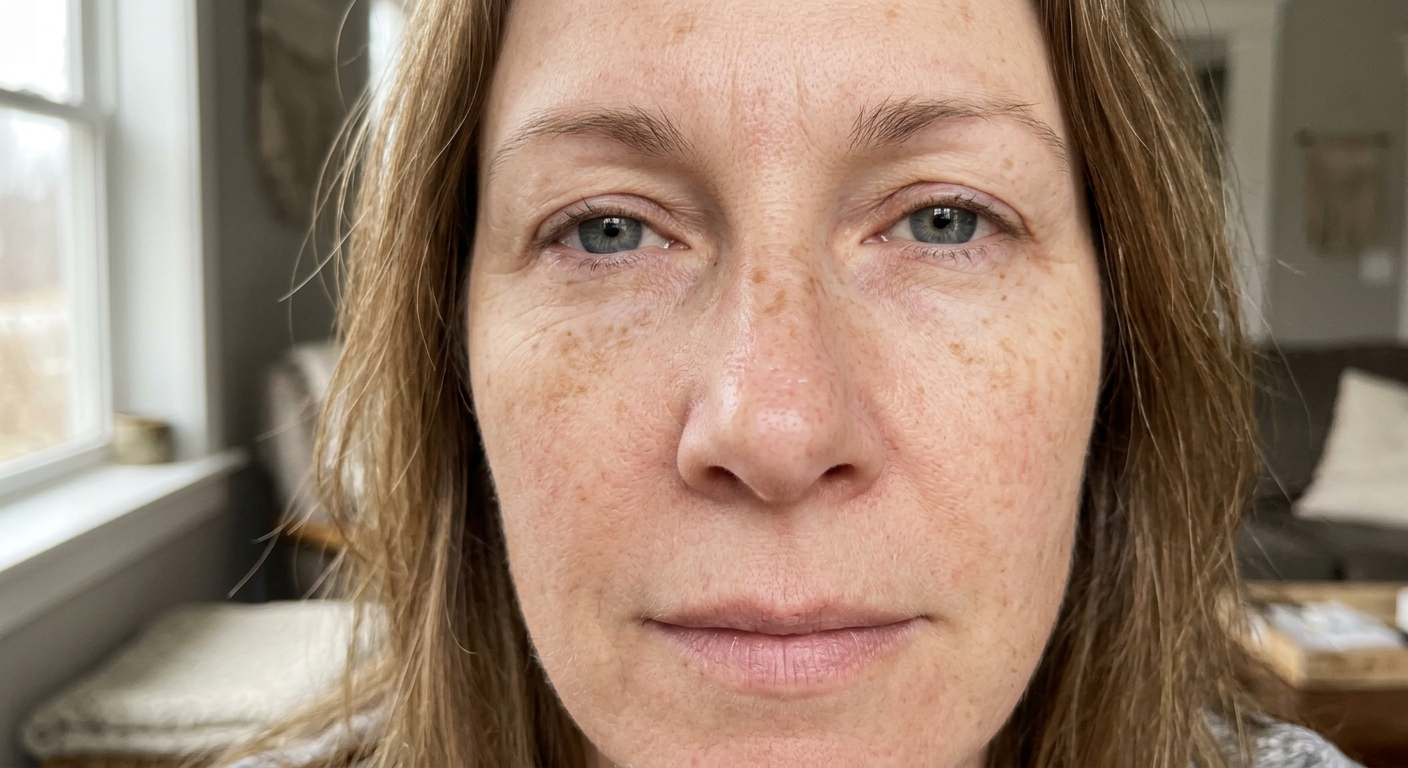
The technical term is solar lentigines — flat, sharply defined areas of increased melanin caused by cumulative UV exposure. They differ from freckles (which fade in winter and are genetically driven) and from melasma (which has a hormonal component). Solar lentigines don’t fade on their own, because UV exposure has permanently altered the distribution of melanocytes — the pigment-producing cells — in the dermis [1].
The mechanism: ultraviolet radiation, particularly UVA, penetrates deep into the skin and triggers melanocytes to produce excess melanin. Repeated exposure causes certain melanocytes to become hyperactive and clustered. The clusters appear as flat brown or tan spots, often irregular in shape, typically ranging from a few millimeters to a centimeter across [2].
The chest is particularly vulnerable for several reasons. The skin here is thinner than on the face, with fewer sebaceous glands and a less robust natural moisture barrier. It has less protective pigmentation in many people, meaning melanocytes respond more dramatically to UV exposure. And because it points upward in most seated or standing positions, it catches reflected as well as direct sunlight — even in the shade.
Most people have a skincare routine for their face.
The Treatment Framework
Effective treatment of solar lentigines on the chest combines two approaches: slowing future melanin production and clearing the accumulated melanin already in the skin. No single ingredient does both equally well, which is why combination therapy consistently outperforms single-ingredient approaches in clinical studies [1].
Topical Retinoids: The Foundation
Retinoids — vitamin A derivatives including retinol and tretinoin — are among the most clinically validated treatments for solar lentigines. They work through multiple mechanisms: accelerating keratinocyte turnover (which pushes pigmented cells out of the skin faster), inhibiting melanin transfer from melanocytes to surrounding cells, and normalizing the abnormal melanocyte clustering that produces spots [3].
A landmark multicenter trial found that a combination of mequinol and tretinoin significantly improved the appearance of solar lentigines on the face, neck, chest, and hands in a double-blind study — one of the few well-designed trials specifically including the décolletage as a treatment area [4]. Retinoids remain first-line agents in most systematic reviews of lentigo treatment [2].
The practical challenge with tretinoin on the chest is irritation. The chest skin, lacking the robust barrier of facial skin, is often more sensitive to conventional retinoid formulations. Redness, peeling, and discomfort are common, which leads many people to stop before the product has had time to work.
This is where delivery technology changes the calculation. Encapsulated retinol formulations — including Nanoretinol, which uses biomimetic lipid nanoparticles — penetrate the epithelial barrier without requiring the barrier disruption that conventional retinoids rely on. For already-sensitive chest skin, this means significantly fewer side effects while still delivering retinol to target cells. In clinical testing, Nanoretinol produced +232% more effective collagen recovery and +73% more effective elastin recovery compared to conventional retinol — the same molecules, more effectively delivered [4].
Vitamin C
L-ascorbic acid and its derivatives work as tyrosinase inhibitors — they interrupt the enzymatic step in melanin synthesis, reducing how much melanin is produced in the first place. Clinical reviews confirm that topical vitamin C formulations improve solar lentigines and general photoaging, with the strongest evidence for formulations at 10–20% concentration [5].
SPF 30+ on the chest every day is not optional during treatment — UV exposure actively reverses what your topicals are doing.
On the chest, vitamin C serums applied in the morning under sunscreen create a dual effect: antioxidant protection against the UV-induced melanin cascade, plus direct inhibition of melanin production in existing spots. It’s a prevention-and-treatment combination in one step.
Niacinamide
Niacinamide (vitamin B3) doesn’t inhibit melanin production, but it does something equally useful: it blocks the transfer of melanin from melanocytes to surrounding keratinocytes. This “melanin cap” effect reduces the visible darkening of spots even when melanocytes are still producing pigment at a higher rate. It’s also anti-inflammatory and extremely well-tolerated on sensitive areas like the chest, making it a practical daily-use option.
Chemical Exfoliants
Glycolic acid and lactic acid accelerate corneocyte shedding, which physically removes pigmented surface cells faster than natural turnover alone. This is complementary to retinoid therapy: the retinoid normalizes melanocyte behavior deeper in the skin; the acid clears pigmented cells from the surface layer. Studies on chemical peels in photoaging contexts confirm their efficacy for solar lentigines when used at appropriate concentrations [1].
For the chest, lower concentrations (5–10% glycolic) used consistently are generally preferred over high-percentage peels, which can cause post-inflammatory hyperpigmentation in sensitive skin — the exact opposite of what you’re treating.
Application Notes for the Chest
The chest responds to topical treatment, but more slowly than the face. Realistic timelines are three to six months for visible fading, twelve months or more for significant clearance of established spots.
Practical points:
- Apply retinol at night to a clean, dry chest. Allow it to absorb before clothing.
- Apply vitamin C in the morning, before sunscreen. This is non-negotiable.
- SPF 30+ on the chest every day is not optional during treatment — UV exposure actively reverses what your topicals are doing. Our guide to sunscreen for aging skin covers the evidence on why.
- If you’re already using a retinol serum on your face, there is no reason not to extend it downward. The same product that addresses dark spots on your face will work on chest lentigines via the same mechanisms.
For the full picture on vitamin C’s role in treating hyperpigmentation, see our overview of vitamin C serum benefits. For niacinamide’s specific brightening mechanism, niacinamide benefits for skin covers the clinical evidence in detail.
Prevention Remains the Most Efficient Strategy
Once you’re treating existing spots, the most important thing you can do is prevent new ones from forming. Solar lentigines develop from cumulative exposure — meaning every unprotected sun exposure you have now adds to the melanocyte damage that produces tomorrow’s spots.
Daily SPF on the chest is more impactful than any topical treatment. Topicals undo existing damage. SPF prevents the next decade of damage from accumulating in the first place.
The combination — consistent sunscreen plus a daily vitamin C in the morning and a retinol at night — is the most evidence-backed protocol for both treatment and prevention of chest hyperpigmentation. It requires commitment measured in months, not weeks. But the structural change it produces is real.
References
- Mardani G, Nasiri MJ, Namazi N, Farshchian M, Abdollahimajd F. “Treatment of Solar Lentigines: A Systematic Review of Clinical Trials.” J Cosmet Dermatol. 2025;24(4):e70133. doi:10.1111/jocd.70133
- Mukovozov I, Roesler J, Kashetsky N, Gregory A. “Treatment of Lentigines: A Systematic Review.” Dermatol Surg. 2023;49(1):17-24. doi:10.1097/DSS.0000000000003630
- Ortonne JP, Pandya AG, Lui H, Hexsel D. “Treatment of solar lentigines.” J Am Acad Dermatol. 2006;54(5 Suppl 2):S262-71. doi:10.1016/j.jaad.2005.12.043
- Fleischer AB Jr, Schwartzel EH, Colby SI, Altman DJ. “The combination of 2% 4-hydroxyanisole (Mequinol) and 0.01% tretinoin is effective in improving the appearance of solar lentigines and related hyperpigmented lesions in two double-blind multicenter clinical studies.” J Am Acad Dermatol. 2000;42(3):459-67. doi:10.1016/s0190-9622(00)90219-6
- Correia G, Magina S. “Efficacy of topical vitamin C in melasma and photoaging: A systematic review.” J Cosmet Dermatol. 2023;22(7):1938-1945. doi:10.1111/jocd.15748
- Cameli N, Abril E, Agozzino M, Mariano M. “Clinical and instrumental evaluation of the efficacy of a new depigmenting agent containing a combination of a retinoid, a phenolic agent and an antioxidant for the treatment of solar lentigines.” Dermatology. 2015;230(4):360-366. doi:10.1159/000379746