Does Skincare Expire? What Actually Happens Inside the Bottle
The date on the box, the symbol nobody reads, and the ingredients that quietly stop working
There is a particular kind of bathroom archaeology most of us have done at least once: a drawer gets opened, a half-used serum surfaces, and the question arrives. Is this still fine?
The honest answer is that “fine” is doing two jobs at once. A product can be perfectly safe to put on your face and still be completely useless. Those are separate failures, they happen on different timelines, and only one of them is obvious.
The date on the box is not the date that matters
Skincare runs on two clocks. The first is the unopened shelf life, which is what a printed expiration date or a batch code refers to. That clock assumes the product is sealed, sitting in the dark, at a sensible temperature.
The second clock starts the moment you break the seal, and it is the one that governs almost everything you own. It is printed as a small open-jar icon on the back of the carton with a number inside it: 6M, 12M, 24M. That is the period after opening, the manufacturer’s estimate of how long the formula holds together once air, light, water and fingers are part of the equation.
Those two clocks can disagree wildly. A vitamin C serum with two years left on its printed date can be finished eight weeks after you open it. A sealed tube of ceramide cream can outlive its stamp without much drama at all.
Two different ways a product fails
The first failure is microbiological. Water-based formulas are hospitable places, and every use introduces something new to them. When researchers cultured cosmetics that people were actually using at home rather than sealed retail stock, they found viable bacterial and fungal contamination was common, with some samples exceeding accepted safety limits, and the worst offenders were water-rich products handled with an applicator that goes back into the tube [1]. A separate study following 91 cosmetics from intact through in-use to end-of-life found that preservative systems generally did hold contamination in check during normal use, but that their effectiveness varied substantially by product type and preservative combination [2]. That variance is precisely what the period-after-opening number is trying to summarise for you.
A product can be perfectly safe to put on your face and still be completely useless.
The second failure is chemical, and it is the expensive one. The active ingredient you paid for degrades into something that no longer does the job, while the cream around it looks, smells and spreads exactly as it did on day one. Nothing warns you. You simply stop getting results and conclude the product never worked.
The actives, ranked by how quickly they quit
Retinol goes first
Retinol is the most fragile useful ingredient in most bathrooms. When researchers ran long-term and accelerated stability testing on commercial retinoid products, they measured anything from no loss to an 80% decline in retinoid content after six months at 25°C, rising to between 40% and 100% at 40°C. Light exposure degraded the retinoids more aggressively than heat did [3]. Ultraviolet exposure also breaks natural retinoids down into photodecomposition products rather than simply diluting them [4].
The practical reading of that data is uncomfortable. Two identical jars, one kept in a dark drawer and one kept on a windowsill, are not the same product by spring. If you want the full picture on getting results from a retinoid, our guide to how to use retinol covers the application side of the same problem.
Vitamin C at least tells you
L-ascorbic acid is the one ingredient that announces its own death. It oxidises, and the oxidation products are coloured, so a serum that has gone from clear or pale straw to deep amber has already lost a meaningful share of its potency. Comparative stability work found that pure ascorbic acid degrades considerably faster in solution and in finished topical formulations than its more stable derivatives such as ascorbyl palmitate and magnesium ascorbyl phosphate [5].
There is a second constraint stacked on top. Ascorbic acid only penetrates skin meaningfully when the formulation sits below pH 3.5 [6]. A formula that has drifted chemically has often drifted out of that window as well, which means it can fail on delivery even before it fails on concentration. Our breakdown of vitamin C serum benefits goes further into what a working formula looks like.
Its 0.2% retinol sits inside biomimetic lipid nanoparticles rather than free in the base, which is what keeps the retinol stabilized and protected instead of slowly oxidising into nothing between the day you open it and the day you finish it.
Sunscreen degrades while you are wearing it
Sunscreen has an unusual problem: its shelf life is the least of it. When commercial sunscreens were exposed to real sun and to controlled ultraviolet lamps, several lost a substantial share of their UVA-absorbing capacity within about 90 minutes of exposure [7]. That is not the bottle going off in a cupboard. That is the product degrading on your face, mid-use, which is the actual argument for reapplication rather than a marketing one.
The stable end of the shelf
Humectants such as glycerin and hyaluronic acid, along with niacinamide and most ceramides, are comparatively robust. When these products fail it is usually mechanical rather than chemical: an emulsion separating, a thickener collapsing, or an unsaturated plant oil turning rancid and smelling faintly of crayons.
A triage you can run in thirty seconds
Look, then smell, then feel. A colour shift in a clear serum, an emulsion that has split into layers, a texture that has gone grainy or waxy, or any change in smell is a genuine signal. Bin it.
The absence of those signals proves less than people assume. A degraded retinol looks exactly like a fresh one. For anything where you are relying on the active rather than the base, the open-jar number and the storage conditions are better evidence than your senses.
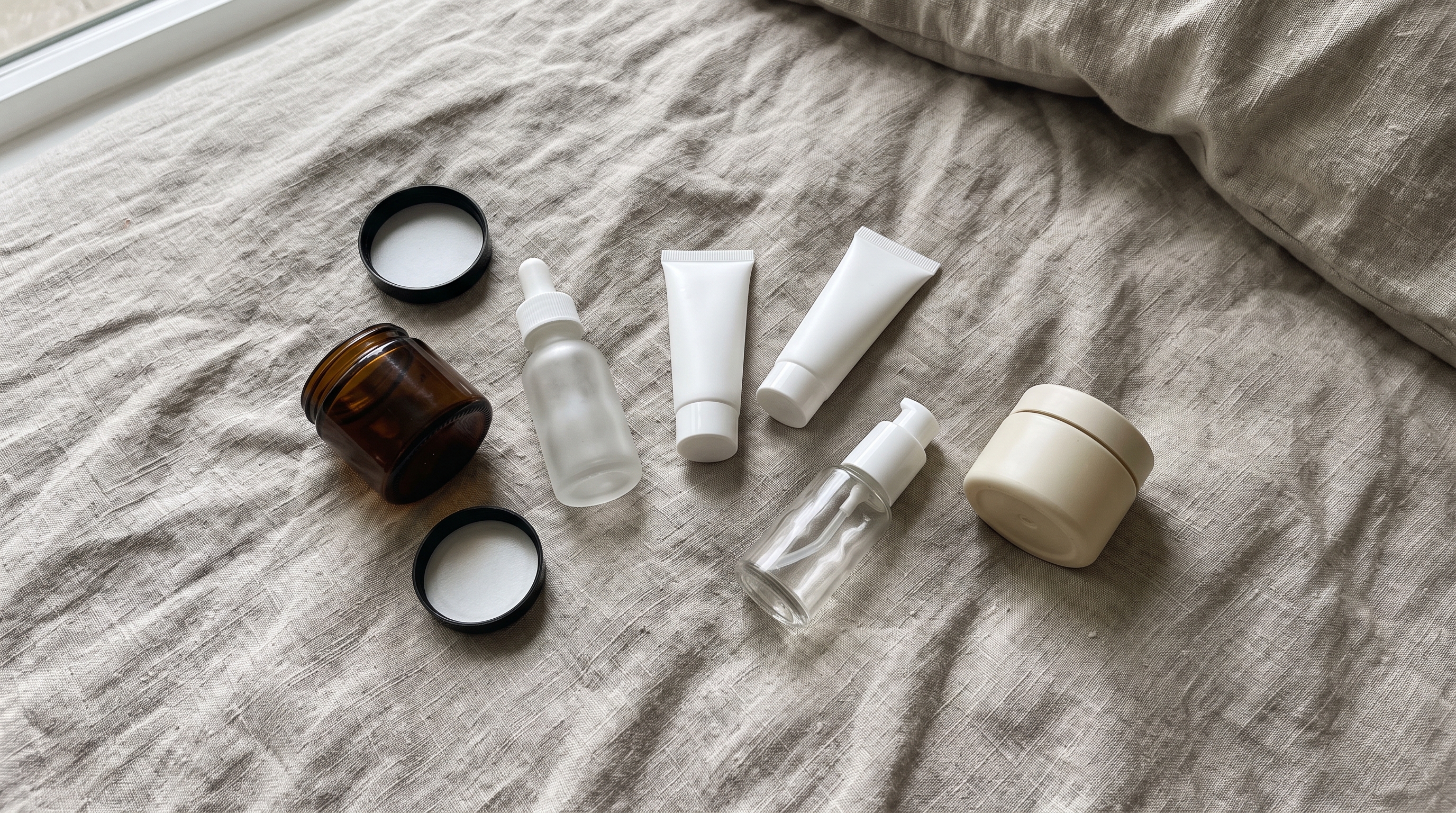
Three habits do most of the work. Buy the size you will finish inside the period after opening rather than the value tub. Keep actives out of the bathroom, where heat and humidity peak twice a day, and store them in a dark drawer instead. Prefer opaque tubes and airless pumps over jars and droppers, both of which hand your formula a fresh dose of air and skin flora every single day.
Why some retinol survives and some does not
Packaging is only half the story. Formulation chemistry is the other half, and the most durable answer to retinoid instability has been to stop leaving the molecule exposed in the first place. Encapsulating retinoids in lipid nanoparticles has been shown to improve their chemical stability against degradation compared with unencapsulated forms [8].
This is the principle Nanoretinol is built on. Its 0.2% retinol sits inside biomimetic lipid nanoparticles rather than free in the base, which is what keeps the retinol stabilized and protected instead of slowly oxidising into nothing between the day you open it and the day you finish it. The same encapsulation is what lets it deliver retinol through the epithelial barrier without the chemicals and petroleum derivatives conventional formulations use to force their way in, and it is why the clinical work behind it recorded 232% greater effectiveness in collagen recovery than conventional retinol. If the encapsulation idea is new to you, encapsulated retinol explains the delivery science on its own terms.
What to keep and what to bin
Expiry in skincare is less a cliff than a slope, and the slope is much steeper for some ingredients than others. Sealed, unopened products age slowly. Opened actives, particularly retinoids and pure vitamin C, age on a clock measured in months and accelerated by every hour of light and warmth they get.
So keep the ceramide cream. Replace the vitamin C that has gone amber. And treat any retinol that has spent half a year in a bright, warm bathroom as spent, however full the bottle still looks.
References
- Bashir A, Lambert P. “Microbiological study of used cosmetic products: highlighting possible impact on consumer health.” Journal of Applied Microbiology. 2020;128(2):598-605. doi:10.1111/jam.14479
- Campana R, Scesa C, Patrone V, Vittoria E, Baffone W. “Microbiological study of cosmetic products during their use by consumers: health risk and efficacy of preservative systems.” Letters in Applied Microbiology. 2006;43(3):301-306. doi:10.1111/j.1472-765X.2006.01952.x
- Temova Rakuša Ž, Škufca P, Kristl A, Roškar R. “Retinoid stability and degradation kinetics in commercial cosmetic products.” Journal of Cosmetic Dermatology. 2021;20(7):2350-2358. doi:10.1111/jocd.13852
- Tolleson WH, Cherng SH, Xia Q, et al. “Photodecomposition and phototoxicity of natural retinoids.” International Journal of Environmental Research and Public Health. 2005;2(1):147-155. doi:10.3390/ijerph2005010147
- Austria R, Semenzato A, Bettero A. “Stability of vitamin C derivatives in solution and topical formulations.” Journal of Pharmaceutical and Biomedical Analysis. 1997;15(6):795-801. doi:10.1016/s0731-7085(96)01904-8
- Pinnell SR, Yang H, Omar M, et al. “Topical L-ascorbic acid: percutaneous absorption studies.” Dermatologic Surgery. 2001;27(2):137-142. doi:10.1046/j.1524-4725.2001.00264.x
- Gonzalez H, Tarras-Wahlberg N, Strömdahl B, et al. “Photostability of commercial sunscreens upon sun exposure and irradiation by ultraviolet lamps.” BMC Dermatology. 2007;7:1. doi:10.1186/1471-5945-7-1
- Jenning V, Gohla SH. “Encapsulation of retinoids in solid lipid nanoparticles (SLN).” Journal of Microencapsulation. 2001;18(2):149-158. doi:10.1080/02652040010000361