
Galactomyces: What the Ferment Filtrate Really Does for Skin
The fermented essence ingredient behind a cult luxury bottle, what the lab and clinical studies show, who paid for them, and how to use it well
Galactomyces ferment filtrate is one of the most recognisable names in Asian skincare. It sits at the top of the ingredient list of a famously expensive Japanese essence, and it now appears in budget Korean essences and toners at 90% or more of the formula. Fans describe brighter, smoother, more even skin. Sceptics see an expensive bottle of fermented water.
The truth sits in between, and it is more interesting than either camp suggests. Here is what galactomyces actually is, what the studies show, who carried them out, and how to fit it into a routine that also does the heavy lifting on wrinkles and firmness.
What Galactomyces Ferment Filtrate Is
Galactomyces is a yeast-like fungus. To make the cosmetic ingredient, it is fermented in a liquid, and the liquid is then filtered to remove the organism itself. What is left is a clear liquid that carries the by-products of fermentation. On ingredient labels it appears as “galactomyces ferment filtrate”.
The origin story is part of its appeal. According to a review written by researchers working with its best-known maker, the ingredient was developed after observers noticed that sake brewers, whose hands spent years in yeast fermentation, had smooth, youthful-looking hands [1]. It is an appealing anecdote, but an anecdote is not evidence, so the better question is what controlled studies have found since.
Your skin never meets a living fungus in a galactomyces essence, only the filtered liquid left behind after fermentation, which is why it behaves more like a toner than a probiotic.
What the Laboratory Studies Show
Most galactomyces research has been done in cultured human skin cells, and the findings are consistent.
Your skin never meets a living fungus in a galactomyces essence, only the filtered liquid left behind after fermentation, which is why it behaves more like a toner than a probiotic.
- Barrier genes. In keratinocytes, the cells that build the outer skin, three separate production lots of the filtrate switched on genes linked to skin barrier formation and to tight junctions, the seals between cells, while switching off genes linked to inflammation [2].
- A built-in signalling route. The filtrate activates the aryl hydrocarbon receptor, a sensor inside skin cells that helps regulate barrier proteins such as filaggrin, a source of the skin’s natural moisturising factor [1].
- Antioxidant defence. It also activates NRF2, the master switch for the cell’s own antioxidant enzymes, which helps cells cope with oxidative stress from ultraviolet light and inflammation [1].
- Calmer signalling. In cultured keratinocytes it raised an anti-inflammatory messenger, IL-37, and lowered IL-33, an alarm signal involved in eczema-type inflammation [3].
- Stronger cell connections. Kyoto University dermatologists reported that it enhanced barrier function and cell-to-cell connections in the epidermis [4].
These are plausible, coherent mechanisms. They explain why people with dry, easily irritated skin often find galactomyces products comfortable. What they cannot tell you is how much difference a bottle makes on a real face.
What Happened in Human Skin
The headline human study followed 86 Japanese women whose facial skin had already been measured in 1999 and again in 2010. Over those 11 years, wrinkles, pigmented spots and roughness worsened, hydration fell and water loss through the skin rose. The women then used three galactomyces-containing products twice a day for 12 months. Hydration rose, water loss fell, and wrinkles, spots and roughness improved, reversing much of the measured 11-year decline [5].
Your skin was its own comparison in the 12-month galactomyces study, because all 86 women used the products and no group went without them for 12 months.
That design matters. With no untreated or vehicle group, it is impossible to say how much of the improvement came from galactomyces and how much from simply moisturising twice a day for a year, from season or from regular measurement. Any consistent moisturiser can raise hydration and soften the look of fine lines.
Who Paid for the Research
It is worth reading the conflict-of-interest statements. In the human study, all authors except one consultant were employees of the company that makes the essence [5]. The gene study [2], the review [1] and the inflammation study [3] were likewise written, funded or advised by the same company. That does not make the findings wrong; industry research is often careful. But independent replication, and especially independent controlled trials on wrinkles and pigmentation, is largely missing.
Your skin was its own comparison in the 12-month galactomyces study, because all 86 women used the products and no group went without them for 12 months.
So the fair verdict is this: galactomyces has good laboratory support as a barrier-friendly, soothing ingredient, and weak independent clinical evidence for anti-aging claims.
Fungal Acne, Sensitivity and Other Questions
Will it cause fungal acne? The filtrate contains no living yeast, and we found no published studies linking it to Malassezia folliculitis. People who are prone to it should still patch-test new essences, because the rest of the formula matters more.
Is it good for sensitive skin? Usually. It is a mild, watery ingredient. Choose fragrance-free versions and avoid essences with a lot of alcohol.
How is an essence different from a serum? An essence is a thin, watery layer applied right after cleansing; a serum is more concentrated. Our explainer on essence vs serum covers where each one fits.
How to Use Galactomyces in a Routine
- Apply it first. Pat a few drops into damp, freshly cleansed skin, before serums and moisturiser.
- Pair it freely. It sits comfortably with niacinamide, vitamin C, hyaluronic acid and retinol.
- Read the label position. If galactomyces ferment filtrate is not near the top of the list, you are paying for a name.
- Do not expect a peel. It hydrates and calms; it does not exfoliate or resurface.
Galactomyces belongs to a wider family of fermented and rice-derived ingredients. Our guide to rice water for skin looks at another sake-related ingredient, our article on probiotics and skin health explains what live bacteria can and cannot do, and our overview of Korean skincare for aging skin shows where essences fit in a full routine.
Where Retinol Comes In
If your goal is fewer wrinkles and firmer skin rather than comfort and glow, you need an ingredient with stronger evidence. Retinol has it. In a randomized, double-blind, vehicle-controlled trial, 0.4% retinol applied for 24 weeks significantly improved fine wrinkling and increased procollagen and glycosaminoglycans compared with the same base without retinol [6].
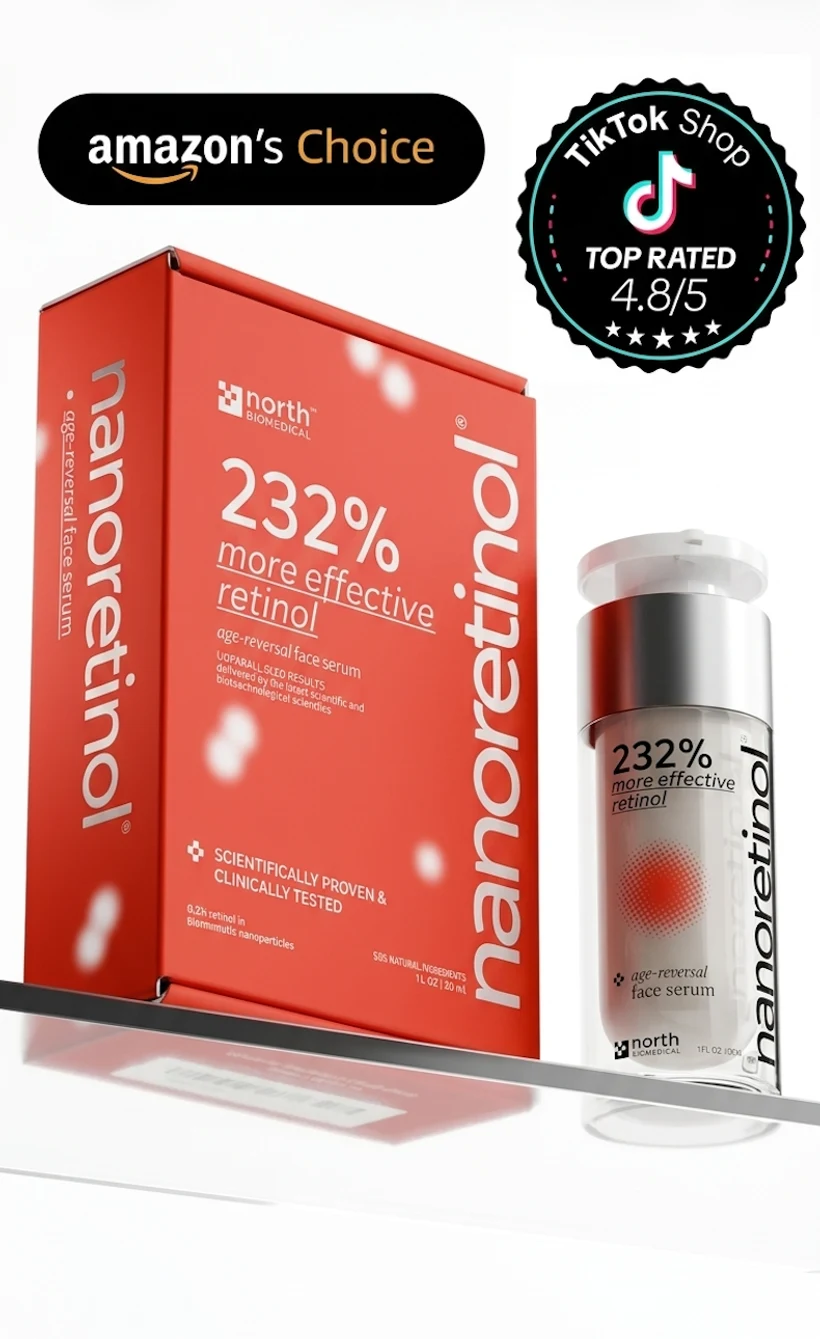
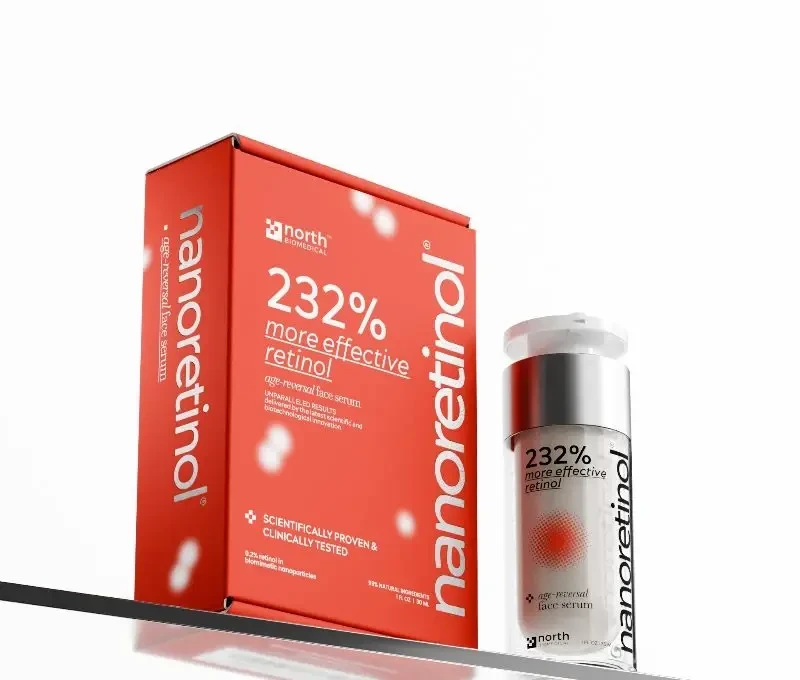
Nanoretinol, from North Biomedical, delivers 0.2% retinol fully stabilised inside biomimetic lipid nanoparticles that the skin recognises as its own, so it passes the barrier without the harsh solvents and petroleum derivatives that conventional formulas rely on. In laboratory testing it was 232% more effective than conventional retinol in collagen recovery and 73% more effective in elastin recovery, and in clinical use it increased skin firmness by 61% and elasticity by 56% in 56 days, with side effects that, when present, were milder than those of conventional retinol [7]. Its water-based gel layers easily over a galactomyces essence at night.
Fermented Water, Fairly Judged
Galactomyces ferment filtrate is neither a miracle nor a scam. It is a gentle, well-studied barrier and comfort ingredient, with most of its research coming from its own manufacturer. Use it if you like how it feels, buy it for hydration and calm, and pair it with a proven retinol for the wrinkles and firmness that an essence alone cannot change.
References
- Yan X, Tsuji G, Hashimoto-Hachiya A, Furue M. “Galactomyces Ferment Filtrate Potentiates an Anti-Inflammaging System in Keratinocytes.” Journal of Clinical Medicine. 2022;11(21):6338. doi:10.3390/jcm11216338
- Nakajima A, Sakae N, Yan X, et al. “Transcriptomic Analysis of Human Keratinocytes Treated with Galactomyces Ferment Filtrate, a Beneficial Cosmetic Ingredient.” Journal of Clinical Medicine. 2022;11(16):4645. doi:10.3390/jcm11164645
- Tsuji G, Hashimoto-Hachiya A, Matsuda-Taniguchi T, et al. “Natural Compounds Tapinarof and Galactomyces Ferment Filtrate Downregulate IL-33 Expression via the AHR/IL-37 Axis in Human Keratinocytes.” Frontiers in Immunology. 2022;13:745997. doi:10.3389/fimmu.2022.745997
- Nakamizo S, Yan X, Kabashima K. “Enhancement of skin barrier function and augmentation of epidermal cell-cell interactions by galactomyces ferment filtrate.” Journal of Dermatological Science. 2024;115(2):94-97. doi:10.1016/j.jdermsci.2024.03.011
- Miyamoto K, Inoue Y, Yan X, Yagi S, Suda S, Furue M. “Significant Reversal of Facial Wrinkle, Pigmented Spot and Roughness by Daily Application of Galactomyces Ferment Filtrate-Containing Skin Products for 12 Months-An 11-Year Longitudinal Skin Aging Rejuvenation Study.” Journal of Clinical Medicine. 2023;12(3):1168. doi:10.3390/jcm12031168
- Kafi R, Kwak HS, Schumacher WE, et al. “Improvement of naturally aged skin with vitamin A (retinol).” Archives of Dermatology. 2007;143(5):606-612. doi:10.1001/archderm.143.5.606
- North Biomedical LLC. “Nanoretinol vs. Conventional Retinol: Efficacy in Collagen and Elastin Recovery.” Clinical Study Summary, 2024. Study summary