Gold Face Mask: Worth It, or Just a Very Shiny Sheet Mask?
24k gold leaf, colloidal gold and gold nanoparticles all show up in luxury masks. What each one can and cannot do, what the glow really comes from, and who should skip gold
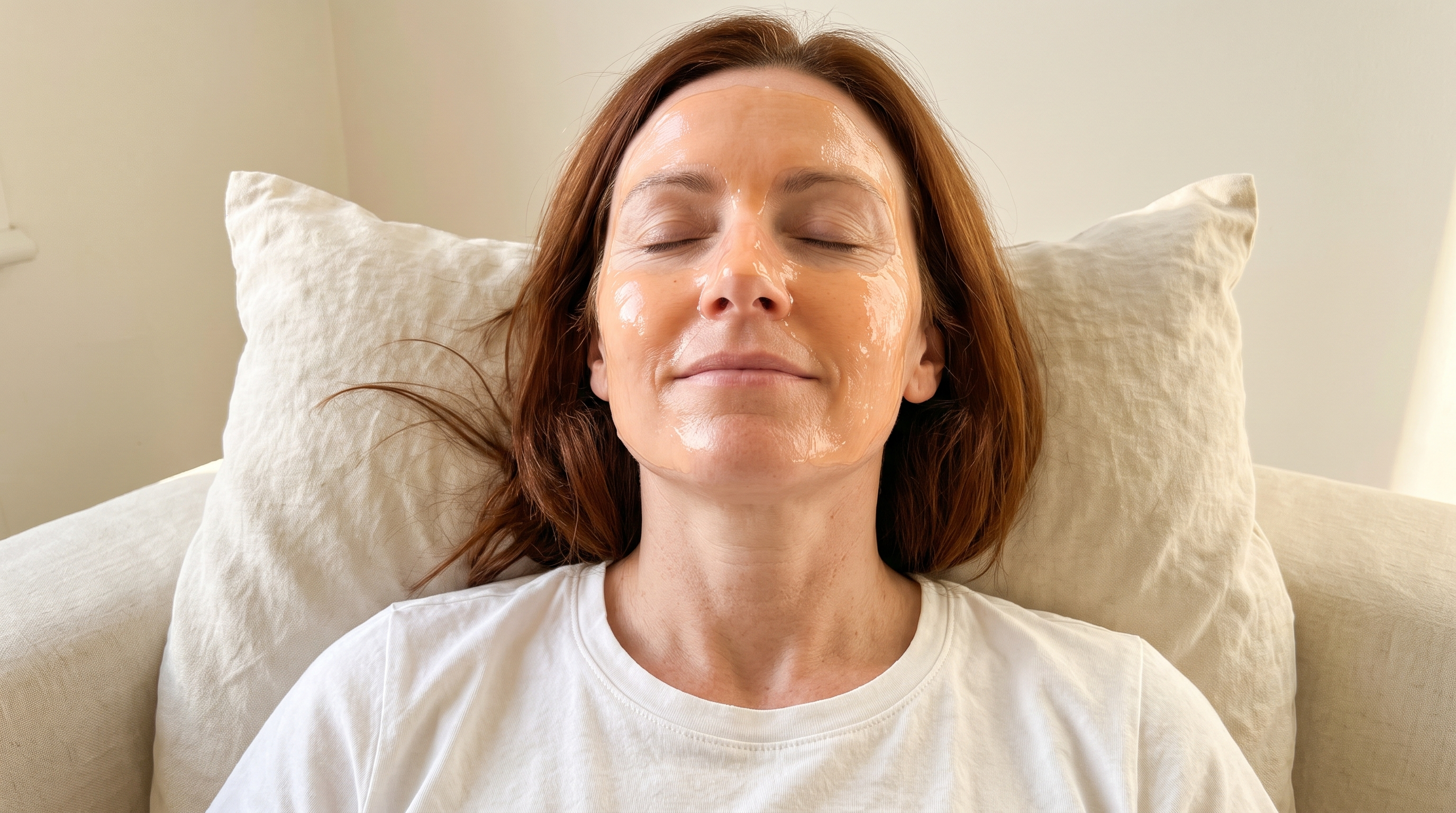
Few skincare products photograph as well as a gold face mask. A translucent hydrogel shell flecked with gold leaf, or a sheet that turns the whole face metallic for twenty minutes, looks like the definition of luxury. Gold has been linked to youth and beauty for centuries, and modern packaging leans hard on that history.
The real question is simpler. When the mask comes off, has the gold done anything a regular hydrating mask would not? The answer depends on which kind of gold is in the product, and on what you expect it to do.
Three very different kinds of gold
The word “gold” on a label can mean three things, and they behave nothing alike on skin.
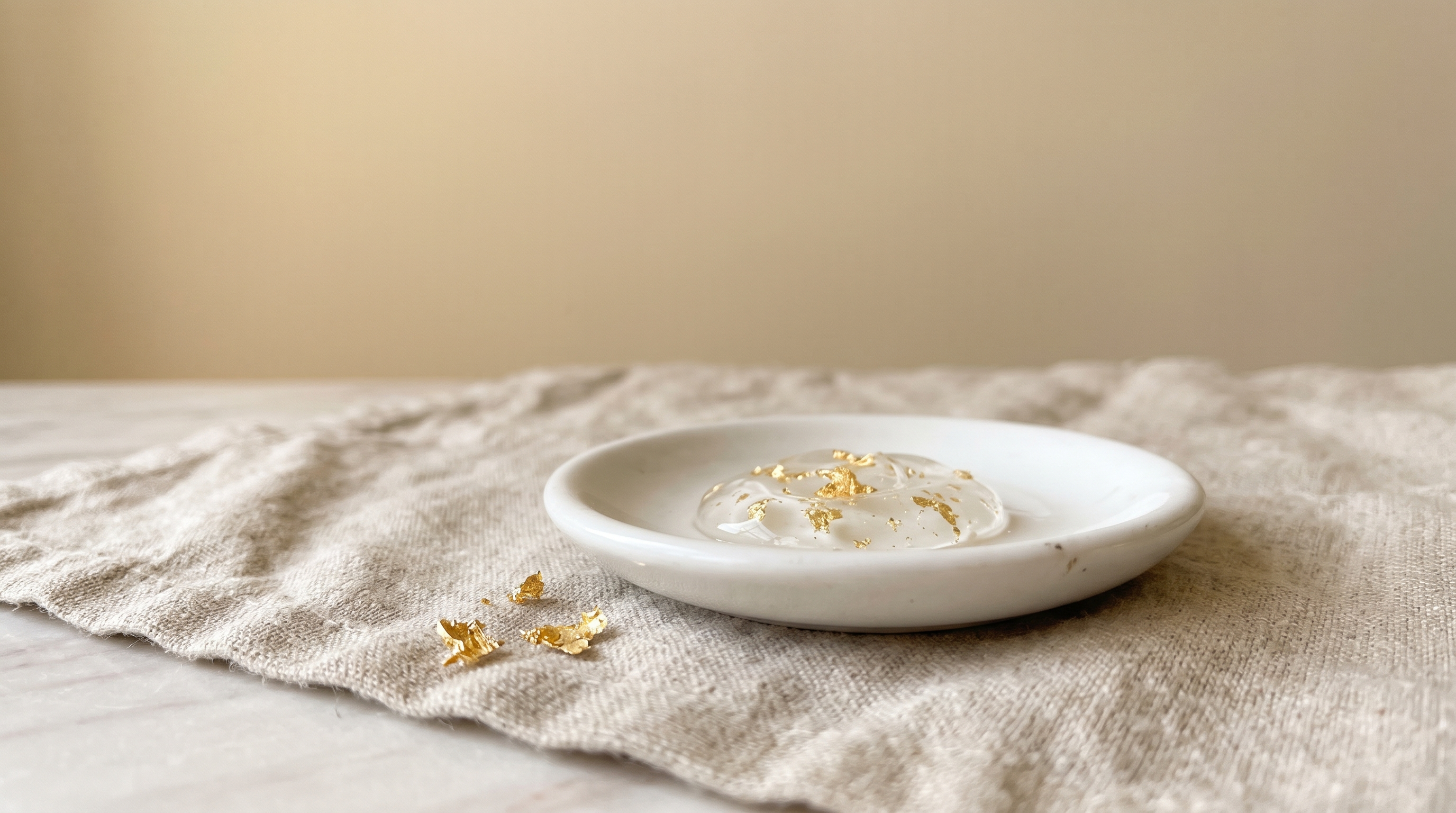
- 24k gold leaf: pure gold beaten into foil and broken into visible flakes. Each flake is wafer-thin but millimeters wide.
- Colloidal gold: tiny gold particles suspended in water or gel, which give a faint red, purple or golden tint.
- Gold nanoparticles: engineered particles with a defined size, usually tens of nanometers, studied in laboratories for drug delivery and wound care.
Some masks marketed as gold contain mostly the first type, sometimes only a sprinkle of it, plus gold-colored pigments that create the shimmer. The amount of gold is rarely listed.
Can gold actually get into your skin?
The skin’s outer layer is built to keep particles out, and size is the deciding factor. In a laboratory study using rat skin, gold nanoparticles 15 nanometers across passed through far more readily than particles of about 100 or 200 nanometers, while the larger ones were found mainly in the upper layers rather than deeper down [1]. Rat skin is considerably more permeable than human skin, so those figures are a best case.
Your skin will look plumper for a few hours after 20 minutes under any hydrating mask, gold or not, and far more because of water than metal.
A critical review of inorganic nanoparticles and the skin barrier concluded that whether such particles reach living tissue in human skin is still debated, partly because the experiments use very different setups [2]. If particles a few hundred nanometers wide struggle, a gold flake thousands of times wider has no route in at all. Gold leaf sits on top of the skin and washes off with the mask.
Your skin will look plumper for a few hours after 20 minutes under any hydrating mask, gold or not, and far more because of water than metal.
What the gold research actually measured
The appealing claims about gold come from laboratory work. In one study, gold nanoparticles combined with two antioxidants, green tea catechin and alpha-lipoic acid, helped skin cells multiply and migrate in culture and sped up wound healing in mice, with lower markers of inflammation [3]. That is interesting science, but it tested engineered nanoparticles mixed with other actives on wounds, not gold leaf on intact facial skin.
There are, so far, no well-designed human trials showing that a gold face mask reduces wrinkles, firms skin or fades dark spots better than the same mask without gold. Claims that gold “boosts collagen” or “stops aging” borrow the language of lab studies without the evidence.
Where the glow really comes from
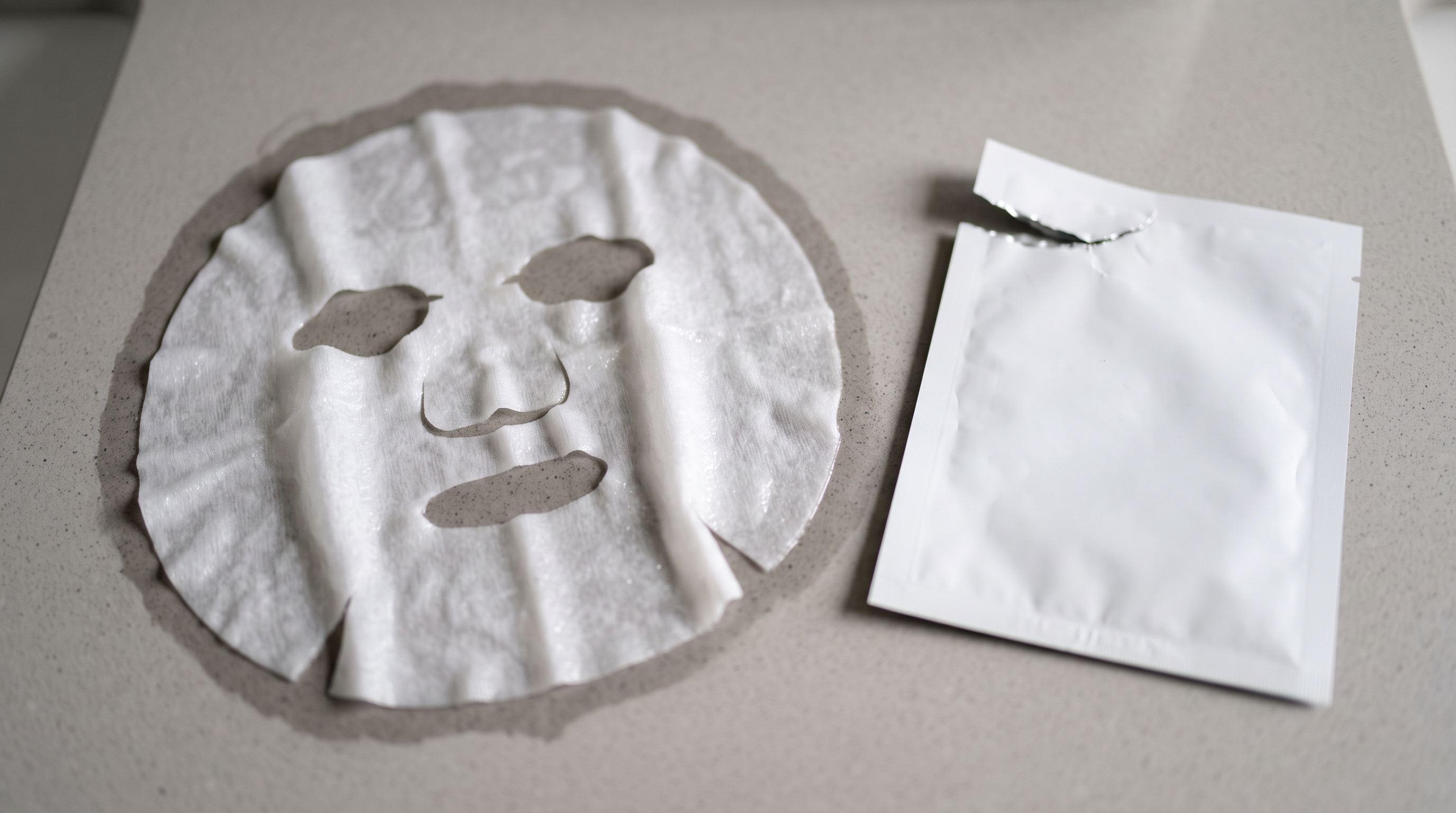
People do look brighter after a gold mask, and there is a real reason. Sheet and hydrogel masks hold water against the skin and slow its evaporation, so the outer layer swells with moisture and fine lines look softer for a while. In a randomized study of facial sheet masks, short wear of under 25 minutes improved hydration and reduced redness, while wearing a mask for longer, especially a plain water mask, led to more dryness and redness afterward [4].
Your skin reacts to gold more often than people expect: about 1 in 7 dermatitis patients who are patch tested react to it.
That is the same effect you get from any well-made sheet mask. Gold-colored particles left on the surface can add a little reflective shimmer, which the eye reads as radiance. Both effects are pleasant and both fade within hours.
The allergy question
Gold has a reputation as the metal that never causes reactions, but that is not quite true. Your skin reacts to gold more often than people expect: about 1 in 7 dermatitis patients who are patch tested react to it.
That figure comes from a 2024 analysis of 16 studies and almost 15,000 patients, which found a pooled rate of 14.1 percent. The authors stressed that a positive patch test often does not translate into real-world rashes [5]. Still, in a double-blind study of 60 women with a positive gold patch test, more of those given 24-carat gold earrings developed a skin reaction during 8 weeks than those given lookalike titanium earrings [6]. If you know you react to gold jewelry, or develop itching or redness after a gold mask, skip the gold.
How to choose a gold face mask
Gold masks are perfectly fine as an occasional treat, and the base formula decides how well one works. To get the most from one:
- Judge the base, not the gold: look for humectants such as hyaluronic acid or glycerin, and soothing ingredients such as panthenol.
- Prefer hydrogel or a well-fitted sheet: both hold moisture against the skin better than a loose rinse-off cream.
- Keep it short: 15 to 20 minutes is plenty, then press the remaining essence into the skin.
- Skip heavy fragrance: it adds irritation risk with no benefit.
- Use a gold eye patch for the occasion: under-eye patches give the same short-term de-puffing as any cooling hydrogel.
If you want a mask that does more than hydrate, compare the options in our guide to the best face masks for aging skin, and see what a collagen mask can and cannot do. For a quick deep clean before an event, a peel-off face mask is a different tool with its own trade-offs.
Nanoparticles that are built to deliver
The gold mask story contains a useful lesson: putting a precious ingredient on the skin is not the same as getting it into the skin. Delivery is the part that decides whether an active can work.
Lipid nanoparticles take the opposite approach to gold. They are made from lipids similar to the skin’s own, are designed to carry an active ingredient and release it gradually, and are known for excellent tolerability on skin [7]. That is the principle behind Nanoretinol. It carries 0.2% retinol inside biomimetic lipid nanoparticles that the skin recognizes as familiar, so the retinol can pass the barrier without the harsh chemistry that causes redness and peeling with many conventional retinol products.
The results are measured, not implied. In laboratory testing, Nanoretinol was 232 percent more effective in collagen recovery and 73 percent more effective in elastin recovery than conventional retinol, and in clinical testing over 56 days users saw a 61 percent increase in skin firmness [8]. Enjoy a gold mask for the glow on a special evening, and leave the long-term work of firmness and fine lines to an active that can actually reach the cells that need it.
References
- Sonavane G, Tomoda K, Sano A, et al. “In vitro permeation of gold nanoparticles through rat skin and rat intestine: effect of particle size.” Colloids and Surfaces B: Biointerfaces. 2008;65(1):1-10. doi:10.1016/j.colsurfb.2008.02.013
- Labouta HI, Schneider M. “Interaction of inorganic nanoparticles with the skin barrier: current status and critical review.” Nanomedicine: Nanotechnology, Biology and Medicine. 2013;9(1):39-54. doi:10.1016/j.nano.2012.04.004
- Leu JG, Chen SA, Chen HM, et al. “The effects of gold nanoparticles in wound healing with antioxidant epigallocatechin gallate and α-lipoic acid.” Nanomedicine: Nanotechnology, Biology and Medicine. 2012;8(5):767-775. doi:10.1016/j.nano.2011.08.013
- Wang Y, Cao Y, Huang X, et al. “Short-term skin reactions and changes in stratum corneum following different ways of facial sheet mask usage.” Journal of Tissue Viability. 2024;33(4):831-839. doi:10.1016/j.jtv.2024.06.012
- Jensen MB, Kursawe Larsen C, Isufi D, et al. “Prevalence of contact allergy to gold in dermatitis patients from 2010 to 2024: A systematic review and meta-analysis.” Contact Dermatitis. 2024;91(6):451-458. doi:10.1111/cod.14707
- Ahnlide I, Björkner B, Bruze M, Möller H. “Exposure to metallic gold in patients with contact allergy to gold sodium thiosulfate.” Contact Dermatitis. 2000;43(6):344-350. doi:10.1034/j.1600-0536.2000.043006344.x
- Pardeike J, Hommoss A, Müller RH. “Lipid nanoparticles (SLN, NLC) in cosmetic and pharmaceutical dermal products.” International Journal of Pharmaceutics. 2009;366(1-2):170-184. doi:10.1016/j.ijpharm.2008.10.003
- North Biomedical LLC. “Nanoretinol vs. Conventional Retinol: Efficacy in Collagen and Elastin Recovery.” Clinical Study Summary, 2024. Study summary