Vitamin C Face Mask: Does It Brighten Skin, and Is It Worth It?
Sheet, clay, gel and powder vitamin C masks all promise an instant glow. Here is what a short mask can deliver, which forms of vitamin C survive in each type, and how it compares with a daily serum
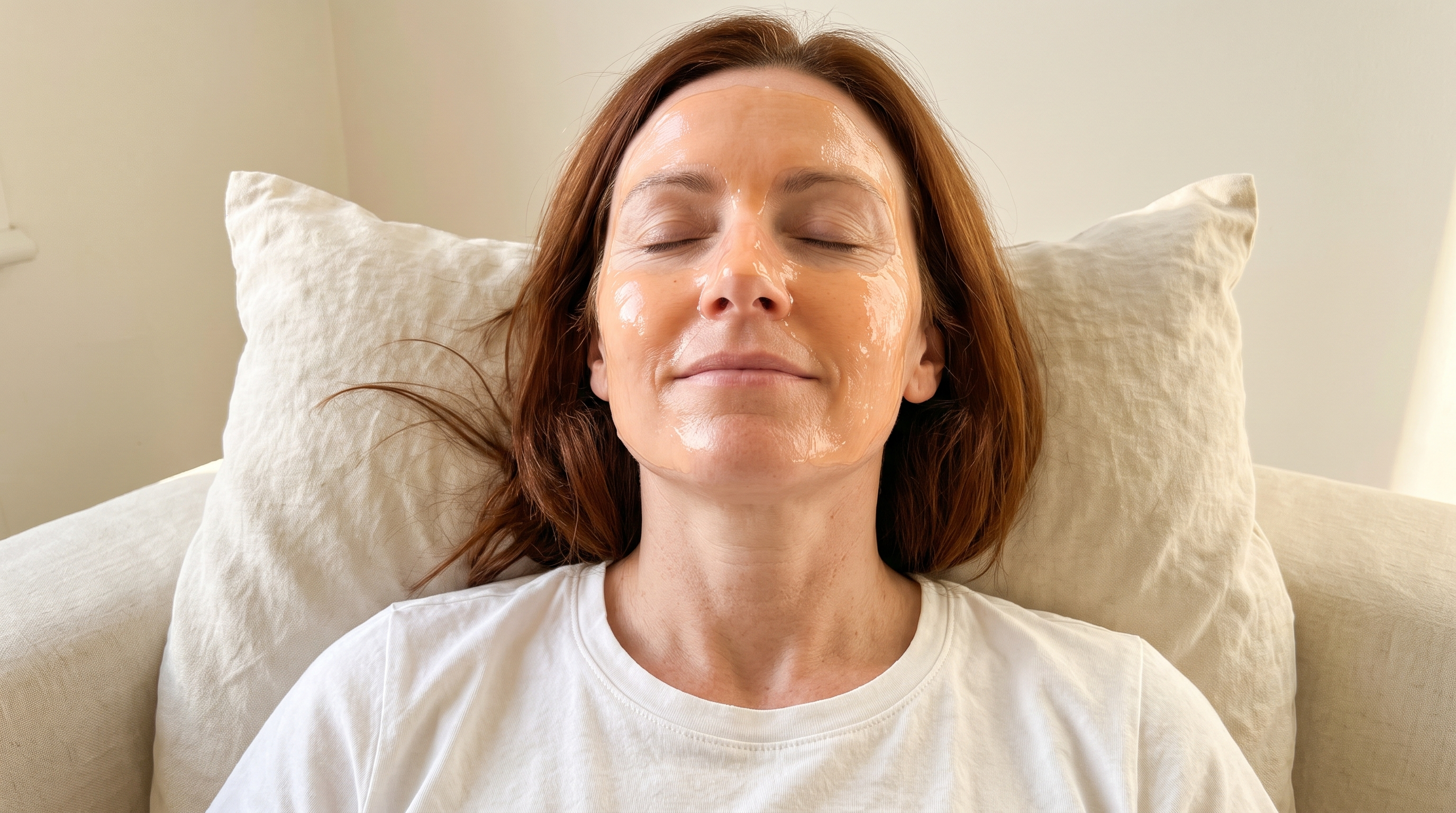
A vitamin C face mask sounds like the perfect shortcut. Fifteen minutes on the sofa, a cool sheet or a bright orange clay, and you rinse off to skin that looks fresher and more even. Masks are sold as a concentrated hit of the same antioxidant that fills serum bottles.
The fresher look is real, but it comes mostly from hydration, not from vitamin C. A mask sits on your face briefly, vitamin C is fragile, and getting it into the skin takes very specific conditions. This guide explains what a vitamin C mask can and cannot do, which forms of vitamin C survive in each mask type, and how to fit one into a routine that actually fades dark spots.
What vitamin C does for skin
Vitamin C is one of the skin’s main antioxidants. It helps neutralize the free radicals that sunlight and pollution generate, it is required for the enzymes that build collagen, and it slows melanin production, which is why it is linked to a brighter, more even tone [1]. Healthy skin contains high levels of it naturally [2].
The catch is getting more in from the outside. Reviews agree that clinical studies on topical vitamin C remain limited and that the main challenge is finding a formula that is both stable and able to penetrate [1]. Researchers also point out that it is still not clear how much topical vitamin C adds compared with a good diet [2].
The delivery problem
The landmark work on topical vitamin C set clear rules. Pure vitamin C, called L-ascorbic acid, only entered the skin when the formula was acidic, below pH 3.5, and absorption peaked at a 20% concentration [3]. Skin levels reached their maximum after three daily applications and then took about four days to fall by half [3].
Your skin needs 3 days of steady vitamin C before its levels peak, so a mask once a week does far less than a daily serum.
Your skin needs 3 days of steady vitamin C before its levels peak, so a mask once a week does far less than a daily serum.
The same study found that several popular derivatives, including magnesium ascorbyl phosphate and ascorbyl palmitate, did not raise skin levels of vitamin C in that model [3]. Derivatives are more stable in the jar, but stability and delivery are not the same thing [4].
Which forms hold up in a mask
Vitamin C breaks down quickly in water, air and light. A mask that is soaked in liquid, spread thin across the face, or exposed to air for 15 minutes is a hostile place for it [4].
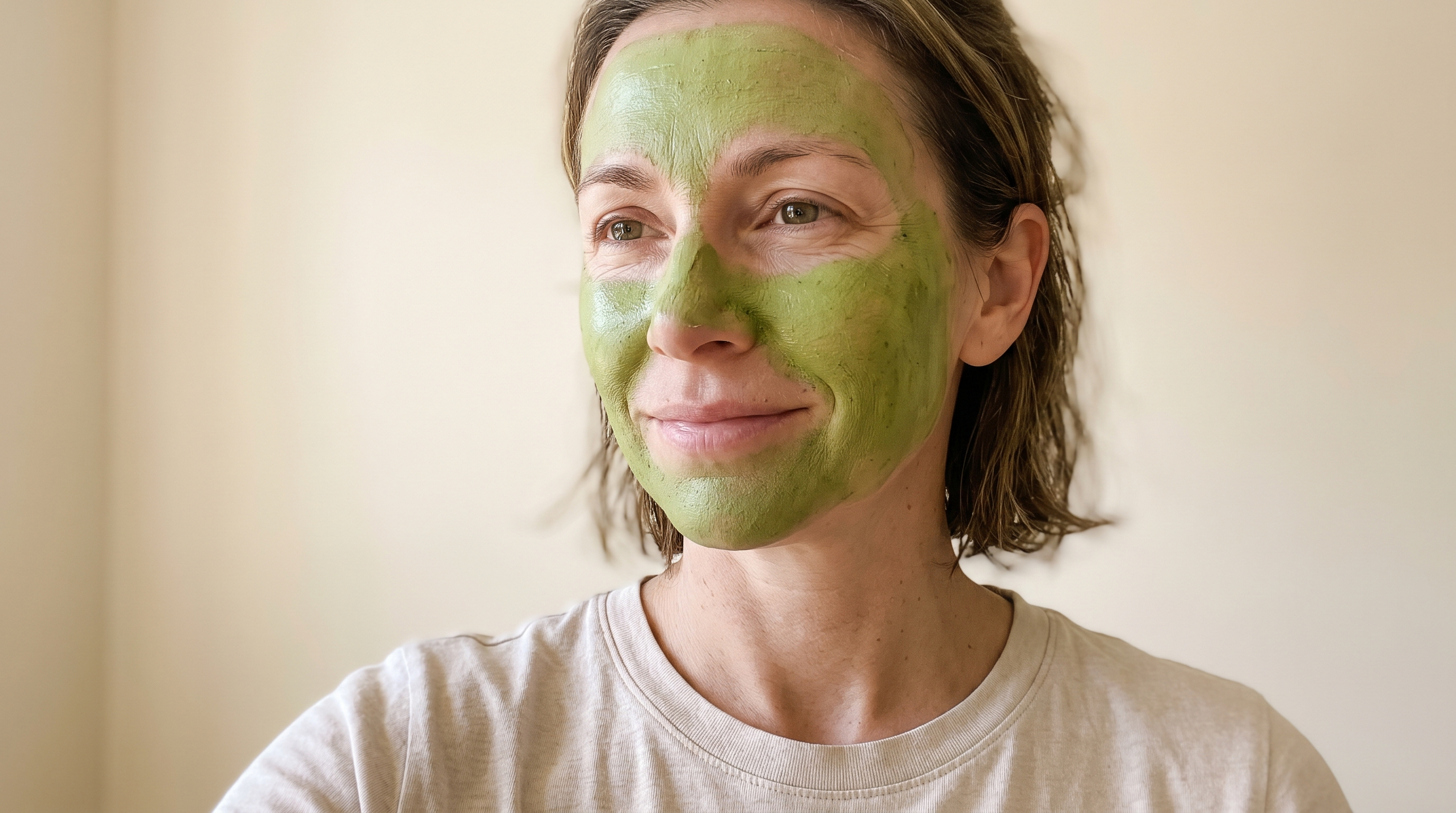
- Sheet masks are soaked in a watery serum, so most use stable derivatives such as sodium ascorbyl phosphate or ascorbyl glucoside. They hydrate well, but the vitamin C dose reaching the skin is modest.
- Clay and cream masks often use ethyl ascorbic acid or sodium ascorbyl phosphate, alongside clay for oil control.
- Powder masks that you mix with water just before use are the one format where pure L-ascorbic acid can stay fresh until application, but they can sting.
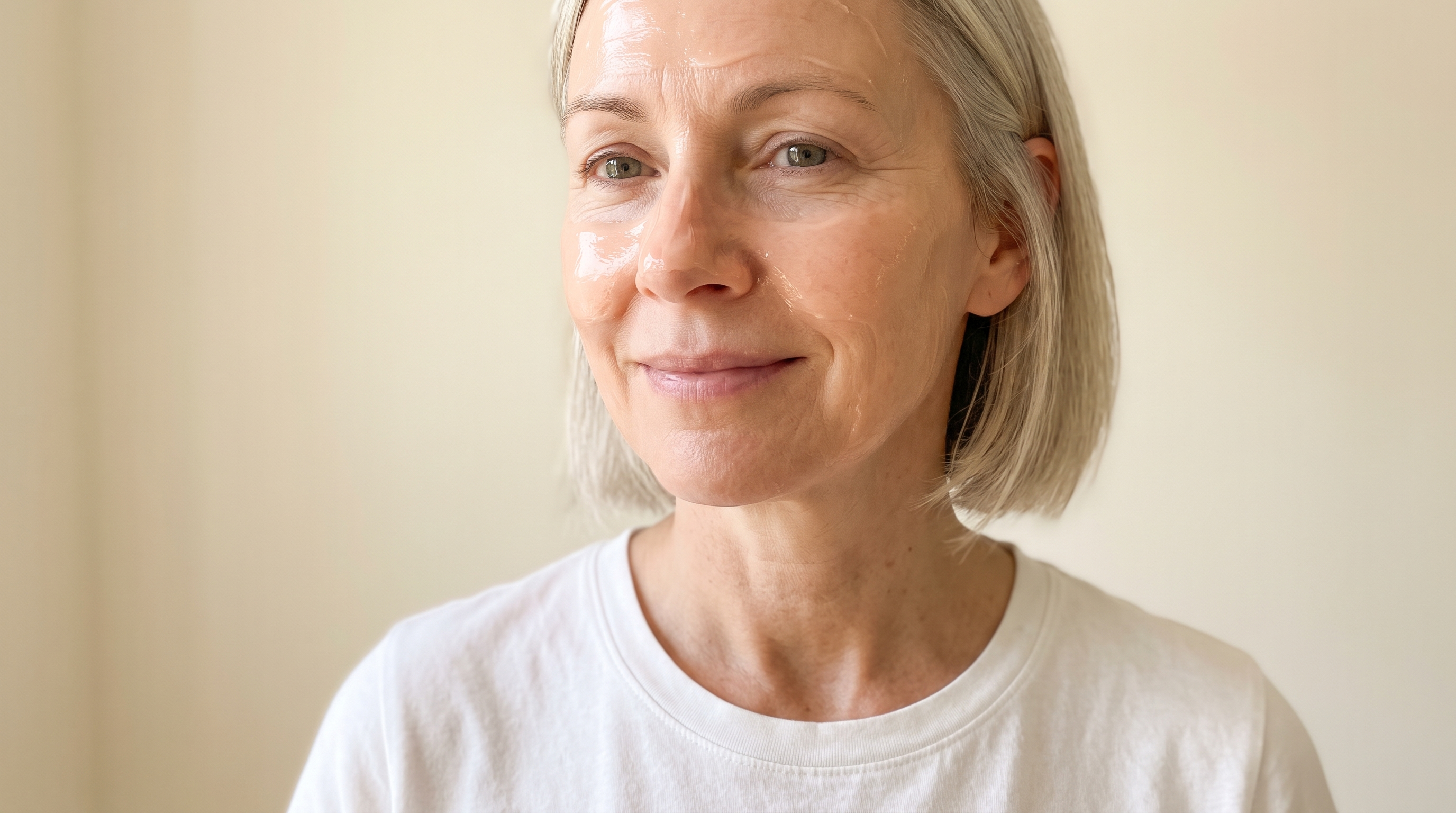
- Gel and overnight masks stay on longest, which gives any vitamin C more contact time.
If you would rather try a gentle grain-based brightening mask that skips vitamin C altogether, our rice face mask guide covers what the rice research shows, how the different kinds of rice compare and how often to use one.
Where the instant glow comes from
Most of the immediate change after a mask is water. The stratum corneum swells as it hydrates, light reflects more evenly, and skin looks plumper and more luminous for a few hours.
Your skin had far fewer side effects with nightly vitamin C cream than with hydroquinone over 16 weeks in a melasma trial, though hydroquinone looked better to patients.
Wearing time matters here too. In a trial of facial sheet masks, wearing one for under 25 minutes improved hydration and reduced redness, while wearing it longer caused more dryness and redness as the skin dried out under the mask [5]. Leave a vitamin C sheet mask on for the time on the pack, usually 15 to 20 minutes, and press the leftover serum in afterwards.
What it takes to fade dark spots
Your skin had far fewer side effects with nightly vitamin C cream than with hydroquinone over 16 weeks in a melasma trial, though hydroquinone looked better to patients.
In that trial, women used 5% vitamin C cream on one side of the face and 4% hydroquinone on the other, every night, with daily sunscreen [6]. Patients rated 62.5% of the vitamin C sides as good or excellent, against 93% for hydroquinone, but colour measurements showed no significant difference between sides, and only 6% had side effects with vitamin C compared with 69% on hydroquinone [6]. The lesson is that vitamin C can help with pigmentation, but only with nightly use over months. That is serum territory, not mask territory. Our guide to the best vitamin C serum explains how to pick a formula that delivers.
Why DIY lemon masks are a bad idea
Homemade vitamin C masks usually mean lemon, lime or orange juice on the skin. That is a poor trade. Citrus juice is too unstable and unbuffered to deliver vitamin C reliably, and lime and other citrus contain furanocoumarins. When skin touched by these plant compounds meets sunlight, the result can be a phototoxic reaction called phytophotodermatitis, with redness, blisters and dark patches that can last for months [7]. The dark patches are exactly what you were trying to fade.
How to use a vitamin C mask well
- Cleanse and pat dry.
- Apply the mask, or mix a powder mask just before use.
- Follow the time on the pack; do not wear a sheet mask past 20 minutes.
- Remove, press in any leftover serum, then moisturize.
- Use sunscreen the next morning.
Use a mask as a once or twice weekly treat, ideally in the evening. If you already use a vitamin C serum, the mask adds hydration more than extra vitamin C. If your skin stings, choose a derivative-based mask instead of a pure L-ascorbic acid powder. For other mask types worth considering after 40, our guide to the best face masks for aging skin compares them.
Pairing vitamin C with retinol
The strongest routine uses each ingredient where it works best: vitamin C in the morning, under sunscreen, for antioxidant protection, and a retinoid at night to rebuild what sunlight breaks down. Our overview of vitamin C serum benefits covers the morning side in more detail.
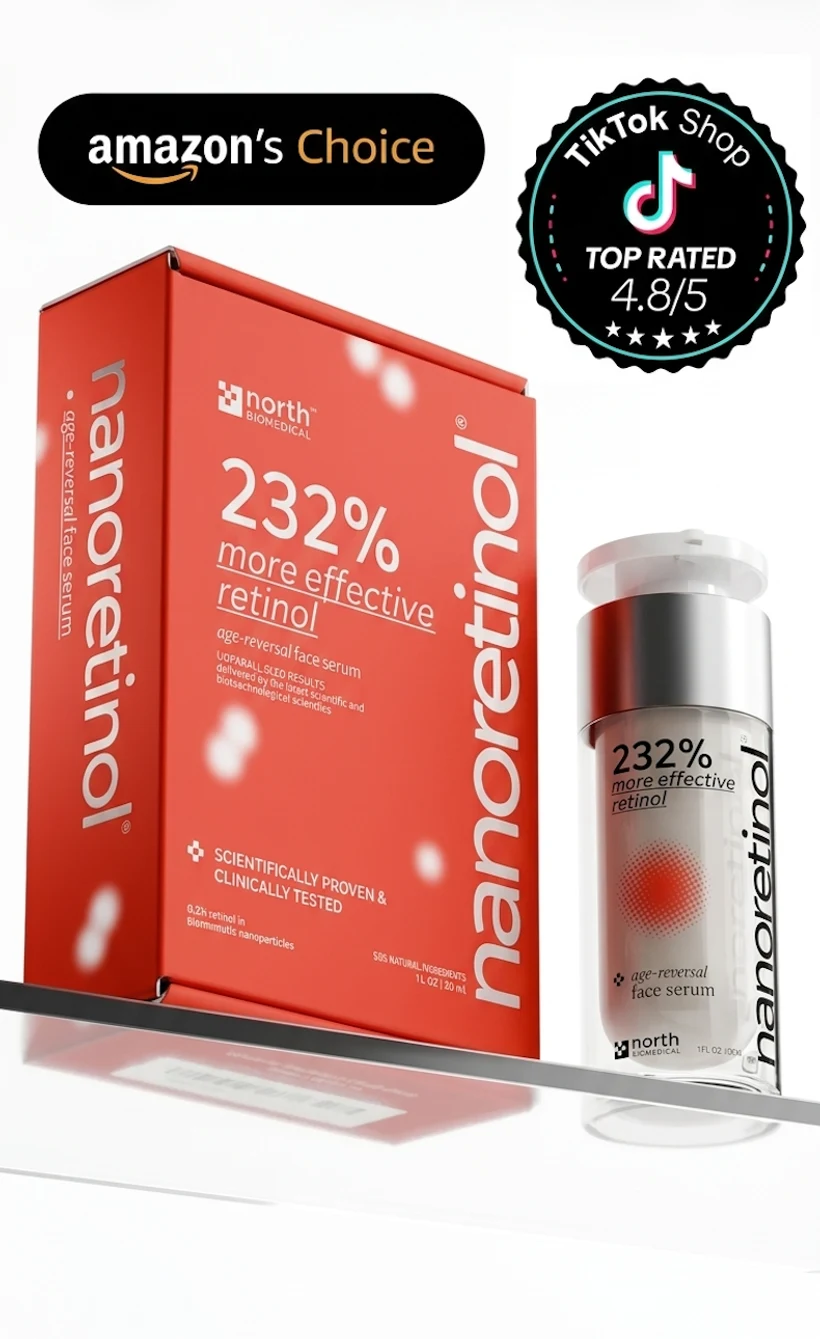
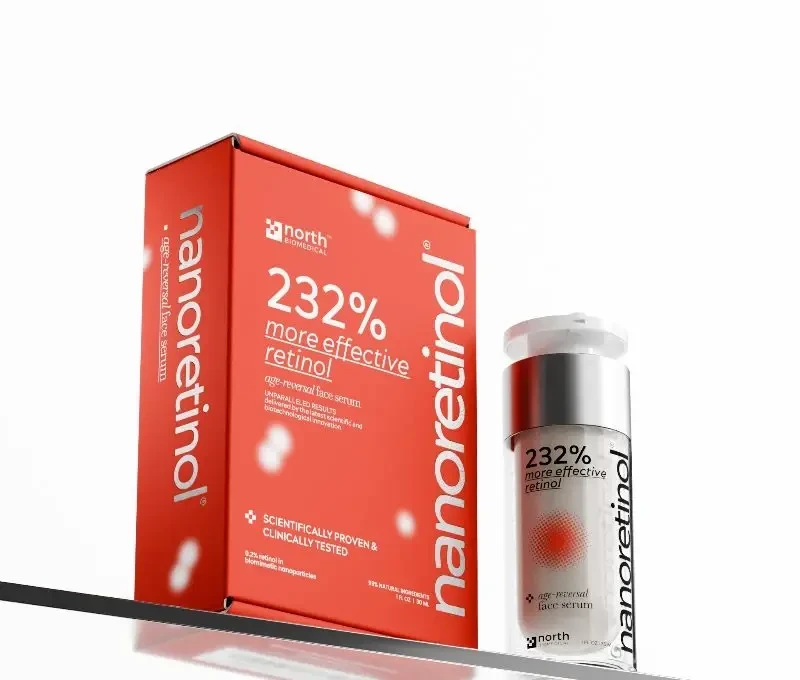
At night, retinol does the slower structural work. In a trial on aged skin, retinol increased collagen production and improved fine wrinkles over 24 weeks [8]. Nanoretinol carries 0.2% retinol in biomimetic lipid nanoparticles, in a light, water-based gel that already contains a stable vitamin C derivative, sodium ascorbyl phosphate. In North Biomedical’s clinical study, it was 232% more effective in collagen recovery than conventional retinol and produced a 61% increase in firmness after 56 days, with milder side effects than conventional retinol [9]. Use your vitamin C mask on a free evening and Nanoretinol on the others.
References
- Al-Niaimi F, Chiang NYZ. “Topical Vitamin C and the Skin: Mechanisms of Action and Clinical Applications.” Journal of Clinical and Aesthetic Dermatology. 2017;10(7):14-17. PubMed: 29104718
- Pullar JM, Carr AC, Vissers MCM. “The Roles of Vitamin C in Skin Health.” Nutrients. 2017;9(8):866. doi:10.3390/nu9080866
- Pinnell SR, Yang H, Omar M, Monteiro-Riviere N, DeBuys HV, Walker LC, et al. “Topical L-Ascorbic Acid: Percutaneous Absorption Studies.” Dermatologic Surgery. 2001;27(2):137-142. doi:10.1046/j.1524-4725.2001.00264.x
- Stamford NP. “Stability, Transdermal Penetration, and Cutaneous Effects of Ascorbic Acid and Its Derivatives.” Journal of Cosmetic Dermatology. 2012;11(4):310-317. doi:10.1111/jocd.12006
- Wang Y, Cao Y, Huang X, Zhang M, Hu J, Li L, Xiong L. “Short-Term Skin Reactions and Changes in Stratum Corneum Following Different Ways of Facial Sheet Mask Usage.” Journal of Tissue Viability. 2024;33(4):831-839. doi:10.1016/j.jtv.2024.06.012
- Espinal-Perez LE, Moncada B, Castanedo-Cazares JP. “A Double-Blind Randomized Trial of 5% Ascorbic Acid vs. 4% Hydroquinone in Melasma.” International Journal of Dermatology. 2004;43(8):604-607. doi:10.1111/j.1365-4632.2004.02134.x
- Grosu Dumitrescu C, Jîjie AR, Manea HC, Moacă EA, Iftode A, Minda D, et al. “New Insights Concerning Phytophotodermatitis Induced by Phototoxic Plants.” Life. 2024;14(8):1019. doi:10.3390/life14081019
- Kafi R, Kwak HS, Schumacher WE, Cho S, Hanft VN, Hamilton TA, et al. “Improvement of Naturally Aged Skin with Vitamin A (Retinol).” Archives of Dermatology. 2007;143(5):606-612. doi:10.1001/archderm.143.5.606
- North Biomedical LLC. “Nanoretinol vs. Conventional Retinol: Efficacy in Collagen and Elastin Recovery.” Clinical Study Summary, 2024. Study summary