How to Get Rid of Freckles: What Actually Fades Them (and What Doesn't)
A dermatology-backed guide to fading freckles, preventing new ones, and telling them apart from sun spots.
If you have spent any time searching for how to get rid of freckles, you have probably collected a confusing pile of advice: lemon juice, lasers, $4 fade creams, and the vague reassurance that they will “go away in winter.” Some of that is partly true. Most of it misunderstands what a freckle actually is. And the right approach depends entirely on getting that biology right.
So let us start there, because once you understand why freckles appear, the path to fading them becomes obvious — and so does the reason most home remedies quietly fail.
What a Freckle Really Is
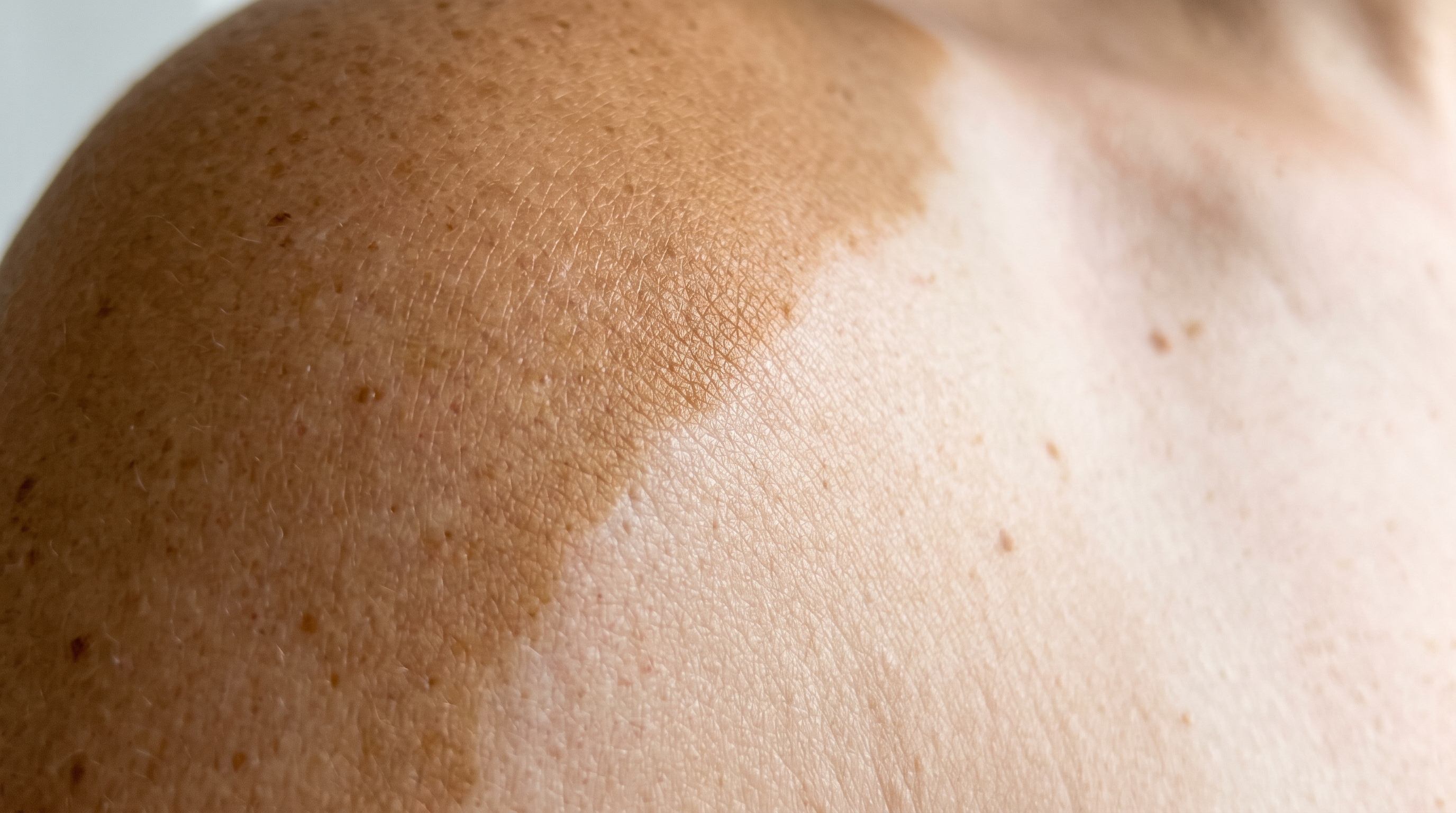
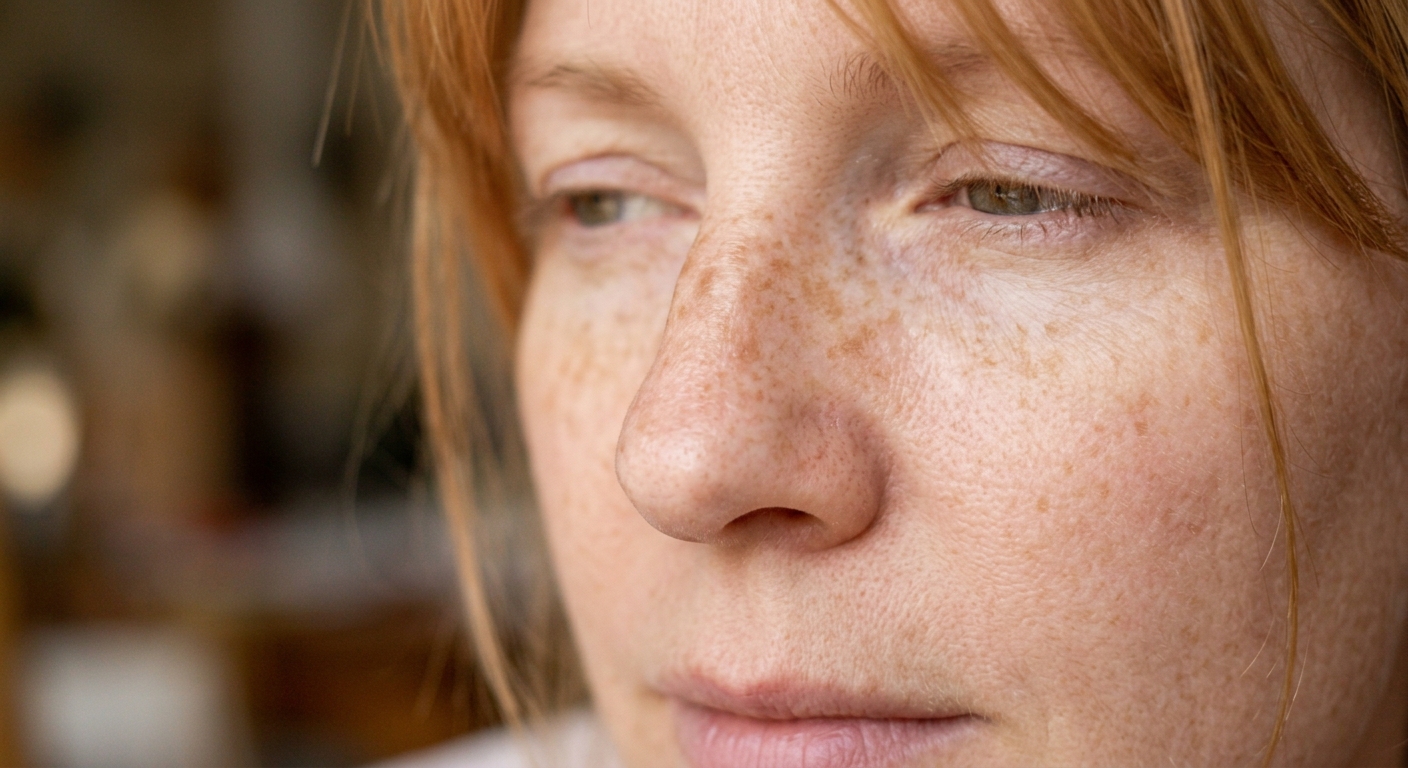
A freckle is not extra pigment sitting on top of your skin. It is a small patch where your melanocytes — the pigment factories in the base of your epidermis — switch into overdrive when sunlight hits them. The true freckle, known medically as an ephelide, is largely written into your genes. Research has identified the melanocortin-1 receptor (MC1R) gene as the single most important freckle gene, and people carrying two variant copies have roughly an eleven-fold higher chance of developing freckles than those without [1].
That genetic switch only flips in the presence of ultraviolet light. A landmark study tracking children found that the freckle phenotype emerges specifically from the interaction between UV exposure and these MC1R variants — sunlight is the trigger, your genes are the gunpowder [2]. It is why freckles bloom across the nose and cheeks every summer and soften through the darker months.
This is the first crucial distinction. Because freckles are a dynamic, light-driven response rather than permanent damage, they are genuinely fadeable — but they are also relentless about coming back the moment you stop protecting your skin.
Freckles Versus Sun Spots: Don’t Treat the Wrong Thing
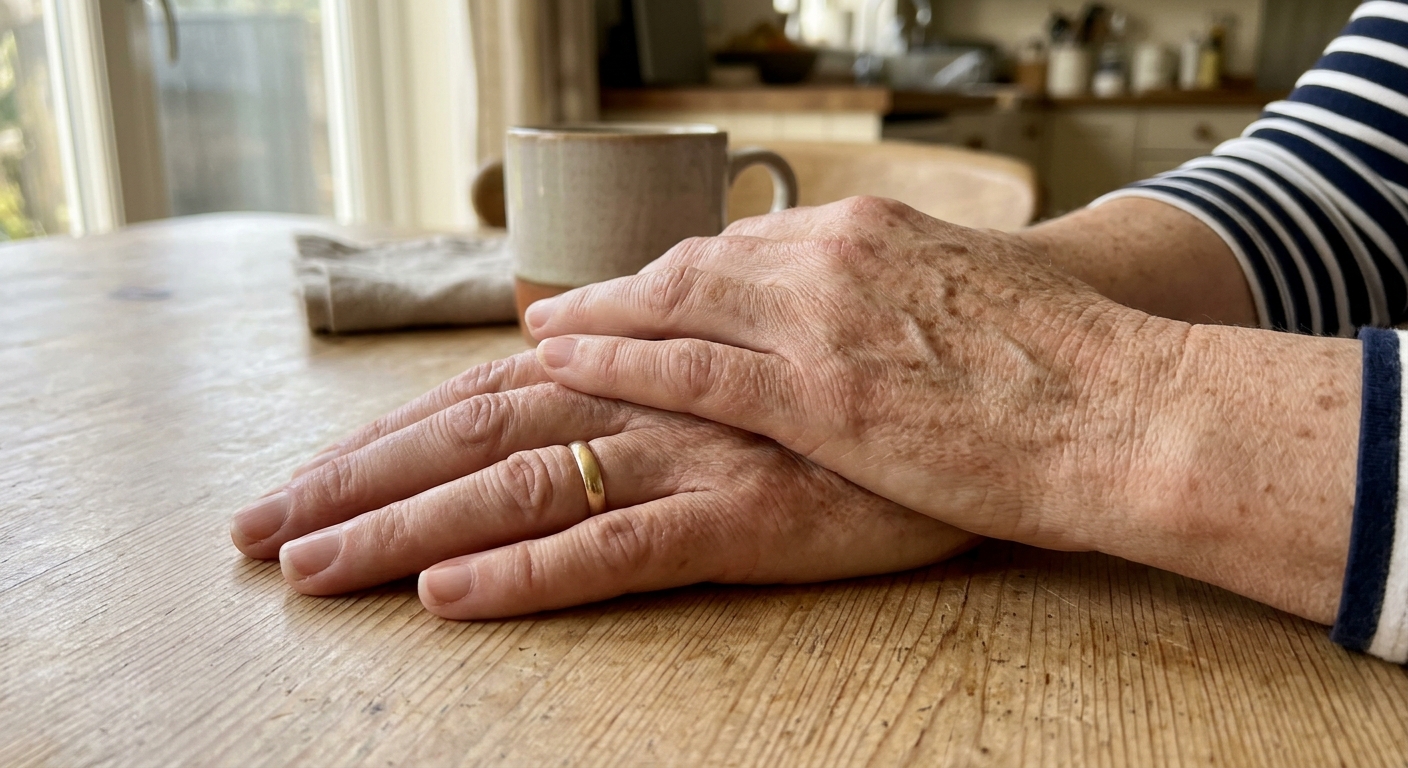
Here is where many people over 40 go wrong. The flat brown marks on your face may not be freckles at all. Solar lentigines — the “sun spots” or “liver spots” that accumulate with age — look similar but behave very differently. They represent a more permanent proliferation of pigment-producing machinery, and they do not fade in winter. If your marks have appeared in your forties or fifties, sit on the backs of your hands, and stay put year-round, you are likely dealing with age spots on the face rather than classic freckles.
If you are also tackling discoloration, our guide to sunscreen for hyperpigmentation covers how to choose one that actually blocks the wavelengths that drive pigment.
The treatments overlap, but the expectations should not. True freckles respond beautifully to sun avoidance alone. Lentigines need active intervention. Knowing which you have saves you months of frustration.
Why Sunscreen Is the Non-Negotiable First Step
Because UV light is the on-switch for freckles, daily broadband sun protection is not optional — it is the entire foundation. No fading ingredient can outrun a face that gets unprotected midday sun. People with the lighter pheomelanin pigment that drives freckling have less natural UV defense to begin with, which is exactly why their melanocytes overreact [1].
A daily SPF 30 or higher, reapplied when you are outdoors, does two things at once: it lets existing freckles fade on their own, and it prevents the next crop from forming. If you are also tackling discoloration, our guide to sunscreen for hyperpigmentation covers how to choose one that actually blocks the wavelengths that drive pigment.
The Ingredients That Actually Fade Freckles
Once sun protection is in place, you can work on the pigment already there. A handful of ingredients have real clinical backing.
Retinoids are the most studied. In a classic randomized, double-blind trial, topical tretinoin significantly lightened sun-induced pigmented spots, with improvements confirmed under the microscope [3]. Retinoids work by accelerating the turnover of pigmented skin cells and helping disperse the clustered melanin, which is why they fade not just freckles but the whole landscape of uneven skin tone. A separate set of multicenter studies confirmed that a retinoid combined with a depigmenting agent outperformed either alone on hyperpigmented lesions [4].
You get the turnover and collagen benefits — Nanoretinol demonstrated 232% greater collagen recovery than ordinary retinol in testing — without the barrier disruption that aggravates pigmentation.
Niacinamide takes a different route. Rather than slowing melanin production, it blocks the transfer of finished pigment from melanocytes to surface skin cells. In a controlled study, 5% niacinamide produced a measurable reduction in hyperpigmentation and an evening of skin tone [5]. It is gentle, which makes it a useful daily partner for more aggressive actives — see niacinamide benefits for how to layer it.
Vitamin C and other tyrosinase inhibitors round out the toolkit by interrupting the enzyme that builds pigment in the first place. These are the slow-and-steady players; consistency matters more than concentration.
The thread connecting the most effective options is cellular turnover and melanin control. And that is precisely where the conversation turns to how you deliver a retinoid in the first place.
The Retinol Problem — and a Smarter Fix
There is a catch with retinoids and pigment-prone skin. Conventional retinol formulations work in part by disrupting the skin barrier to force the active inward, which often produces redness, peeling, and stinging. In freckle-prone and sun-sensitive skin, that inflammation can backfire, sometimes triggering the very darkening you were trying to erase.
This is the limitation Nanoretinol was built to solve. Instead of breaking through the skin barrier, its retinol is encapsulated in biomimetic lipid nanoparticles that the skin recognizes as “self” and admits without damage — the same class of delivery technology used in advanced drug therapies. The result is a fully stabilized 0.2% retinol that has been shown to be significantly gentler on skin cells than conventional retinol, with drastically reduced cytotoxicity. You get the turnover and collagen benefits — Nanoretinol demonstrated 232% greater collagen recovery than ordinary retinol in testing — without the barrier disruption that aggravates pigmentation. For a face full of freckles you want to fade rather than inflame, that distinction is the whole game.
A Realistic Routine
Keep it simple and consistent. In the morning, cleanse, apply an antioxidant such as vitamin C if you use one, and finish with broad-spectrum SPF every single day. At night, cleanse and apply a gentle retinol like Nanoretinol, building up frequency as your skin adjusts and always following with sun protection the next day. Layer in niacinamide whenever you want extra tone-evening support.
Give it patience. Pigment turns over slowly, and meaningful fading typically takes eight to twelve weeks. What you should not expect is a permanent cure — freckles are genetic, and they will return with sun exposure. The realistic goal is lighter, more even skin that you maintain rather than win once.
If your marks turn out to be stubborn lentigines rather than true freckles, the same actives apply, but you may want to read our deeper dive on retinol for dark spots for the more persistent cases.
The Honest Bottom Line on Freckles
Freckles are not a flaw to be ashamed of, and for many people they are a feature worth keeping. But if you want them gone, the science is clear and unglamorous: protect relentlessly, fade patiently with proven actives, and choose a delivery system that fades pigment without inflaming it. The lemon juice can stay in the kitchen.
References
- Bastiaens M, ter Huurne J, Gruis N, Bergman W, Westendorp R, Vermeer BJ, Bouwes Bavinck JN. “The melanocortin-1-receptor gene is the major freckle gene.” Human Molecular Genetics. 2001;10(16):1701-1708. doi:10.1093/hmg/10.16.1701
- Barón AE, Asdigian NL, Gonzalez V, Aalborg J, Terzian T, Stiegmann RA, Torchia EC, Berwick M, Dellavalle RP, Morelli JG, Mokrohisky ST, Crane LA, Box NF. “Interactions between ultraviolet light and MC1R and OCA2 variants are determinants of childhood nevus and freckle phenotypes.” Cancer Epidemiology, Biomarkers & Prevention. 2014;23(12):2829-2839. doi:10.1158/1055-9965.EPI-14-0633
- Rafal ES, Griffiths CE, Ditre CM, Finkel LJ, Hamilton TA, Ellis CN, Voorhees JJ. “Topical tretinoin (retinoic acid) treatment for liver spots associated with photodamage.” New England Journal of Medicine. 1992;326(6):368-374. doi:10.1056/NEJM199202063260603
- Fleischer AB Jr, Schwartzel EH, Colby SI, Altman DJ. “The combination of 2% 4-hydroxyanisole (mequinol) and 0.01% tretinoin is effective in improving the appearance of solar lentigines and related hyperpigmented lesions in two double-blind multicenter clinical studies.” Journal of the American Academy of Dermatology. 2000;42(3):459-467. doi:10.1016/s0190-9622(00)90219-6
- Hakozaki T, Minwalla L, Zhuang J, Chhoa M, Matsubara A, Miyamoto K, Greatens A, Hillebrand GG, Bissett DL, Boissy RE. “The effect of niacinamide on reducing cutaneous pigmentation and suppression of melanosome transfer.” British Journal of Dermatology. 2002;147(1):20-31. doi:10.1046/j.1365-2133.2002.04834.x