Menopause Skin Care: What Actually Works for Hormonal Aging Skin
Estrogen loss changes your skin faster than any decade of birthdays. Here's the science — and the routine that meets menopausal skin where it is.
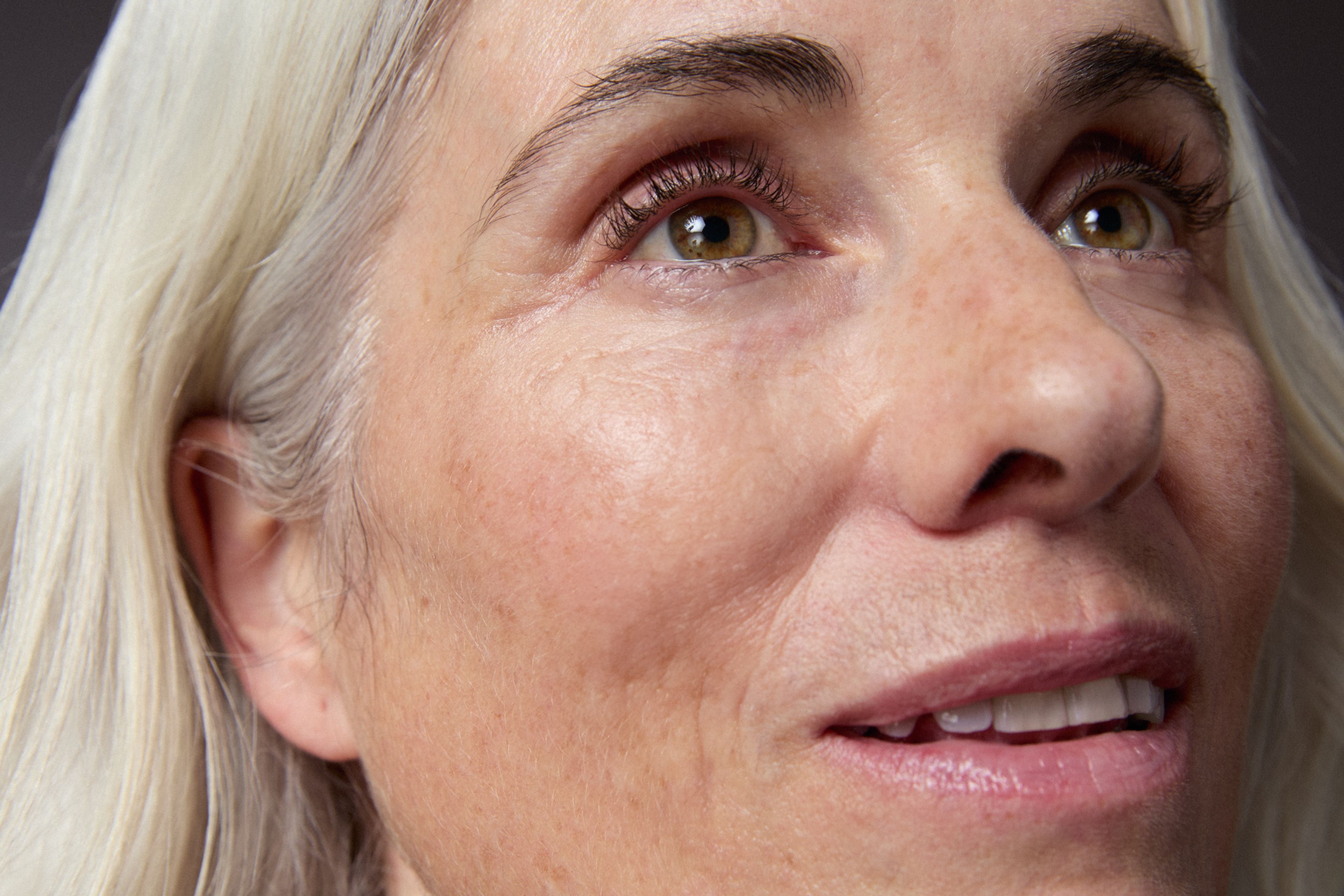
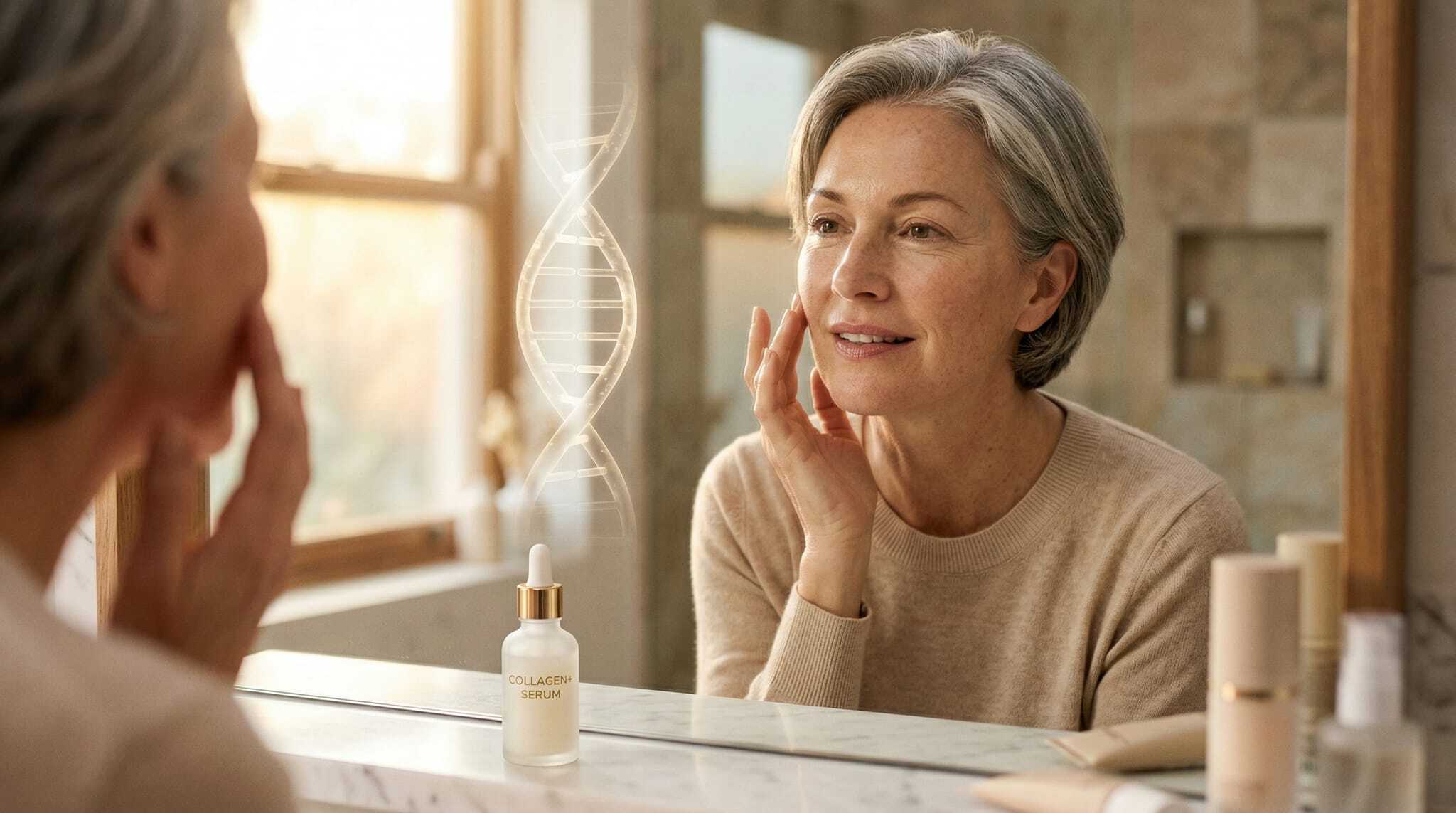
Many women describe the same unsettling experience: for years their skin aged slowly and predictably, and then, sometime around menopause, it seemed to change almost overnight. It gets drier, thinner, less bouncy, more easily irritated — and it feels like it happened far faster than the calendar can explain.
That instinct is correct. Menopausal skin change is not simply “aging faster.” It is a specific, measurable event driven by the loss of estrogen, a hormone your skin depends on more than most people realize. Understanding that distinction is the key to building a routine that actually helps, rather than one that treats menopausal skin like it’s still 35.
The Estrogen–Collagen Cliff
The most striking finding in menopause skin research is how tightly collagen loss tracks hormones rather than age. In the classic work by Brincat and colleagues, skin collagen was shown to decline in relation to years since menopause, at an average of roughly 2% per postmenopausal year — a hormonally driven slope, not a simple function of getting older [1]. The same research group demonstrated that this collagen and skin-thickness loss could be slowed with hormone replacement, further pinning the effect on estrogen rather than time [2].
Later work sharpened the picture. A study of over 300 skin biopsies confirmed that collagen content falls significantly with both advancing age and menopausal status, and that hormone therapy raised skin collagen while untreated skin continued to decline [6]. Reviews of the field summarize the early menopausal transition as a period of unusually rapid loss — by some estimates skin can shed up to about a third of its collagen in the first five years after menopause before the decline settles into a slower grade [1]. Whatever the exact figure, the direction is unmistakable: the scaffold that keeps skin firm comes down fastest right when estrogen falls.
Estrogen does more than protect collagen. Broad reviews of estrogen and skin document its role in maintaining dermal thickness, hydration, wound healing, and elasticity — which is why its withdrawal shows up as thinner, drier, slacker skin across the board [4].
Understanding that distinction is the key to building a routine that actually helps, rather than one that treats menopausal skin like it’s still 35.
Why Menopausal Skin Feels So Dry
The dryness has its own biology. A 2022 study found that menopause alters the skin’s ceramide profile — the lipids that seal the outer barrier — producing lower ceramide levels with shorter chains, which correlates with increased water loss through the skin [5]. In plain terms, the barrier that holds moisture in gets leakier. Notably, that same study found the changes were prevented by hormone therapy, again tracing the effect back to estrogen.
This is why menopausal skin is not just older skin; it is thinner, drier, and more easily irritated, which changes what your routine should ask of it. A regimen that worked in your thirties — actives layered aggressively over a robust barrier — can now leave your skin stinging. If dryness is your dominant symptom, our guide to menopause dry skin goes deeper, and skin barrier repair covers rebuilding that leaky seal.
Building a Routine That Meets Your Skin Where It Is
The good news is that the same estrogen-loss biology points clearly at what helps. A menopausal routine has four jobs.
Rebuild collagen with a retinoid. Since the core problem is collagen loss, the core solution is the one ingredient class proven to rebuild it. Topical tretinoin has been shown in controlled trials to significantly improve photoaged skin clinically and histologically [3], and gentler over-the-counter retinol significantly reduced fine wrinkles and increased procollagen in naturally aged skin [7]. Retinoids don’t cover up menopausal collagen loss — they directly oppose it.
A regimen that worked in your thirties — actives layered aggressively over a robust barrier — can now leave your skin stinging.
Repair and defend the barrier. Because the ceramide barrier is compromised [5], a richer moisturizer with ceramides, and consistent daily sunscreen, are no longer optional niceties — they are what makes everything else tolerable. Our overview of mature skin care covers how to layer this gently, and estrogen and skin explains why hydration behaves differently after menopause. For choosing the cream itself, see our guide to the best moisturizer for dry menopausal skin.
Support with collagen-friendly habits. Peptides, antioxidants, and the lifestyle factors in our how to boost collagen production guide give the retinoid a stronger foundation to build on.
Talk to a clinician about the bigger picture. The research consistently shows systemic or topical estrogen improves skin collagen and thickness [2][6], but hormone decisions belong in a conversation with your doctor about your whole health — not your skincare shelf. Skincare’s job is to do as much as possible from the outside. For the full arc of changes to expect, see perimenopause skin changes and menopause face.
Why Delivery Matters More After Menopause
Here is the catch. The retinoid your menopausal skin most needs is also the one thinner, drier, more reactive skin tolerates least. Conventional retinol formulations push the active across the skin barrier using chemical carriers that disrupt that barrier — a mechanism that is already problematic on healthy skin and genuinely counterproductive on menopausal skin, where the barrier is compromised to begin with. Too many women conclude “I can’t use retinol,” when the truth is they can’t use that delivery of retinol.
Nanoretinol was engineered around exactly this problem. It encapsulates retinol in biomimetic lipid nanoparticles that the skin recognizes and admits without the barrier having to be broken down. The formulation is water-based, 99% natural, and — critically for menopausal skin — significantly gentler on skin cells than conventional retinol, with drastically reduced cytotoxicity. It delivers the collagen-building signal your skin is asking for while respecting the fragile barrier estrogen loss has already thinned. For skin that has become reactive, gentle delivery isn’t a luxury; it’s the only way the active gets used at all.
The Takeaway
Menopause doesn’t age your skin faster in some vague, inevitable way. It removes a specific hormone your skin was quietly relying on, and the result — collagen loss, a leakier barrier, dryness, and reactivity — is measurable and, in large part, addressable. Meet it with a well-delivered retinoid to rebuild collagen, a serious commitment to barrier repair and sun protection, and a clinician’s input on the hormonal side. The skin that changed almost overnight didn’t do so because you ran out of time. It did so because it ran low on estrogen — and that is something you can build a smart routine around. That routine, step by step, is the skin care routine for your 50s.
If you are past this transition rather than in it, the shortlist narrows further in our guide to the best skin care for women over 60.
References
- Brincat M, Moniz CF, Kabalan S, Versi E, O’Dowd T, Magos AL, Montgomery J, Studd JW. “Decline in skin collagen content and metacarpal index after the menopause and its prevention with sex hormone replacement.” British Journal of Obstetrics and Gynaecology. 1987;94(2):126-129. doi:10.1111/j.1471-0528.1987.tb02338.x
- Brincat M, Moniz CJ, Studd JW, Darby A, Magos A, Emburey G, Versi E. “Long-term effects of the menopause and sex hormones on skin thickness.” British Journal of Obstetrics and Gynaecology. 1985;92(3):256-259. PubMed: 3978054
- Weiss JS, Ellis CN, Headington JT, Tincoff T, Hamilton TA, Voorhees JJ. “Topical tretinoin improves photoaged skin. A double-blind vehicle-controlled study.” JAMA. 1988;259(4):527-532. PubMed: 3336176
- Stevenson S, Thornton J. “Effect of estrogens on skin aging and the potential role of SERMs.” Clinical Interventions in Aging. 2007;2(3):283-297. PubMed: 18044179
- Kendall AC, Pilkington SM, Wray JR, Newton VL, Griffiths CEM, Bell M, Watson REB, Nicolaou A. “Menopause induces changes to the stratum corneum ceramide profile, which are prevented by hormone replacement therapy.” Scientific Reports. 2022;12(1):21715. doi:10.1038/s41598-022-26095-0
- Castelo-Branco C, Duran M, González-Merlo J. “Skin collagen changes related to age and hormone replacement therapy.” Maturitas. 1992;15(2):113-119. PubMed: 1345134
- Kafi R, Kwak HSR, Schumacher WE, et al. “Improvement of naturally aged skin with vitamin A (retinol).” Archives of Dermatology. 2007;143(5):606-612. doi:10.1001/archderm.143.5.606