
Moringa Oil for Skin: What This Rich, Stable Oil Can and Cannot Do
Moringa seed oil is rich, slow to spoil and comfortable on dry skin. What its fatty acids mean for your face, why the anti-aging studies used the leaves, and how to use it
Moringa oleifera is often sold as the miracle tree. Its leaves turn up in green powders and teas, and the oil pressed from its seeds has become a staple of natural skincare, marketed as a nourishing, anti-aging face oil. Some of that reputation is earned. Some of it is borrowed from studies on a different part of the plant.
This guide separates the two, explains what moringa oil does on skin, and shows where it fits in a routine for skin that is starting to age.
Seed oil vs leaf extract
Two very different ingredients share the moringa name.
Moringa seed oil is pressed from the kernels inside the tree’s long pods, which can be up to 40% oil by weight [1]. It is pale yellow with a mild nutty smell, and it is what you get in a bottle labelled moringa oil.
Moringa leaf extract is made from the leaves, usually with water or alcohol, and carries the plant’s antioxidant polyphenols. It is an active ingredient that goes into the watery part of creams and serums, not an oil.
Most of the anti-aging headlines about moringa come from the leaves. The oil’s strengths lie elsewhere.
What is in moringa oil
Moringa seed oil is a high-oleic oil. In a detailed review of its composition, oleic acid made up about 74% of its fatty acids, saturated fats about 21%, and linoleic acid less than 1% [1]. Among the saturated fats is a good share of behenic acid, which is why the oil has long been traded as ben or behen oil. It also carries unusually high levels of tocopherols, the natural forms of vitamin E [1].
Your skin gets an oil that stays fresh far longer than rosehip, because moringa holds less than 2% of the fragile fats that turn other oils rancid.
Your skin gets an oil that stays fresh far longer than rosehip, because moringa holds less than 2% of the fragile fats that turn other oils rancid.
That profile has two practical results.
It is very slow to spoil. Oils rich in polyunsaturated fats oxidise quickly once opened and can turn rancid on the shelf. Moringa oil is extremely resistant to oxidation and more heat-stable than soybean, sunflower, canola or cottonseed oil [2]. For a face oil, that means a longer usable life and less risk of spreading oxidised, irritating fats on your skin.
It feels rich and cushioning. Oleic-rich oils spread easily, soften rough patches and leave a supple, satin finish. That makes moringa a comfortable choice for dry and mature skin that wants richness without the heavy, waxy feel of a balm.
The catch with oleic acid
Oleic acid is the reason moringa oil feels so rich, and also the reason it is not for everyone. In high amounts it loosens the orderly lipid layers of the outer skin. In a four-week study on adult forearms, olive oil, another oleic-rich oil, weakened the skin barrier and caused mild redness, while sunflower seed oil, which is rich in linoleic acid, left the barrier intact and improved hydration [3]. A review of plant oils on skin reached a similar conclusion: oils high in linoleic acid tend to support the barrier, while oils high in oleic acid can disrupt it [4].
Moringa oil itself has not been tested this way, so it would be wrong to say it behaves exactly like olive oil. Its fatty acid profile points in the same direction, though, which suggests three sensible rules:
- Small amounts: two or three drops for the whole face, not a slick.
- Healthy barrier only: skip it on skin that is raw, flaring or already reactive.
- Patch test if breakout-prone: oily and acne-prone skin may prefer a lighter, linoleic-rich oil.
Your skin can stay softer for hours after 2 or 3 drops of moringa oil, but no trial has shown that the oil firms skin or fills lines in 12 weeks or any other span.
What the anti-aging study actually tested
The study most often quoted for moringa’s anti-aging effect used a cream containing 3% concentrated moringa leaf extract, trapped in the watery phase of the cream, against the same cream without it. Volunteers applied it to the face for three months, and skin imaging showed improvements in roughness, scaliness, smoothness and wrinkle readings with the active cream [5].
That is a promising result for the leaves, but it says nothing about the seed oil. The extract was a water-based concentrate of leaf antioxidants, and a bottle of pressed seed oil contains none of it. A face cream that lists Moringa Oleifera Leaf Extract and a bottle of Moringa Oleifera Seed Oil are, in practice, two different ingredients.
Your skin can stay softer for hours after 2 or 3 drops of moringa oil, but no trial has shown that the oil firms skin or fills lines in 12 weeks or any other span.
Who moringa oil suits
Moringa oil is a good fit for dry or mature skin that likes a rich finish, for anyone who has had a face oil turn rancid before, and for body skin, cuticles and elbows. It is a weaker fit for oily or acne-prone faces and for skin with a damaged barrier.
For dry skin in particular, our guide to facial oil for dry skin compares the common oils by their fatty acids. Argan oil is the closest alternative if you want something rich but more balanced between oleic and linoleic acid. Rosehip sits at the other end of the scale: light and linoleic-rich, but quick to spoil, as our guide to the benefits of rosehip oil explains.
How to use moringa oil
- Cleanse and leave the skin slightly damp.
- Apply your water-based serum and moisturiser first.
- Warm two or three drops between your fingertips and press them over the face as the last step at night.
- In the morning, skip it or use a single drop so sunscreen still spreads evenly.
Choose cold-pressed oil in a dark glass bottle, and check that the label lists Moringa Oleifera Seed Oil as the only ingredient, with no added fragrance or essential oils.
Moringa oil, aging skin and retinol
An oil can make aging skin look smoother and feel softer on the day, but it cannot rebuild the collagen and elastin that keep skin firm. Readers weighing oils for that goal will find the richer and more active options compared in our guide to the best face oil for aging skin. The ingredient with decades of evidence for the deeper job is retinol: in a 24-week trial in older adults, 0.4% retinol improved fine wrinkling and increased collagen production compared with the plain base [6].
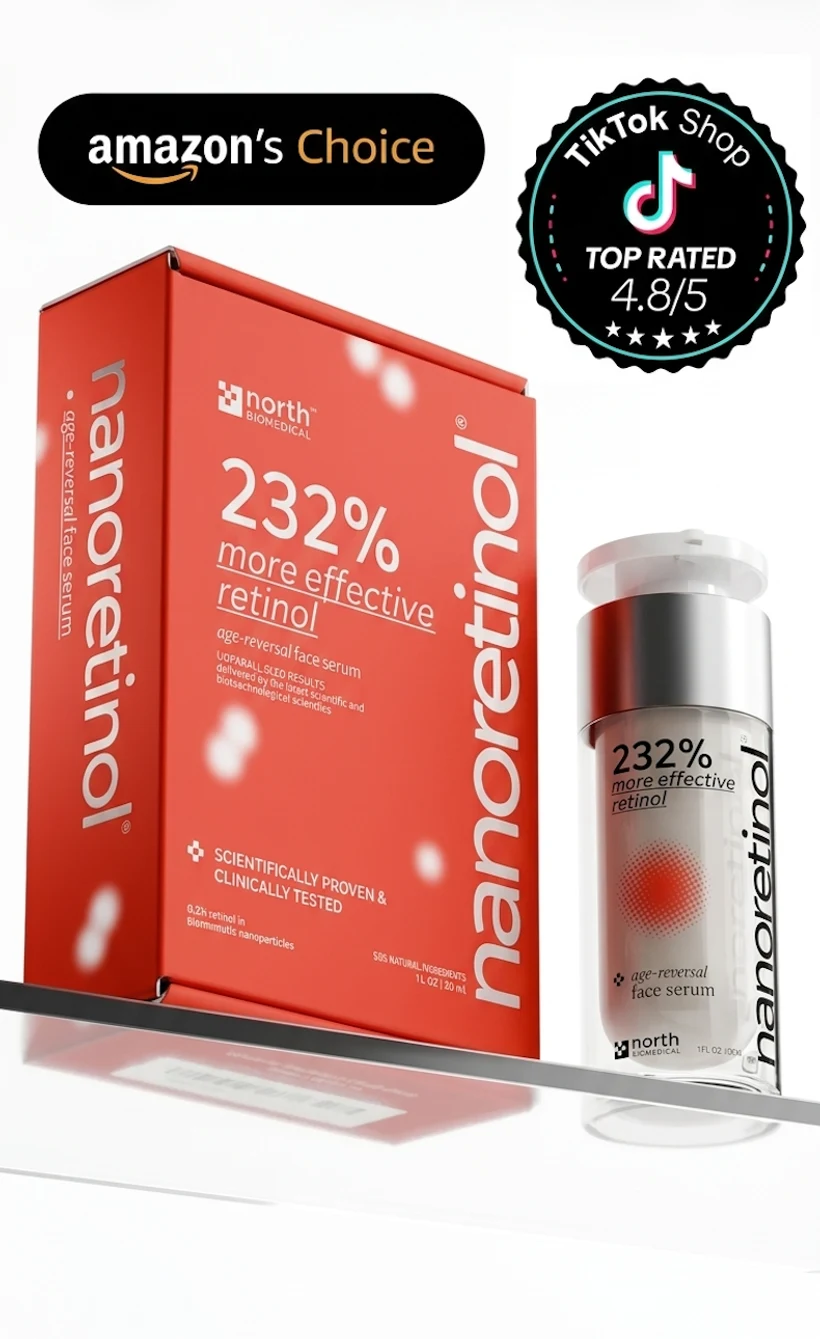
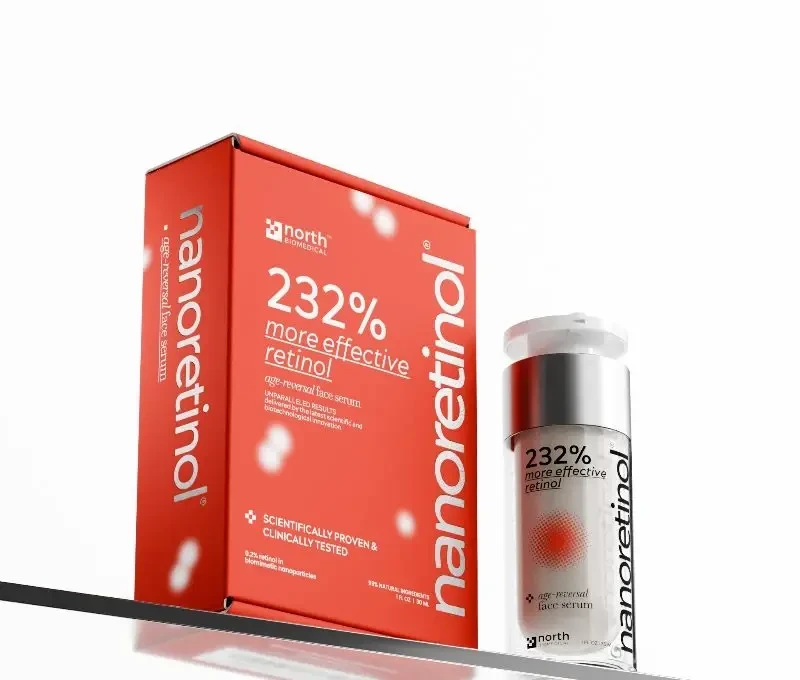
Retinol’s drawback is that conventional formulas can leave skin dry, red and peeling, and they use petroleum-derived chemicals that loosen the skin barrier to push retinol through. Nanoretinol takes a different route. It delivers 0.2% retinol inside biomimetic lipid nanoparticles that the skin recognises as its own, in a light, water-based gel. In North Biomedical’s clinical study it was 232% more effective in collagen recovery and 73% more effective in elastin recovery than conventional retinol, and users saw a 61% increase in firmness and a 56% increase in elasticity after 56 days, with milder side effects than conventional retinol [7].
The two fit together easily. In the evening, apply Nanoretinol to clean, dry skin, follow with your moisturiser, then press two drops of moringa oil over the top to seal everything in. The retinol works on the layers beneath while the oil keeps the surface soft and comfortable.
References
- Leone A, Spada A, Battezzati A, Schiraldi A, Aristil J, Bertoli S. “Moringa oleifera Seeds and Oil: Characteristics and Uses for Human Health.” International Journal of Molecular Sciences. 2016;17(12):2141. doi:10.3390/ijms17122141
- Nadeem M, Imran M. “Promising Features of Moringa oleifera Oil: Recent Updates and Perspectives.” Lipids in Health and Disease. 2016;15(1):212. doi:10.1186/s12944-016-0379-0
- Danby SG, AlEnezi T, Sultan A, Lavender T, Chittock J, Brown K, Cork MJ. “Effect of Olive and Sunflower Seed Oil on the Adult Skin Barrier: Implications for Neonatal Skin Care.” Pediatric Dermatology. 2013;30(1):42-50. doi:10.1111/j.1525-1470.2012.01865.x
- Lin TK, Zhong L, Santiago JL. “Anti-Inflammatory and Skin Barrier Repair Effects of Topical Application of Some Plant Oils.” International Journal of Molecular Sciences. 2017;19(1):70. doi:10.3390/ijms19010070
- Ali A, Akhtar N, Chowdhary F. “Enhancement of Human Skin Facial Revitalization by Moringa Leaf Extract Cream.” Postepy Dermatologii i Alergologii. 2014;31(2):71-76. doi:10.5114/pdia.2014.40945
- Kafi R, Kwak HS, Schumacher WE, Cho S, Hanft VN, Hamilton TA, et al. “Improvement of Naturally Aged Skin with Vitamin A (Retinol).” Archives of Dermatology. 2007;143(5):606-612. doi:10.1001/archderm.143.5.606
- North Biomedical LLC. “Nanoretinol vs. Conventional Retinol: Efficacy in Collagen and Elastin Recovery.” Clinical Study Summary, 2024. Study summary