Olive Oil for Skin: What the Science Says It Can (and Can't) Do
A kitchen-cabinet classic with real antioxidants and a real barrier problem—here is where olive oil helps aging skin and where it quietly backfires
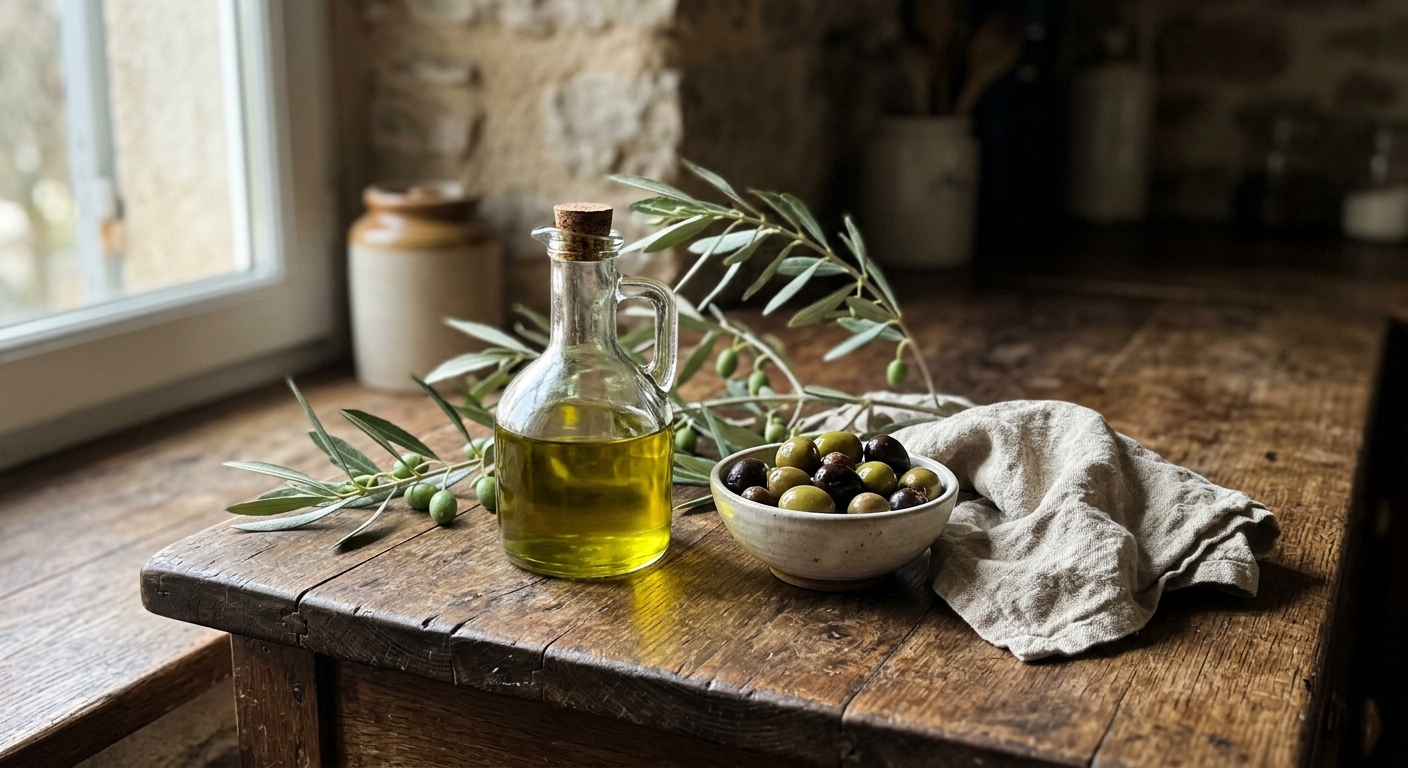
Olive oil has been rubbed into skin for at least three thousand years, from the athletes of ancient Greece to Mediterranean grandmothers who swear by a drop after the bath. That heritage gives it an unusual credibility: if people have used it for millennia, surely it must be good for skin. The truth is more interesting, and more divided. Olive oil is genuinely rich in protective antioxidants, and it is also one of the few plant oils that laboratory studies have caught actively weakening the skin barrier.
Both of those things are true at once, and which one matters more depends entirely on your skin. Understanding the split is the difference between a soothing ritual and a slow, invisible irritation.
What Is Actually in Olive Oil
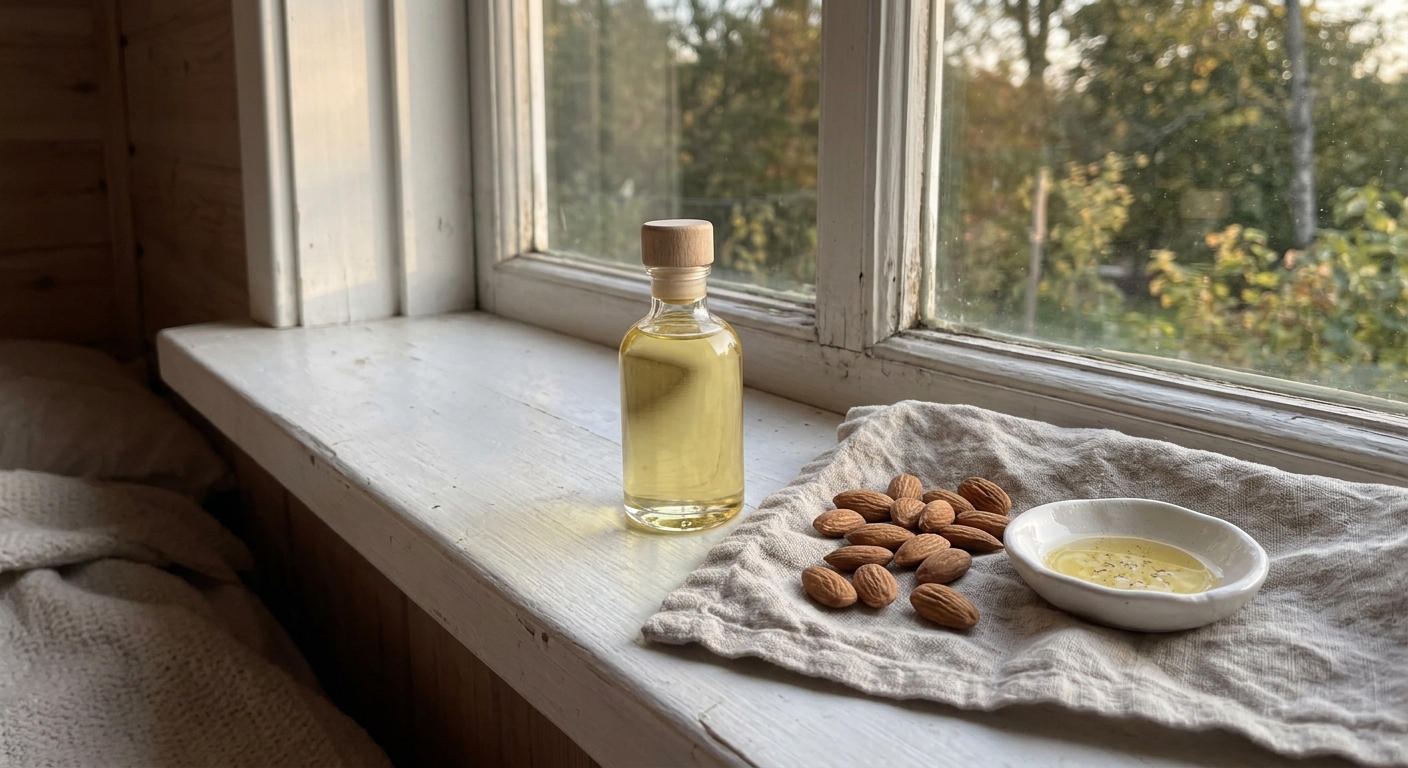
Olive oil is roughly 70% oleic acid, a monounsaturated omega-9 fatty acid, with only a small fraction of the lighter linoleic acid. Alongside those fats it carries a genuinely impressive cast of bioactive compounds: polyphenols such as hydroxytyrosol and oleocanthal, the hydrocarbon squalene, and a healthy dose of vitamin E [3]. Extra virgin olive oil, which is cold-pressed and unrefined, keeps the most of these; the pale, refined supermarket oils lose much of the polyphenol content on the way to the bottle.
That fatty-acid profile is the key to the whole story. Oils dominated by oleic acid feel richer and more occlusive than linoleic oils, and they interact with the skin’s own lipids very differently. It is a small detail on a nutrition label that turns out to decide how the oil behaves on your face.
The Antioxidant Case Is Real
The strongest claims for olive oil are the antioxidant ones, and they hold up. Hydroxytyrosol, the standout olive polyphenol, is a potent free-radical scavenger. In laboratory work on skin-derived cells, it prevented the protein damage that long-wave ultraviolet light inflicts, shielding the cellular machinery from oxidative stress [5]. Squalene and vitamin E add to that defensive layer, mopping up the reactive molecules that sunlight and pollution generate at the surface.
Applied topically, this means olive oil can supply a legitimate dose of antioxidants and a soft, occlusive film that slows water loss on very dry skin. As an emollient for cracked heels, elbows, or weathered hands, it earns its long reputation. The nutritional literature on olive oil as a whole-body protector is deep and consistent [3].
Both of those things are true at once, and which one matters more depends entirely on your skin.
The Barrier Problem Nobody Mentions
Here is the part the folk wisdom leaves out. When researchers actually measured what topical olive oil does to adult skin, the results were unflattering. In a controlled study, twice-daily olive oil applied to the forearm for four weeks significantly damaged the skin barrier and caused mild redness, while sunflower oil on the opposite arm did not [1]. The culprit is the very thing that makes olive oil feel rich: oleic acid.
Oleic acid is a known penetration enhancer, which is a polite way of saying it pries apart the tightly packed lipids of the stratum corneum. Detailed biophysical work shows it fluidizes and disorganizes those barrier lipids, loosening the mortar that holds the skin’s outer wall together [6]. Comparative studies of topical oils on delicate skin reached the same conclusion: oils high in oleic acid tend to slow barrier recovery, whereas linoleic-rich oils support it [4]. A broad review of plant oils in dermatology places olive oil firmly on the cautionary side of that divide [2].
For someone with an already compromised barrier—eczema-prone, sensitized, or simply mature and thinning skin—this is not a trivial footnote. It can mean more transepidermal water loss, not less, over time.
Who Should Use It, and Who Should Not
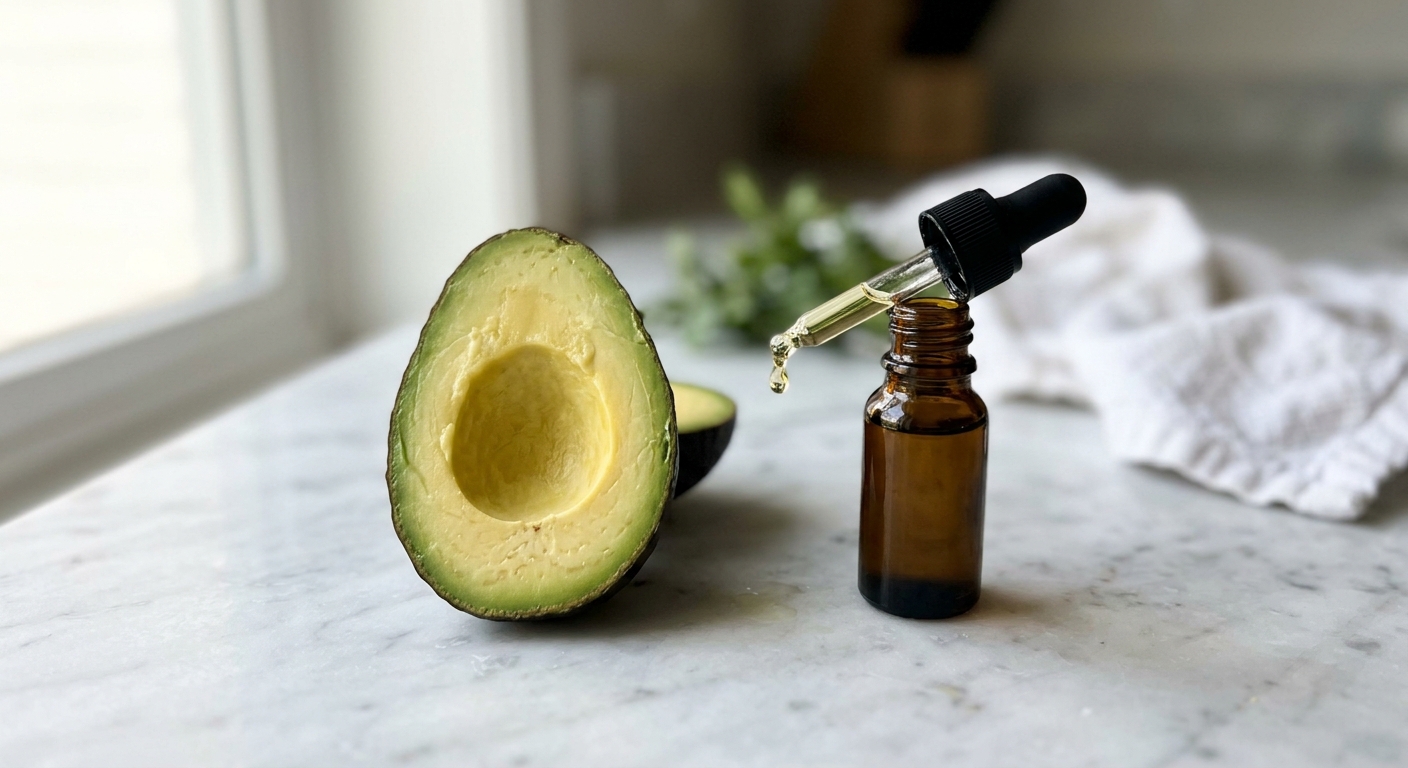
Put the two halves together and a sensible rule emerges. If your skin is robust, very dry, and you are using olive oil on the body as an occlusive treat, the antioxidants are a bonus and the barrier concern is minor. If your skin is delicate, breakout-prone, or showing the thinning and sensitivity that come with age, olive oil on the face is a gamble that often does not pay off. If you do use it, choose extra virgin for the polyphenols, patch test first, and stop at the first sign of stinging or redness. For most faces, a lighter, linoleic-rich facial oil is the smarter default, and olive-derived squalane—the stable, non-greasy fraction refined out of olives—delivers the slip without the oleic-acid downside. The same caution applies to avocado oil, another oleic-dominant kitchen oil that has migrated onto bathroom shelves.
What Olive Oil Simply Cannot Do
Even at its antioxidant best, olive oil runs into a hard ceiling. Visible aging—the deep creases, the loss of firmness, the crepey slackness—begins in the dermis, the living layer where collagen-producing fibroblasts sit. Rebuilding that scaffolding requires an ingredient that can reach those cells and switch synthesis back on. An oil, by design, works at and just above the surface. It can condition and it can protect, but it cannot reach the dermis and rebuild what the years have dismantled, and no amount of drizzling will change that job description. Treating a kitchen oil as an anti-ager is how people spend years moisturizing a problem that needs remodeling.
If your skin is robust, very dry, and you are using olive oil on the body as an occlusive treat, the antioxidants are a bonus and the barrier concern is minor.
What Actually Rebuilds Aging Skin
The molecule with the deepest evidence for regenerating the dermal matrix is retinol. Unlike an oil, retinol signals fibroblasts to lay down fresh collagen and helps switch off the enzymes that dismantle it. Its historic weakness has always been delivery: conventional retinol is unstable, oxidizes on contact with air, and irritates the barrier on its way in—the exact opposite of what sensitized skin needs.
That is the problem Nanoretinol was engineered to solve. It wraps retinol inside biomimetic lipid nanoparticles that slip through the skin’s outer barrier intact—recognized as “self” rather than forced through—and release their payload where fibroblasts can act on it. Because the delivery is so much more efficient, a gentle 0.2% concentration outperforms harsher conventional formulas: North Biomedical’s clinical testing showed a 232% improvement in collagen recovery versus regular retinol, with markedly less irritation. That makes it the structural counterpart to a surface antioxidant—and a far better fit for anyone whose barrier is already fragile than an oil that may weaken it further.
The Honest Bottom Line on Olive Oil
Olive oil is a wonderful food and a decent body emollient with real antioxidant credentials. On the face, and especially on aging or reactive skin, its oleic-acid content makes it a riskier choice than its reputation suggests. Use it where its strengths shine, respect the barrier data, and do not ask a salad-bowl staple to do the work of a targeted active. Your skin will tell you quickly which side of olive oil’s split personality it has met.
References
-
Danby SG, AlEnezi T, Sultan A, Lavender T, Chittock J, Brown K, Cork MJ. “Effect of Olive and Sunflower Seed Oil on the Adult Skin Barrier: Implications for Neonatal Skin Care.” Pediatric Dermatology. 2013;30(1):42-50. doi:10.1111/j.1525-1470.2012.01865.x
-
Lin TK, Zhong L, Santiago JL. “Anti-Inflammatory and Skin Barrier Repair Effects of Topical Application of Some Plant Oils.” International Journal of Molecular Sciences. 2018;19(1):70. doi:10.3390/ijms19010070
-
Viola P, Viola M. “Virgin Olive Oil as a Fundamental Nutritional Component and Skin Protector.” Clinics in Dermatology. 2009;27(2):159-165. doi:10.1016/j.clindermatol.2008.01.008
-
Darmstadt GL, Mao-Qiang M, Chi E, Saha SK, Ziboh VA, Black RE, Santosham M, Elias PM. “Impact of Topical Oils on the Skin Barrier: Possible Implications for Neonatal Health in Developing Countries.” Acta Paediatrica. 2002;91(5):546-554. doi:10.1080/080352502753711678
-
D’Angelo S, Ingrosso D, Migliardi V, Sorrentino A, Donnarumma G, Baroni A, Masella L, Tufano MA, Zappia M, Galletti P. “Hydroxytyrosol, a Natural Antioxidant from Olive Oil, Prevents Protein Damage Induced by Long-Wave Ultraviolet Radiation in Melanoma Cells.” Free Radical Biology and Medicine. 2005;38(7):908-919. doi:10.1016/j.freeradbiomed.2004.12.015
-
Kováčik A, Kopečná M, Hrdinová I, Opálka L, Boncheva Bettex M, Vávrová K. “Time-Dependent Differences in the Effects of Oleic Acid and Oleyl Alcohol on the Human Skin Barrier.” Molecular Pharmaceutics. 2023;20(12):6237-6245. doi:10.1021/acs.molpharmaceut.3c00648