Pimple Patches: Do They Work, Which Type to Buy and When to Skip Them
Hydrocolloid patches can flatten a surfaced spot and stop you picking at it. Here is what the evidence shows, how the types differ and where patches fall short
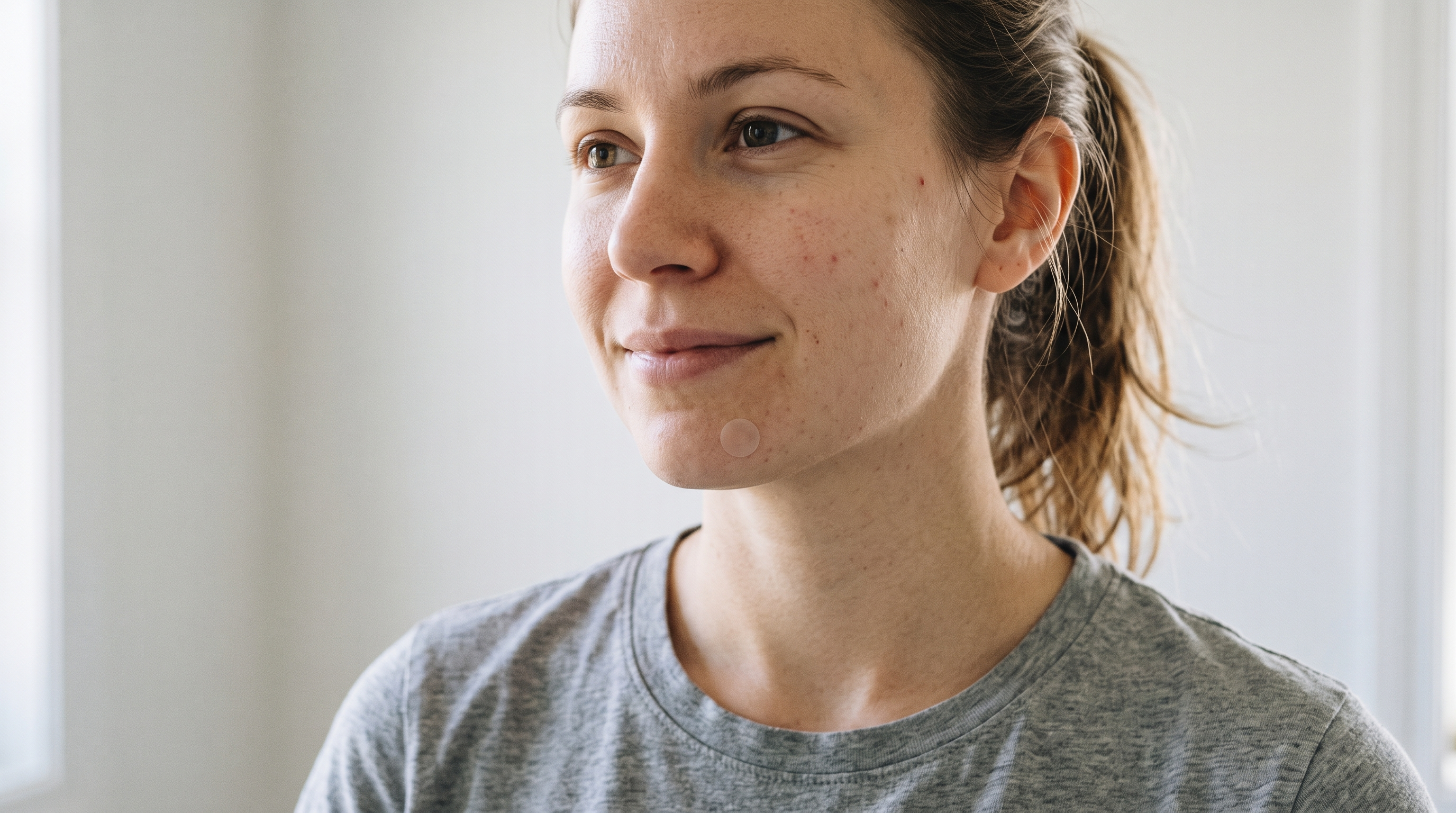
Pimple patches went from the wound-care shelf to the bathroom cabinet in about a decade. The small clear stickers are made of hydrocolloid, the same gel-forming material that has long been used to dress blisters and shallow wounds, and they promise to shrink a spot overnight without harsh chemicals.
They deliver part of that promise. Whether a patch is worth buying depends on the kind of spot you have, the kind of patch you choose and what you expect it to do. This guide explains how patches work, what the research found, which spots they help, how the different types compare, and why a patch is a rescue tool rather than an acne treatment.
How a hydrocolloid patch works
A hydrocolloid patch is a thin layer of gel-forming particles, usually cellulose-based, held in an adhesive under a waterproof film. When it sits on a moist surface, the particles absorb fluid and swell into a soft gel. On a whitehead that has come to a head, or a spot that has opened, the patch soaks up fluid and turns white and cloudy as it fills.
The idea comes from wound care. In 1962, the researcher George Winter showed that shallow wounds kept moist under a film healed faster than wounds left to dry out and scab in the open air [1]. That finding launched the modern moist-dressing industry, and hydrocolloids are one of its products. A patch over an opened spot keeps it in that moist, protected healing environment.
The patch is also a physical shield. It keeps fingers from touching, squeezing and picking, keeps makeup and grime off the spot, and blocks some of the sunlight that darkens a healing mark.
What the research shows
The evidence is small but encouraging. In a randomized, double-blind pilot study from Taiwan, 20 people with mild to moderate acne wore either a hydrocolloid acne dressing or an ordinary skin tape, changed every two days for one week [2]. From day 3 onward, the hydrocolloid group improved more in overall severity and inflammation, with greater reductions in redness, oiliness and dark marks. The dressing let through only 7.4% of UVB light, compared with 38% for the tape, and neither group had significant side effects.
Your skin can calm a surfaced spot faster under a patch than in open air, often within 3 days, but untouched pores get no benefit.
Your skin can calm a surfaced spot faster under a patch than in open air, often within 3 days, but untouched pores get no benefit.
That is one small trial lasting a week, so it cannot show that patches clear acne. It does support what most users notice: a patched spot tends to look smaller and calmer within a few days, partly because nobody is picking at it.
The picking matters more than it seems. Squeezing pushes inflammation deeper and lengthens healing, and the brown or red mark left behind, called post-inflammatory hyperpigmentation, affects darker skin tones more often and more severely [3]. Treating that mark starts with calming the inflammation that caused it, and our guide to post-inflammatory hyperpigmentation explains why those marks can linger for months.
Which spots patches help, and which they don’t
- Whiteheads with a visible head: the best match. The patch absorbs fluid, flattens the bump and protects it while it heals.
- Spots that have already opened: also a good match, since the patch keeps the wound clean and moist instead of letting it crust.
- Red bumps with no head: a plain patch has little to absorb here. It still stops you touching the spot, and medicated or microneedle patches are designed for this stage.
- Blackheads and small skin-colored bumps: patches do nothing for these. The plug sits inside the pore, and our guide to closed comedones covers the ingredients that actually clear them.
- Deep, painful cysts and nodules: a patch cannot reach them. These are the spots most likely to scar, so they need a dermatologist rather than a sticker.
Plain, medicated or microneedle?
Plain hydrocolloid patches are the gentlest option and the one with the most direct evidence. They suit sensitive skin and work best on surfaced or opened spots.
Medicated patches add an active ingredient such as salicylic acid, niacinamide or tea tree oil to the hydrocolloid. Tea tree oil has some real acne data behind it. In a trial of 124 people, a 5% tea tree oil gel reduced both inflamed and non-inflamed spots about as well as a 5% benzoyl peroxide lotion, with a slower start but fewer side effects [4]. In a placebo-controlled trial of 60 people, a 5% tea tree oil gel used for 45 days was 3.55 times more effective than placebo at reducing total spot counts [5]. Those studies used a gel spread over the face, not a patch, so the dose a patch delivers is uncertain. Tea tree oil can also trigger allergic reactions, so test a single patch first.
Your skin will heal a patched spot with less risk of a lasting mark than a squeezed one, because the patch stops the picking that drives inflammation deeper.
Microneedle patches carry a grid of tiny dissolving points, usually made of hyaluronic acid and loaded with an active ingredient, that press it into an early spot that has not yet come to a head. They are the most interesting design for headless bumps, but research on them is still mostly at the laboratory and pilot stage, so treat their claims with some caution.
How to use pimple patches
- Start with clean, dry skin. Do not put serum or moisturizer under the patch, because the adhesive will not grip and you would trap the product against the spot.
- Choose the right size. The patch should cover the spot with a small margin of clear skin around it.
- Leave it on. Wear it overnight or for at least six to eight hours, and replace it once it turns white or starts to lift. The patches in the Taiwan trial were changed every two days.
- Do not squeeze first. If a spot opens on its own, clean it gently and patch it. Forcing it open defeats the purpose.
- Keep strong actives off the patched area. Put your other treatments on the rest of your face and leave the patched spot alone, because a seal over a freshly applied active can increase irritation.
A patch treats the spot, not the acne
Every pimple starts as a microscopic blockage inside a pore weeks before it becomes visible. A patch can only work on the one spot you can already see, so it never reduces how many spots are on the way.
Your skin will heal a patched spot with less risk of a lasting mark than a squeezed one, because the patch stops the picking that drives inflammation deeper.
Preventing the next breakout takes a leave-on treatment spread over the whole breakout-prone area. Benzoyl peroxide kills the bacteria behind inflamed spots, and our guide to benzoyl peroxide cream explains why 2.5% is usually enough. Retinoids work one step earlier. The American Academy of Dermatology calls them the core of topical acne therapy, because they clear the microscopic blockages that start every spot, calm inflammation and help keep skin clear once it has improved [6].
If a patch has become a nightly habit, treat that as a sign the underlying acne needs attention. And if old spots have left pitted or rolling marks, our guide to acne scar treatment covers what can smooth them.
From rescuing spots to preventing them
Many adults reach for patches because their skin is breaking out and showing its first fine lines at the same time. Retinol helps with both, keeping pores clear and supporting collagen, but conventional retinol formulas often rely on chemicals that break down the skin’s lipid barrier to push retinol in. That can mean redness and peeling around the very spots you are trying to calm.
Nanoretinol takes a different approach. Its 0.2% stabilized retinol is carried in biomimetic lipid nanoparticles that the skin recognizes as its own, so it crosses the barrier without damaging it, in a light, water-based gel suited to oily, combination and sensitive skin. In North Biomedical’s study summary, Nanoretinol was 232% more effective in collagen recovery and 73% more effective in elastin recovery than conventional retinol, and after 56 days of use, skin firmness rose by 61% and elasticity by 56% [7].
A simple evening routine is to cleanse, apply Nanoretinol to the rest of your face, starting every other night, and put a plain hydrocolloid patch only on a spot that has surfaced. Wear sunscreen every morning, do not combine Nanoretinol with another retinoid, and see a dermatologist if your breakouts are deep, painful or leaving scars.
References
- Winter GD. “Formation of the scab and the rate of epithelization of superficial wounds in the skin of the young domestic pig.” Nature. 1962;193:293-294. doi:10.1038/193293a0
- Chao CM, Lai WY, Wu BY, Chang HC, Huang WS, Chen YF. “A pilot study on efficacy treatment of acne vulgaris using a new method: results of a randomized double-blind trial with Acne Dressing.” Journal of Cosmetic Science. 2006;57(2):95-105. PubMed:16688374
- Davis EC, Callender VD. “Postinflammatory hyperpigmentation: a review of the epidemiology, clinical features, and treatment options in skin of color.” Journal of Clinical and Aesthetic Dermatology. 2010;3(7):20-31. PubMed:20725554
- Bassett IB, Pannowitz DL, Barnetson RS. “A comparative study of tea-tree oil versus benzoylperoxide in the treatment of acne.” Medical Journal of Australia. 1990;153(8):455-458. doi:10.5694/j.1326-5377.1990.tb126150.x
- Enshaieh S, Jooya A, Siadat AH, Iraji F. “The efficacy of 5% topical tea tree oil gel in mild to moderate acne vulgaris: a randomized, double-blind placebo-controlled study.” Indian Journal of Dermatology, Venereology and Leprology. 2007;73(1):22-25. doi:10.4103/0378-6323.30646
- Leyden J, Stein-Gold L, Weiss J. “Why topical retinoids are mainstay of therapy for acne.” Dermatology and Therapy. 2017;7(3):293-304. doi:10.1007/s13555-017-0185-2
- North Biomedical LLC. “Nanoretinol vs. Conventional Retinol: Efficacy in Collagen and Elastin Recovery.” Clinical Study Summary, 2024. Study summary