Skincare Fridge: Is a Mini Beauty Fridge Worth It?
What cold storage really does for retinol, vitamin C and eye creams, which products should never go in, and what to look for before you buy one
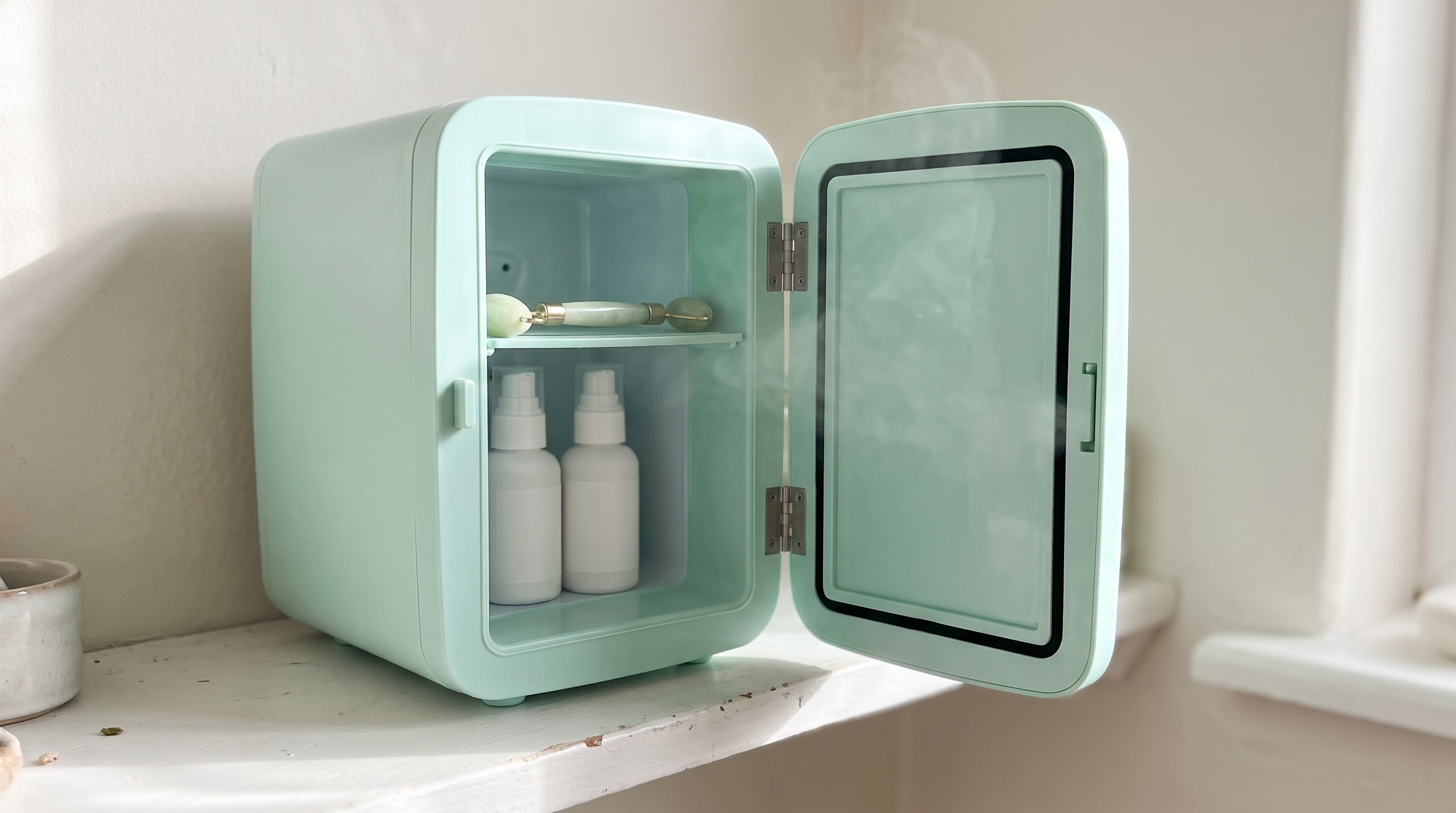
A skincare fridge is one of the most photographed objects in modern bathrooms. Small, pastel and lined with serums, it promises fresher products, a cooling morning routine and less puffiness. It has also become a popular gift, which is why searches for one jump every winter.
The honest answer to “is it worth it?” depends on what you keep in it. For a few ingredients, cool and dark storage genuinely slows the clock. For most products it changes nothing, and for some it does harm. This guide sorts out which is which.
What a Beauty Fridge Actually Does
Most mini skincare fridges are thermoelectric coolers rather than true refrigerators. Instead of a compressor, they use a small electronic plate that moves heat out of the box. They cool relative to the room around them, so in a warm bathroom they typically hold somewhere around 10 to 15°C (50 to 59°F). A kitchen fridge runs much colder, at about 4°C (40°F).
That middle temperature is the product’s whole pitch. It is cool enough to slow some chemical reactions and to feel refreshing on the skin, but not so cold that creams stiffen or oils turn solid the way they can in the kitchen.
What a beauty fridge does not do is preserve products in any medical sense. Cosmetics are formulated and preservative-tested to stay stable at room temperature until the expiry date or the period-after-opening symbol on the pack. Our guide to whether skincare expires explains how to read those dates. A fridge does not extend them.
The Cooling Effect Is Shorter Than You Think
Cold product does feel good, especially on tired morning skin. The sensation is real, but it is brief.
Your skin warms a chilled cream to its own temperature within 1 or 2 minutes, so the cooling effect is far shorter than most fridge ads imply.
Your skin warms a chilled cream to its own temperature within 1 or 2 minutes, so the cooling effect is far shorter than most fridge ads imply.
Clinical cold therapy works very differently. After nose surgery, nurses apply ice packs around the eyes for 20 minutes every hour to limit swelling. One randomized trial found that 4 hours of this was as effective as 48 hours [1]. That trial compared durations of ice-pack use after surgery and says nothing about a 10°C serum. What it does show is how far a thin layer of cool cream is from the sustained, near-freezing cold used to manage real swelling.
If morning puffiness is your main reason for buying a fridge, a dedicated cold tool does more. An ice roller for the face or a chilled jade roller holds its cold far longer than a spoonful of gel, and either fits in the same fridge.
Where Cold Storage Genuinely Helps
Two ingredient families are notorious for breaking down on the shelf: retinoids and vitamin C.
Retinol and other retinoids
Researchers at the University of Ljubljana tracked 16 retinoids across 12 commercial cosmetics for six months [2]. Almost every product lost active ingredient over time. At 25°C, roughly a warm room, the decline ranged from 0% to 80%. At 40°C it ranged from 40% to 100%. Some products already contained less retinoid than their labels declared.
The same study found something that matters even more for storage: light degraded the retinoids more than heat did. Stability also depended heavily on the formula, so two retinol serums kept side by side can age at very different speeds.
Vitamin C
Pure L-ascorbic acid is one of the least stable actives in skincare. It oxidizes in contact with air, light and warmth, which is why fresh serums are clear or pale and old ones turn yellow, then orange or brown [3]. Many brands now use more stable derivatives for this reason. If you use a classic L-ascorbic acid serum, cool and dark storage is a reasonable way to slow the browning. Our guide to the best vitamin C serums covers which forms hold up best.
Light Matters More Than Cold
Your retinol serum can lose up to 80% of its retinol in 6 months at room temperature, and light damages it even more than heat does.
Your retinol serum can lose up to 80% of its retinol in 6 months at room temperature, and light damages it even more than heat does.
That finding changes how you should think about a fridge. A clear-door beauty fridge with an interior light that sits on a sunny vanity protects a retinoid less than a closed, dark drawer. Opaque, airless or pump packaging protects it more than either. A product’s packaging is the first line of defense, and the storage spot is the second.
So the practical priorities are:
- Keep light out. Choose opaque or amber packaging and store it closed away from windows.
- Keep air out. Pumps and airless bottles beat open jars and droppers that get left uncapped.
- Avoid real heat. A hot bathroom shelf, a car or a windowsill does far more damage than a fridge prevents.
What Should Not Go in a Skincare Fridge
Some products are actively worse off in the cold.
- Oils and balms. Many plant oils cloud, thicken or partly solidify when chilled, and balms can turn hard and grainy.
- Clay masks. Cold clay stiffens and becomes harder to spread evenly.
- Rich creams and emulsions. Formulas are tested for temperature swings, but repeatedly moving an emulsion between a cool box and a warm, humid room is not what most were designed for, and some can separate or change texture.
- Most sunscreens and makeup. They are built for room temperature and gain nothing from cooling.
If a product’s label says to refrigerate after opening, follow it. Otherwise assume room temperature, away from heat and light, is what the formulator intended.
The Hygiene Catch
A fridge feels clean, but it does not sterilize anything. When microbiologists in the UK tested donated, used makeup, 79% to 90% of the products were contaminated with bacteria, and beauty sponges were by far the worst [4]. Contamination comes from fingers, applicators and air, not from storage temperature.
A cold product also has a quirk: open a chilled jar in a steamy bathroom and moisture can condense on its surface. Close lids quickly, use clean spatulas instead of fingers, and wipe the fridge out every few weeks.
Buying One: What to Check
If you decide a fridge suits your routine, a few details separate useful models from decorative ones:
- Temperature control. A model that shows or sets its temperature beats one with a single cold or warm switch.
- An opaque door, or an interior light you can switch off.
- Enough height for pump bottles, so you are not laying serums on their side.
- Quiet running, if it will live in a bedroom.
- A removable shelf that is easy to wipe.
For many people, a closed drawer in a cool room does the same job for free. For a single vitamin C serum, a door shelf of the kitchen fridge is a fine option, as long as you let it sit a moment before use so it spreads properly.
When the Formula Does the Protecting
A fridge is a workaround for fragile formulas. The better solution is a formula that protects its active ingredient from the start.
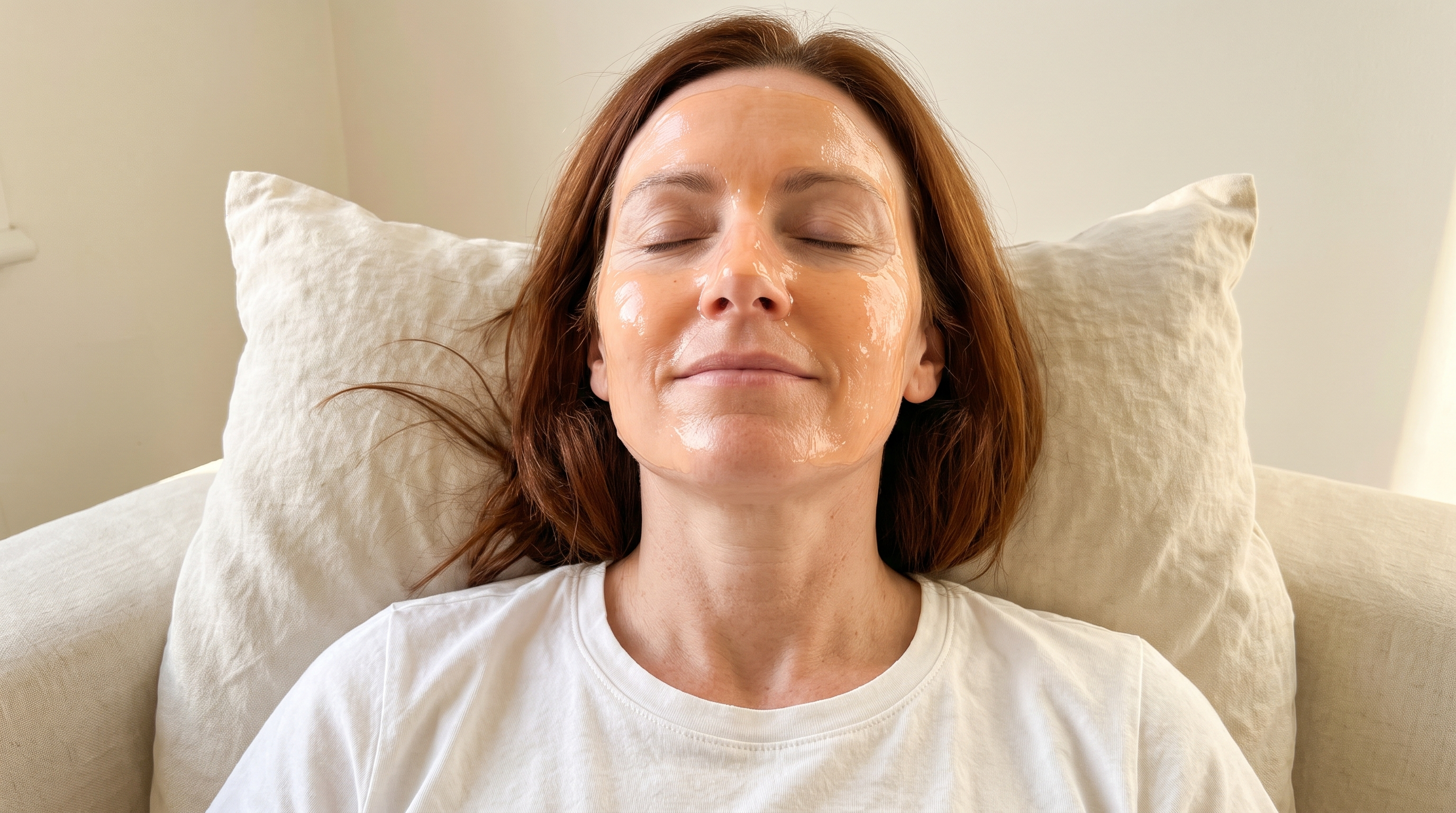
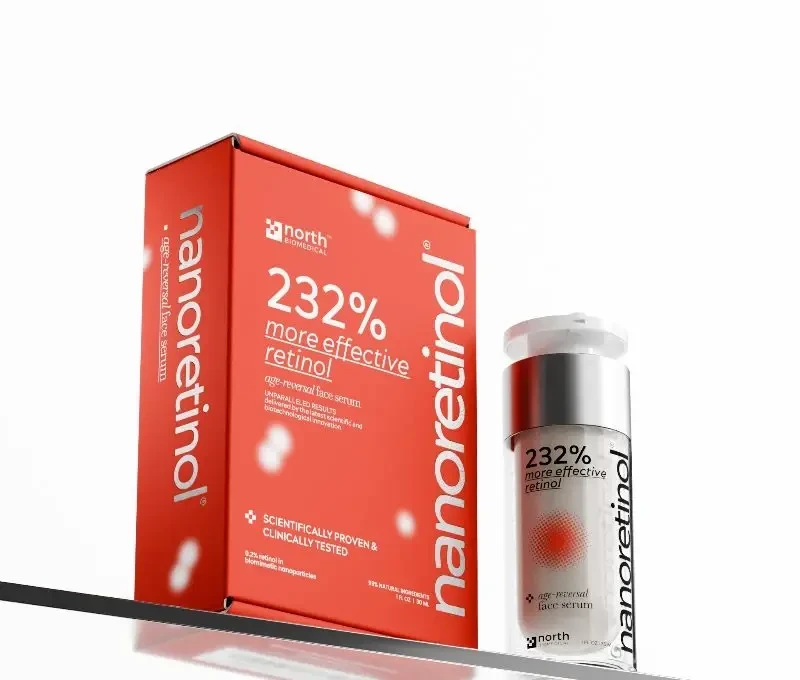
Nanoretinol takes that approach. Its 0.2% retinol is encapsulated in biomimetic lipid nanoparticles that keep it fully stabilized and protected, so stability comes from the formula rather than from your storage habits. The nanoparticles are also how it delivers retinol: they are recognized by the skin as “self” and pass the epithelial barrier without damaging it, which is why Nanoretinol was significantly gentler on skin cells than conventional retinol in testing. In North Biomedical’s study it was 232% more effective in collagen recovery than regular retinol, and in clinical use it increased skin firmness by 61% in 56 days.
Apply it at night and use sunscreen the next day. Then let your skincare fridge do what it does best: hold a cold roller and give you a refreshing start to the morning.
References
- Tekin YE, Iyigun E, Karakoc O. “The Effects of Two Different Cold Application Times on Edema, Ecchymosis, and Pain After Rhinoplasty: A Randomized Clinical Trial.” Journal of PeriAnesthesia Nursing. 2024;39(3):455-460. doi:10.1016/j.jopan.2023.10.003
- Temova Rakuša Ž, Škufca P, Kristl A, Roškar R. “Retinoid stability and degradation kinetics in commercial cosmetic products.” Journal of Cosmetic Dermatology. 2021;20(7):2350-2358. doi:10.1111/jocd.13852
- Stamford NP. “Stability, transdermal penetration, and cutaneous effects of ascorbic acid and its derivatives.” Journal of Cosmetic Dermatology. 2012;11(4):310-317. doi:10.1111/jocd.12006
- Bashir A, Lambert P. “Microbiological study of used cosmetic products: highlighting possible impact on consumer health.” Journal of Applied Microbiology. 2020;128(2):598-605. doi:10.1111/jam.14479