Hydrating Toner: How a Watery Step Actually Holds Moisture in Your Skin
A hydrating toner is nothing like the stinging astringents of the past. Here is which ingredients do the work, why water alone can leave skin drier, and how to layer one so the hydration stays
For decades, toner meant an alcohol-heavy liquid that left your face squeaky and tight. The hydrating toner is its opposite. It is a thin, watery layer of moisture-binding ingredients, applied right after cleansing, and it has become one of the most popular steps in modern skincare, largely thanks to Korean routines that treat the toner as the first layer of hydration rather than a final scrub.
A good hydrating toner can make skin feel noticeably softer and more comfortable. A poorly chosen hydrating toner, or a good one used the wrong way, can leave your skin drier than before. The difference comes down to a little skin biology.
How your skin actually holds water
The outermost layer of skin, the stratum corneum, is built like a brick wall. The bricks are flattened dead cells, and the mortar is a carefully organized mix of lipids that slows water from escaping [1]. Inside the bricks sits natural moisturizing factor, a blend of small, water-loving molecules made by the skin itself that binds water and keeps the cells supple.
When skin is dehydrated, whether or not it is also dry (our guide to dehydrated skin explains the difference), that system is running low. A hydrating toner works by topping up the water-binding side of the equation with humectants, ingredients that attract and hold water much like natural moisturizing factor does. It cannot rebuild the lipid mortar on its own, which is why the step that follows it matters so much.
Why water on its own can backfire
Here is the counterintuitive part. Plain water is not a moisturizer, and repeated water exposure can actually be mildly irritating. Researchers who reviewed the evidence noted that water can dilute or wash out natural moisturizing factor and, under some conditions, increase water loss through the skin [5].
A poorly chosen hydrating toner, or a good one used the wrong way, can leave your skin drier than before.
That is why a hydrating toner is only as good as its humectants, and why you should never leave a toner to evaporate on bare skin. Leave a toner to evaporate on bare skin and your face can end up feeling drier than it did before you applied it.
The ingredients that do the work
The best hydrating toners lean on a handful of well-studied humectants:
- Glycerin. The workhorse. Reviews of the research show glycerin improves stratum corneum hydration, supports barrier function, helps skin’s mechanical properties and protects against irritation [2]. It is inexpensive and often listed second, right after water, in good formulas.
- Panthenol (provitamin B5). In a controlled study on irritated skin, a dexpanthenol cream sped up barrier repair, increased hydration and reduced redness compared with the same cream without it [3]. That was a cream rather than a toner, but panthenol is water-soluble and fits easily into toner formulas.
- Hyaluronic acid. In a 60-day trial in 76 women, creams with 0.1% hyaluronic acid improved hydration and elasticity around the eyes compared with a placebo, and the lower molecular weight versions also reduced wrinkle depth [4]. Many toners now combine several molecular weights for that reason.
- Supporting humectants such as betaine, sodium PCA, amino acids, beta-glucan and sugars round out many Korean-style formulas.
Your skin can feel smoother and more comfortable after one use, but the measured improvements in elasticity and fine lines took weeks of twice-daily application.
Toner, mist, essence or serum?
These products overlap, and brands blur the lines on purpose. Broadly, a hydrating toner is the thinnest layer, designed to be patted in right after cleansing. A face mist is often similar in formula but sprayed, which deposits less product and tends to evaporate faster. An essence is usually a slightly richer toner. A hydrating serum is more concentrated and is meant to deliver a stronger dose of humectants or actives in a smaller amount.
If your skin is only mildly dehydrated, a good toner followed by a moisturizer may be all you need.
If your skin is only mildly dehydrated, a good toner followed by a moisturizer may be all you need. If it stays tight, our guide to hydrating serums covers the more concentrated option. Our general guide to the best toner for aging skin compares hydrating toners with the niacinamide and gentle-acid toners that target other concerns.
The layering trend, and its limits
The “seven skin” method, in which you pat on several thin layers of toner one after another, became popular because each layer adds more humectant to the skin’s surface. Layering two or three times can genuinely help very dehydrated skin feel plumper. Beyond that, you are mostly using up product.
The more important rule is what you do next. Seal the toner in with a moisturizer within a minute or two, while your skin is still slightly damp. Humectants pull water into the skin, and the lipids in your moisturizer slow it from escaping again [1].
What to avoid on the label
- Denatured alcohol or ethanol high on the list. Alcohol gives toners a quick-drying, refreshing feel, but it is associated with skin irritation and contact dermatitis in some people [6]. A small amount far down the list in a hydrating formula is less of a concern than alcohol as the second ingredient.
- Added fragrance and essential oils. They add nothing to hydration and are common triggers for sensitive skin.
- Strong acids in a “hydrating” toner. Some products blend exfoliating acids into a hydrating formula. That is fine if you want exfoliation, but it is a different product with different rules.
How to use a hydrating toner
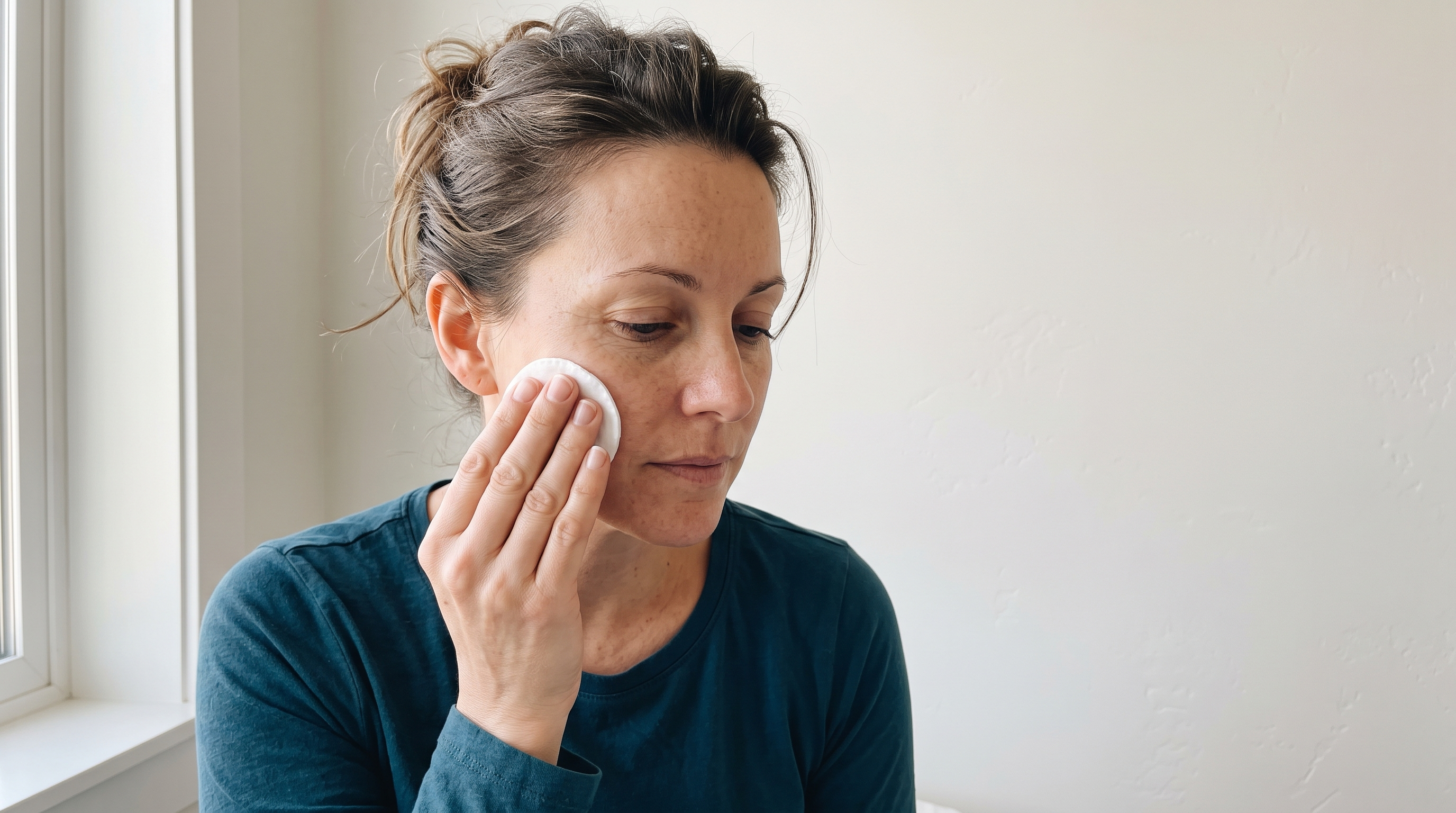
Pour a small amount into clean hands and press it gently into damp skin after cleansing, rather than wiping it on with a cotton pad that absorbs much of the product. Follow with any serum, then your moisturizer, while your skin is still slightly damp. Our guide to skincare routine order shows where each step fits, morning and night.
Where Nanoretinol fits
A hydrating toner restores water to the outer layers, but it cannot rebuild the collagen that gives skin its firmness. That job belongs to retinol, which has strong evidence in aging skin: in a 24-week vehicle-controlled trial, 0.4% retinol significantly improved fine wrinkling and increased collagen production in older adults [7].
At night, the order is simple: cleanse, pat in your hydrating toner, let it settle for a minute, then apply your retinol and finish with moisturizer. Nanoretinol suits this routine well because it is a light, water-based gel that absorbs completely. Its stabilized 0.2% retinol is carried in biomimetic lipid nanoparticles that reach skin cells without breaking down the barrier the way conventional formulations can. In North Biomedical’s study summary, Nanoretinol was 232% more effective in collagen recovery and 73% more effective in elastin recovery than conventional retinol, with a 61% increase in firmness after 56 days of use [8].
Hydration that lasts past the first hour
A hydrating toner is worth adding if your skin often feels tight after cleansing. Choose one built on glycerin, panthenol or hyaluronic acid, without much alcohol or fragrance, press it into damp skin, and always seal it in. Used that way, it is a small step that makes everything after it work better.
References
- Rawlings AV, Harding CR. “Moisturization and skin barrier function.” Dermatologic Therapy. 2004;17 Suppl 1:43-48. doi:10.1111/j.1396-0296.2004.04s1005.x
- Fluhr JW, Darlenski R, Surber C. “Glycerol and the skin: holistic approach to its origin and functions.” British Journal of Dermatology. 2008;159(1):23-34. doi:10.1111/j.1365-2133.2008.08643.x
- Proksch E, Nissen HP. “Dexpanthenol enhances skin barrier repair and reduces inflammation after sodium lauryl sulphate-induced irritation.” Journal of Dermatological Treatment. 2002;13(4):173-178. doi:10.1080/09546630212345674
- Pavicic T, Gauglitz GG, Lersch P, et al. “Efficacy of cream-based novel formulations of hyaluronic acid of different molecular weights in anti-wrinkle treatment.” Journal of Drugs in Dermatology. 2011;10(9):990-1000. PubMed: 22052267
- Tsai TF, Maibach HI. “How irritant is water? An overview.” Contact Dermatitis. 1999;41(6):311-314. doi:10.1111/j.1600-0536.1999.tb06990.x
- Lachenmeier DW. “Safety evaluation of topical applications of ethanol on the skin and inside the oral cavity.” Journal of Occupational Medicine and Toxicology. 2008;3:26. doi:10.1186/1745-6673-3-26
- Kafi R, Kwak HS, Schumacher WE, et al. “Improvement of naturally aged skin with vitamin A (retinol).” Archives of Dermatology. 2007;143(5):606-612. doi:10.1001/archderm.143.5.606
- North Biomedical LLC. “Nanoretinol vs. Conventional Retinol: Efficacy in Collagen and Elastin Recovery.” Clinical Study Summary, 2024. Study summary