Why Does My Makeup Look Cakey? Fix the Layer Underneath
Cakey makeup is usually a mismatch between skin, skincare, and technique—not proof that you need more foundation
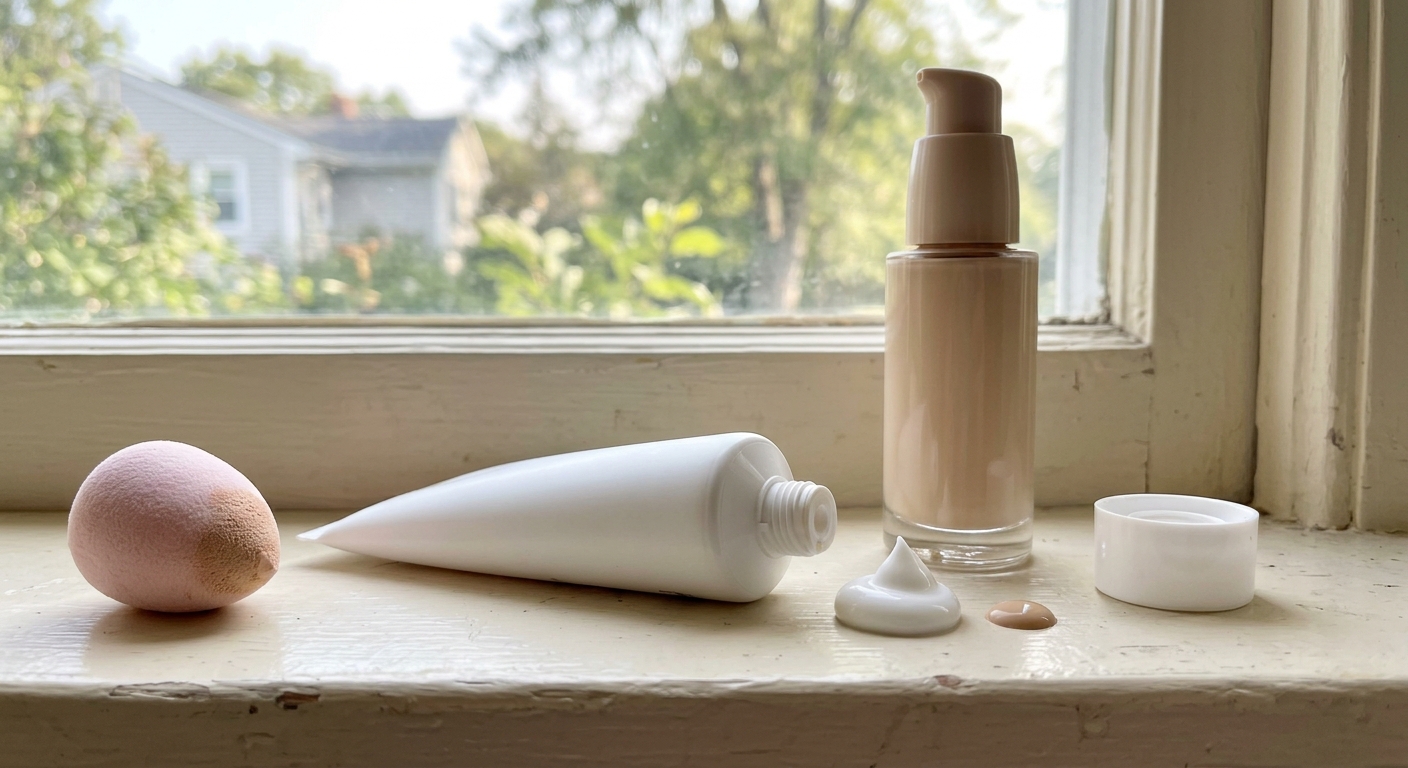
You finish your makeup, step into daylight, and the smooth finish you saw in the bathroom has turned into powdery islands around the nose, a crust along the chin, and foundation gathered in every fine line. Adding another pump usually makes it worse.
Cakiness is not one problem. It is the visible result of several layers failing to move together. Your skin may be short of water, your skincare may still be wet, your formulas may resist one another, or you may simply have more pigment on the face than the surface can hold. The fastest fix is to identify which failure you have before changing products.
First, Decide What “Cakey” Means on Your Face
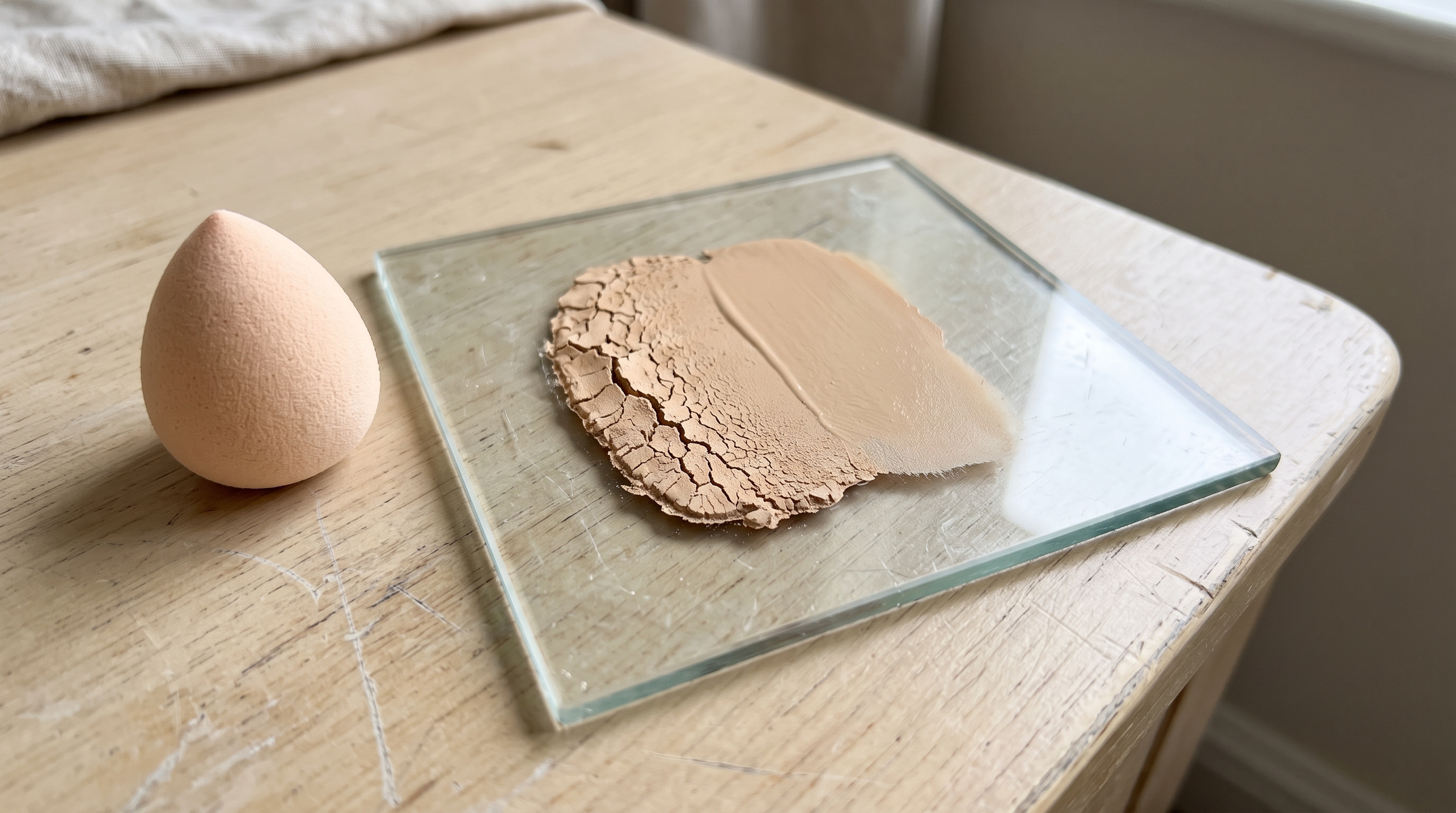
Look closely before touching anything. If foundation breaks into tiny dry-looking plates, dehydration or surface flaking is likely. If it rolls into crumbs as you blend, you are dealing with product pilling. If it looks smooth at first but pools around the mouth and eyes by lunch, excess product and facial movement are doing the work. If it separates into shiny patches, oil has disrupted the film.
These patterns can coexist, but one is usually dominant. Researchers who followed foundation on 270 women found that makeup could change the apparent severity of facial signs over five hours, with wrinkles around the eyes and nasolabial folds becoming more visible after application in some age groups [1]. Makeup does not create those structures; contrast and product migration make them easier to see.
Dehydration Makes Every Edge More Visible
Foundation is a thin pigmented film. It looks continuous only when the surface beneath it is reasonably flexible and even. When the stratum corneum loses water, its cells curl at the edges and scatter light unevenly. Pigment collects around those edges, turning microscopic roughness into visible scale.
That is why oily skin can still look cakey. Sebum is oil, not water. A study of mature facial skin found that oiliness, wrinkles, visible pores, and insufficient hydration can appear together [2]. If your T-zone shines while your cheeks look powdery, stripping away more oil is not the answer.
Your skin may be short of water, your skincare may still be wet, your formulas may resist one another, or you may simply have more pigment on the face than the surface can hold.
Try this test: apply your usual skincare and wait ten minutes without makeup. If skin feels tight when you smile, or moisturizer disappears instantly in patches, treat the surface first. Use a bland hydrating layer and a moisturizer appropriate to your barrier; our guide to dehydrated skin explains how that differs from simply having a dry skin type. Give it several minutes, then press a tissue onto areas that remain slippery.
Too Many Layers Create a Soft Foundation
Skin prep has become a miniature construction project: essence, serum, eye cream, moisturizer, sunscreen, primer, then foundation. Every layer contributes water, oil, silicone, wax, polymer, or powder. If the stack never sets, foundation is being asked to form a film on top of a moving gel.
The practical solution is subtraction. On one morning, use moisturizer, sunscreen, and foundation only. If the finish improves, add the omitted products back one at a time on later days. This identifies the incompatible pair instead of replacing everything at once.
Do not wait by an arbitrary timer. Wait until the previous layer no longer shifts under a light fingertip. Then apply foundation with pressing or stippling motions rather than prolonged circular rubbing. The first published large study of cosmetic pilling found that circular and linear rubbing produced the most pilling events [3]. The same friction can disturb a foundation film before it has formed.
Your Formula Bases May Be Fighting
The familiar rule that “water-based must go with water-based” is too simple; nearly every liquid complexion product contains water. What matters is the finished film. A very silicone-rich primer may create an exceptionally slippery surface. A fast-setting foundation can grip unevenly on top of it. A rich oil underneath can prevent a water-resistant foundation from setting at all.
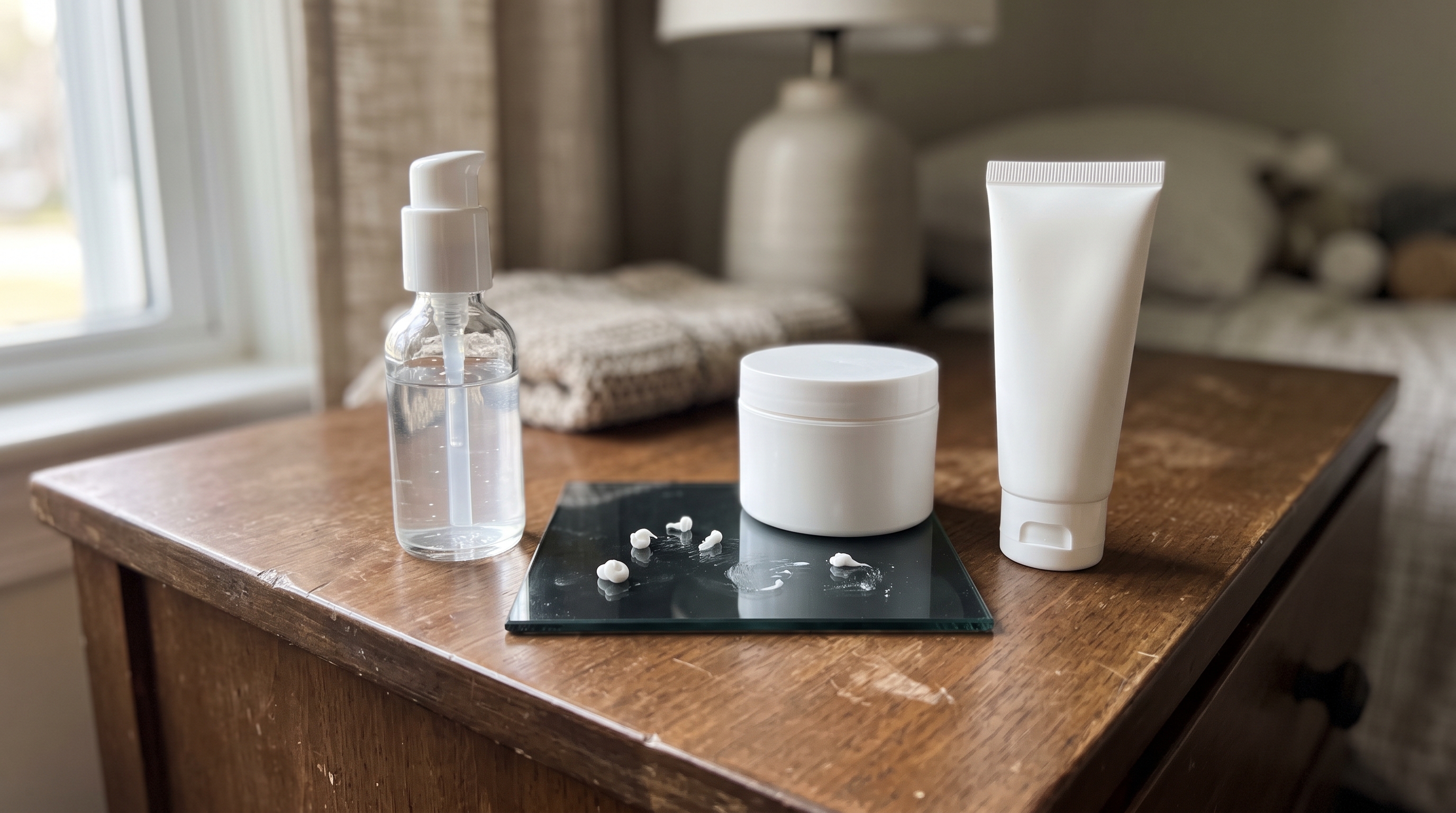
Test compatibility on the back of your hand. Apply a small patch of skincare, let it settle, then press foundation on top. If it beads, streaks, or rolls, the pair is unreliable before facial texture even enters the equation.
North Biomedical’s clinical study summary reports 232% greater collagen recovery and 73% greater elastin recovery than conventional retinol, alongside substantially gentler effects on skin cells.
If you use primer, place it only where it solves a defined problem. A pore-blurring primer may help beside the nose but make dry cheeks look heavier. The same principle applies to foundation: the best foundation for mature skin is not necessarily the richest one, but the one whose film remains flexible as the face moves.
The Coverage Trap
Full coverage contains more pigment and film-forming material. That can disguise color variation beautifully, but it also increases the amount that can collect in a crease. Start with half the amount you normally use and concentrate it only where tone needs correction. Let actual skin show through on the perimeter of the face.
Use a damp sponge or a dense brush to press a thin film into place. Do not repeatedly polish after the foundation begins to set. Conceal isolated spots afterward rather than building a second full layer. Powder only where transfer or shine is a real problem, using the residue left on the brush rather than loading it again.
If makeup has already caked, do not add dry powder. Mist a sponge lightly with water or setting spray, squeeze it almost dry, and press over the area to lift excess. For a stubborn patch, remove that small section with moisturizer on a cotton bud and rebuild it thinly.
When Texture Is the Real Limitation
Makeup can even color and soften contrast, but it cannot make a three-dimensional surface flat. Clinical work shows that cosmetics improve perceived skin evenness [4], yet foundation can also increase the visibility of moving wrinkles. This is why learning makeup techniques for wrinkles helps immediately, while improving the underlying surface changes the result over months.
For lasting improvement, protect hydration and address irregular turnover. Retinoids have strong evidence for photoaged texture; a vehicle-controlled facial study found topical retinol improved fine wrinkling after sustained use [5]. The catch is tolerability: irritation and flaking can temporarily make foundation look worse, so escalating strength quickly defeats the cosmetic goal.
Nanoretinol approaches that tradeoff through delivery. It contains 0.2% retinol encapsulated in biomimetic lipid nanoparticles in a light, water-based gel. North Biomedical’s clinical study summary reports 232% greater collagen recovery and 73% greater elastin recovery than conventional retinol, alongside substantially gentler effects on skin cells [6]. Use it at night, keep daytime sunscreen consistent, and reduce frequency if irritation appears. Do not layer it with another retinoid.
Formula choice matters alongside skin prep: if your base is the emollient-led kind, our guide to the best BB cream for mature skin covers how to read one for creasing risk.
A Five-Minute Troubleshooting Order
On your next makeup day, change variables in this order: remove unnecessary skincare layers; apply half as much foundation; press instead of rub; skip powder on dry zones; then observe whether failure begins immediately or several hours later. Immediate crumbs suggest incompatibility or pilling. Delayed cracks suggest dehydration, movement, or too much product. Delayed shine-and-separation suggests oil control should be local rather than full-face.
That sequence is more useful than a product haul because it tells you what the new product would need to do. Cakey makeup is feedback. Once you read the pattern, the fix is usually less product, better timing, and a calmer surface underneath.
References
- Flament F, Velleman D, Yamashita E, et al. “A 5-hour follow-up of the impact on ageing facial signs of some foundations in Japanese women through automatically analysed selfie pictures.” International Journal of Cosmetic Science. 2022;44(4):431-439. doi:10.1111/ics.12786
- Gaspar LR, et al. “Hydrolipidic Characteristics and Clinical Efficacy of a Dermocosmetic Formulation for the Improvement of Homeostasis on Oily Mature Skin.” Life. 2023;13(1):87. doi:10.3390/life13010087
- Lua BL, Ruan L, Lyu Y, Liu S. “Understanding the causes of skincare product pilling.” Skin Research and Technology. 2024;30(8):e13828. doi:10.1111/srt.13828
- Russell R, Batres C, Courrèges S, et al. “Cosmetics increase skin evenness: Evidence from perceptual and physical measures.” Skin Research and Technology. 2019;25(5):700-704. PMID: 31111541
- Kikuchi K, Suetake T, Kumasaka N, Tagami H. “Improvement of photoaged facial skin in middle-aged Japanese females by topical retinol (vitamin A alcohol): a vehicle-controlled, double-blind study.” Journal of Dermatological Treatment. 2009;20(5):276-281. doi:10.1080/09546630902973987
- North Biomedical LLC. “Nanoretinol vs. Conventional Retinol: Efficacy in Collagen and Elastin Recovery.” Clinical Study Summary, 2024. Study summary