Eye Makeup for Mature Women: Why It Creases and What Actually Holds
The eyelid biology behind creasing, flaking and transfer, and the formulas that survive it
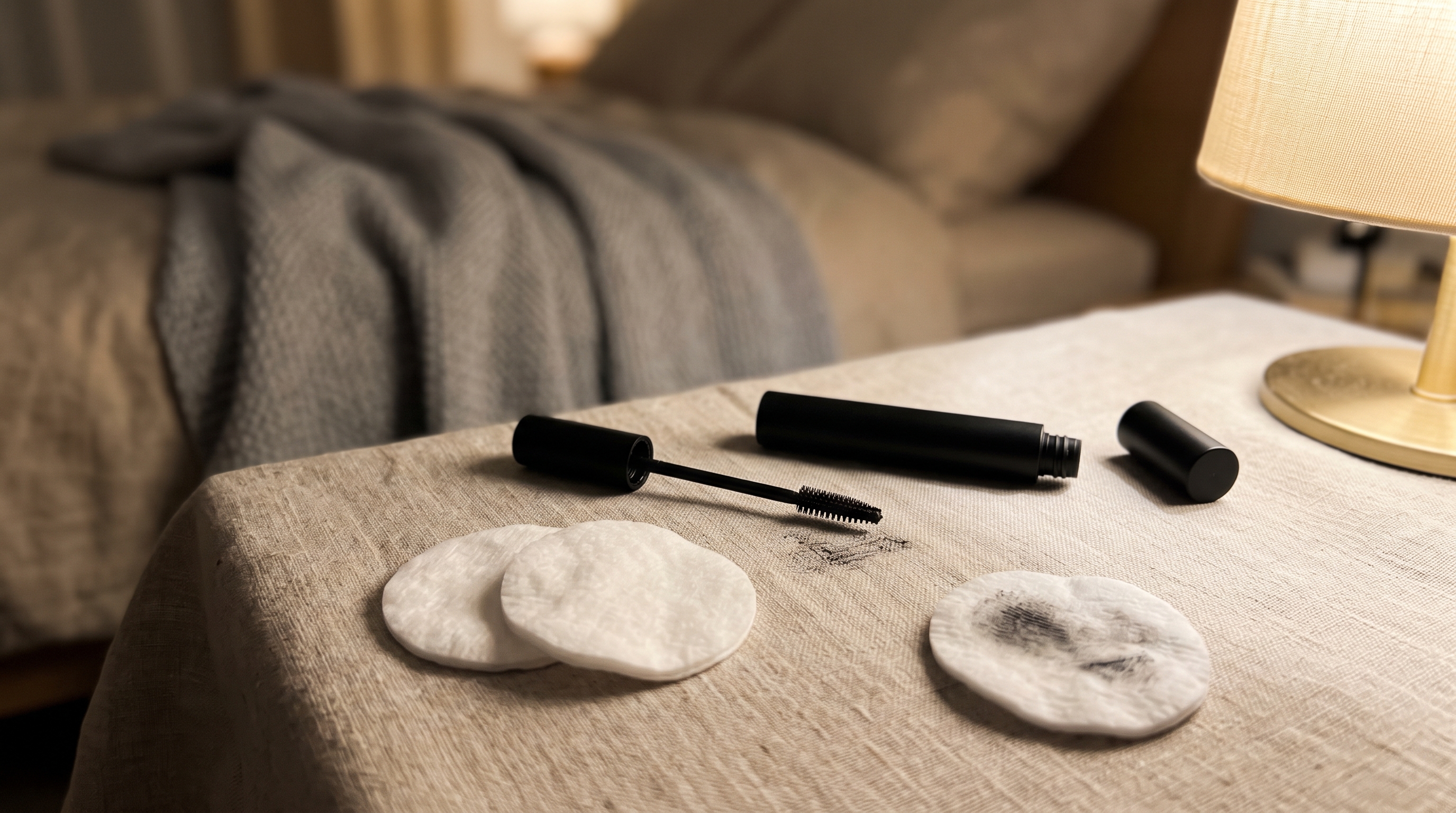
There is a specific moment most women recognise. You apply eyeshadow carefully in good light, you like what you see, and by lunchtime it has migrated into a single dark line sitting in the crease of your lid. Eyeliner has feathered upward. Mascara has printed a faint grey shadow under your brow bone.
The usual explanation is that you bought the wrong product, or that your technique slipped. Neither is quite right. What changed is the surface you are painting on, and it changed in ways that have been measured.
The eyelid is the hardest surface on your face to hold makeup
Skin thickness across the face is not remotely uniform. A histometric study of fifteen facial sites found the upper eyelid to have the thinnest skin of the entire face in every single subject examined, and used it as the reference point against which everything else was compared [1]. Nasal tip skin came in at more than three times the thickness of eyelid skin. Brow and forehead skin measured close to three times thicker.
That thinness matters for makeup because thin skin has almost no structural padding to keep it flat. It folds readily, and once it folds, anything sitting on the surface collects in the fold.
The lid also sits in an awkward neighbourhood. Sebum output across the face varies by region, and research measuring androgen receptor expression in facial sebaceous glands found significantly higher activity in the forehead, nose and chin than in the cheeks [2]. The brow and forehead sit directly above the lid. Oil produced there does not stay there, and powder pigment mixed with migrating sebum is precisely what forms that dark line in your crease.
What the years actually change
Two separate processes are at work, and they compound.
The first is loss of mechanical quality in the skin itself. Cutometer measurements taken across 120 women aged 18 to 65 showed elastic recovery and gross elasticity declining significantly with age, with facial sites showing the strongest correlation of all regions tested [3]. Underneath that sits a steady structural loss: forearm skin collagen has been measured falling at roughly 1% per year across adult life [4]. Skin with less recoil does not spring flat after a blink. It stays creased for a moment longer each time, and makeup settles into the crease that lingers.
Underneath that sits a steady structural loss: forearm skin collagen has been measured falling at roughly 1% per year across adult life.
The second is architectural. A review of periocular ageing describes the hallmark changes as hollowing of the upper sulcus, dermatochalasis, brow descent and downward migration of skin, fat and fascia across the upper face [5]. The lid you are working on at 60 may occupy a different position and a different shape than the one you learned to do makeup on. If your eyeshadow keeps disappearing entirely, the issue is often that your mobile lid has been partly covered, which is a separate problem from creasing and is covered in more depth in our guide to hooded eyes.
If the lid surface itself has developed fine horizontal lines and a papery texture, that is a distinct condition worth understanding on its own terms, and we cover it in crepey eyelids.
Formula rules that hold up
Once you know the surface is thin, mobile and receiving oil from above, the formula decisions get easier.
Eyeshadow
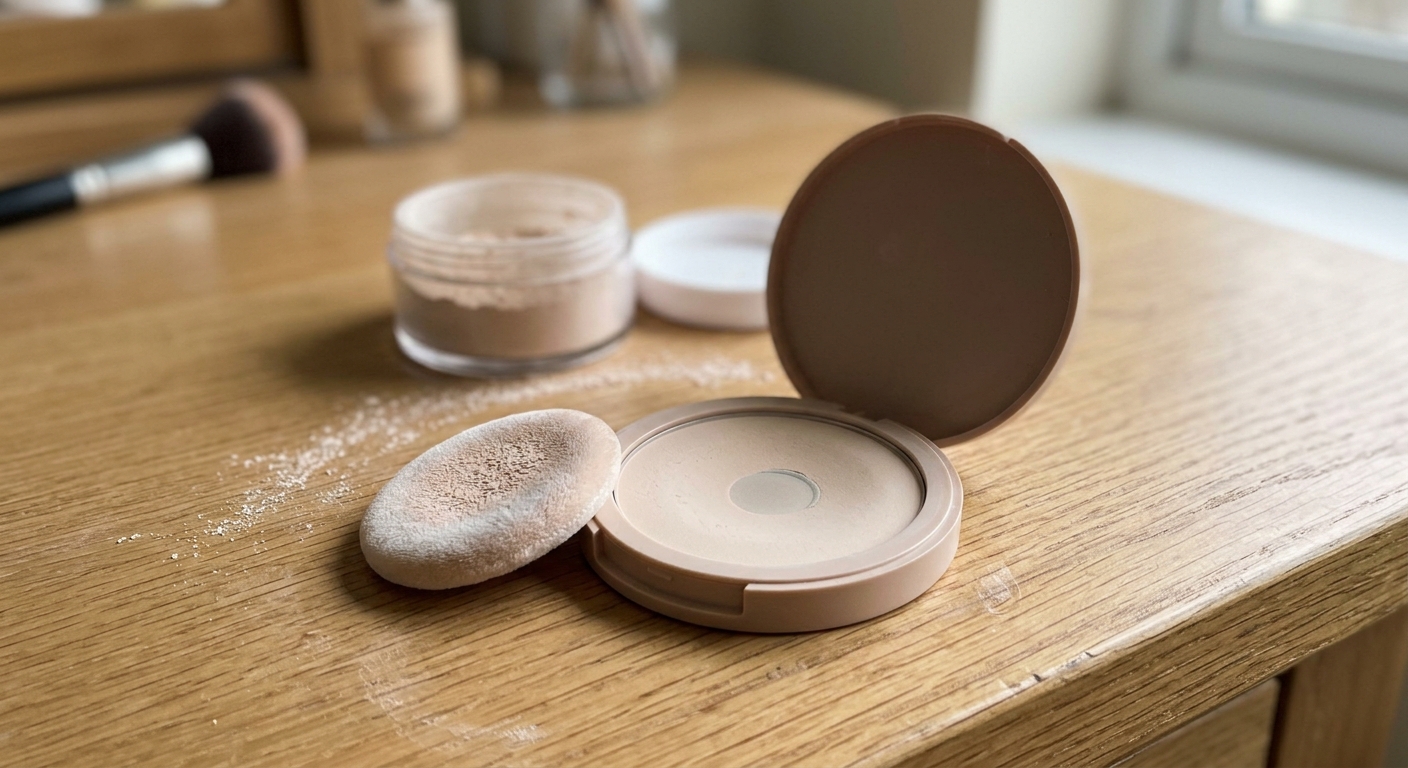
Cream shadows applied thickly are the least reliable choice on a mature lid, because they stay mobile and travel into the crease with every blink. Powder alone tends to cling to dry patches and emphasise texture. What holds best in practice is a thin cream or liquid base set with a fine, finely milled powder in a matching tone. The base gives grip, the powder absorbs the oil arriving from the brow.
Heavy shimmer is worth reconsidering on principle rather than as a rule about age. Reflective particles are large, they sit on top of texture rather than sinking into it, and anything sitting on top of a fold makes the fold more visible. Satin finishes give luminosity without that effect.
Eyeliner
Soft pencil is the most forgiving to apply and the least likely to stay where you put it. Gel and long-wear liquid formulas hold considerably better, but they demand a steadier surface. Pulling the lid taut to draw a line and then releasing it is what produces a broken, gappy result, because you drew on a stretched surface that then contracted. Working in short connected strokes on an unstretched lid gives a line that survives the day.
The instruction to put a darker shade “in the crease” assumes the crease is visible when your eyes are open.
Tightlining, which means depositing colour at the lash root rather than on the mobile lid, sidesteps the creasing problem almost entirely and still defines the eye.
Mascara
Tubing mascaras form a polymer sleeve around each lash and release with warm water rather than dissolving into oil. On skin that produces oil above the lid, and on eyes that water more readily with age, they transfer far less than fibre or traditional wax formulas. They also come off without the rubbing that thin periocular skin tolerates poorly.
Placement, once the lid has moved
The instruction to put a darker shade “in the crease” assumes the crease is visible when your eyes are open. For many women past 50 it is not. Placing shadow in an invisible crease means the colour disappears, and adding more only deepens the shadow that reads as tiredness.
The workaround is to place the transition shade slightly above the anatomical crease, where it remains visible on an open eye, and to keep the lid itself lighter than the area above it. Colour placed under the lower lash line should be used sparingly, since anything dark there emphasises hollowing rather than balancing it. The related question of fine lines beneath the eye, and what genuinely improves them, is covered in under-eye wrinkles.
Improving the canvas rather than compensating for it
Makeup can only ever sit on the surface it is given. Improving that surface is the part with the strongest evidence behind it.
In a randomised controlled study of 196 women with moderate to severe periorbital wrinkles, a prescription topical retinoid produced significant measurable improvement in wrinkle appearance over 8 to 24 weeks [6]. Retinoids are the most evidence-backed topical route to better texture around the eye, which is why they appear in almost every serious discussion of eye creams for wrinkles.
The catch has always been tolerance. Periocular skin is the thinnest on the face, and conventional retinol formulations frequently reach it by chemically loosening the skin barrier, which is exactly the wrong trade in exactly the wrong place.
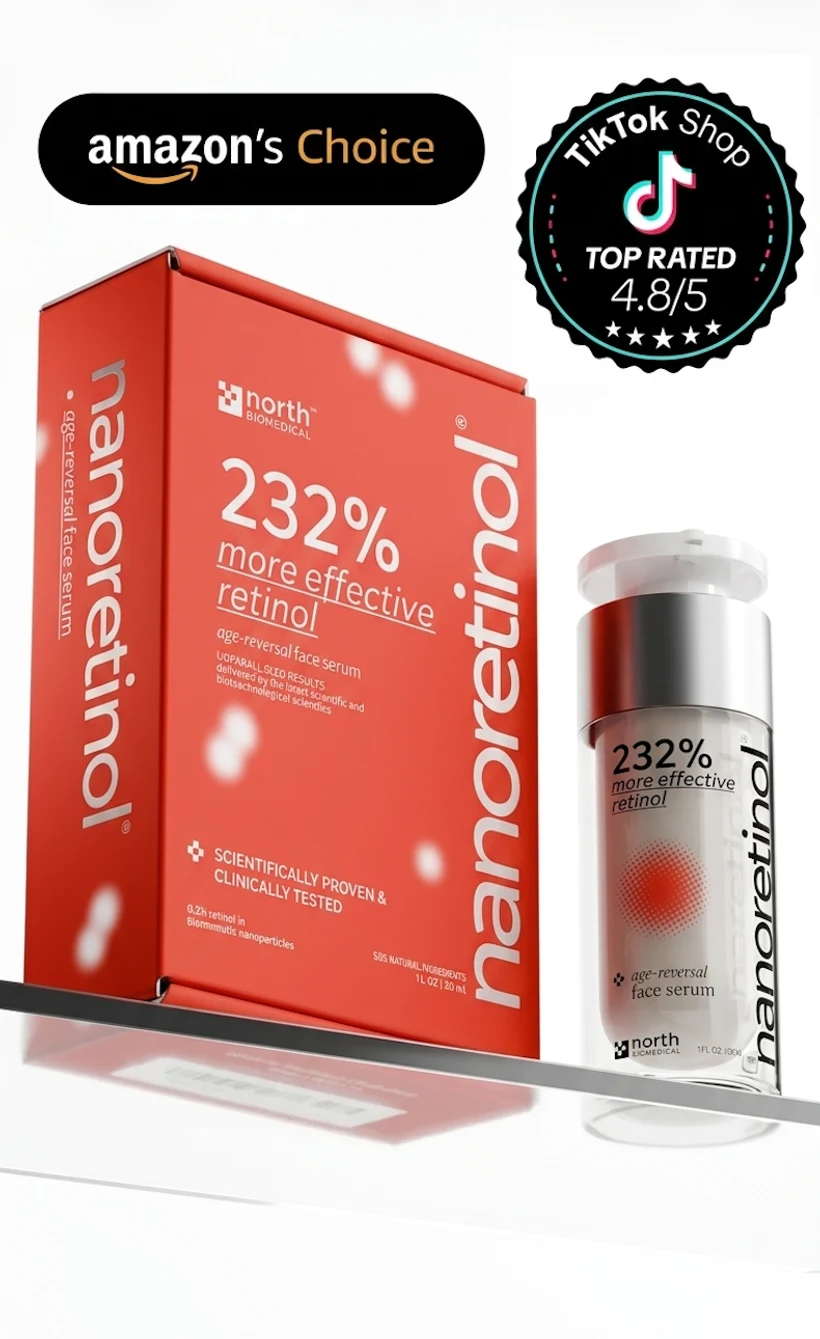
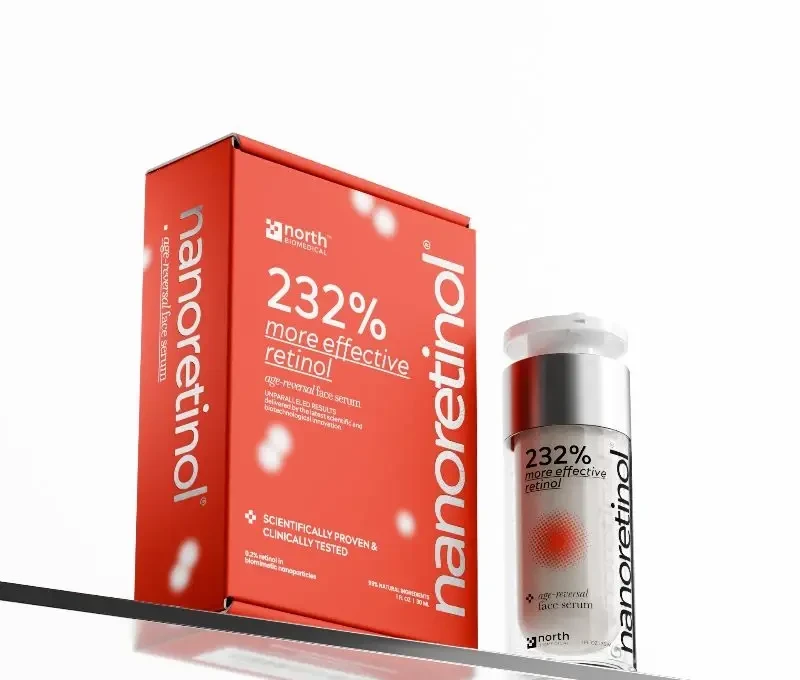
Nanoretinol takes a different route. Its 0.2% retinol travels inside biomimetic lipid nanoparticles the skin recognises as self and admits intact, in a water-based, 99% natural formulation that is safe for the eye contour. Measured against conventional retinol it achieved 232% greater collagen recovery and 73% greater elastin recovery with drastically reduced cytotoxicity, and over 56 days delivered 61% greater firmness and 56% greater elasticity.
Start with one change
Pick the single failure that annoys you most. If it is the dark line by noon, add a thin gripping base under your shadow and set it. If it is a broken liner, stop stretching the lid. If it is grey shadows under the brow, switch to a tubing mascara.
Then give the skin itself something to work with, because every one of those fixes gets easier on a lid that has recovered some firmness.
References
- Ha RY, Nojima K, Adams WP Jr, Brown SA. “Analysis of Facial Skin Thickness: Defining the Relative Thickness Index.” Plastic and Reconstructive Surgery. 2005;115(6):1769-1773. doi:10.1097/01.prs.0000161682.63535.9b
- Seo YJ, Li ZJ, Choi DK, Sohn KC, Kim HR, Lee Y, Kim CD, Lee YH, Shi G, Lee JH, Im M. “Regional Difference in Sebum Production by Androgen Susceptibility in Human Facial Skin.” Experimental Dermatology. 2014;23(1):70-72. doi:10.1111/exd.12291
- Krueger N, Luebberding S, Oltmer M, Streker M, Kerscher M. “Age-Related Changes in Skin Mechanical Properties: A Quantitative Evaluation of 120 Female Subjects.” Skin Research and Technology. 2011;17(2):141-148. doi:10.1111/j.1600-0846.2010.00486.x
- Shuster S, Black MM, McVitie E. “The Influence of Age and Sex on Skin Thickness, Skin Collagen and Density.” British Journal of Dermatology. 1975;93(6):639-643. doi:10.1111/j.1365-2133.1975.tb05113.x
- Tao BK, Butt FR, Dhivagaran T, Balas M, Nijhawan N, Nassrallah G, Hussain A, Ing EB. “Periocular Aging Across Populations and Esthetic Considerations: A Narrative Review.” Journal of Clinical Medicine. 2025;14(2):535. doi:10.3390/jcm14020535
- Fu JJ, Hillebrand GG, Raleigh P, Li J, Marmor MJ, Bertucci V, Grimes PE, Mandy SH, Perez MI, Weinkle SH, Kaczvinsky JR. “A Randomized, Controlled Comparative Study of the Wrinkle Reduction Benefits of a Cosmetic Niacinamide/Peptide/Retinyl Propionate Product Regimen vs. a Prescription 0.02% Tretinoin Product Regimen.” British Journal of Dermatology. 2010;162(3):647-654. doi:10.1111/j.1365-2133.2009.09436.x