Best SPF Lip Balm: The Spec That Protects the Thinnest Skin on Your Face
Lip sunscreen fails for reasons face sunscreen never does, and the label rarely tells you which product survives it
Most people who are careful about sunscreen still have a blind spot roughly the size of a postage stamp, sitting in the middle of the face. The lips get skipped. They get skipped at the beach, they get skipped on the commute, and they get skipped by nearly every skincare routine that otherwise runs to eight steps.
Part of that is habit. Most of it is that a lip balm behaves like a cosmetic rather than a sunscreen, so it never gets held to the same standard. Choosing a good SPF lip balm means understanding why lips are unusually hard to protect, and then buying against that problem rather than against a number on a tube.
Why Lips Lose This Fight Before It Starts
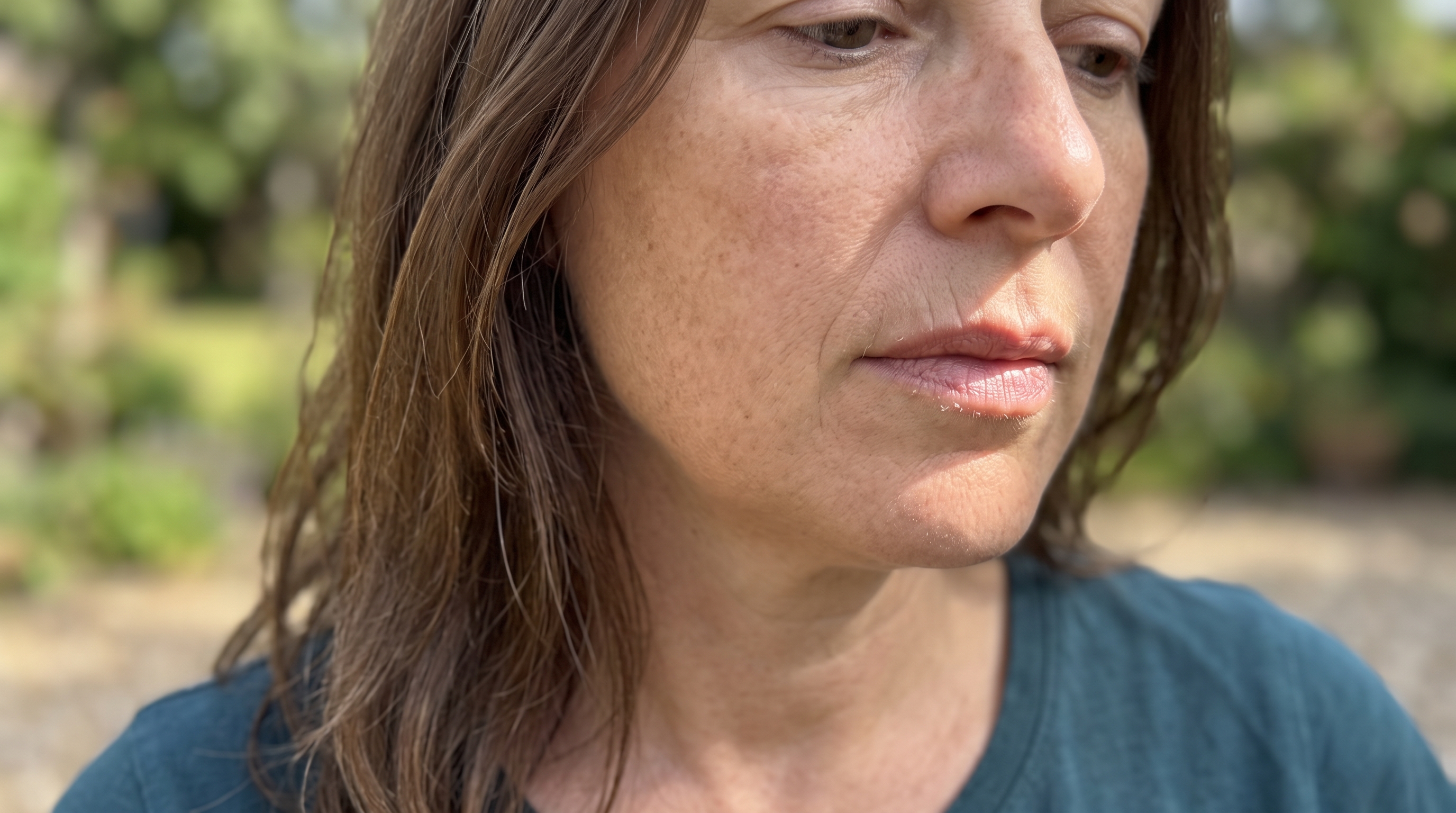
The vermilion border is the only place on the face where oral mucosa is permanently exposed to open air, and it is not equipped for the job. When researchers compared lip and cheek tissue in 303 healthy women aged 21 to 80, transepidermal water loss on the lips ran almost three times as high as on the cheek, while surface conductance, a measure of how much water the tissue holds, came in at about one third of cheek values [1].
The reason sits in the structure. The same study found the superficial cells of the lip surface to be parakeratotic and enlarged, meaning corneocyte formation never completes there. A cheek builds a proper brick-and-mortar stratum corneum. A lip builds a partial one, then leaves it exposed.
Add to that the absence of sebaceous glands across most of the vermilion. There is no natural oily film for a product to bind into and no reservoir to hold it in place. Anything you apply sits on top, unanchored, waiting to be removed by the next sip of coffee.
The Damage Has a Location
Chronic ultraviolet exposure on the lower lip produces actinic cheilitis, which dermatology classifies as a precursor to squamous cell carcinoma. Reported rates of malignant transformation range from 10 to 30%, and the recognised risk factors read like a list of everyday exposures: cumulative UV, advancing age, fair phototypes, and tobacco use [2].
That is a matter for a dermatologist, not a balm, and persistent scaling, roughness, or a blurred lip border deserves a professional look rather than a product. But it explains why the lower lip in particular is worth protecting. It sits at an angle that catches overhead sun almost continuously, and it has the least equipment to cope.
Reported rates of malignant transformation range from 10 to 30%, and the recognised risk factors read like a list of everyday exposures: cumulative UV, advancing age, fair phototypes, and tobacco use.
The SPF Number on a Balm Is Even Softer Than on a Bottle
Two separate effects erode the printed number.
The first is measurement. When researchers determined the sun protection factor of a lipstick sunscreen directly on lips rather than on back skin, the lip result came out two SPF units below the value the same product earned in classical testing [3]. Interestingly, the same work found unprotected lip tissue slightly more UV-resistant than unprotected back skin, an adaptation to lifelong exposure, but that resilience does not close the gap.
The second effect is dose, and it is much larger. Every SPF figure on the market is certified using a standardised film of 2 mg of product per square centimetre. When that quantity was varied experimentally in vivo, the relationship between the amount applied and the protection achieved proved exponential rather than proportional, and sunbathers were found to apply roughly a quarter of the certifying thickness [4]. Thinning the layer costs you far more protection than the arithmetic suggests.
Now combine the two on a surface with no oil film to hold product in place, and it becomes obvious why the SPF on a lip balm is best treated as an optimistic ceiling rather than a promise.
The Spec Worth Buying Against
Strip away the packaging and a genuinely useful SPF lip balm needs five things.
Broad-spectrum protection at SPF 30 or higher. The lower lip accumulates UVA as well as UVB, so a UVB-only filter set leaves the ageing half of the spectrum untouched.
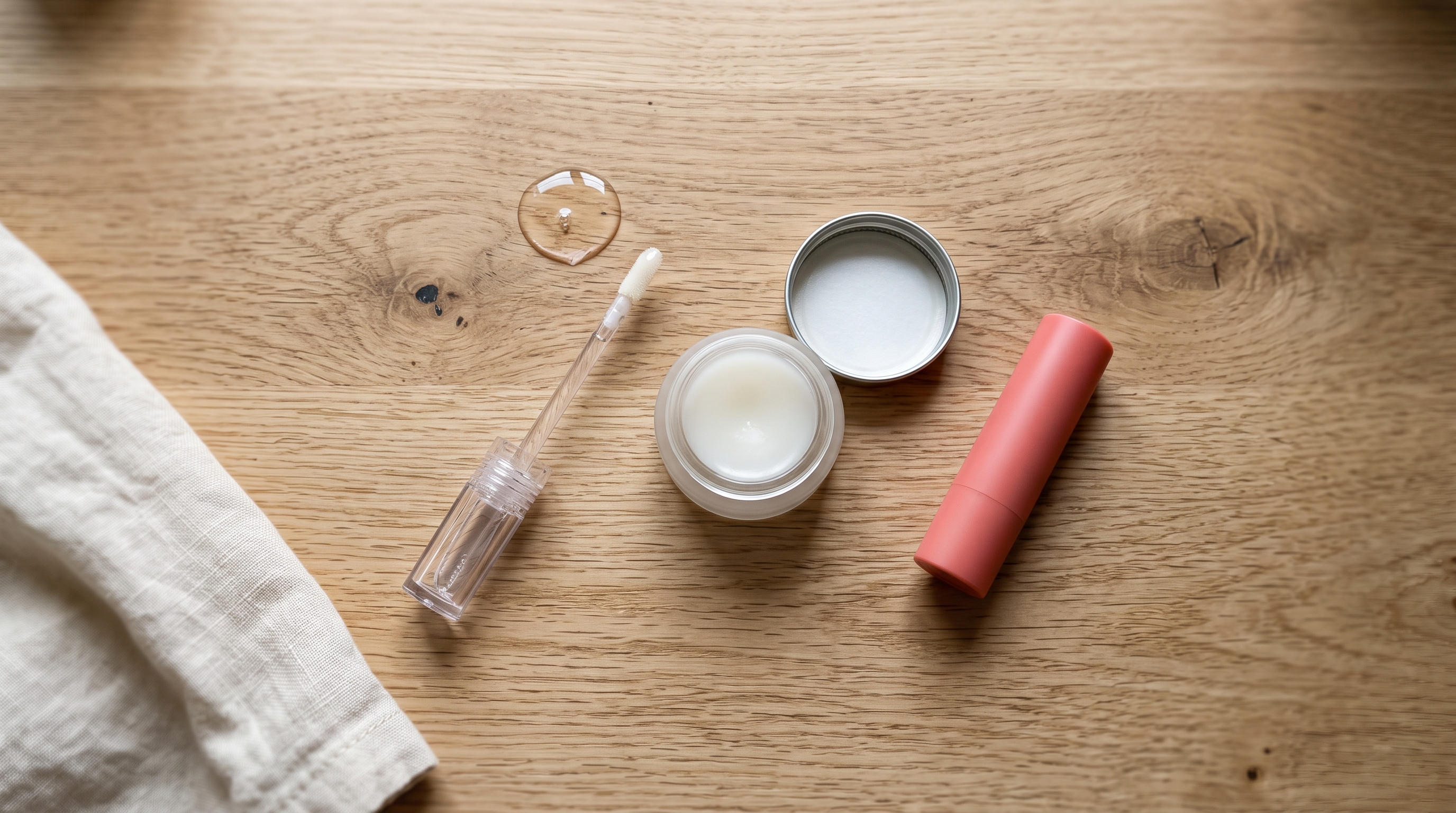
A base that stays put. Wax-forward sticks and balms cling far better than glossy oil-heavy formulas, which spread thin and migrate. A product that feels slightly firm going on is usually holding a thicker film.
In a randomised trial following 903 adults for four and a half years, the group using sunscreen daily showed 24% less skin ageing than those who used it at their own discretion.
Tint or opacity, if you will tolerate it. Pigment adds a physical barrier on top of the chemistry, and tinted formulas are typically applied more generously because people want the colour payoff.
No flavouring, menthol, or camphor. Anything that makes a balm pleasant to taste increases lip licking, which is the fastest way to remove the layer you just applied. Cooling agents also aggravate already-compromised lip skin.
A format you will actually carry. Reapplication is not a refinement here, it is the whole strategy. Hourly outdoors is the realistic target, and after every meal or drink regardless.
Mineral and organic filters both work on lips. Zinc oxide leaves more visible cast but is unbothered by heat and light. Organic filters vanish more cleanly and are usually applied more thickly as a result. The better choice is whichever one you will reapply without thinking about it.
What a Lip Balm Cannot Undo
Daily sun protection is genuinely preventive. In a randomised trial following 903 adults for four and a half years, the group using sunscreen daily showed 24% less skin ageing than those who used it at their own discretion [5]. That is a substantial return on a small habit.
What it does not do is reverse anything. The vertical lip lines already etched into the skin above your mouth, the flattening of the border, and the gradual loss of lip volume all reflect collagen and elastin that have already been degraded, largely by accumulated sun exposure on the face. Blocking tomorrow’s ultraviolet does nothing about them.
That repair belongs to a different category of product. In a randomised, controlled trial in older adults, topical retinol applied to naturally aged skin produced significant improvements in fine wrinkling alongside increased glycosaminoglycan expression and procollagen synthesis [6]. Retinoid signalling remains the best-evidenced way to rebuild what UV took out, and the perioral lines around the mouth respond to it.
The obstacle has always been tolerance. Conventional retinol formulations get the molecule through by disrupting the skin barrier, which is a rough proposition on the delicate perioral skin. Nanoretinol works differently, encapsulating 0.2% retinol in biomimetic lipid nanoparticles that the skin recognises as self and admits without that barrier damage. That delivery route is why it achieves 232% more effective collagen recovery than conventional retinol while remaining significantly gentler on skin cells. It is applied at night to the facial skin around the mouth, not to the lip mucosa itself, and sunscreen belongs in the following morning’s routine.
Making It a Habit You Keep
Buy the balm you will reapply. Broad-spectrum, SPF 30 or above, waxy rather than glossy, unflavoured, and small enough to live in the pocket you use every day. Keep a second one in the car, because the one at home protects nothing.
Then treat the lines already there as a separate job with a separate product. Sun protection holds the line at the vermilion border. It was never going to walk back the decade behind it.
References
- Kobayashi H, Tagami H. “Functional Properties of the Surface of the Vermilion Border of the Lips Are Distinct From Those of the Facial Skin.” British Journal of Dermatology. 2004;150(3):563-567. doi:10.1046/j.1365-2133.2003.05741.x
- Vasilovici A, Ungureanu L, Grigore L, et al. “Actinic Cheilitis — From Risk Factors to Therapy.” Frontiers in Medicine. 2022;9:805425. doi:10.3389/fmed.2022.805425
- Gabard B, Ademola J. “Lip Sun Protection Factor of a Lipstick Sunscreen.” Dermatology. 2001;203(3):244-247. doi:10.1159/000051758
- Faurschou A, Wulf HC. “The Relation Between Sun Protection Factor and Amount of Sunscreen Applied In Vivo.” British Journal of Dermatology. 2007;156(4):716-719. doi:10.1111/j.1365-2133.2006.07684.x
- Hughes MC, Williams GM, Baker P, Green AC. “Sunscreen and Prevention of Skin Aging: A Randomized Trial.” Annals of Internal Medicine. 2013;158(11):781-790. doi:10.7326/0003-4819-158-11-201306040-00002
- Kafi R, Kwak HS, Schumacher WE, et al. “Improvement of Naturally Aged Skin With Vitamin A (Retinol).” Archives of Dermatology. 2007;143(5):606-612. doi:10.1001/archderm.143.5.606