Silicone Body Scrubber: Is It Really Cleaner Than a Loofah?
What grows in a damp loofah, how a silicone scrubber compares, how to choose a back scrubber, and when to put the scrubber down altogether
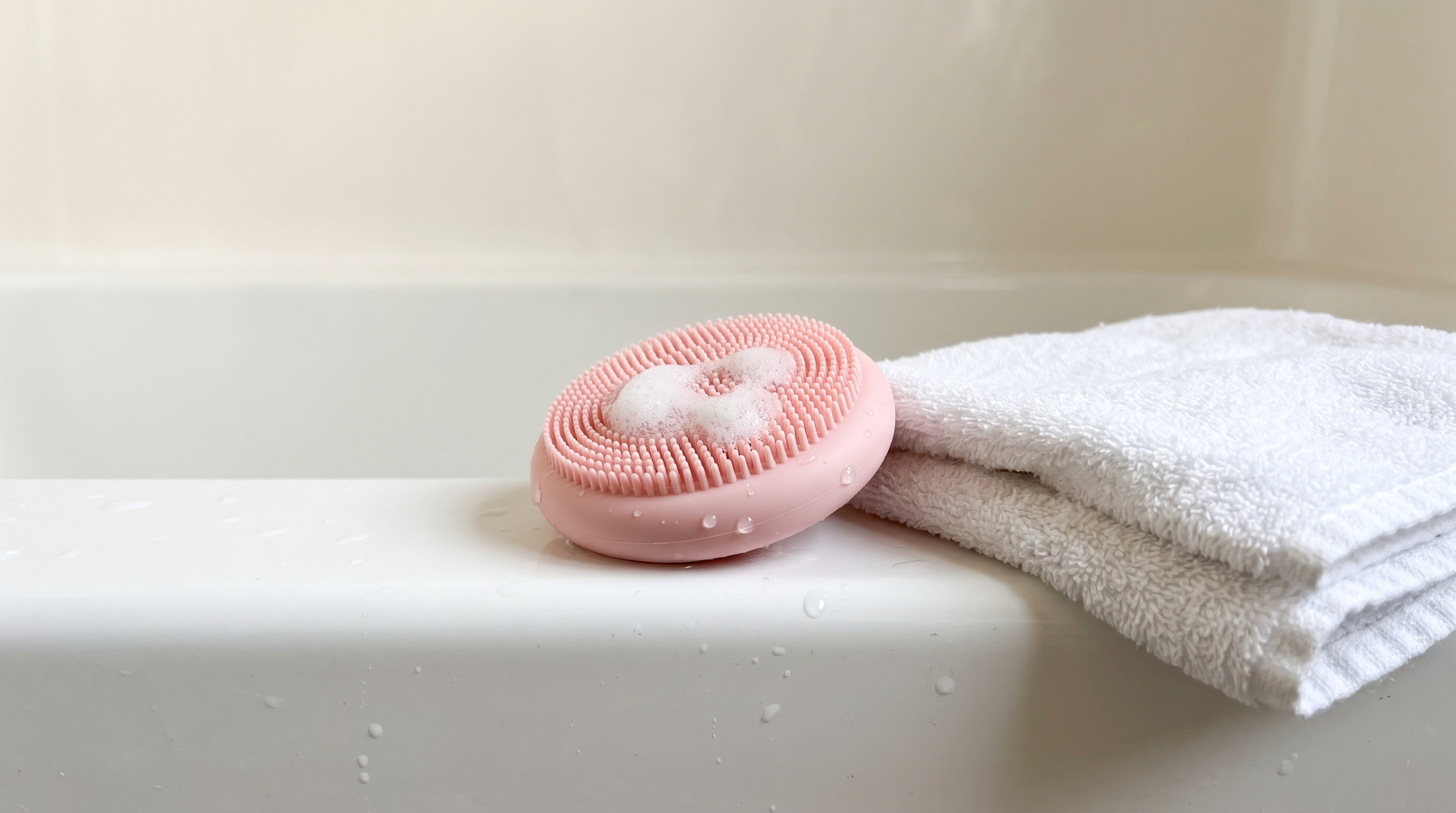
The silicone body scrubber has quietly replaced the loofah in a lot of showers. It is a flat pad or a long strap covered in soft rubbery nubs, it lathers body wash surprisingly well, and it is sold with a simple promise: cleaner than a sponge, gentler than a brush.
Part of that promise holds up, and part of it is marketing. Here is what the research says about the tools we rub on our bodies every day, how silicone compares, and how to choose and use one without trading one skin problem for another.
What Actually Grows in a Loofah
A natural loofah is the dried fibrous skeleton of a gourd. Its open mesh is good at holding lather, and just as good at holding water, soap residue and the skin cells it scrubs off. Then it hangs in a warm, humid bathroom.
Microbiologists at Mount Sinai Hospital in New York took a closer look after tracing a patient’s skin infection to her loofah. The same strain of Pseudomonas aeruginosa grew from her rash and from the sponge, and sterile, unused loofahs on their own were enough to support the bacterium’s growth [1]. A follow-up study found that loofahs boosted the growth of a long list of bacteria, from Pseudomonas and Klebsiella to Enterococcus, and that a brand-new loofah, once wet, shifted from sparse skin bacteria to a mostly gram-negative population. Trapped skin cells, the authors noted, feed the growth further [2].
Synthetic tools are not automatically better. In a Japanese clinic, 8 of 10 patients with Pseudomonas folliculitis, an itchy rash of small pus-filled bumps around hair follicles, had been rubbing their bodies with nylon towels or sponges, and the rash cleared once they stopped [3].
Your skin gets rubbed with whatever lives in a damp shower tool, and in one clinic 8 of 10 patients with a follicle infection had been scrubbing with nylon towels or sponges.
Your skin gets rubbed with whatever lives in a damp shower tool, and in one clinic 8 of 10 patients with a follicle infection had been scrubbing with nylon towels or sponges.
Why Silicone Is Easier to Keep Clean
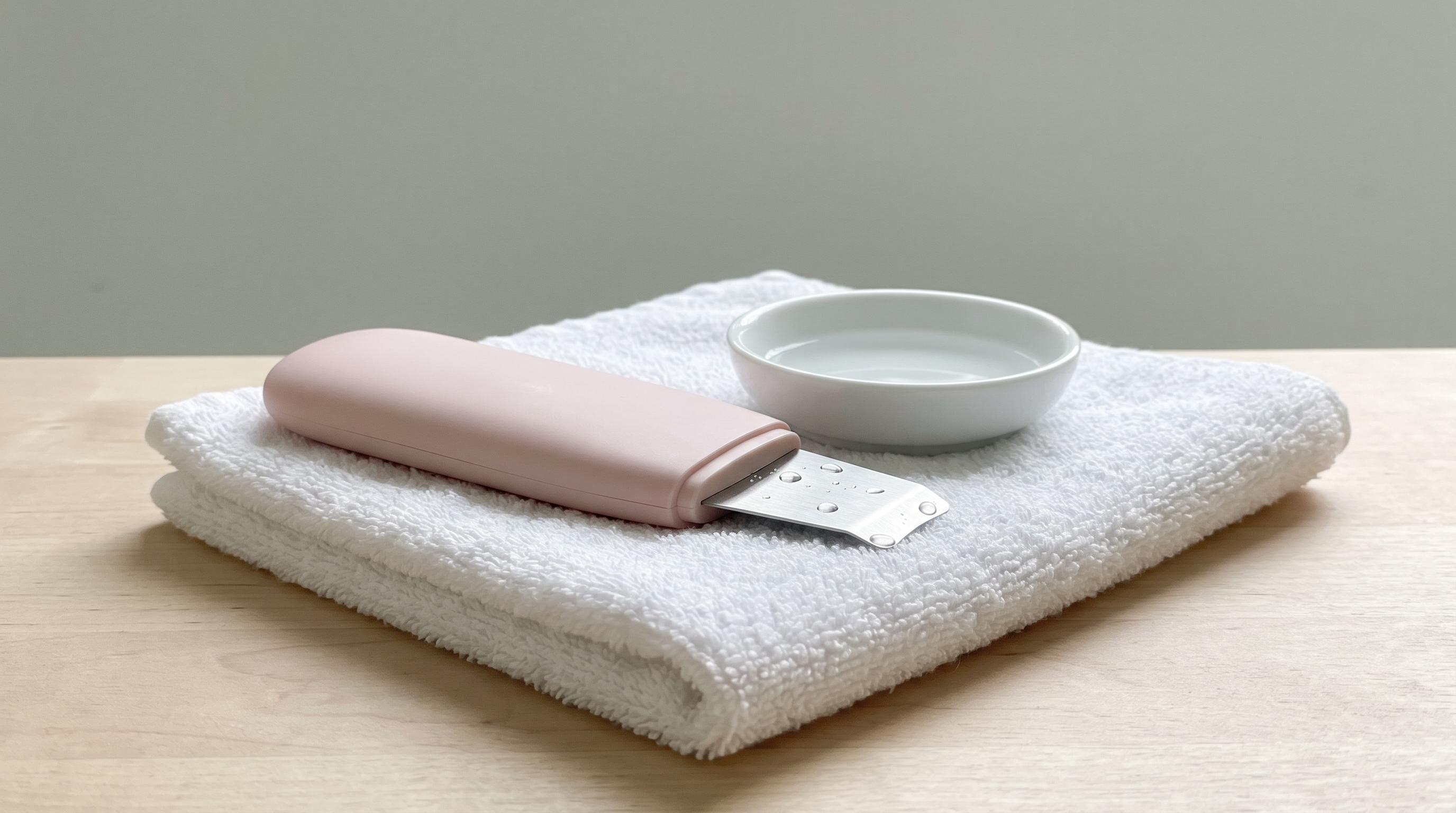
Medical-grade and food-grade silicone is non-porous. Water runs off it instead of soaking in, there are no fibres for skin cells to lodge between, and a solid pad dries far faster than a tangled mesh. It also tolerates hot water and soap, and many pads can be boiled or washed on the top rack of a dishwasher if the maker allows it.
That makes silicone easier to keep clean, not self-cleaning. Silicone is not antibacterial in itself, whatever the packaging says. Biofilm can still build up in the grooves between nubs, around a hanging loop and in the seams of a two-part handle. The advantage is practical: you can see the surface, scrub it and dry it, which you cannot do with a loofah.
Silicone vs Mitts, Brushes and Loofahs
The second difference is abrasion. Soft silicone nubs spread body wash and lift surface grime, but they remove far fewer skin cells than a viscose exfoliating mitt or a stiff natural-bristle brush.
- Silicone scrubber: gentle, hygienic, good for daily washing. Little real exfoliation.
- Exfoliating mitt: strong mechanical exfoliation, best used weekly. Our guide to exfoliating gloves explains what those grey rolls really are.
- Dry brush: used on dry skin before a shower; firm bristles, more friction. Our article on dry brushing covers what it can and cannot do.
- Loofah: moderate abrasion, hardest to keep clean, replace every few weeks.
For most people, a silicone scrubber is the right everyday tool precisely because it does so little damage.
Friction Has Limits
Scrubbing harder does not make skin cleaner, and it can leave marks. In Japan, where nylon bath towels are common, doctors described friction melanosis in young women, a brownish darkening of skin over bony areas such as the collarbones and upper back, which they linked to the habit of rubbing with nylon towels and brushes [4].
Your skin can turn brown from scrubbing alone, and Japanese doctors traced that darkening over the collarbones and spine to the nylon towels and brushes people used in the bath.
Your skin can turn brown from scrubbing alone, and Japanese doctors traced that darkening over the collarbones and spine to the nylon towels and brushes people used in the bath.
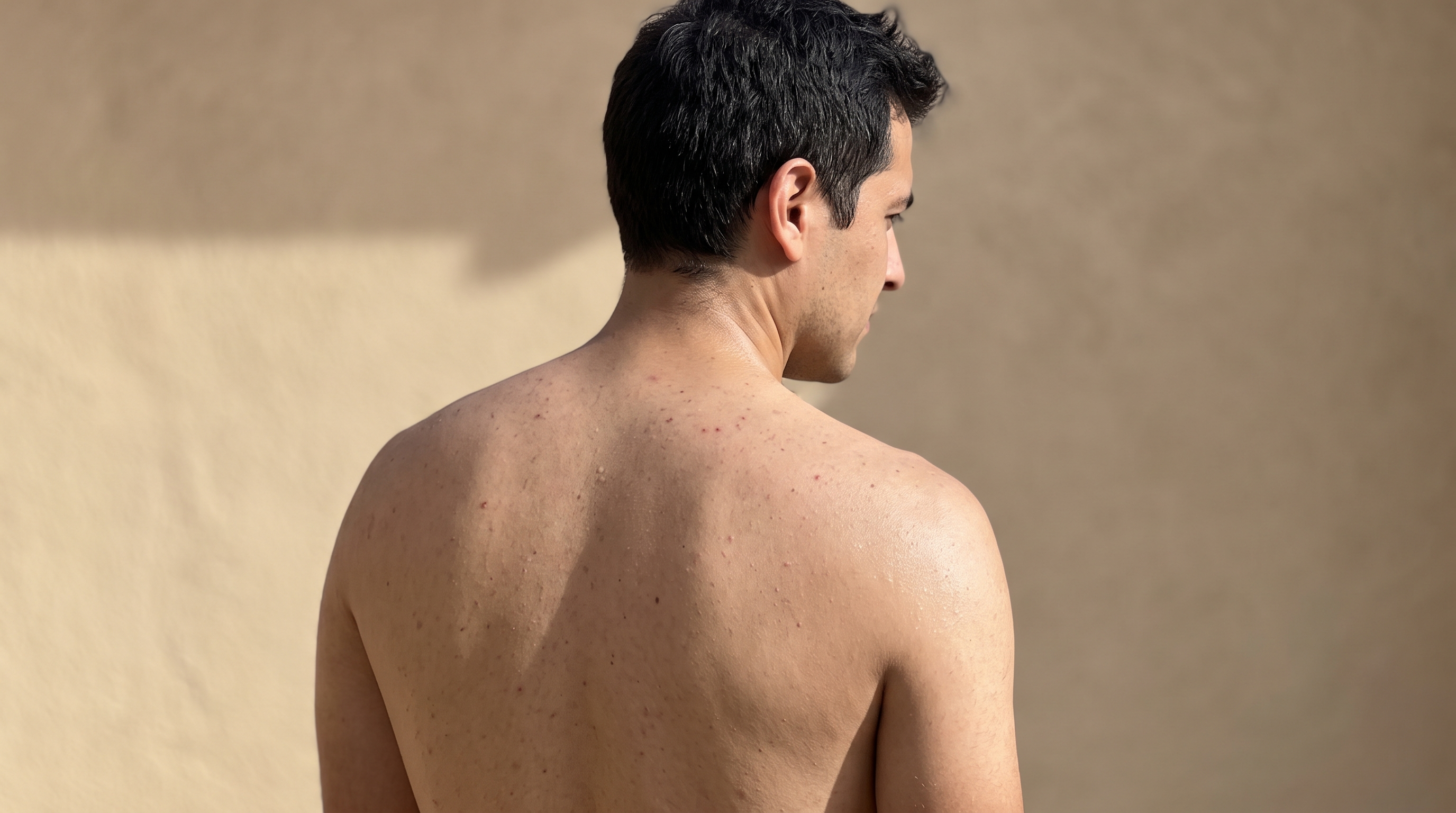
Friction also aggravates breakouts. “Acne mechanica” is the name dermatologists gave to flares triggered by rubbing, pressure, occlusion and heat on acne-prone skin [5]. If you are fighting back acne, a scrubber used to attack the spots is likely to make them angrier, so wash the area with light pressure and let a leave-on treatment do the work instead.
The same applies to the rough, goosebump-like texture of keratosis pilaris on the upper arms and thighs. Those bumps are plugs of keratin inside the follicle, and scrubbing only shaves the tops off. A 2025 literature review found the best support for topical keratolytics, such as acid lotions and urea, which loosen the plugs and soften the skin [6]. Our guide to keratosis pilaris treatment explains how to combine them.
Choosing a Back Scrubber
The back is the one area most people cannot reach, and it is oily and prone to breakouts. A good silicone back scrubber solves that without needing force.
- Strap or handle: a long double-handled strap lets you pull across the back with even, light pressure. A brush on a stick gives more control but tends to concentrate pressure on the spine.
- Nub size: short, soft nubs for daily use; longer ones lather better but feel firmer.
- One-piece construction: fewer seams means fewer places for water to sit.
- Drainage: a hanging hole lets it drip dry. Never leave it lying in a puddle on the shower floor.
How to Use and Care for a Silicone Scrubber
- Use light pressure. The nubs should glide; if skin turns red, you are pressing too hard.
- Rinse it, shake it, hang it. After every shower, let it dry fully in air.
- Wash it weekly in hot soapy water or the dishwasher if the label permits.
- Replace it if it tears, turns cloudy or smells. A torn pad has the crevices you bought silicone to avoid.
- Do not share it. A scrubber carries the bacteria of whoever used it last.
- Skip it on sunburned, broken or eczema-flared skin, and go gently on areas treated with retinoids or acids.
Smooth Skin Comes From Renewal, Not Force
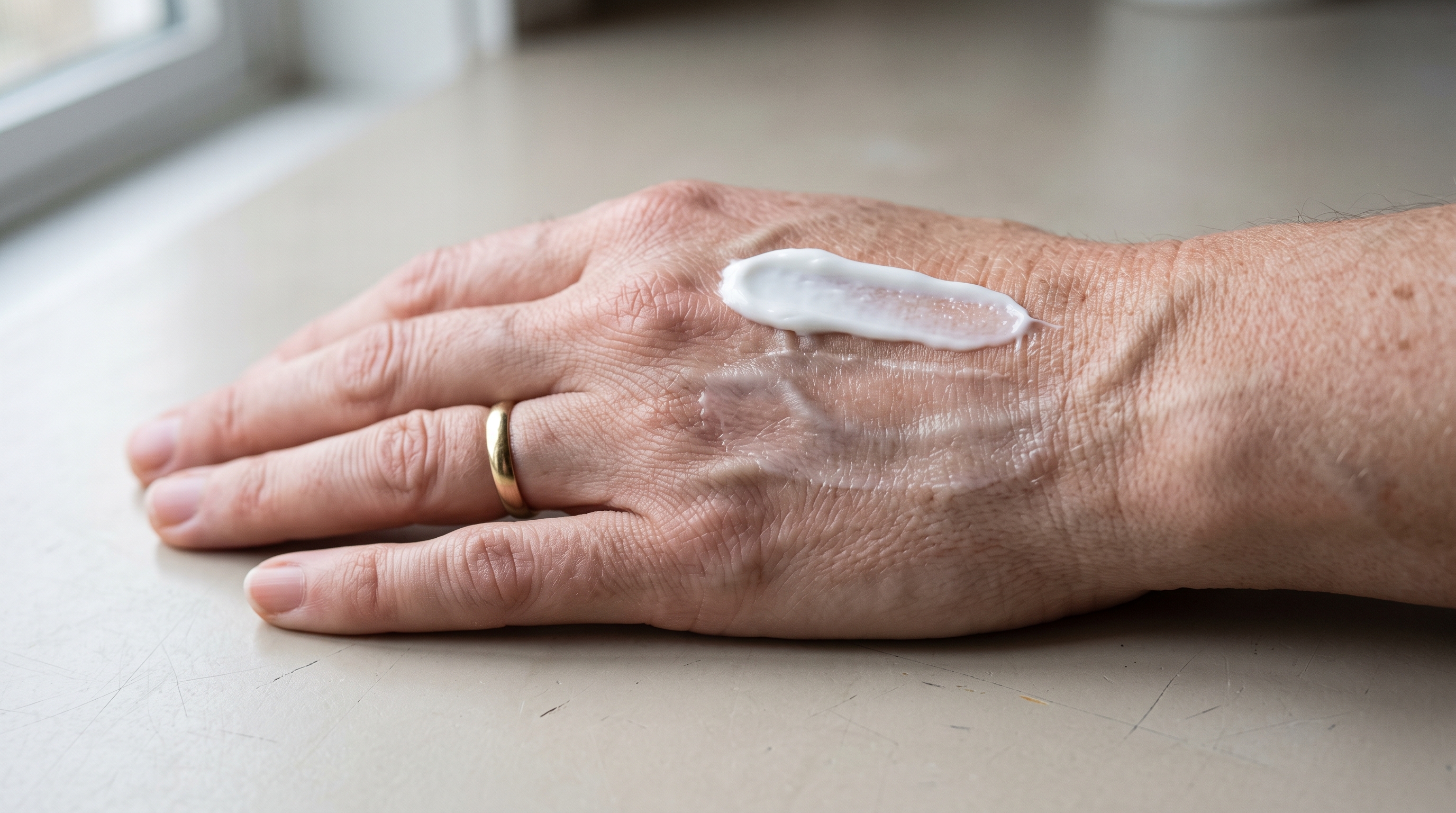
A scrubber can only remove what is already loose on the surface. Lasting smoothness, firmness and an even tone depend on what happens underneath: how quickly skin renews itself, and how much collagen it makes. That is why leave-on treatments outperform scrubbing for rough, crepey or uneven skin.
Retinol is one of the best-studied examples. In a randomized, vehicle-controlled trial on the arms of elderly volunteers, 0.4% retinol applied up to three times a week for 24 weeks significantly improved fine wrinkling, with increased glycosaminoglycans and procollagen in the treated skin [7].
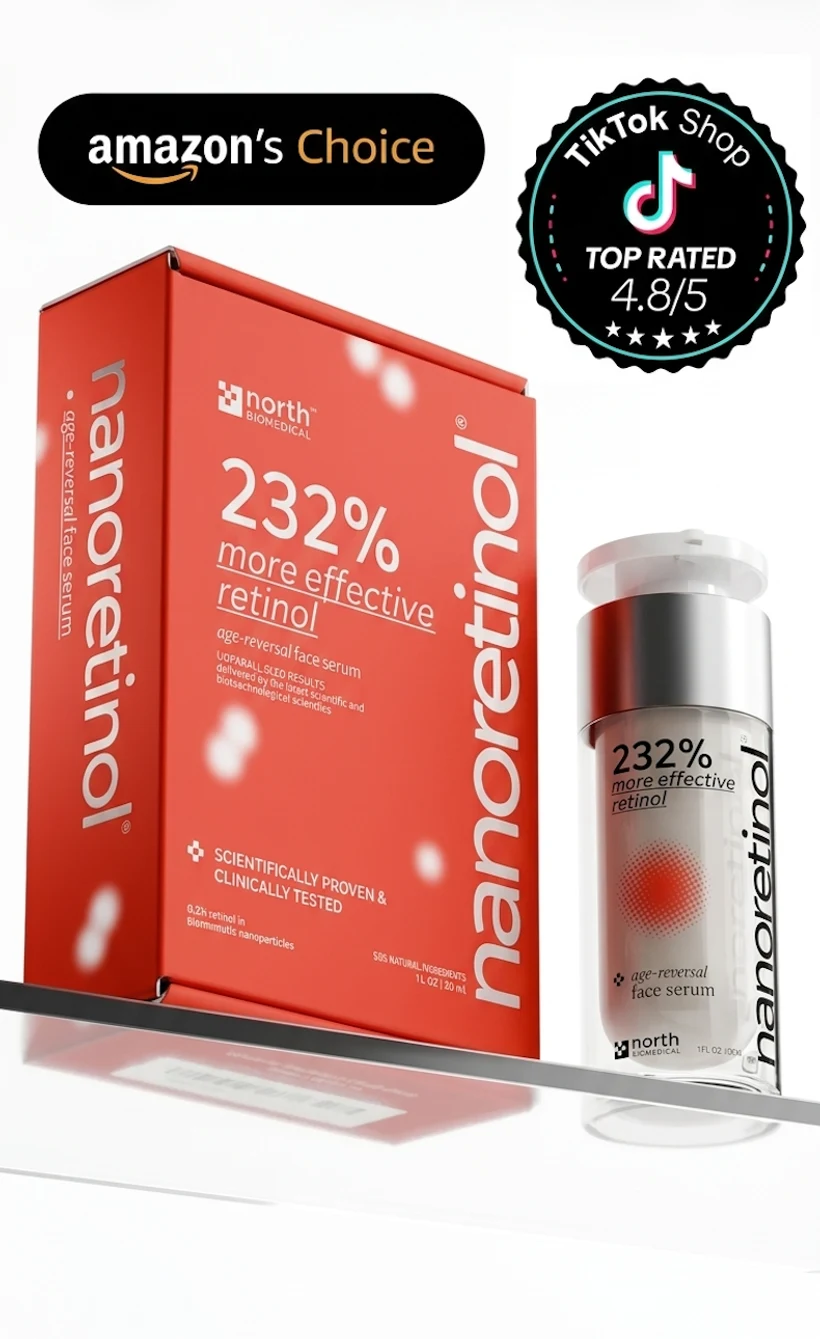
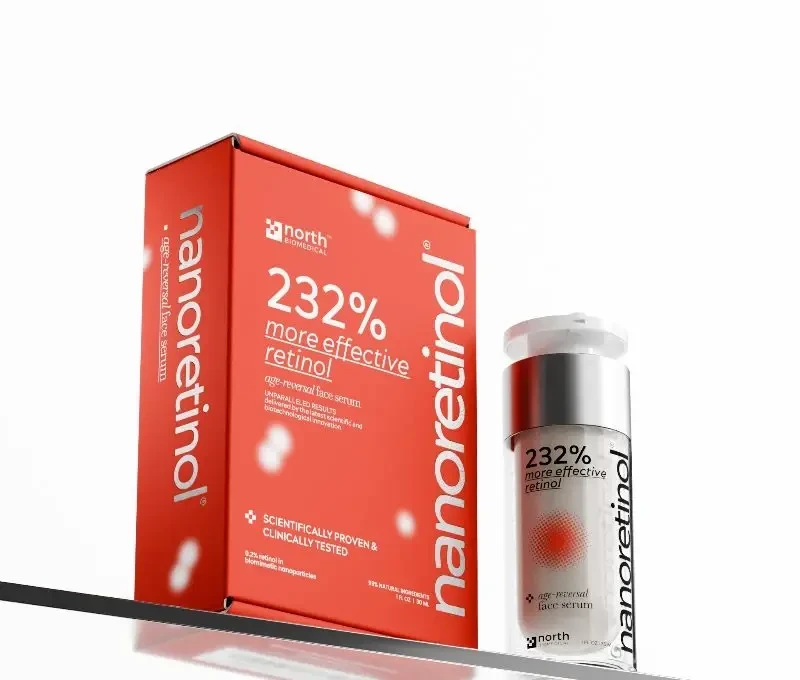
Nanoretinol, from North Biomedical, takes that approach and removes the usual trade-off. Its 0.2% retinol is fully stabilised inside biomimetic lipid nanoparticles that the skin recognises as its own, so the active passes the barrier without the chemicals and petroleum derivatives that conventional formulas use to break it down. In laboratory testing it was 232% more effective than conventional retinol in collagen recovery, and in clinical use it increased skin firmness by 61% and elasticity by 56% in 56 days, with side effects that, when present, were milder than those of conventional retinol. It is a light, water-based gel that absorbs completely to a matte finish.
Gentle Tool, Better Results
A silicone body scrubber is a sensible upgrade from a loofah: easier to clean, quicker to dry and kind to the skin barrier. Treat it as a washing tool, not an exfoliator, keep it dry between showers and replace it when it wears. Then let leave-on treatments, rather than friction, handle texture, breakouts and firmness.
References
- Bottone EJ, Perez AA 2nd. “Pseudomonas aeruginosa folliculitis acquired through use of a contaminated loofah sponge: an unrecognized potential public health problem.” Journal of Clinical Microbiology. 1993;31(3):480-483. doi:10.1128/jcm.31.3.480-483.1993
- Bottone EJ, Perez AA 2nd, Oeser JL. “Loofah sponges as reservoirs and vehicles in the transmission of potentially pathogenic bacterial species to human skin.” Journal of Clinical Microbiology. 1994;32(2):469-472. doi:10.1128/jcm.32.2.469-472.1994
- Teraki Y, Nakamura K. “Rubbing skin with nylon towels as a major cause of pseudomonas folliculitis in a Japanese population.” Journal of Dermatology. 2015;42(1):81-83. doi:10.1111/1346-8138.12712
- Hata S, Tanigaki T, Misaki K, Nakata K, Okada A. “Incidence of friction melanosis in young Japanese women induced by using nylon towels and brushes.” Journal of Dermatology. 1987;14(5):437-439. doi:10.1111/j.1346-8138.1987.tb03606.x
- Mills OH Jr, Kligman A. “Acne mechanica.” Archives of Dermatology. 1975;111(4):481-483. PubMed: 123732
- Dampa E. “The Effectiveness of Topical Keratolytics (Alpha Hydroxy Acids/Beta Hydroxy Acids/Urea) in Treating Keratosis Pilaris: A Review of the Literature.” Cureus. 2025;17(12):e100507. doi:10.7759/cureus.100507
- Kafi R, Kwak HS, Schumacher WE, et al. “Improvement of naturally aged skin with vitamin A (retinol).” Archives of Dermatology. 2007;143(5):606-612. doi:10.1001/archderm.143.5.606